Vintage Bathroom Ideas: The Complete Guide to an Old-House Bath That Lasts
Vintage bathroom ideas in the order that works: pick the era, settle the tile and color, then choose fixtures and finishing. Plus how to decide what to keep in an original bath, and what to do first.

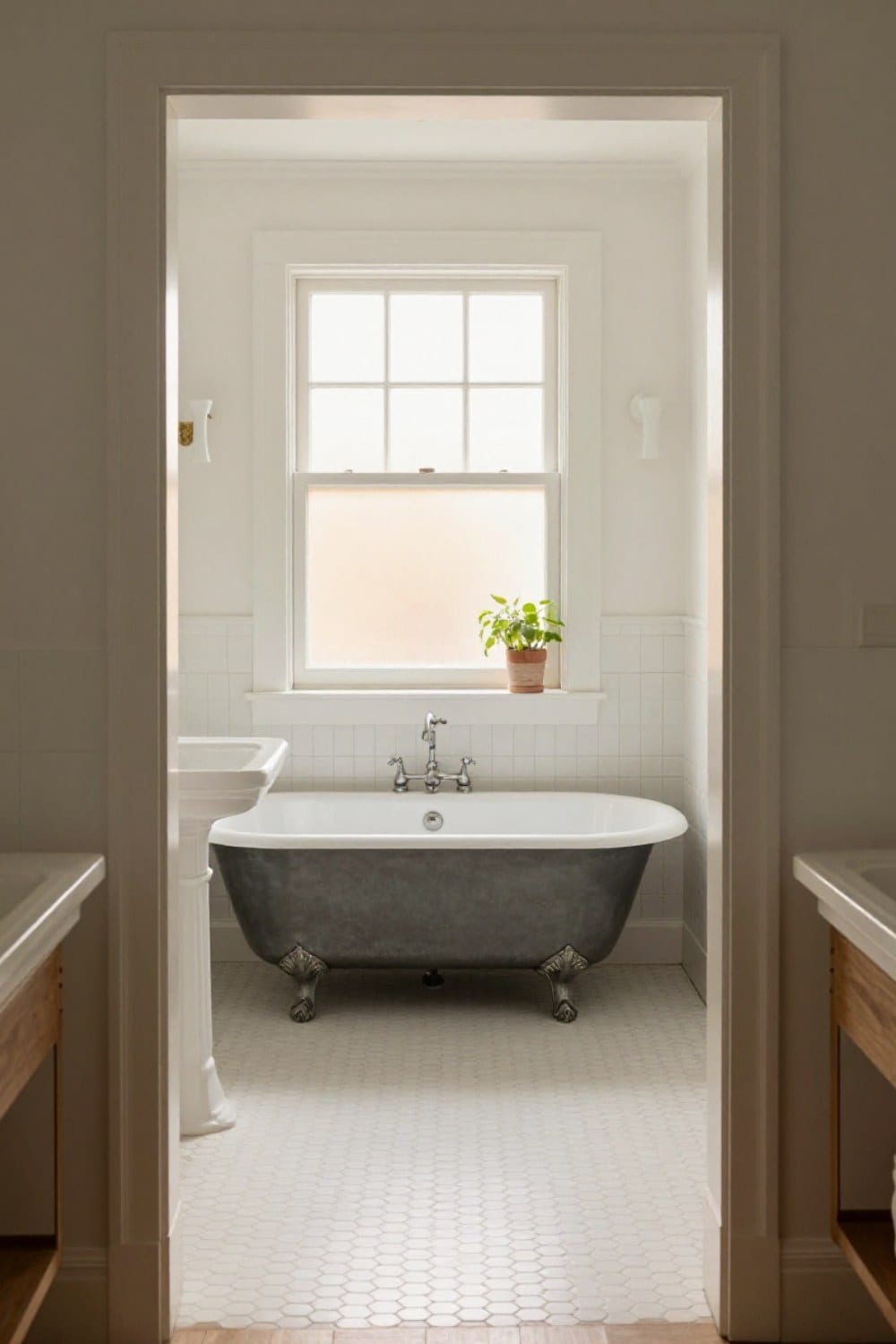
Vintage bathroom ideas are all over my Pinterest feed lately, and I understand why. Pink tile, a white hex floor, a pedestal sink under a milk glass sconce. They look like rooms that have been loved for decades, because a lot of them have.
Our own bathroom dates to 1928. It has the original hex floor, a cast iron tub, and a window that fogs by minute three. I've lived with it for six years, repaired it twice and nearly ruined it once. This is the order I wish someone had handed me before I started.
Think of this as the pillar for everything we've written about old-house baths. You'll get the three decisions in the right sequence, a way to judge what to keep, and a quick tour of each lane. Every section points to a longer guide when you want the detail.
Why vintage bathrooms are back
A few years ago, every flipped house I toured had the same bathroom. Gray vanity, white subway tile, a frameless glass door, a brushed faucet that could sit in any room in any city. Clean, yes. Forgettable, also yes.
What came back is character. Small glazed tile with soft grout lines. A real tub on feet. A tap with two cross handles you turn with your whole hand. Some of the pull is Pinterest, and some is a quiet protest against rooms designed to sell fast. Pam Kueber of Retro Renovation started Save the Pink Bathrooms because sound original baths were being torn out by the dumpster load, and plenty of us have come around to her side.
The good news is that this look rewards patience. It doesn't depend on one season's trend, and the materials get better with age. The catch is how easy it is to buy a costume instead of a bathroom. The rest of this guide is about avoiding that.
What makes a bathroom feel vintage instead of themed
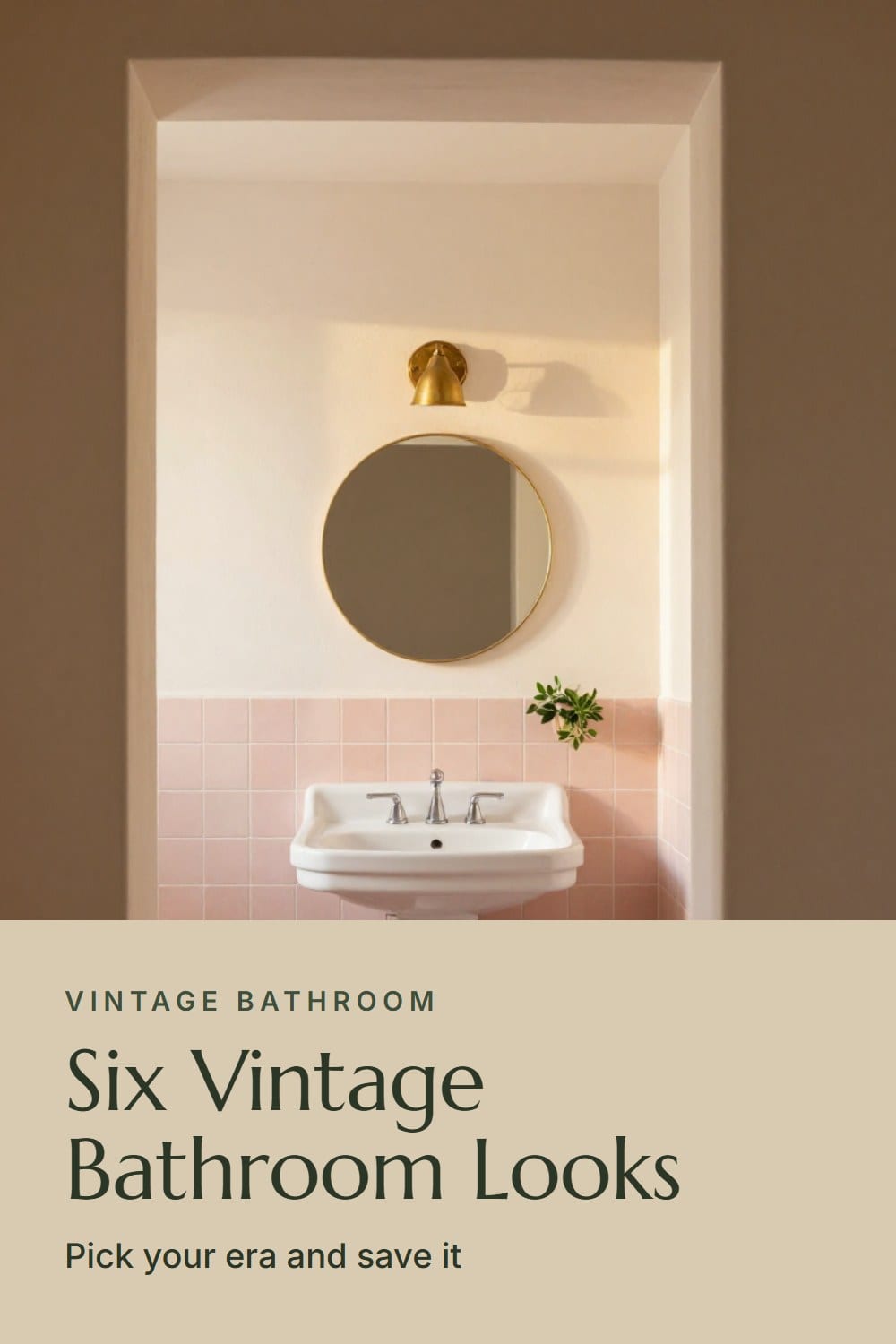
Old bathrooms share five quiet clues. Small tile, usually mosaic or a 3x6 subway. A deep glaze that catches light instead of reflecting it flat. Warm metal, such as polished nickel or aged brass. A sink that stands on legs or a base. And light from a window or a glass shade rather than a row of recessed cans.
A themed bathroom has a wooden sign over the tub and a shelf of enamel pails from a craft store. The difference is mostly restraint. Real old rooms use a handful of materials and use them well.
Count the finishes in yours: tile, one metal, one wood, one wall color. Past about five, something is shouting. I once hung a mirror, two shelves, a framed print and a wire basket on a single four-foot wall. A friend walked in and asked if the gift shop was open. She was right.
Vintage bathroom ideas start with three decisions, in order
Reverse this order and you end up with a faucet that argues with your floor. Here is the sequence I use, and the one I give any friend who texts me a photo and asks where to begin.
- Era. Which decade is your bathroom, or which one should it feel like? This sets the rules for everything after it.
- Tile and color. Tile is the biggest surface and the hardest to change, so the walls and the fixtures have to agree with it.
- Fixtures and finishing. Tub, sink, taps, lighting, mirror and the small pieces, chosen to match the first two.
Everything past the tile is easier to swap later. That's why towels come last and the floor comes first.
Start by choosing an era
You don't need a museum-accurate room. You need one clear decade to lean on, so the choices stop competing. The decade-by-decade retro bathroom guide walks from the 1920s to the 1960s if you want the full map. Here is the short tour.
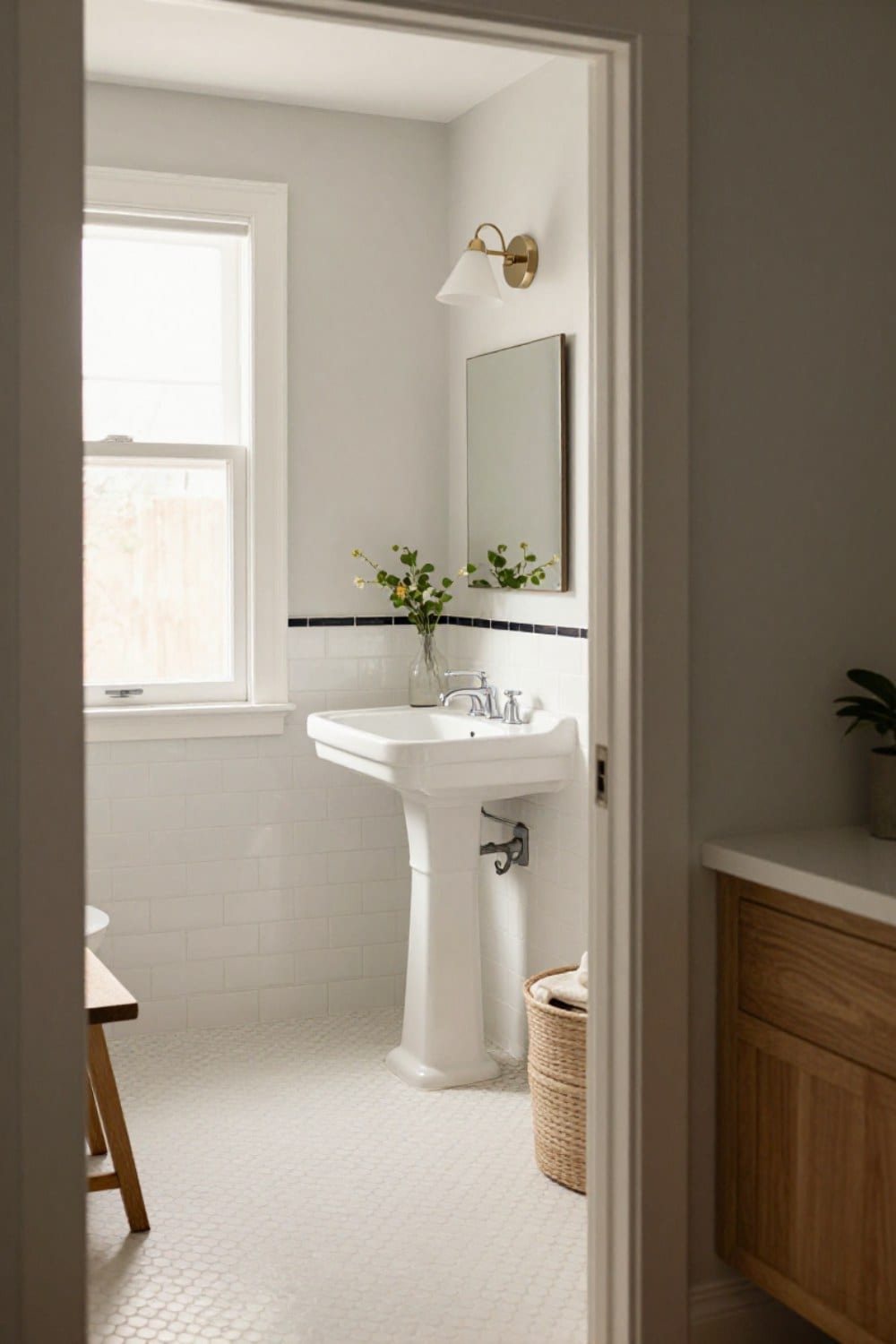
The 1920s look is white hex tile, a pedestal sink and polished nickel. It's the calmest of the group, and the one I'd pick for most older houses. 1920s bathroom ideas covers the floor, the sink and the metal. Its more graphic cousin, with geometry and black accents, is in art deco bathroom ideas, written to feel classic instead of costume.
Pastel tile arrived in the 1950s: pink, mint, sky blue, with chrome trim. Done with restraint it feels grown-up, and 1950s bathroom ideas shows how. If your house was built in that decade or the next, mid century bathroom ideas fits the architecture.
Two newer takes borrow from every era. Skirted sinks, florals and scalloped edges belong to grandmillennial bathroom ideas. Dark walls, old brass and low warm light belong to moody vintage bathroom ideas, which suits a windowless room better than anything else I know.
Match the house, not the screen. I once fell for a pastel pink 1950s bathroom and spent a month trying to fit it into our 1928 house. The hex floor fought every pink thing I brought home, and I finally gave in. Look at your window trim, door hardware and floor before you pick a decade.
Tile and color come second
Tile is the part of a bathroom you live with longest, so it gets the most thought. The vintage bathroom tile ideas guide covers the patterns and colors that never date. The short version is to choose small, glazed and simple. A 3/4 inch hex or 1 inch penny round on the floor, a 3x6 subway on the walls, and a rounded bullnose cap on the edge.
Floors split into two camps. Hexagon feels crisp and a little formal, penny round feels softer and more hand-laid. Hexagon vs penny tile helps you choose. If you love pattern, checkerboard bathroom floor ideas settles tile size, color and layout.
Color is the next call. Already have pink tile? Decorating a pink tile bathroom explains why it's worth keeping. Mint, sage or bottle green? See green tile bathroom ideas. A black and white floor can feel stern, so how to decorate a black and white tile bathroom shows how to warm it up.
Then the walls. Paint follows tile, never the other way around. Hold your sample against the tile in morning and evening light, and pick a color family that shares its warmth. Vintage bathroom paint colors that work with old tile goes through the families. I painted the wall above our mint tile a stark white first. It made the mint look green-gray and tired, and I repainted in a warm cream a week later.
Finish matters in steam. Eggshell or satin holds up and wipes clean; flat paint stains. And plan on cleaning old tile gently. How to clean old bathroom tile and grout covers what to use and what to skip.
Fixtures and finishing come last
Once the tile and color are set, the fixtures almost choose themselves. The vintage bathroom decor guide collects the finishing pieces that make a room feel original. Each of these has its own page, so here is where each one fits.
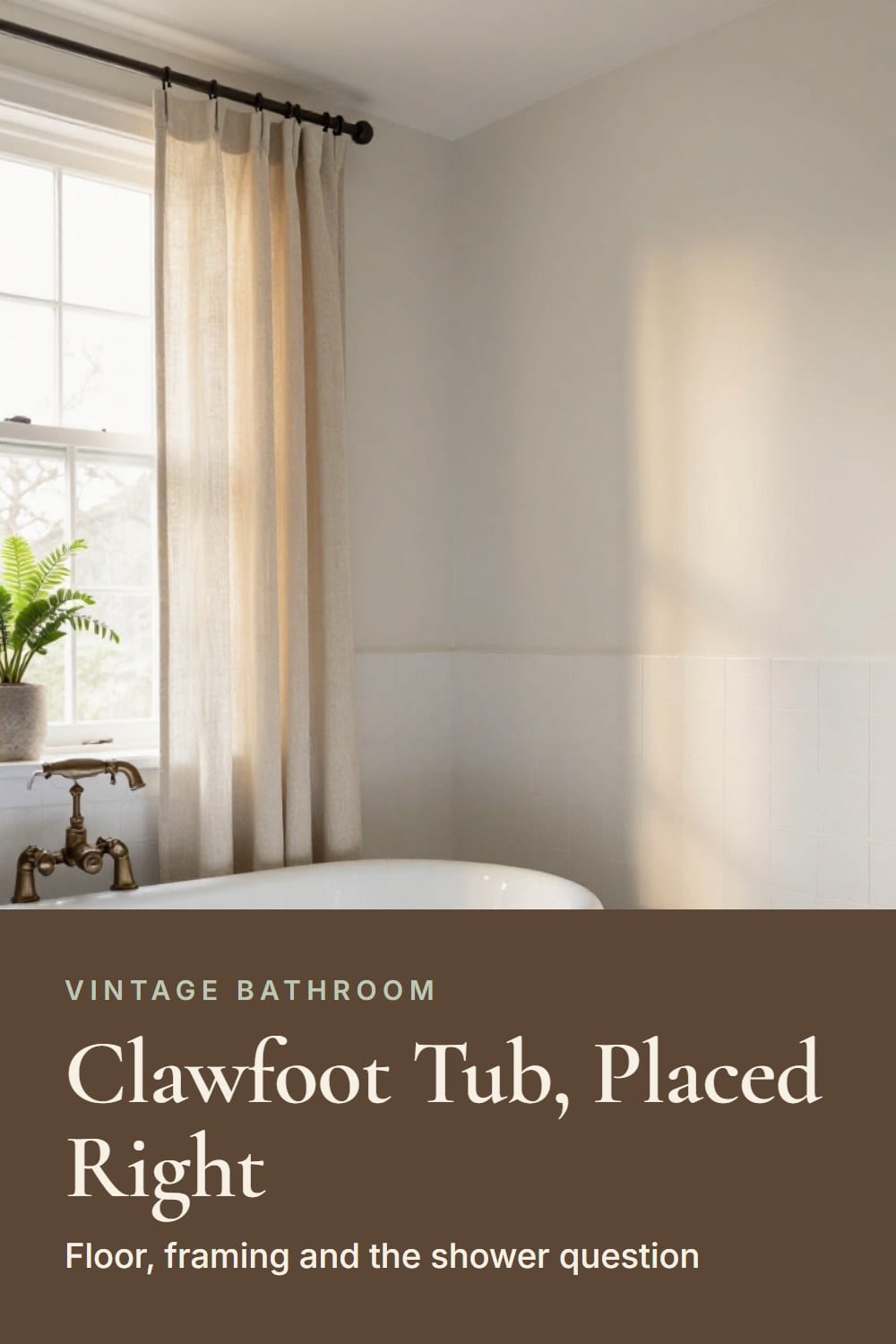
The tub comes first. A clawfoot is the classic, and clawfoot tub bathroom ideas covers placement, floors and the shower question. Cast iron tubs are heavy, roughly 250 to 400 pounds empty and far more with water and a bather. Have a contractor check the floor framing before you commit.
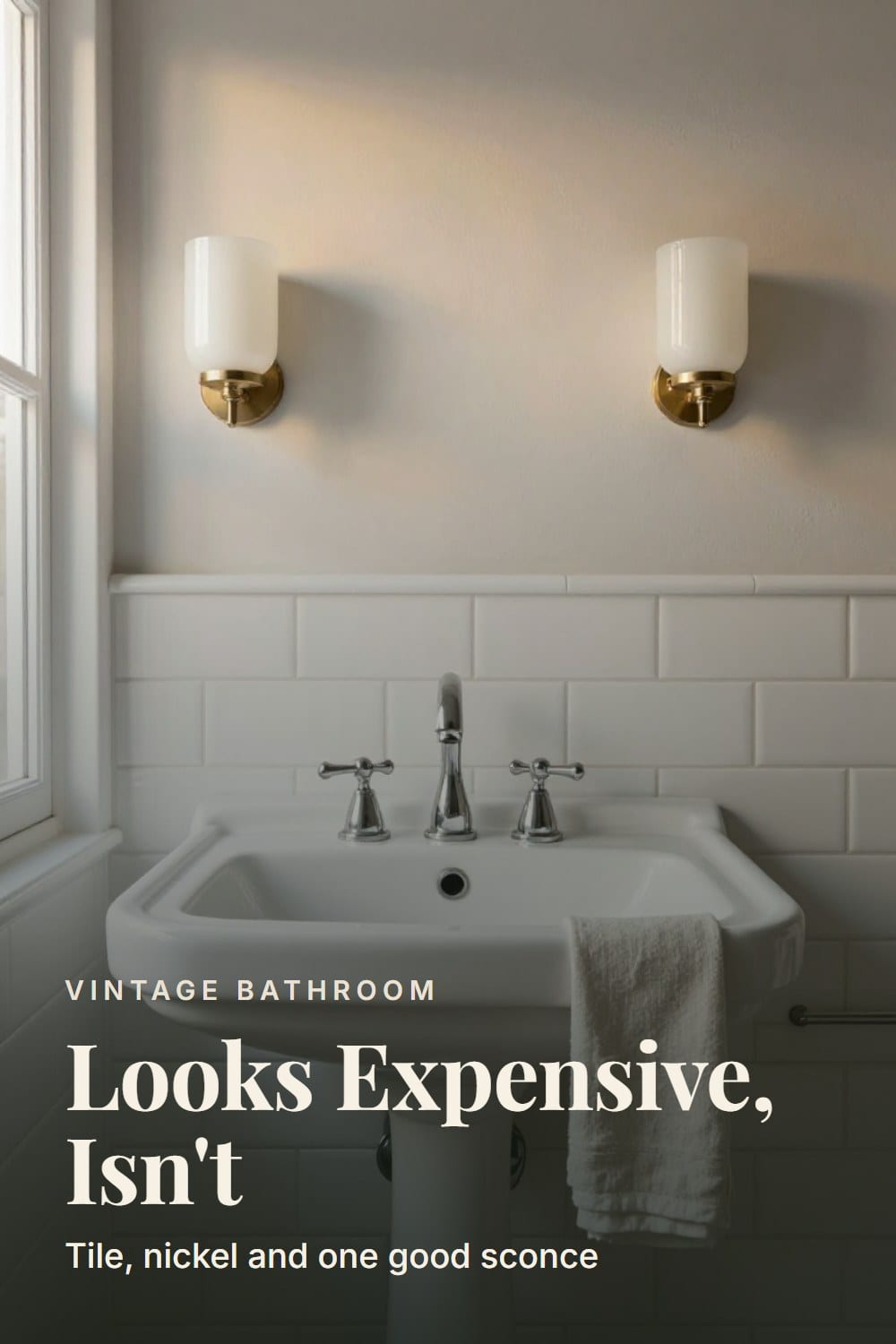
The sink is next. A pedestal looks lovely and stores nothing, which is why pedestal sink bathroom storage ideas exists. If you want a cabinet, vintage bathroom vanity ideas shows converted dressers, washstands and console sinks.
Taps are small and do a lot of work. Two cross handles on polished nickel or unlacquered brass tell the eye the room is old. Cross handle faucets and unlacquered brass explains how they age. Unlacquered brass darkens with use, so decide up front whether you'll love that or polish it.
Light is the last big piece. Aim for warm bulbs around 2700K with a CRI of 90 or higher, so skin and tile look natural. Vintage bathroom lighting covers sconces, schoolhouse globes and the right bulb. Any fixture over a tub or shower must be damp- or wet-rated, and rewiring a vintage fixture is a job for an electrician.
Walls can carry pattern too. Vintage bathroom wallpaper ideas explains how to make paper last in steam. The answer starts with a fan: run it during every shower and for about 20 minutes after. Paint and wallpaper both fail without one.
How to decide whether to keep an original bathroom
If your house came with its original bathroom, the instinct is to rip it out. Slow down. Sound original tile, a cast iron tub and a standing sink are often better built than anything you could buy now, and the room is already half done.
Here is the test I use. Tap each tile with a knuckle. A solid, dull sound means it's well bonded. A hollow sound means it's loose and water may be getting behind it. Check the tub rim for rust and the sink for hairline cracks around the drain.
- Keep it when the tile sounds solid and the glaze is intact.
- Keep it when the tub and sink hold water and show no rust through the finish.
- Replace it when tile sounds hollow or water has reached the wall behind it.
- Replace it when plumbing leaks or the floor under the tub has gone soft.
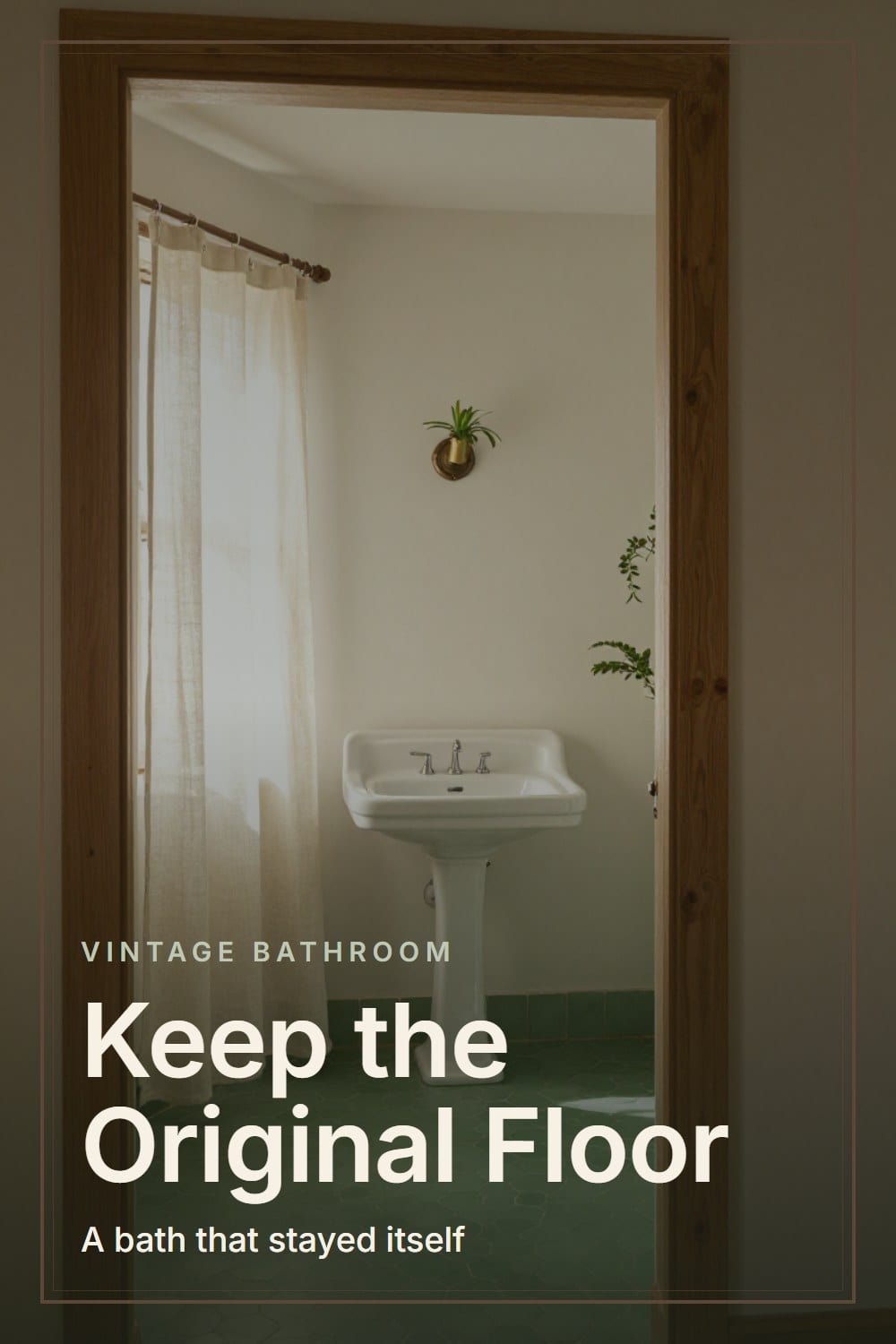
You don't need to gut anything to get the look, either. If your bathroom is plain and newer, how to make a bathroom look vintage without gutting it shows what to change first: the sink, the taps, the light and the walls. That's often enough.
That's also the fix for a flipped gray bathroom. The tile and the tub can stay. Swap the faucet for cross handles, hang a milk glass sconce, and repaint the walls in a warm color. It reads like a different room within a weekend.
What to do first, and what lasts
Invisible work comes first, because everything pretty sits on top of it. Here is the planning order I'd follow on a real project.
- Test for asbestos and lead before any demolition or sanding.
- Fix plumbing, waterproofing and the exhaust fan.
- Repair or replace tile, and decide the floor.
- Set the tub and sink.
- Choose the faucet and the lighting.
- Paint or paper the walls to suit the tile.
- Add towels, a curtain, a mirror and the small pieces.
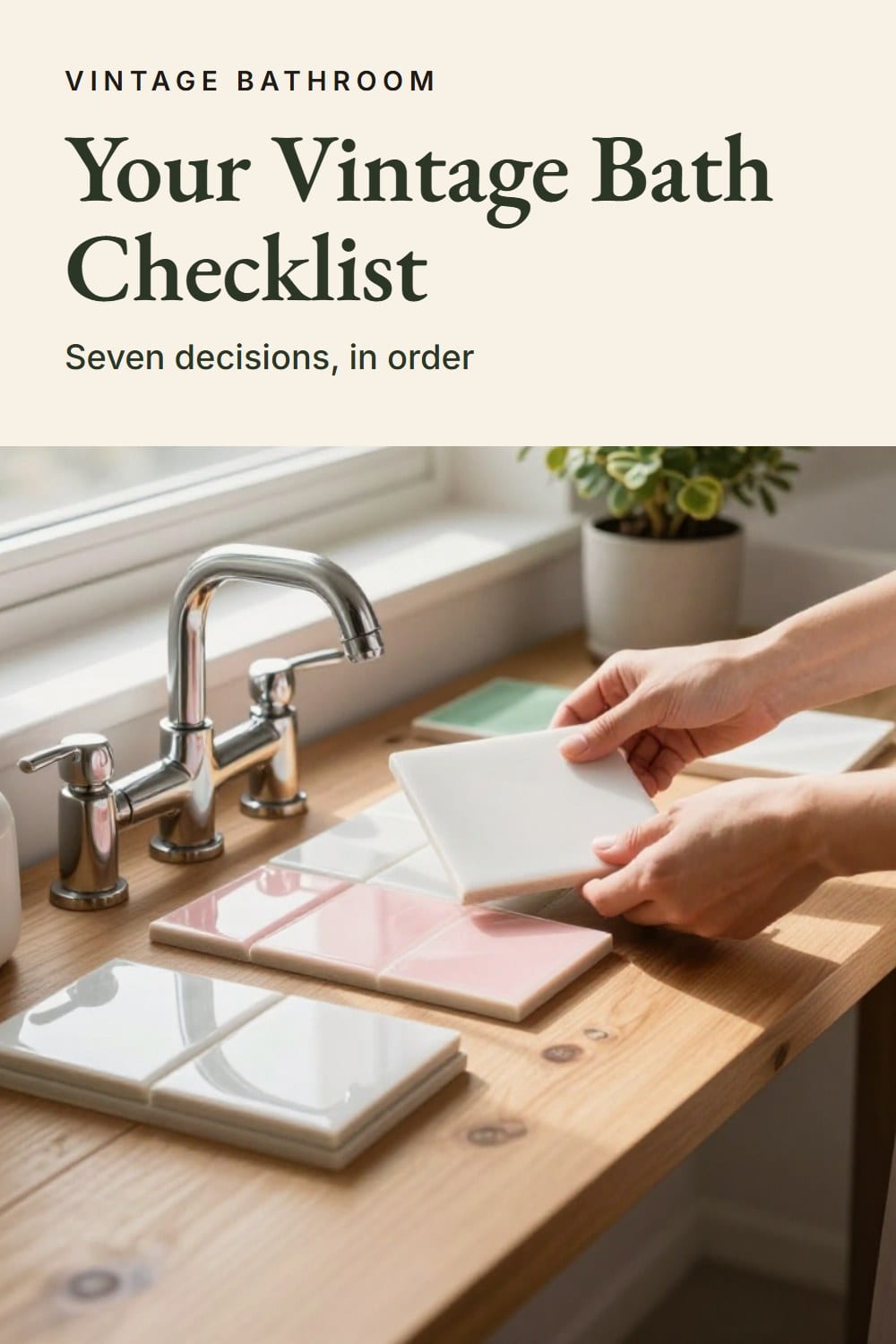
The things that last are the things you can't easily wear out. Porcelain, cast iron, glazed tile and solid brass will outlive you. Fabric, paper and paint finish are the soft layer. They look wonderful and they need care, so I treat them as the part I'll replace.
Where to put the effort
A solid brass cross handle faucet set
It is used every day, it can be repaired instead of replaced, and it gains character with age.
Washable linen towels and a linen curtain
They soften with each wash, they are easy to swap when your taste shifts, and they carry the color.
Five mistakes that make a vintage bath look themed
- Choosing the faucet before the tile, so the metal never quite fits.
- Mixing chrome, brass and black metal in one small room.
- Painting a stark white wall beside warm-toned tile.
- Hanging signs and crowding every shelf until it looks like a store.
- Skipping the fan, then wondering why the paint peels.
My advice is simple. Pick the era, buy the tile you won't regret, and live in the room for a month before you add anything. A vintage bathroom is built slowly on purpose, and the rooms that last are rarely finished in one weekend.
The Vintage Bathroom Planner
The printable is being finished. It will live here, free, with no sign-up wall.
Frequently asked
What makes a bathroom look vintage?
Should I keep my original bathroom tile?
What should I decide first when planning a vintage bathroom?
Can I get a vintage bathroom look without a full renovation?
Sarah Whitmore
she keeps the teak, she oils it in spring
Sarah has furnished the same porch three times and finally stopped. She writes about what actually survives a decade outdoors — which wood silvers, which fabric fades, and which inexpensive piece quietly reads the same as the expensive one.
SarahMore from this corner
 Vintage Bathroom
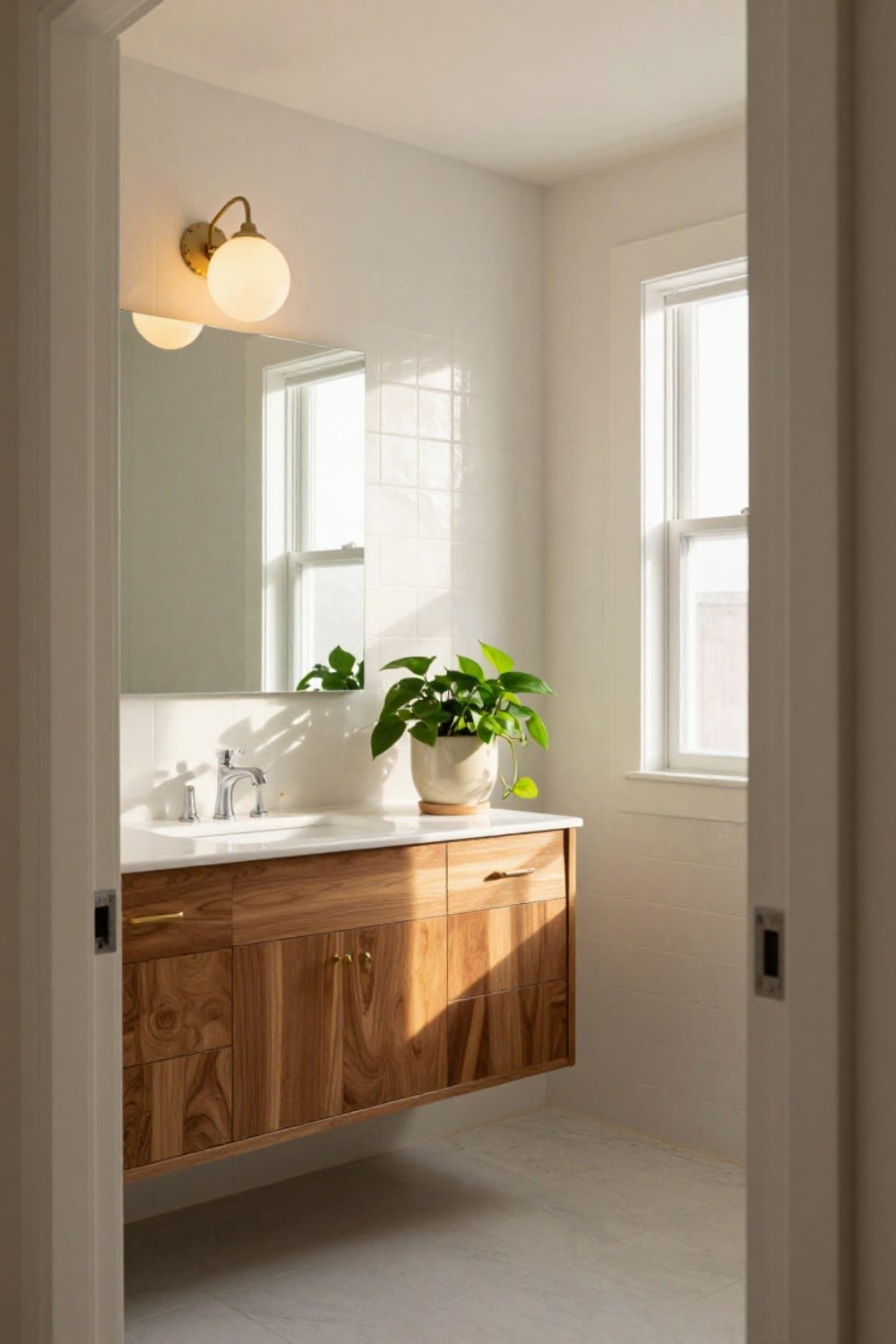
Mid Century Bathroom Ideas for a House Built in the 1950s and 60s
Mid century bathroom ideas for a ranch or split-level: the floating vanity, square and penny tile, globe lights, a wide mirror, and which original features to keep and update around.
Oct 31, 2026 · 12 min read
 Vintage Bathroom
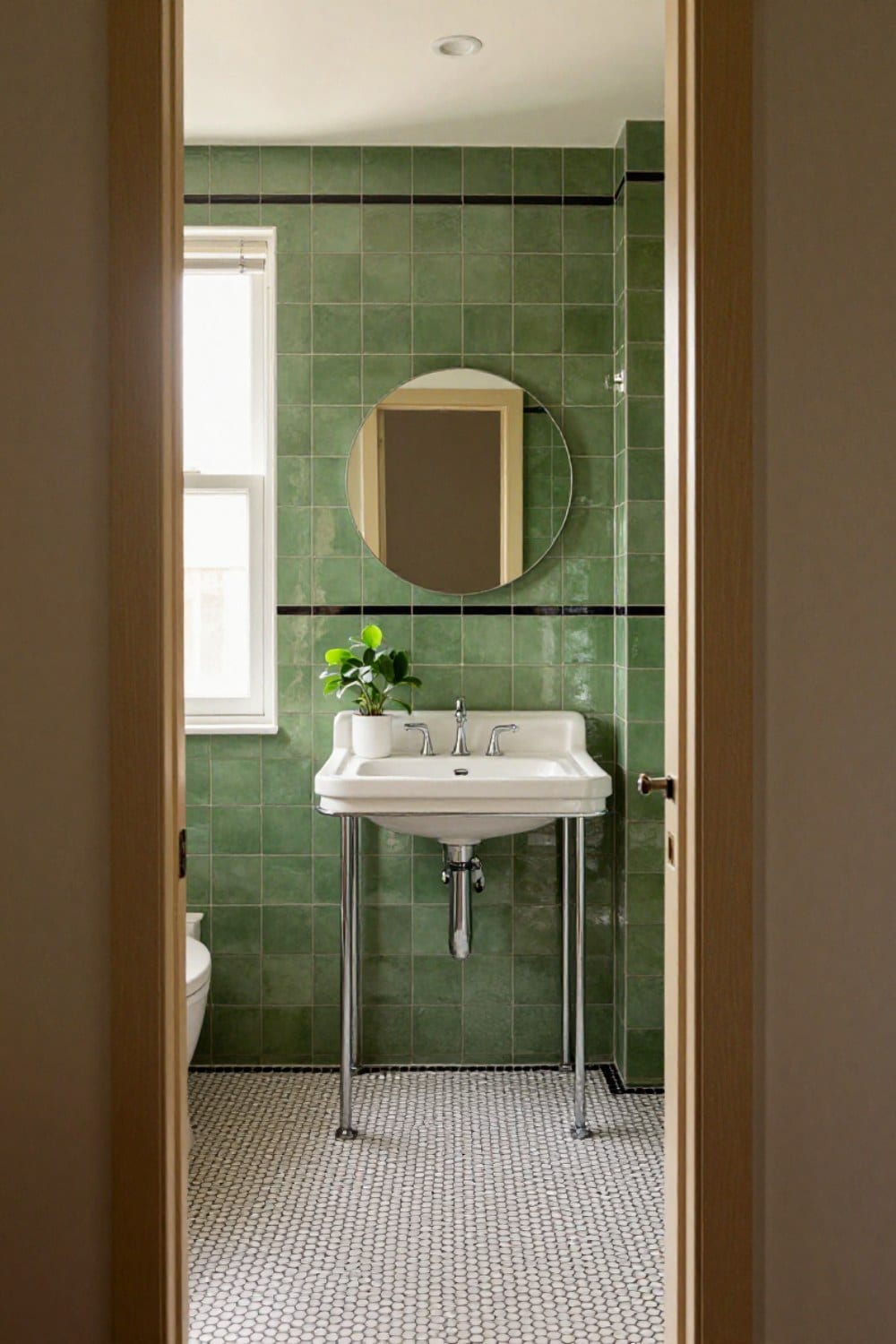
Art Deco Bathroom Ideas That Feel Classic, Not Costume
Art deco bathroom ideas scaled for a real house: the one-statement rule, black and white or green and black tile with a border, round mirrors, frosted sconces, a console sink on chrome legs, and the mistakes that make it look like a set.
Oct 31, 2026 · 11 min read
 Vintage Bathroom
 Tile Ideas: The Patterns and Colors That Never Date
Vintage bathroom tile ideas that still look right decades on: the hex, penny, subway and checkerboard patterns, the glaze colors worth keeping, the grout rule that matters most, and how to decide between repair and reproduction.
Oct 29, 2026 · 12 min read