Vintage Bathroom Decor: The Finishing Pieces That Make It Feel Original
Vintage bathroom decor is what decides whether an old-house bath feels original or themed. The tub, sink, faucets, lighting, mirror and soft layer that finish the room, and which pieces are worth buying new.

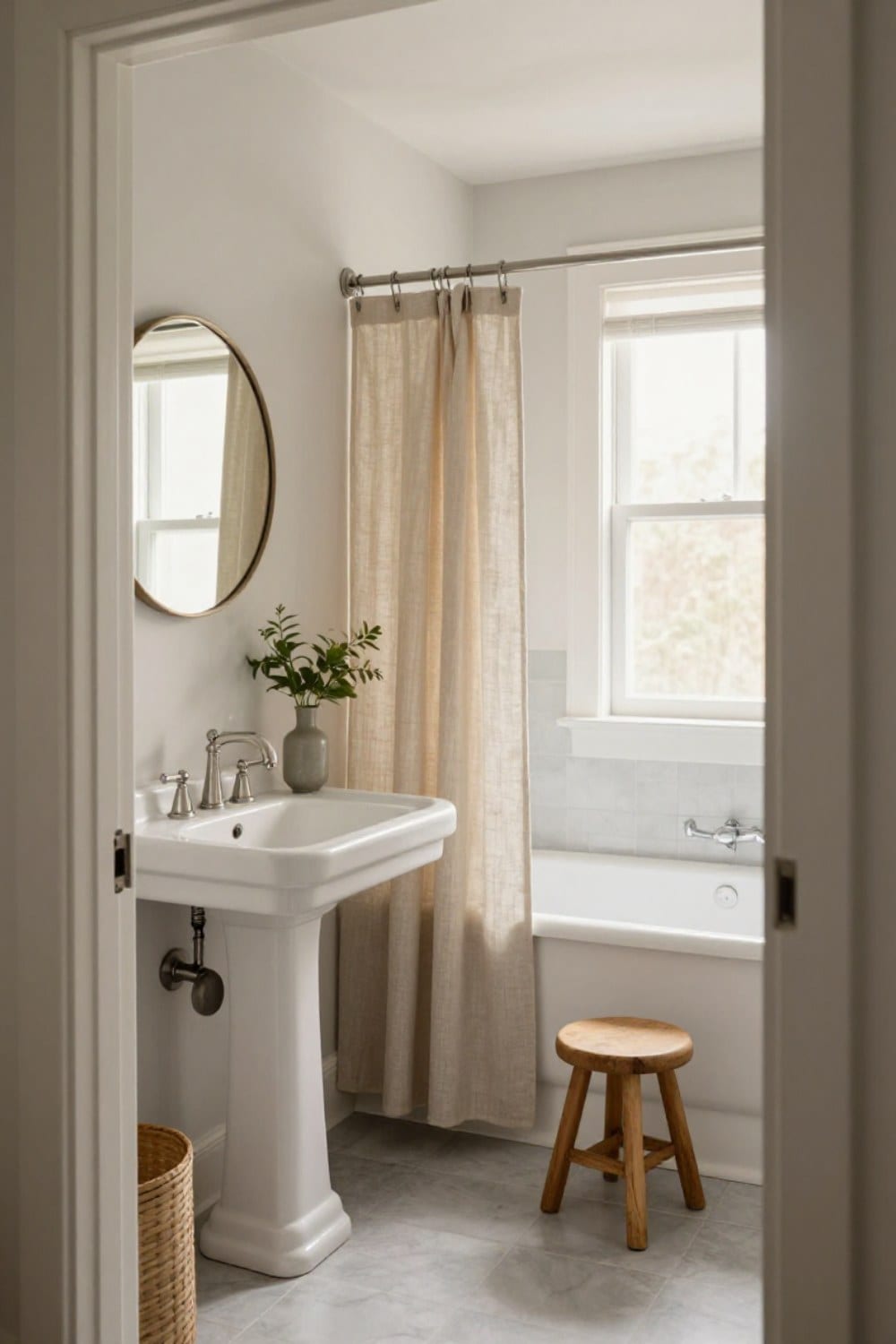
Vintage bathroom decor is what's left to decide once the tile and the paint are settled, and it's the part that tells a visitor if the bathroom is old-house or theme. Same pink tile. Same hex floor. Different finishing pieces, and the room feels completely different.
I got this wrong in our 1928 bathroom. The tile was right and the bones were right. Then I added a rooster-print shower curtain on a rod at the standard height, a wicker basket of faux flowers and a little wooden sign about soaking. For about a year the room looked like a gift shop.
This is the hub for the finishing layer: tub, sink, faucets, lighting, mirror, wallpaper and then the soft things. You'll see what is worth buying new, what is better found secondhand, and where each piece has a longer guide of its own.
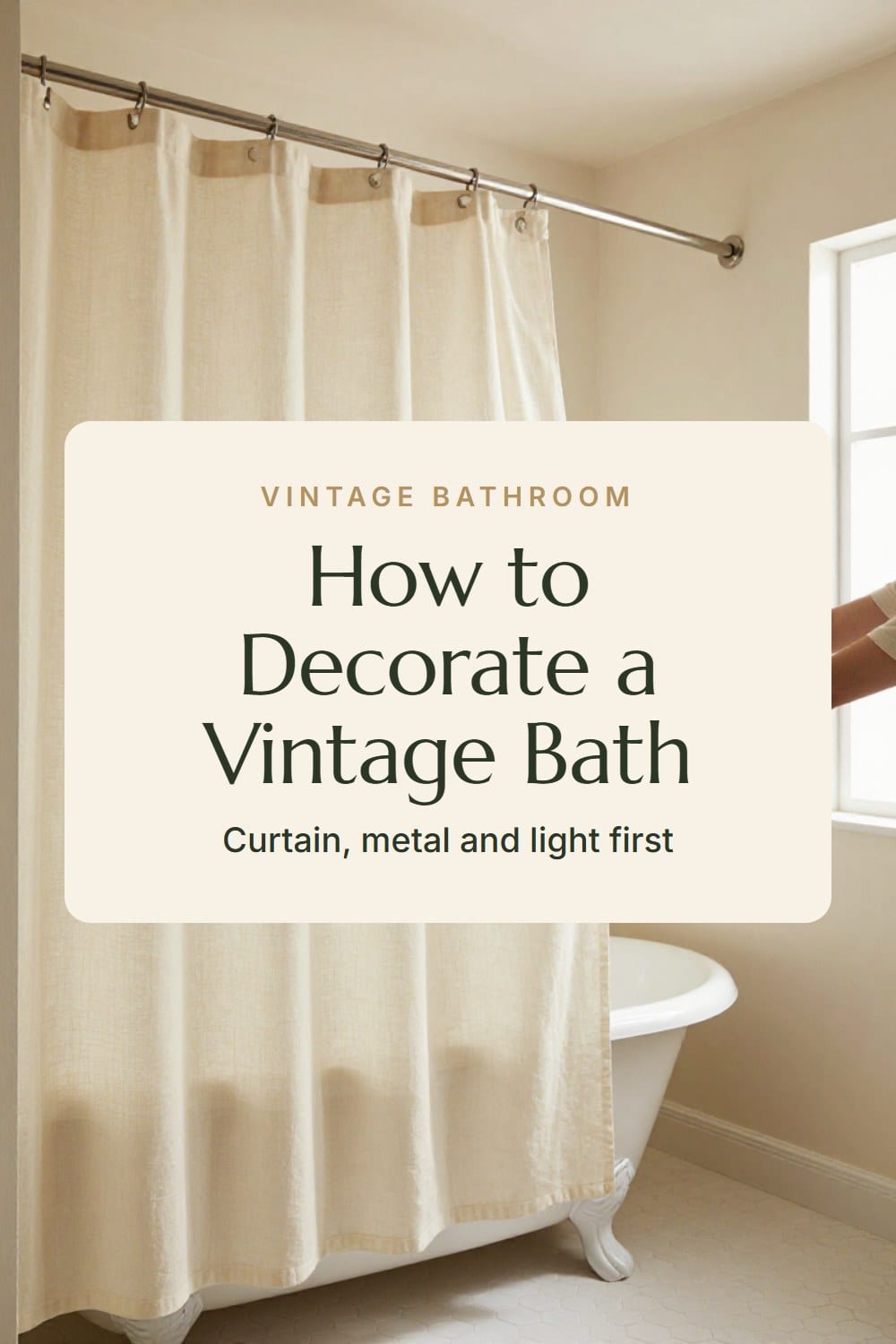
What makes a bathroom feel original instead of themed
A themed bathroom is decorated with things that announce they are old. An original one is furnished with things that were simply made well and kept. The difference shows in three places: the metal, the light and the edit.
Metal first. In a house from the 1920s to the 1950s, nearly everything you touched was nickel, chrome or brass, and it was all one family. Light second. Those rooms had a ceiling fixture and a pair of glass sconces, never a row of spotlights. The edit last. Nobody in 1935 owned a shelf of bathroom signs.
If you want the whole-room version, how to make a bathroom look vintage without gutting it walks through it, and vintage bathroom ideas is the complete guide. Here I'm only dealing with the pieces that finish a room.
Start with the pieces you touch every day
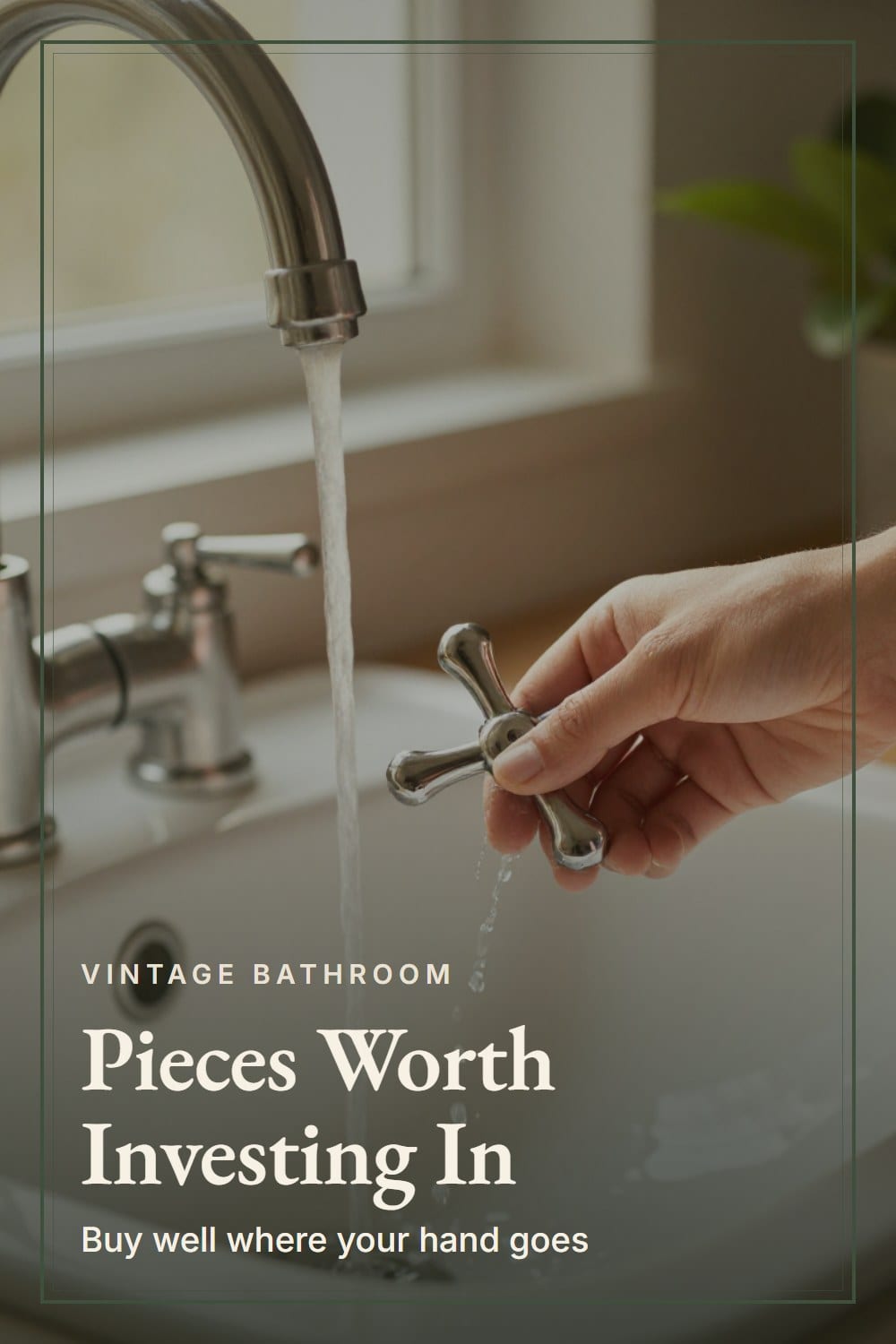
My rule for where to spend is simple. Buy well where your hand goes: the faucet handles, the sink, the tub, the light switch plate, the towel bar. You feel those every single day, and thin, plated versions announce themselves in the weight and the finish.
Then be relaxed about everything you only look at. A mirror, a stool and a framed print can come from an estate sale, an architectural salvage yard or your grandmother's attic, and they will look better for having a past. I'd put the money into a solid brass faucet before I'd put it into a new mirror, every time.
Old finds come with one warning. Painted furniture and frames from before the late 1970s can carry lead paint, so have an old piece tested before you sand it or strip it. Wiping it down and leaving the finish alone is the safe route.
The tub and the sink set the tone
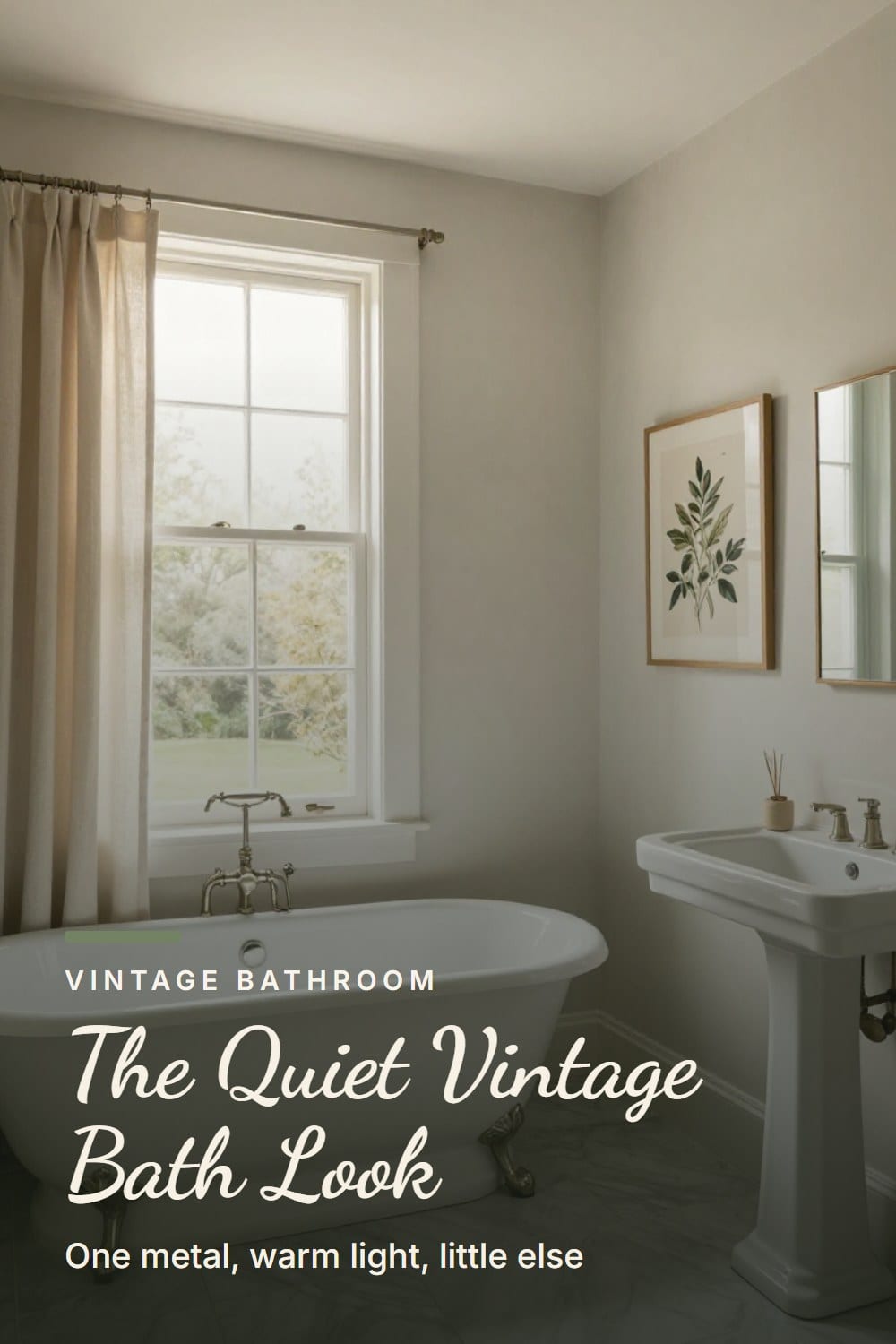
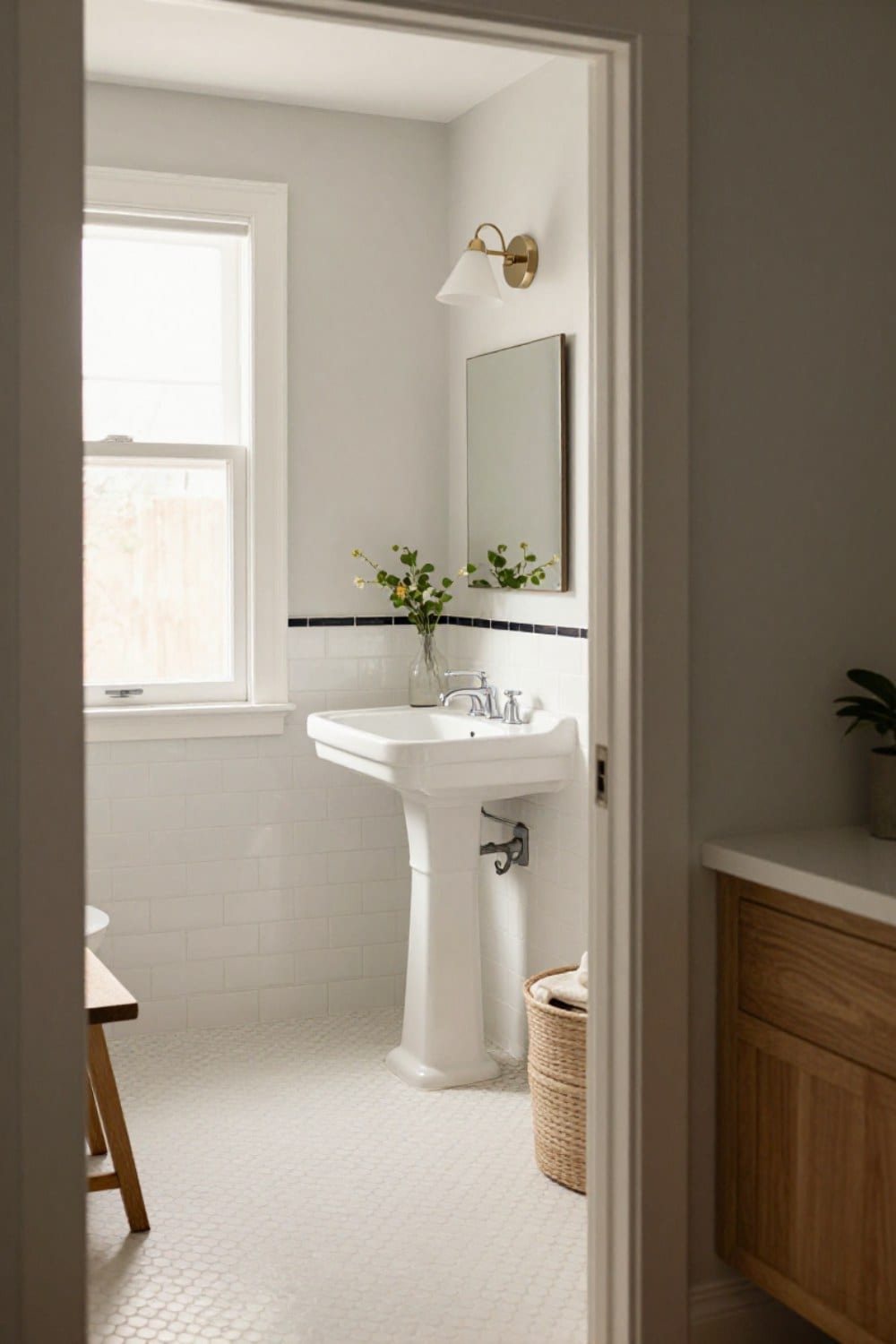
A freestanding tub on claw feet reads as old before anything else in the room does. A white pedestal sink with its slim column does the same job on the other wall. If you have either one, the rest of this list is easy. If you don't, these two are where the investment goes first.
Cast iron tubs are heavy, roughly 250 to 400 pounds empty and far more with water and a person in it. Have a contractor look at the floor framing before you commit. Placement, floors and the shower question all get their own page in clawfoot tub bathroom ideas.
The pedestal sink has one drawback, which is that it has no storage. I solved it with a recessed shelf and a small wall cabinet, and pedestal sink bathroom storage ideas shows how to keep the old-house look while you do it. If you'd rather have a cabinet beneath the basin, vintage bathroom vanity ideas covers converted dressers, washstands and console sinks.
If your tub's enamel is chipped or you're thinking about refinishing it, have the old coating tested before anyone sands. Some vintage glazes and enamels contain lead.
Faucets and lighting are the jewelry
Think of the faucet as the one piece of jewelry in the room. Plain cross handles on a gooseneck or bridge spout look right in nearly any house built before 1960. Solid brass and nickel finish well and can be repaired, which most newer plated fixtures cannot.
Finish matters more than style. Unlacquered brass darkens and develops a soft patina with use, and some people love that and some find it too much. Polished nickel stays quiet and warm. Pick one and carry it to the towel bar, the switch plate, the cabinet pulls and the sconces. Cross handle faucets and unlacquered brass explains how each ages.
Lighting does as much for the mood. A pair of milk glass sconces flanking the mirror, and a schoolhouse globe overhead, are what the room probably had to begin with. Use a bulb at 2700K with a CRI of 90 or better, so skin and tile both look warm and true.
A mirror or medicine cabinet that looks like it was always there
The mirror is where secondhand shines. An oval or arched mirror in an aged wood or plaster frame, hung with its center around 60 inches from the floor, looks right immediately. A little foxing, those soft dark freckles in the silvering, is a feature, not a flaw.
If you have a wall with studs and some patience, a recessed medicine cabinet is the other classic. The opening usually sits between two studs, about 14 inches wide, so it disappears into the wall. It hides the toothbrushes and the clutter, which means you can leave the shelves above clean.
Hang the mirror a little lower than you think you should. I put ours at standard height first and every guest shorter than six feet looked slightly cut off. We lowered it two inches and it felt like a different room.
Where wallpaper works in a bathroom
Wallpaper is the quickest way to add a hundred years of character, and also the quickest way to learn about steam. Use it on the walls farthest from the tub and shower. A small repeat in a botanical or a stripe is the safe choice, and a vinyl-coated paper copes best in a bath.
Run the fan during every shower and for about 20 minutes after. Without that, any paper will start lifting at the seams within a season. The full guide, including the primer and the paste, is vintage bathroom wallpaper ideas.
A word of caution on old walls. If the plaster has older paper layers, test before you scrape. Some old joint compounds and wall coatings contain asbestos or lead, and demolition is when it gets airborne.
The soft layer: a high curtain, good towels and a runner
This is the part that changes the room's temperature, and it's also the part people do in the wrong order. Start with the shower curtain.
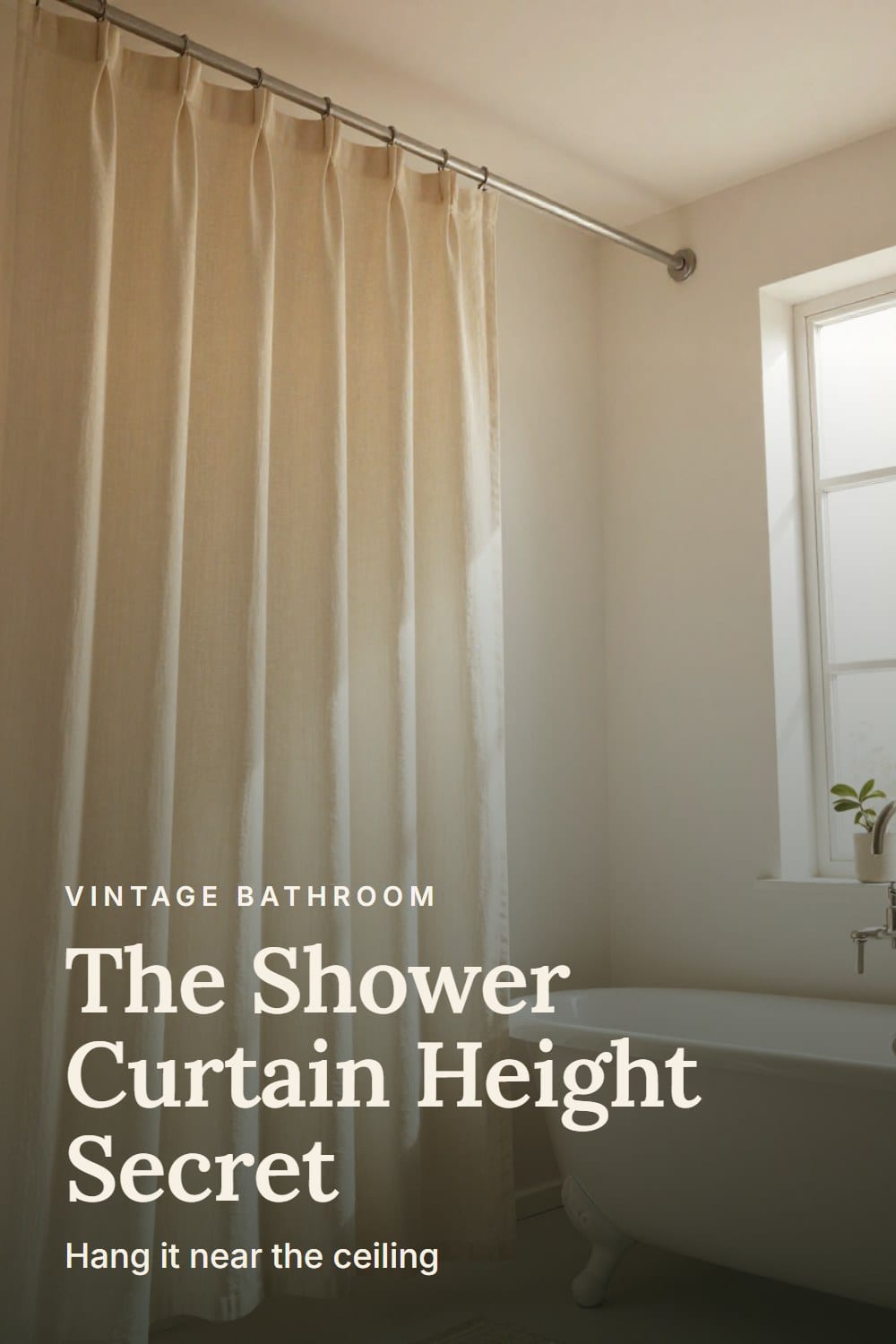
Hang the rod about 3 inches below an 8-foot ceiling, then use a 96-inch curtain and trim the hem so it clears the floor by half an inch. The fabric draws your eye up and makes the bathroom look taller and older. A standard rod at 72 inches does the opposite.
Choose washable linen or heavy cotton in cream, white or a quiet stripe, with a separate liner. Fabric near water has to be washed, so pick something that can go in the machine. A curtain you can't wash will mildew, and a mildewed curtain is not a vintage look.
Towels are the second soft layer. Waffle weave and linen, in white or cream, look right on a nickel bar. A bath towel is usually about 27 by 52 inches and a hand towel about 16 by 30. Roll one or two on a shelf and fold the rest over the bar. Skip matching sets with an embroidered edge.
Last, a runner. A flatweave cotton or wool in a stripe or a faded pattern, around 2 by 4 feet, softens a hard floor and looks like it has been there for decades. Put a grip pad underneath, lift it on damp days and let it dry fully so the floor stays healthy.
Small things: a stool, a print and a glass jar
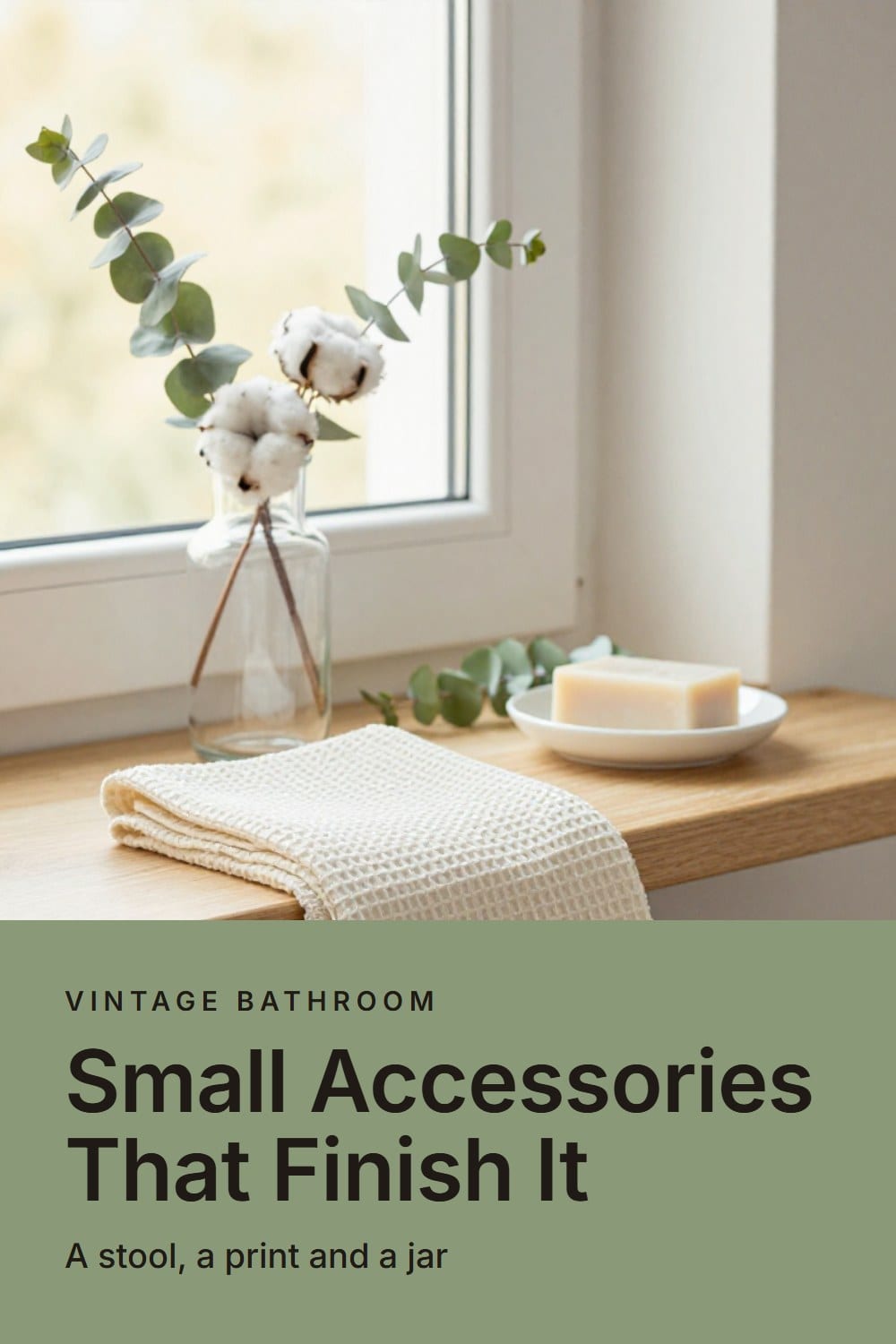
A small wood stool beside the tub holds a folded towel and a bar of soap on a dish. Oak and pine are the usual, about 14 to 18 inches high. A coat of wax or oil keeps water rings from setting in.
One framed botanical or architectural print, behind glass, on the wall farthest from the tub. One. The mat should be white or cream and the frame plain wood or gilt. It gives the eye a place to rest, and it costs very little attention.
And one apothecary jar. Clear glass with a lid, filled with cotton balls or bath salts, beside the sink. It's the kind of object that looks like it came with the house. Everything else in a vintage bathroom can be quieter than you think.
Twelve finishing pieces, in the order I'd buy them
- The tub. Freestanding on claw feet, if the floor can carry it.
- The sink. A pedestal, a console or a converted washstand.
- The faucet. Cross handles in solid brass or nickel.
- The light. Milk glass sconces and a schoolhouse globe at 2700K.
- The mirror. Oval or arched, hung low, found secondhand.
- The shower curtain. Linen, 96 inches long, rod set high.
- The towel bar and hooks. The same metal as the faucet.
- The wallpaper. A small repeat on the dry wall only.
- The runner. A washable flatweave, about 2 by 4 feet.
- The stool. Oak or pine, waxed against water rings.
- The print. One botanical, behind glass.
- The jar. Clear glass, with a lid.
What to buy new and what to find secondhand
Fixtures that carry water or current should usually be new, or properly restored. Old plumbing parts are often worn inside, and an old electrical cord is a risk. That applies to the faucet, the supply lines and any lamp. The fixtures you can salvage safely are the heavy, passive ones: a cast iron tub, a porcelain sink, a mirror.
Where to spend, where to scavenge
A solid brass or nickel cross handle faucet
You turn it every day. Solid metal wears gracefully, can be repaired and keeps the room looking original for decades.
A secondhand mirror, stool and framed print
They carry no water or current, they look better with age, and a flea market or salvage yard turns up good ones. Wipe them down and leave old finishes alone.
Mistakes that make a vintage bath look like a theme
- Mixing metals. Chrome faucet, brass towel bar and black sconces make the room look assembled.
- Hanging the curtain at standard height. The room reads low and new.
- Using cool white bulbs. Anything over 3000K makes old tile look clinical.
- Crowding a shelf with signs and baskets. Edit down to a stool, a print and a jar.
- Skipping the fan. Steam ruins paper, paint and wood faster than age ever will.
If the room already has its tile and floor, the rest of the planning lives in sibling guides. Vintage bathroom tile ideas and vintage bathroom paint colors cover the surfaces, and retro bathroom styles sorts the decades.
Find the style that suits your house
The pieces above work across decades, but the details lean differently. For a house built in the 1920s, polished nickel and white hex are the anchor, and 1920s bathroom ideas goes deep on it. A 1950s house wants softer pastels, and 1950s bathroom ideas keeps them grown-up.
If you like florals and skirted sinks, look at grandmillennial bathroom ideas. If you want darker walls and old brass, moody vintage bathroom ideas has it. Two more directions are Art Deco bathroom ideas and mid century bathroom ideas.
Starting from a color you inherited? Pink tile, green tile and black and white tile each have their own pairing guide, and checkerboard floors and hexagon versus penny tile cover the floor underneath.
A checklist before you buy anything
- Choose one metal family and keep it everywhere.
- Put a 2700K bulb behind milk glass.
- Set the shower curtain rod about 3 inches below the ceiling.
- Buy the faucet new and the mirror secondhand.
- Check any fixture over water for a damp or wet rating.
- Test old paint or enamel before sanding.
- Use a washable curtain, towels and runner.
- Edit the small things down to a stool, a print and a jar.
Buy the faucet first and live with it for a month. The rest of the room tends to tell you what it needs. Buy fewer, better pieces, and keep them for years.
The Vintage Bathroom Finishing Planner
The printable is being finished. It will live here, free, with no sign-up wall.
Frequently asked
What decor makes a bathroom look vintage?
Should vintage bathroom fixtures be new or antique?
How high should a vintage shower curtain hang?
Can I use wallpaper in an old bathroom?
Sarah Whitmore
she keeps the teak, she oils it in spring
Sarah has furnished the same porch three times and finally stopped. She writes about what actually survives a decade outdoors — which wood silvers, which fabric fades, and which inexpensive piece quietly reads the same as the expensive one.
SarahMore from this corner
 Vintage Bathroom
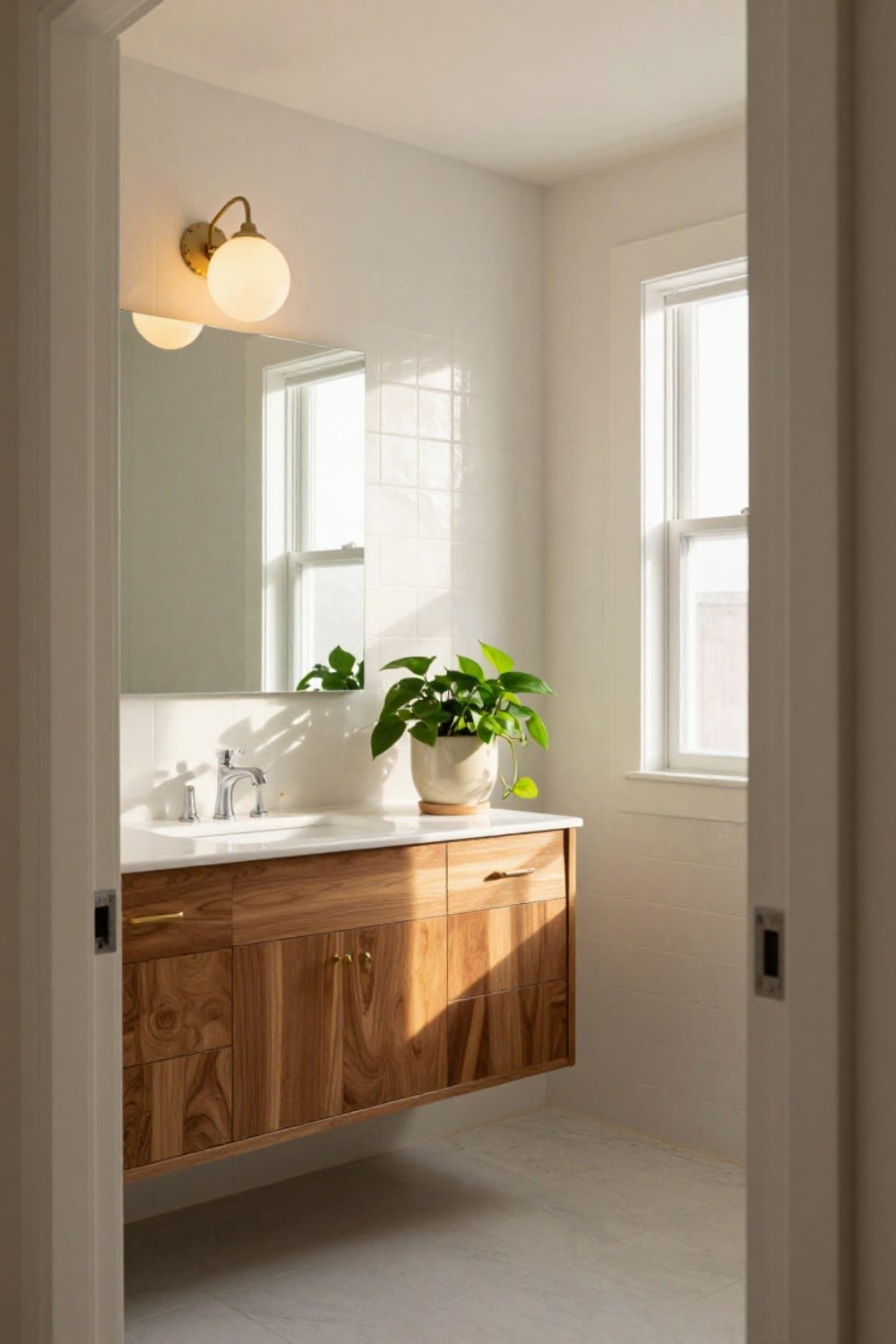
Mid Century Bathroom Ideas for a House Built in the 1950s and 60s
Mid century bathroom ideas for a ranch or split-level: the floating vanity, square and penny tile, globe lights, a wide mirror, and which original features to keep and update around.
Oct 31, 2026 · 12 min read
 Vintage Bathroom
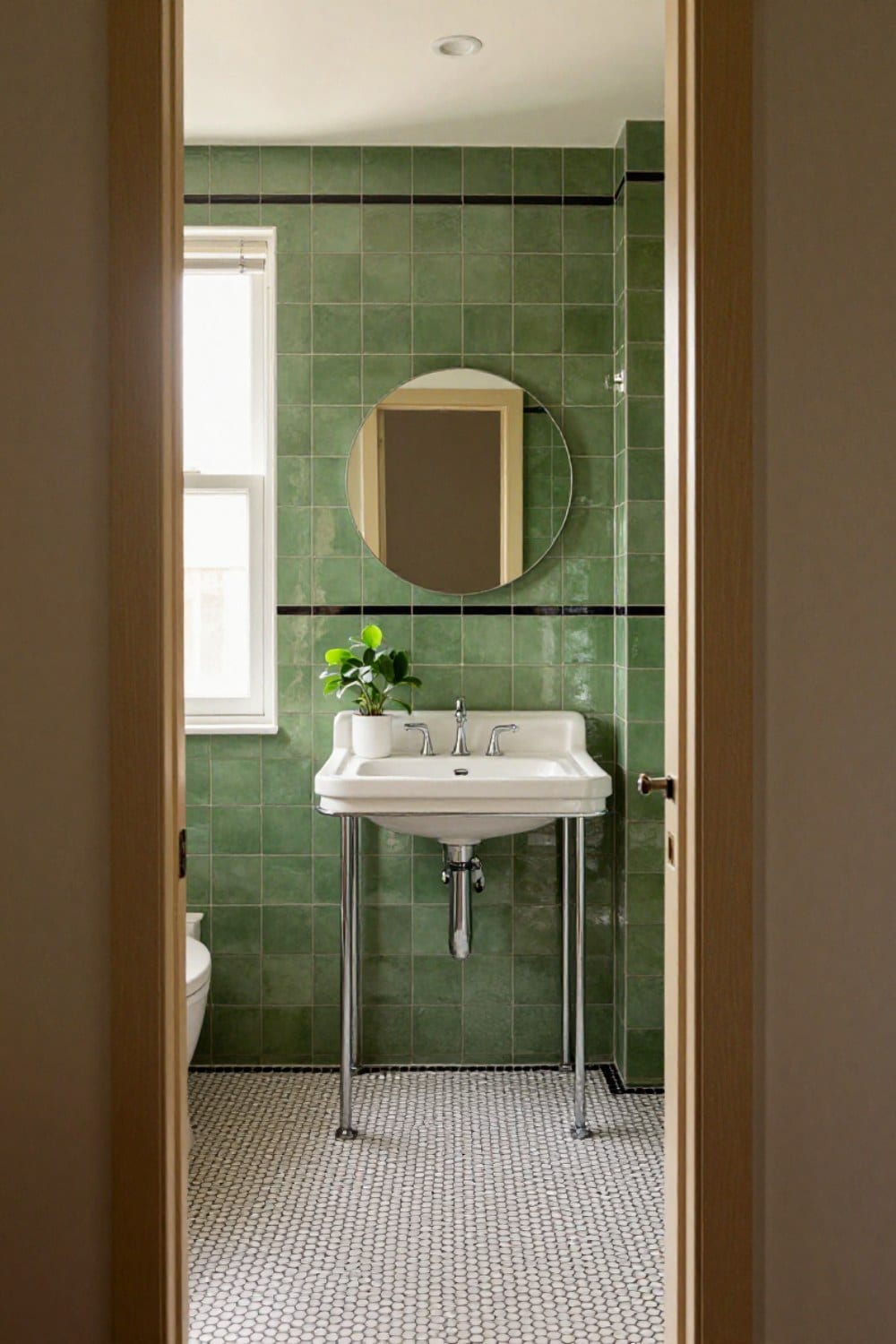
Art Deco Bathroom Ideas That Feel Classic, Not Costume
Art deco bathroom ideas scaled for a real house: the one-statement rule, black and white or green and black tile with a border, round mirrors, frosted sconces, a console sink on chrome legs, and the mistakes that make it look like a set.
Oct 31, 2026 · 11 min read
 Vintage Bathroom
 Tile Ideas: The Patterns and Colors That Never Date
Vintage bathroom tile ideas that still look right decades on: the hex, penny, subway and checkerboard patterns, the glaze colors worth keeping, the grout rule that matters most, and how to decide between repair and reproduction.
Oct 29, 2026 · 12 min read