Retro Bathroom Styles: A Decade-by-Decade Guide From the 1920s to the 1960s
Retro bathroom styles from the 1920s to the early 1960s: the three signatures that make each decade read authentic, what to keep if your house already has it, how to pick your era and how to blend two without it looking like a set.

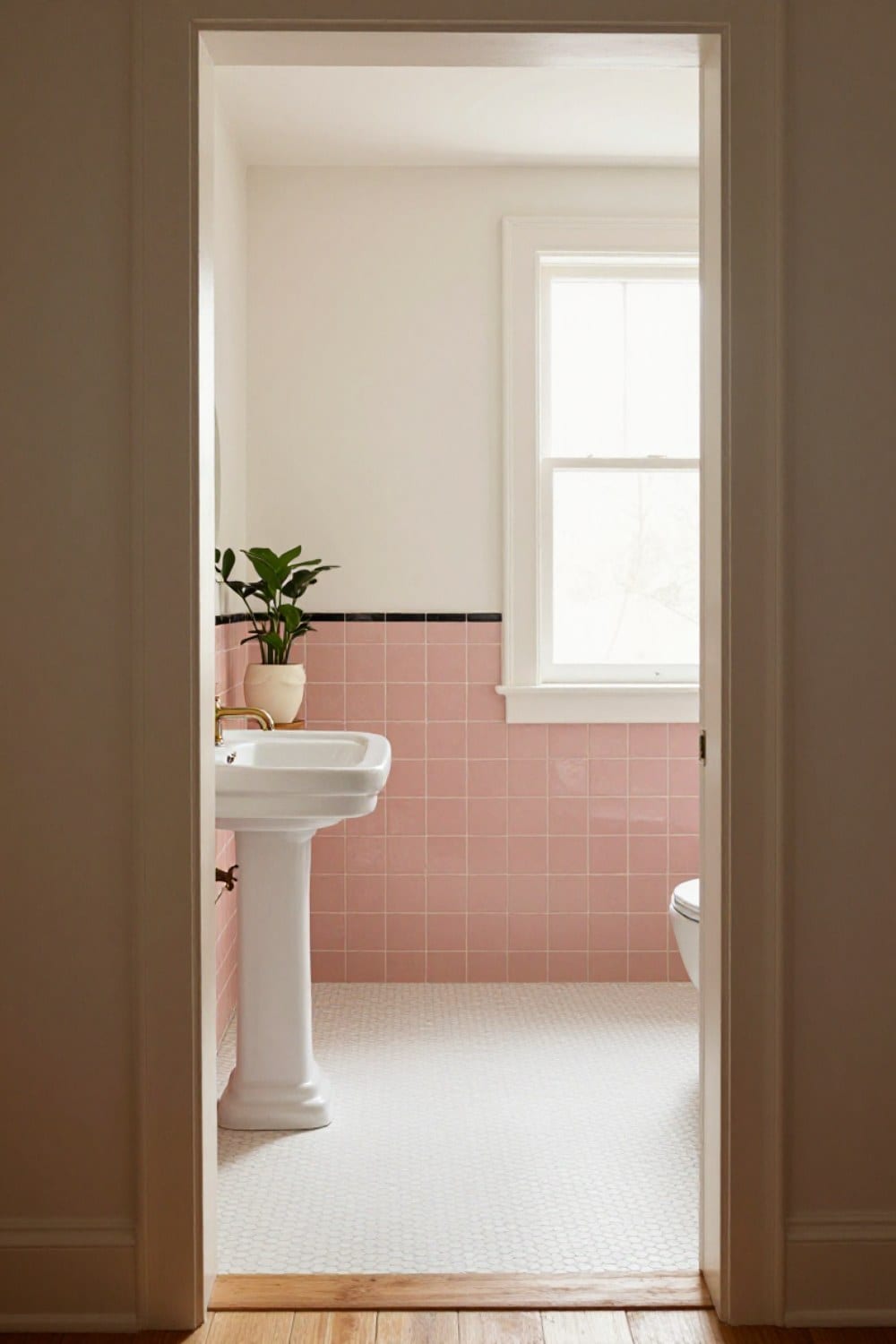
Retro bathroom styles are easy to love in a photo and surprisingly hard to name in a real house. Pink tile here, a black and white floor there, a nickel tap that looks older than anything else in the room. Which decade is which? And which one belongs to yours?
I've lived with a 1928 bathroom for six years, original white hex floor and all. For the first twelve months I couldn't have told you whether my wall tile was from the 1920s or the 1940s. I just knew I liked it and was afraid to touch it.
Then I started reading the clues: the size of the tile, the shape of the tap handle, the trim line along the wall. Once you know a decade's signatures, an old bathroom stops being a mystery and starts being a plan.
This is the hub for the whole run, from the 1920s through the early 1960s. You'll get three signatures for each decade, what to keep if your house already has it, how to choose an era, and how to blend two without making a set. Each section points to a longer guide when you want the detail.
Which retro bathroom styles are worth living with
Retro is a loose word. I use it for a bathroom that carries the look of its decade in its permanent pieces: the tile, the tub, the sink and the metal. Towels and art come and go. Glaze doesn't.
I'm stopping at the early 1960s on purpose. Shag, avocado suites and harvest gold are a different conversation, and not one we'll have here. All five decades were built to last, which is why so much of it still stands.
1920s bathrooms are white hex, pedestals and nickel
The 1920s bathroom was built to look clean, and it still does. White almost everywhere, small tiles on the floor, a slightly austere feel. It's the decade I'd call the most forgiving to live with, because white goes with whatever you already own.
Three signatures make a 1920s bathroom read authentic.
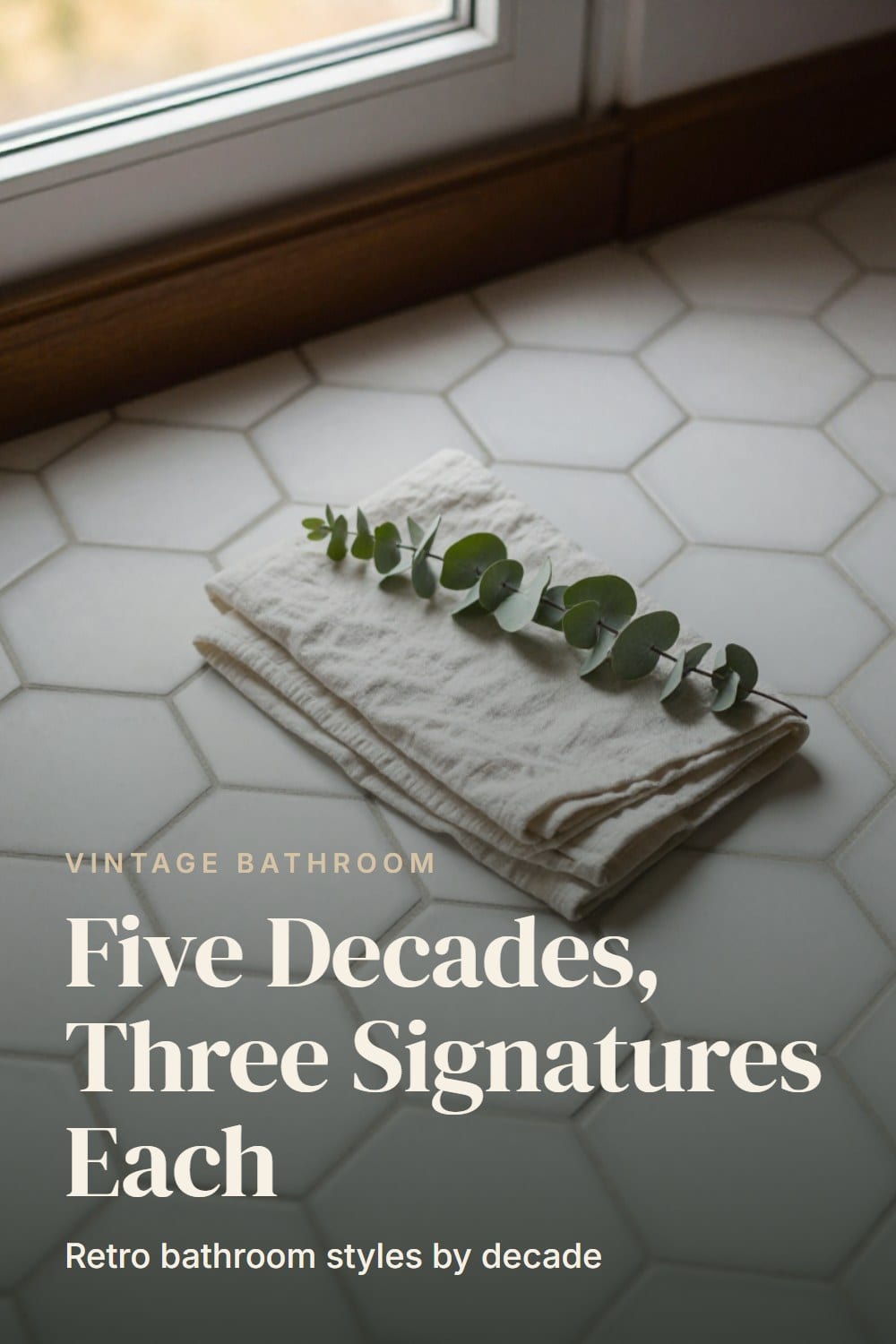
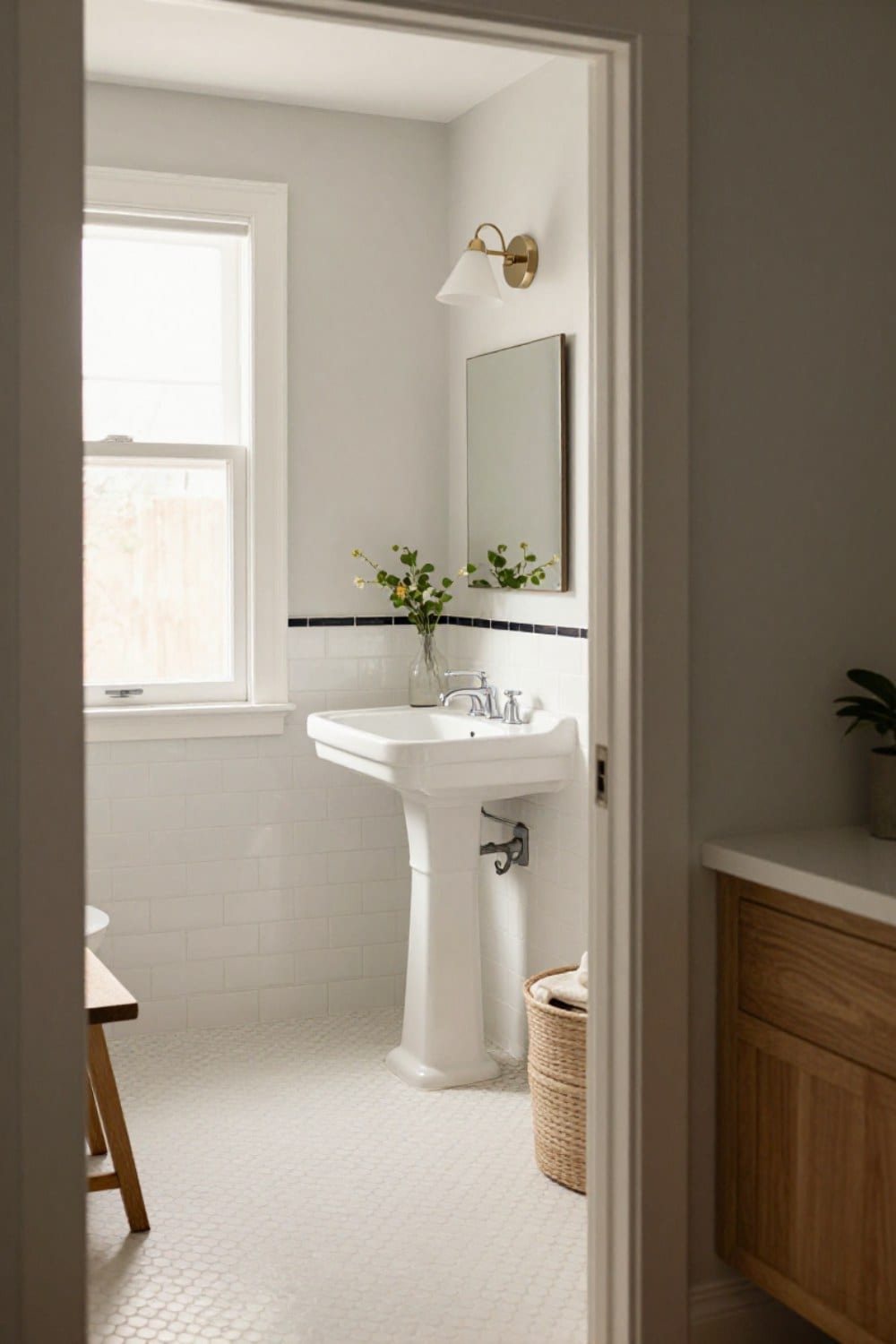
- A white hex or basketweave floor. Small mosaic tile, usually 3/4 or 1 inch across, often with a thin black border line. The grout lines are tight and soft gray.
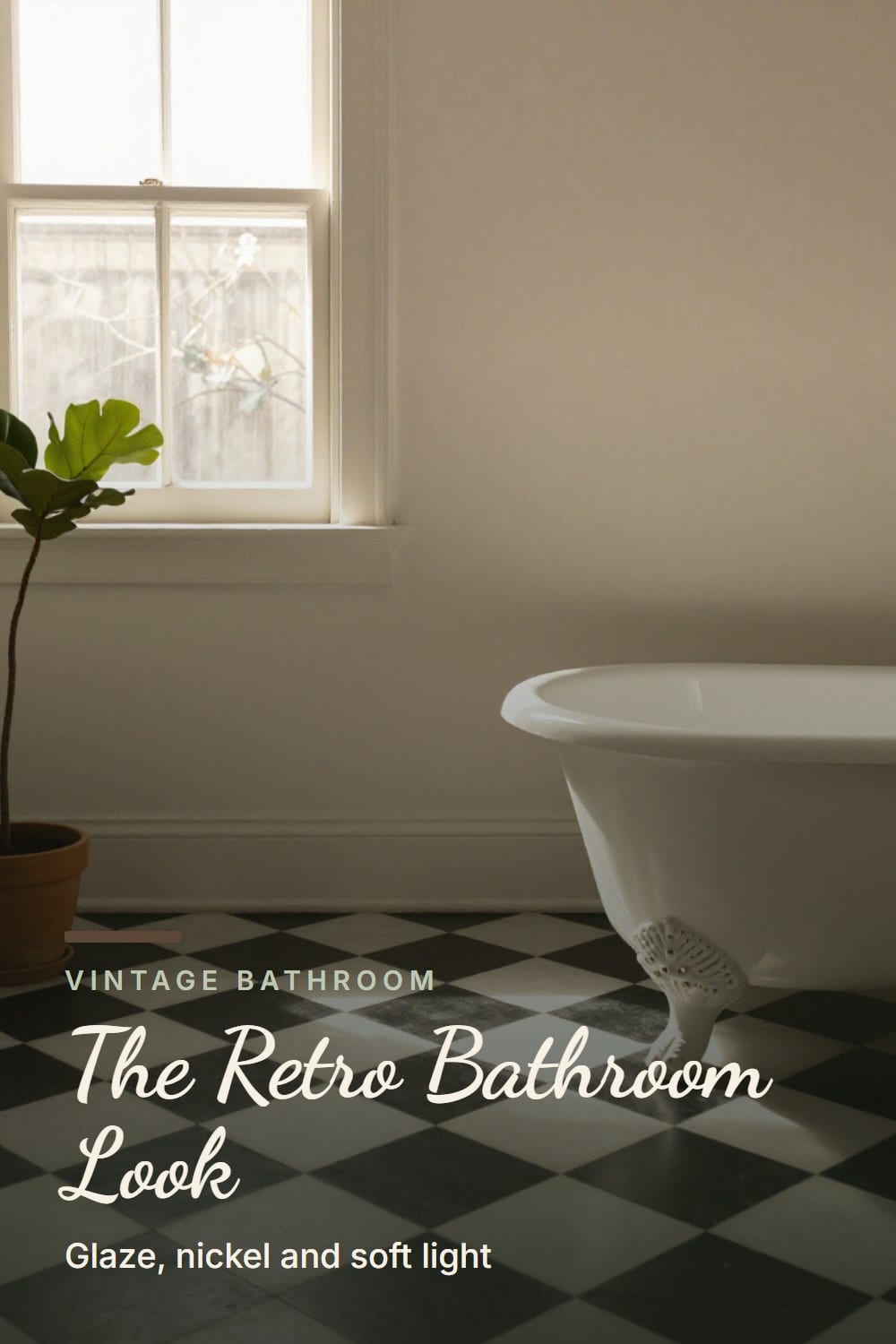
- A pedestal sink and a clawfoot tub. The sink stands on one leg and the tub on four feet, so the floor and wall show all the way around.
- Polished nickel with cross handles. The metal has a warm, slightly soft shine, gentler than modern chrome.
If your house has these, keep all of them and clean them well. White subway tile, 3x6 inches, to about shoulder height is the usual partner on the walls. I painted the wall above mine a stark, cool white at first, and it made the old tile look yellow and tired. A warmer white fixed it in an afternoon.
The full guide is 1920s bathroom ideas. For floors alone, hexagon vs penny tile will tell you which small tile you have, and cross handle faucets and unlacquered brass covers the taps.
1930s bathrooms lean on black, white and colored glass
By the 1930s the bathroom developed a sense of humor. Art Deco and Streamline Moderne brought geometry, contrast and color. Fixtures that had been white began arriving in pastels, a trend that started at the very end of the 1920s and caught on fast.
- Black and white contrast. A black trim band against white wall tile, or a checkerboard floor, cut with a crisp edge.
- Colored glass and a glossy finish. Pigmented structural glass panels and glass block gave walls a polished, almost lacquered look.
- Chrome and rounded corners. Curved tub profiles and rounded fixtures replaced the squarer shapes of the decade before.
Keep the black and white. It's the easiest combination of any decade to live with, and it looks as sharp now as it did then. If you have one, warm the room around it with wood and a soft light so it doesn't feel like a diner.
Art deco bathroom ideas keeps the look classic instead of theatrical. How to decorate a black and white tile bathroom shows how to soften it, and checkerboard bathroom floor ideas covers tile size and layout.
1940s bathrooms bring in tile wainscot and the first pastels
The 1940s are the quiet decade. Materials were tight during the war years and houses stayed modest, so the bathrooms are practical, tiled and tidy. Soft color crept into the tile once building picked up again.
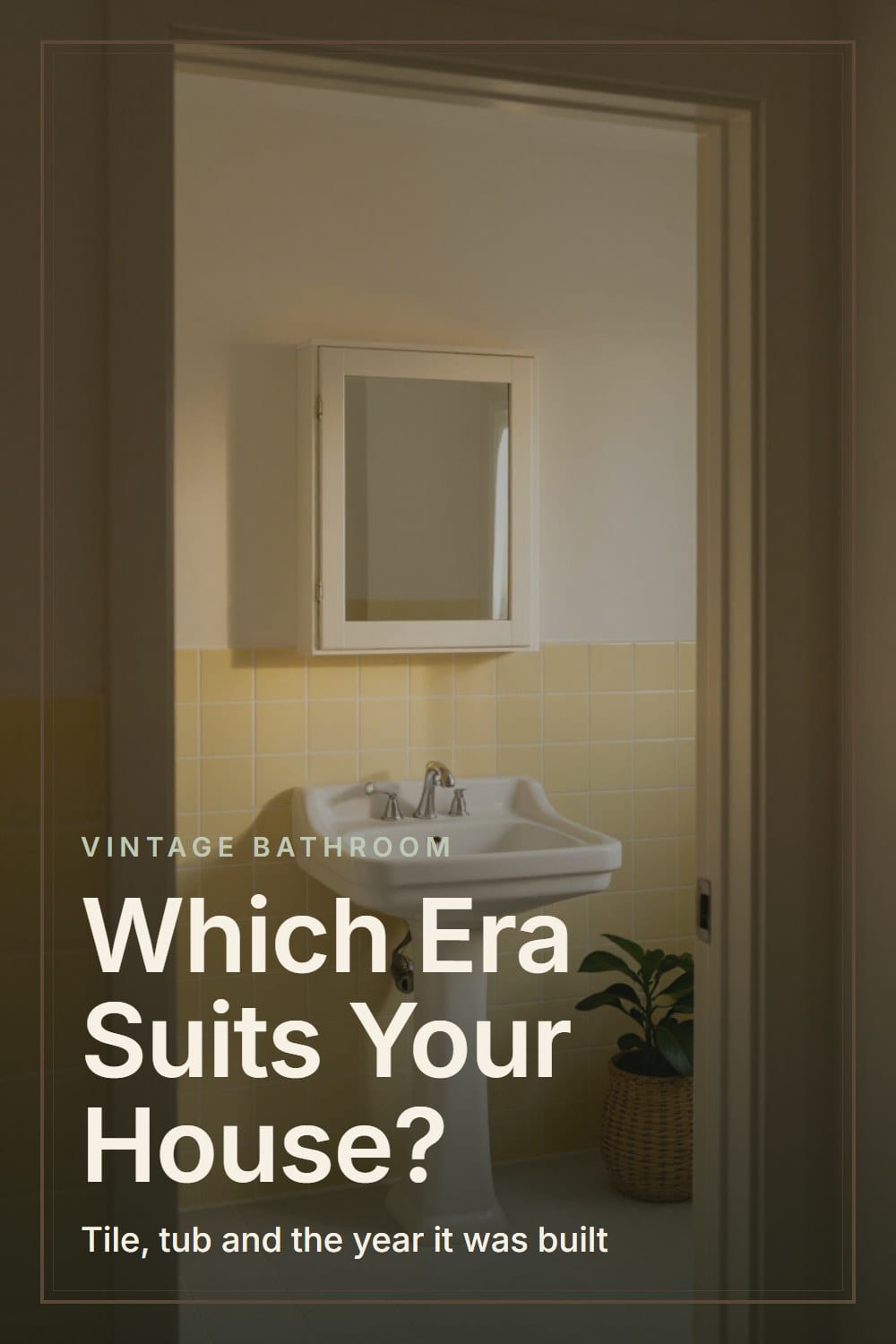
- Tile wainscot with a cap. Glossy 4 1/4 inch square tile running about 4 feet up the wall, finished with a trim piece, and plaster or paint above.
- The first pastels. Soft yellow, green and blue in a creamy glaze, never loud.
- The recessed medicine cabinet. A mirrored door set into the wall between the studs, instead of a framed mirror hung over the sink.
Keep the wainscot and the cabinet. They do the work of a mirror frame and a shelf without taking an inch of floor. My aunt had a 1946 bathroom with pale yellow tile to the height of a chair rail, and I wasn't old enough to appreciate it. I've been chasing that room ever since.
If the wall above the tile is the wrong color, fix that first with vintage bathroom paint colors. Vintage bathroom tile ideas covers patterns that hold up.
1950s bathrooms went pink, mint, yellow and powder blue
This is the decade everyone pictures. Whole neighborhoods went up fast after the war, and the bathroom finally got its color: tub, toilet, sink and tile in one shade, usually finished with a contrasting trim band.
Pink became wildly popular, helped along by Mamie Eisenhower's fondness for it. Save the Pink Bathrooms, started by Pam Kueber of Retro Renovation, is the reason many of them still stand.
- A one-color suite. Tub, sink and toilet matched, with 4 1/4 inch square tile in the same family.
- The contrasting trim band. A strip of black, charcoal or deep green framing the top of the tile.
- A gentle, milky glaze. Pink, mint, butter yellow and powder blue, glossy but soft, never neon.
I made the white-wall mistake here too. In a house we owned before this one, I painted the wall above a mint tile stark white and the tile turned green-gray overnight. A warm, creamy white brought it back.
Keep the color. Always keep the color. 1950s bathroom ideas has the grown-up version, how to decorate a pink tile bathroom makes the case for the most misunderstood tile of the decade, and green tile bathroom ideas covers the mint.
Early 1960s bathrooms warmed up with wood and globe lights
Around 1960 the bathroom stopped looking like a laboratory. Wood came in, color settled down, and the sink moved onto a cabinet.
- A wood vanity. Walnut or teak veneer on slim tapered legs, or a floating box, with a ceramic or laminate top.
- Globe lights. Round white glass globes on a bar over the mirror, or a single pendant.
- Quieter color. Muted blue, tan and soft green tile, sometimes as a mosaic of tiny squares.
This is the best decade for blending, because the wood does the connecting. Keep the vanity and the globes. Both make a cold tile room feel lived in. Wipe splashes off the wood and don't let water sit.
The long version is mid century bathroom ideas. If the lights are the part you love, vintage bathroom lighting covers sconces, globes and the right bulb.
How to pick the era that matches your house
Start with the year the house was built, then look at its bones. A 1926 foursquare wants hex and nickel. A 1955 ranch wants color and chrome. Fighting the house is how you end up with a bathroom that looks like a set.
Then walk the room and read five clues.
- The floor tile. Tiny mosaic points to the 1920s and 1930s. Larger glossy squares are more typical from the 1940s on.
- The tile height. Waist to shoulder height with a trim cap is typical of the 1920s through the 1940s. Tile that runs to the ceiling is more common as the 1950s arrive.
- The tub. A freestanding clawfoot is the 1920s calling card. A built-in tub in a 5 foot alcove is the usual 1930s and later layout.
- The faucet handles. Cross handles tend to be 1920s and 1930s. Levers and chrome lean toward the 1950s and 1960s.
- The light. A sconce on each side of the mirror is older. A bar of globes above it is early 1960s.
A bathroom is rarely all one decade. Mine has a 1950s medicine cabinet over a 1928 sink. That's fine. Pick the decade of the biggest pieces, the tile and the tub, and let the rest follow.
If you're still unsure, vintage bathroom ideas is the full pillar guide. And if your house has no original anything, how to make a bathroom look vintage without gutting it starts from a newer room.
How to blend two eras without it looking like a set
A set looks bought in one weekend. A blend looks loved for decades.
My rule is one era leads and the second shows up twice. The lead era gets the tile, the tub and the sink. The second gets two pieces, say a 1960s globe light and a wood vanity in a 1930s room. Any more than that and the room starts arguing with itself.
- Blend neighbors. The 1920s with the 1930s, or the 1950s with the early 1960s, sit together easily. A 1920s hex floor with 1960s teak is a bigger reach.
- Choose one metal finish family. Polished nickel and chrome look related. Shiny brass beside them looks like a mistake.
- Repeat one color twice. If the tile is mint, echo it in a glass jar and a hand towel.
- Keep every bulb at 2700K. Warm light ties tile from different decades together, and cool white bulbs pull them apart.
If you like your eras layered with more pattern, grandmillennial bathroom ideas shows how skirted sinks and florals sit with old tile. If you'd rather go dark, moody vintage bathroom ideas works old brass into deep walls.
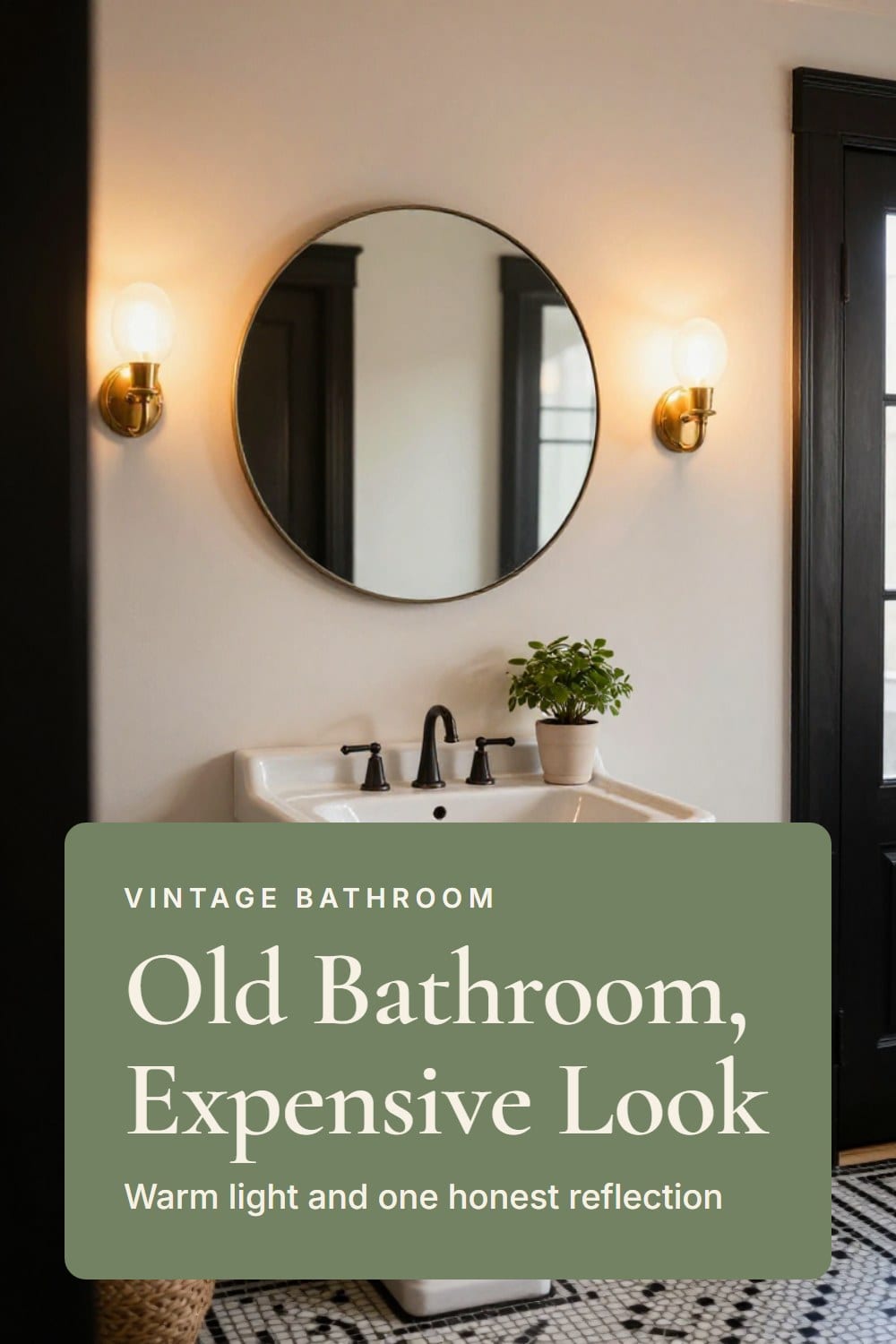
The small pieces win a blend. See vintage bathroom decor and vintage bathroom vanity ideas.
Mistakes that make a retro bathroom look like a theme
I've made most of these. These are the ones that matter.
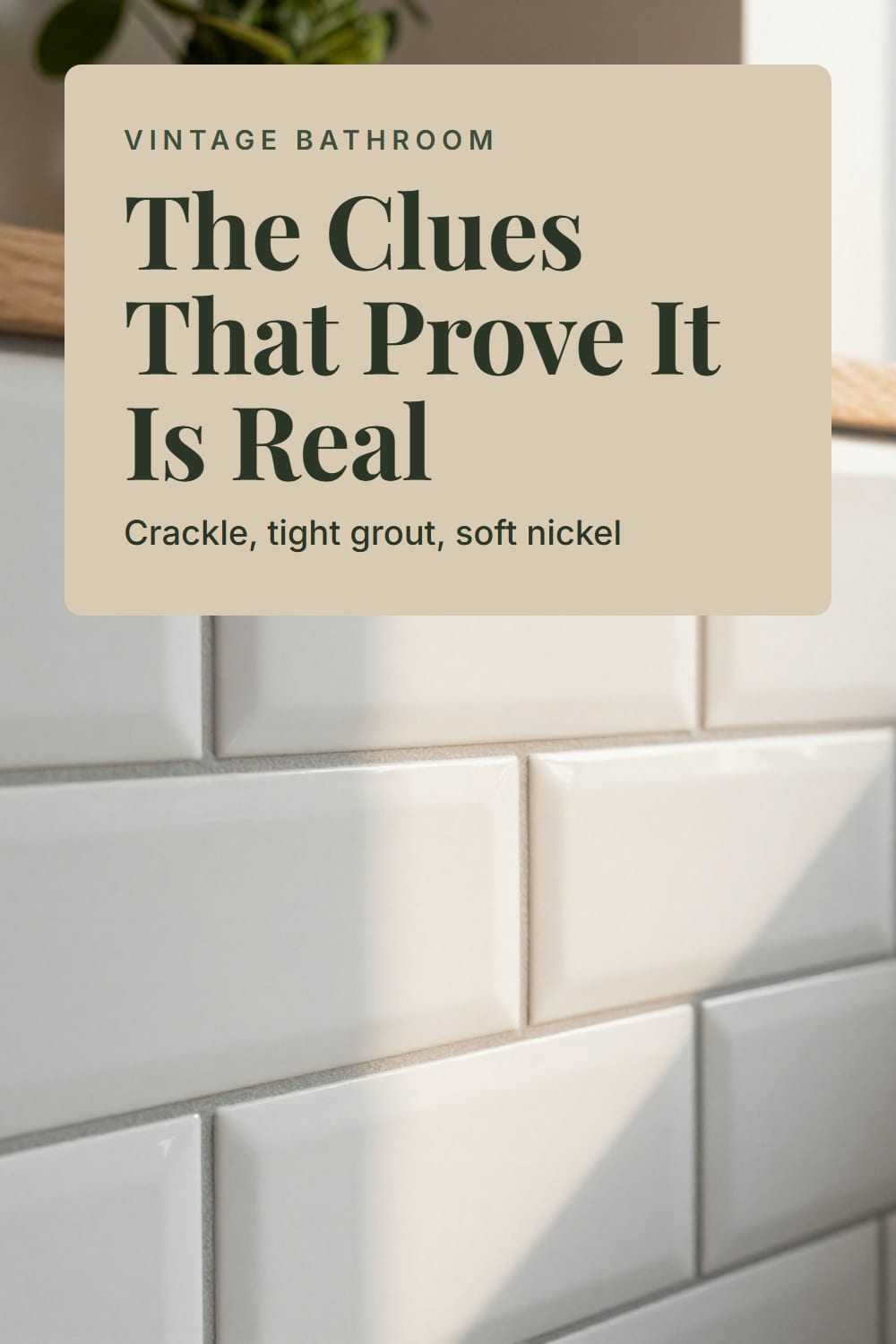
- Tearing out original tile for something that looks old. Real glaze and tight grout lines are very hard to get back once they're gone.
- Painting the wall a cold, stark white. It turns warm tile green-gray or yellow. Choose a warm white, or a color family close to the tile.
- Using cool white bulbs. Light at 4000K and above makes pastel tile look flat. Stay near 2700K.
- Giving every decade equal weight. One era leads. The others are guests.
- Scrubbing with whatever is under the sink. Abrasive powders scratch old glazes, and acids like vinegar can etch marble and unsealed cement grout. Try a hidden spot first.
A seven-point checklist before you commit to an era
- Write down the year your house was built.
- Name the decade of your tile and your tub.
- Let those two pieces decide the lead era.
- Choose one metal finish family and stick to it.
- Put 2700K bulbs in every fixture.
- Settle the wall color family in daylight, at three times of day.
- Have anything you plan to demolish or sand tested first.
My advice is to live in the room for a month before you change a thing. It tells you what it wants. A pedestal sink needs storage, and pedestal sink bathroom storage ideas keeps the old look. Wallpaper can wait, and vintage bathroom wallpaper ideas explains how to make it last in the steam.
The Retro Bathroom Era Finder
The printable is being finished. It will live here, free, with no sign-up wall.
Frequently asked
Which retro bathroom style is easiest to live with?
Can I mix 1950s pink tile with 1920s fixtures?
How do I tell what decade my bathroom is from?
Should I replace cracked original tile?
Sarah Whitmore
she keeps the teak, she oils it in spring
Sarah has furnished the same porch three times and finally stopped. She writes about what actually survives a decade outdoors — which wood silvers, which fabric fades, and which inexpensive piece quietly reads the same as the expensive one.
SarahMore from this corner
 Vintage Bathroom
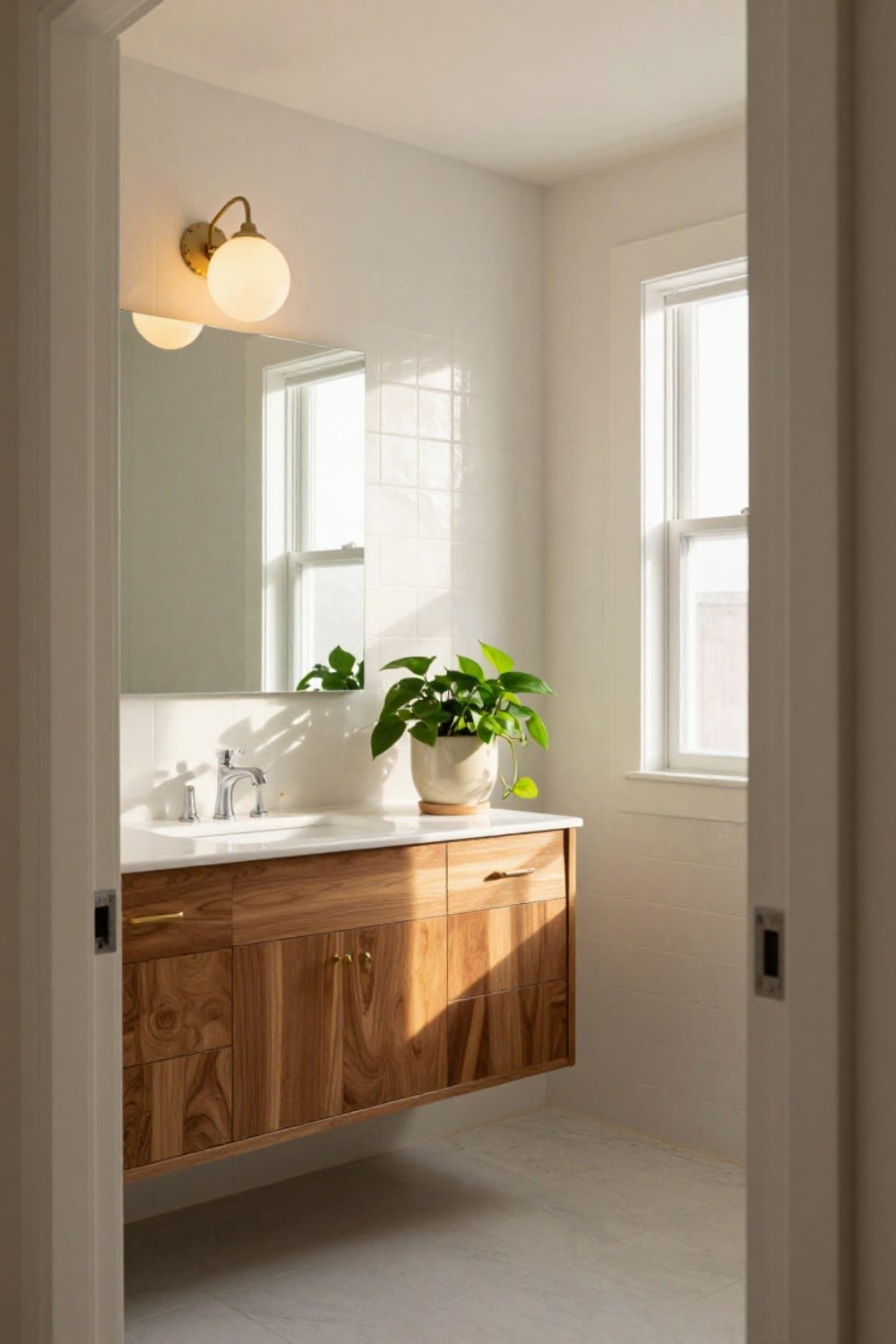
Mid Century Bathroom Ideas for a House Built in the 1950s and 60s
Mid century bathroom ideas for a ranch or split-level: the floating vanity, square and penny tile, globe lights, a wide mirror, and which original features to keep and update around.
Oct 31, 2026 · 12 min read
 Vintage Bathroom
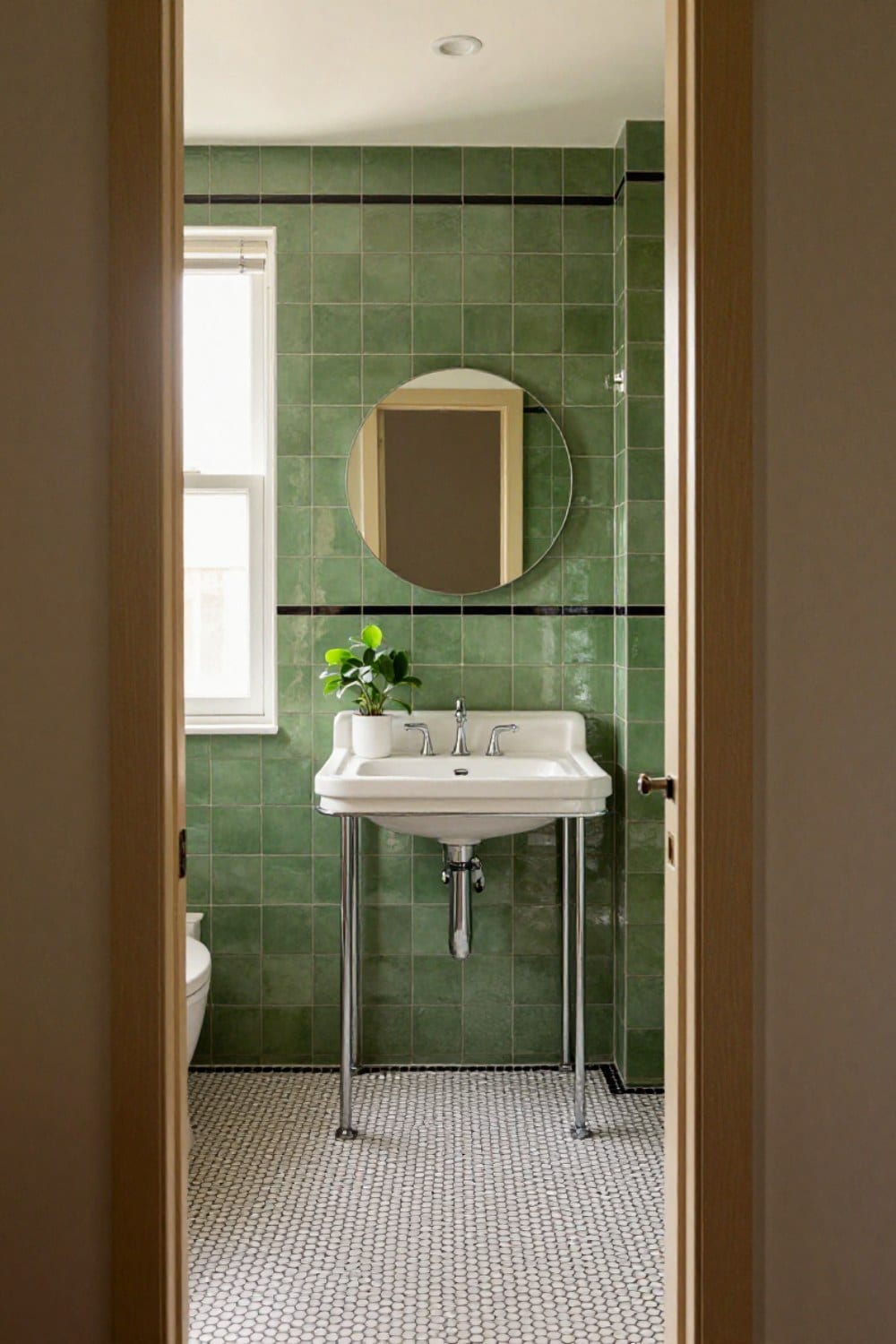
Art Deco Bathroom Ideas That Feel Classic, Not Costume
Art deco bathroom ideas scaled for a real house: the one-statement rule, black and white or green and black tile with a border, round mirrors, frosted sconces, a console sink on chrome legs, and the mistakes that make it look like a set.
Oct 31, 2026 · 11 min read
 Vintage Bathroom
 Tile Ideas: The Patterns and Colors That Never Date
Vintage bathroom tile ideas that still look right decades on: the hex, penny, subway and checkerboard patterns, the glaze colors worth keeping, the grout rule that matters most, and how to decide between repair and reproduction.
Oct 29, 2026 · 12 min read