Green Tile Bathroom Ideas: Mint, Sage and Deep Bottle Green
Green tile bathroom ideas for an old-house bath: how to style vintage mint and seafoam, why sage likes wood, when deep bottle green earns its place, and the grout, metals and wall colors that make each one look expensive.

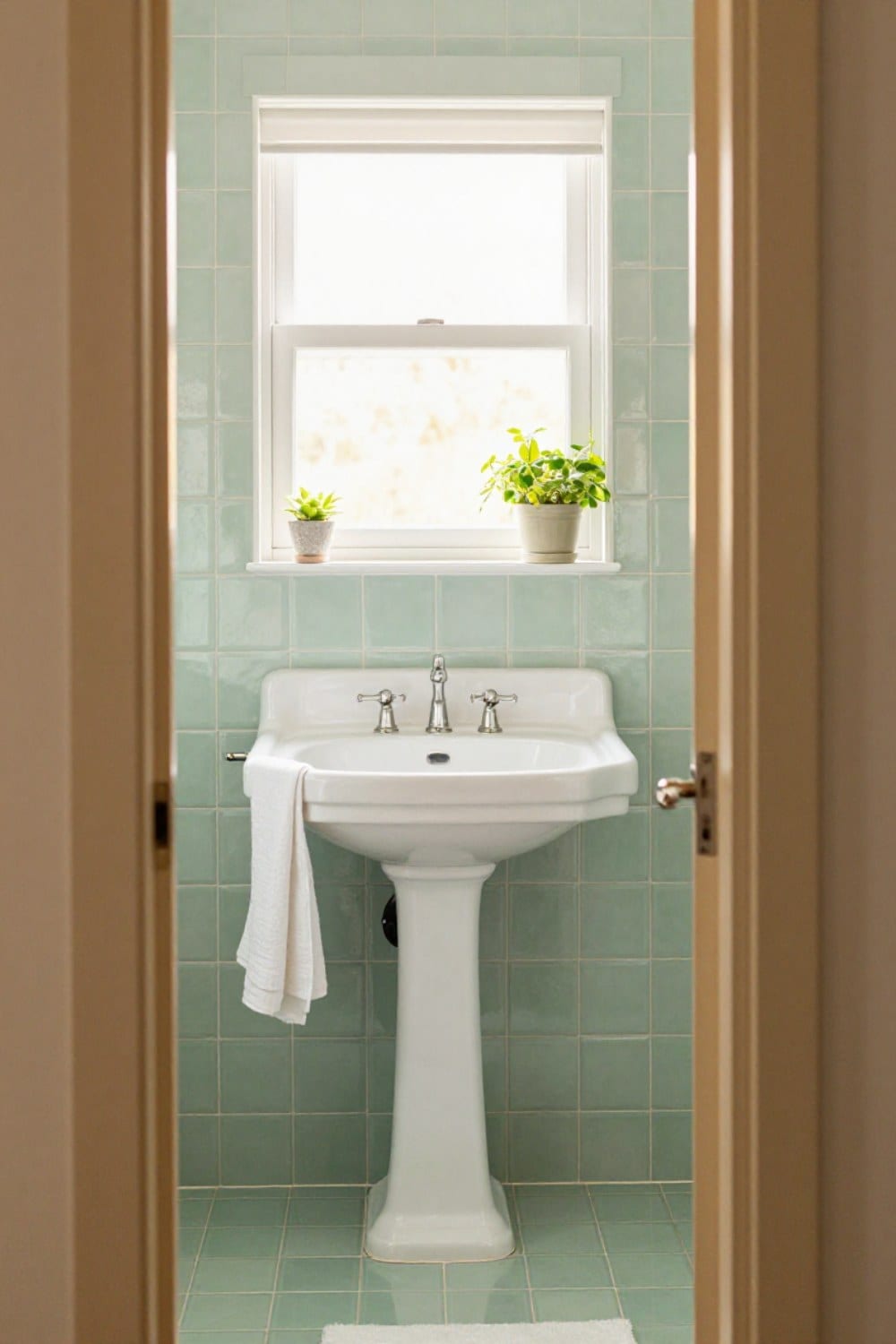
Green tile bathroom ideas usually start with a house that already has the tile. Maybe it's a soft mint from the 1950s, glossy and a little scuffed along the tub, and you're deciding whether to love it or rip it out. Or you're starting fresh and want a green that will still look right in twenty years.
I've lived with both. Our hall bath still has its original mint squares, and I made a real mistake early on: I painted the wall above them a stark white. It made the tile look green-gray and tired. A warmer white fixed it in one afternoon, and I've paid close attention to green ever since.
Here's what's ahead: the three families of green, when to stop at wainscot height, how to choose grout and metals, and what belongs on the walls and floor beside it. It sits inside the bigger picture of vintage bathroom tile ideas, if you want the full pattern-and-color view.
Green tile bathroom ideas start with knowing your green
Green isn't one color. Three families turn up in old bathrooms and new ones, and they behave differently.
Mint and seafoam are pale and lean slightly yellow or blue. Sage and celadon are soft, grayed greens, closer to a leaf's underside. Bottle and forest are deep, glossy and nearly black at the edges. Which family you have decides the grout, the metals and the wall color, so name it before you buy a single thing.
Here's a quick test. Hold a white towel against the tile beside a window, in daylight. Minty and a little blue next to the towel means seafoam. Gray-green means sage. I misjudge my own tile under bathroom bulbs every time, which is why I only ever check by the window.
Vintage mint and seafoam: keep it and style it warm
Mint is the color of the 1940s and 50s bath. Most of it is glazed square tile around 4 1/4 inches, set tight, with a bullnose trim along the top and a coved base at the floor. Those trim pieces matter more than people realize. They're the hardest part to find again, so protect them.
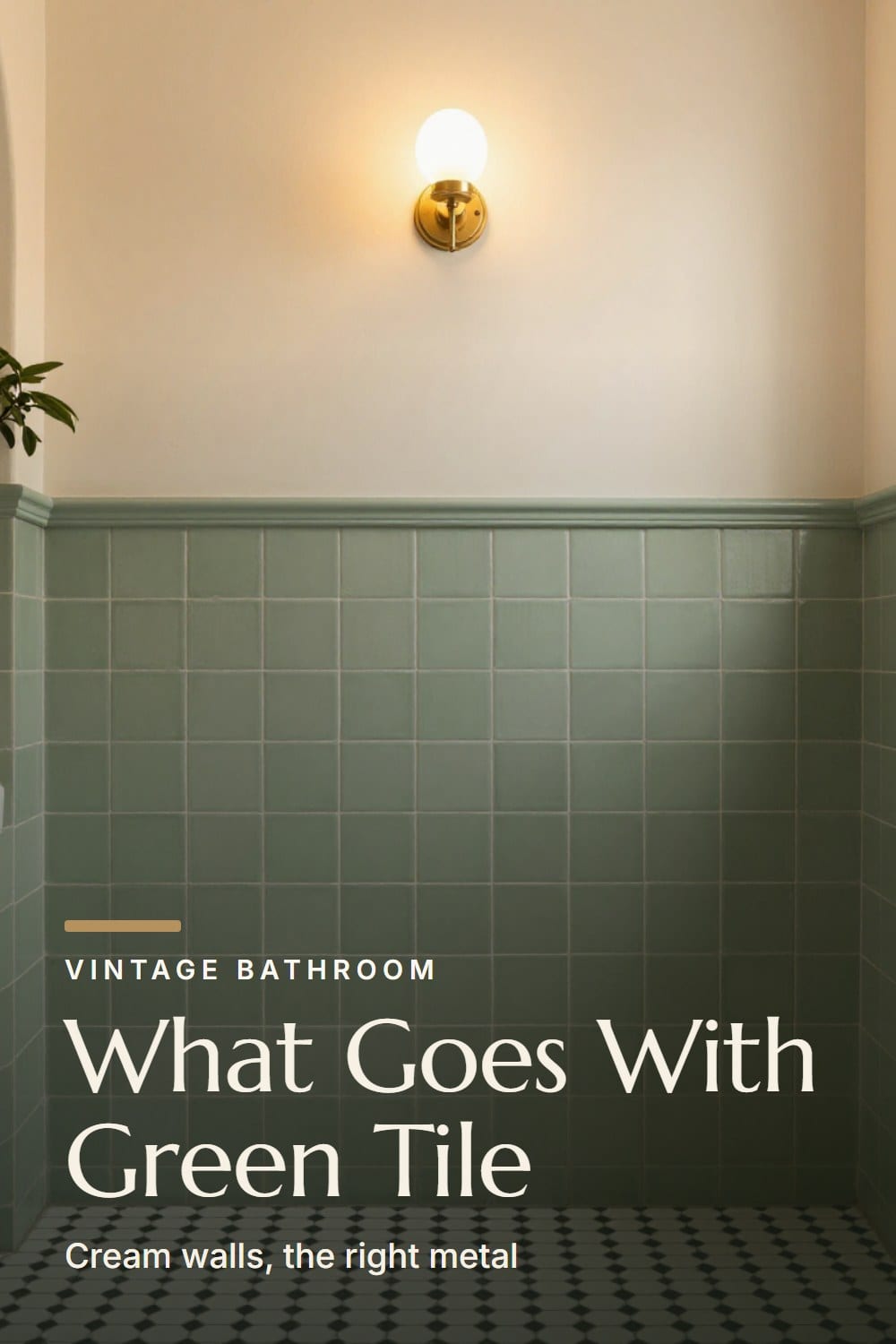
Mint reads dated when everything around it fights it: cool bluish white walls, chrome mixed with brass, a stiff plastic curtain. It reads grown-up when you warm the surroundings. Think warm white or cream walls, polished nickel taps, white porcelain and one wood piece. For the era as a whole, 1950s bathroom ideas goes room by room.
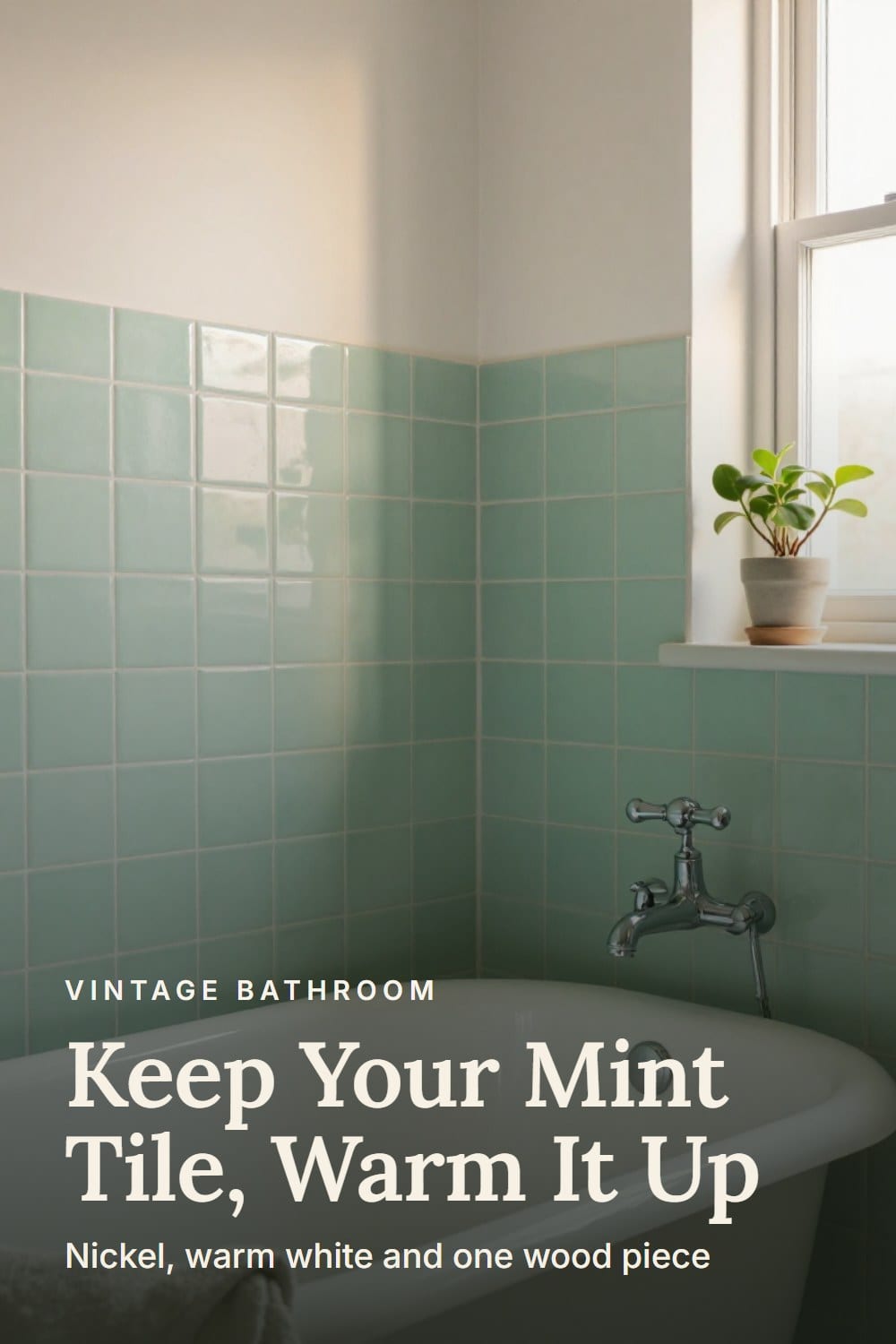
If you also have a pink bath in the family tree, how to decorate a pink tile bathroom uses the same keep-it-and-warm-it logic.
Sage and celadon, the soft green that likes wood
Sage is the gray-green. Celadon is a touch bluer and has the look of old porcelain. Both are quieter than mint, and both sit happily beside oak, walnut, linen and aged brass.
Sage is also the green I'd pick for a bath that has a lot of wood in it. A walnut washstand against sage 3x6 subway tile looks like it has always lived there. I once tested the same sage sample next to a cold gray vanity, and the tile went flat and slightly sad. Next to oak it woke right up.
The one weakness is light. In a dim, cool bathroom sage turns gray. Use a 2700K bulb with a CRI of 90 or higher, and the green comes back. The vintage bathroom lighting guide covers sconces and the right bulb.
Deep bottle and forest green: the glazed square worth the commitment
This is the newest of the three and the one readers ask me about most. It's the handmade-look glazed square, usually about 4 inches, with soft uneven edges, in the spirit of zellige (the hand-cut clay tile from Morocco). The glaze pools darker at the edges and the surface moves with the light.
That movement is the whole point. A perfectly flat factory tile in the same color looks like plastic. Handmade-look tile varies in size, so plan grout lines closer to 1/8 or 3/16 inch and hire a setter who has laid it before.
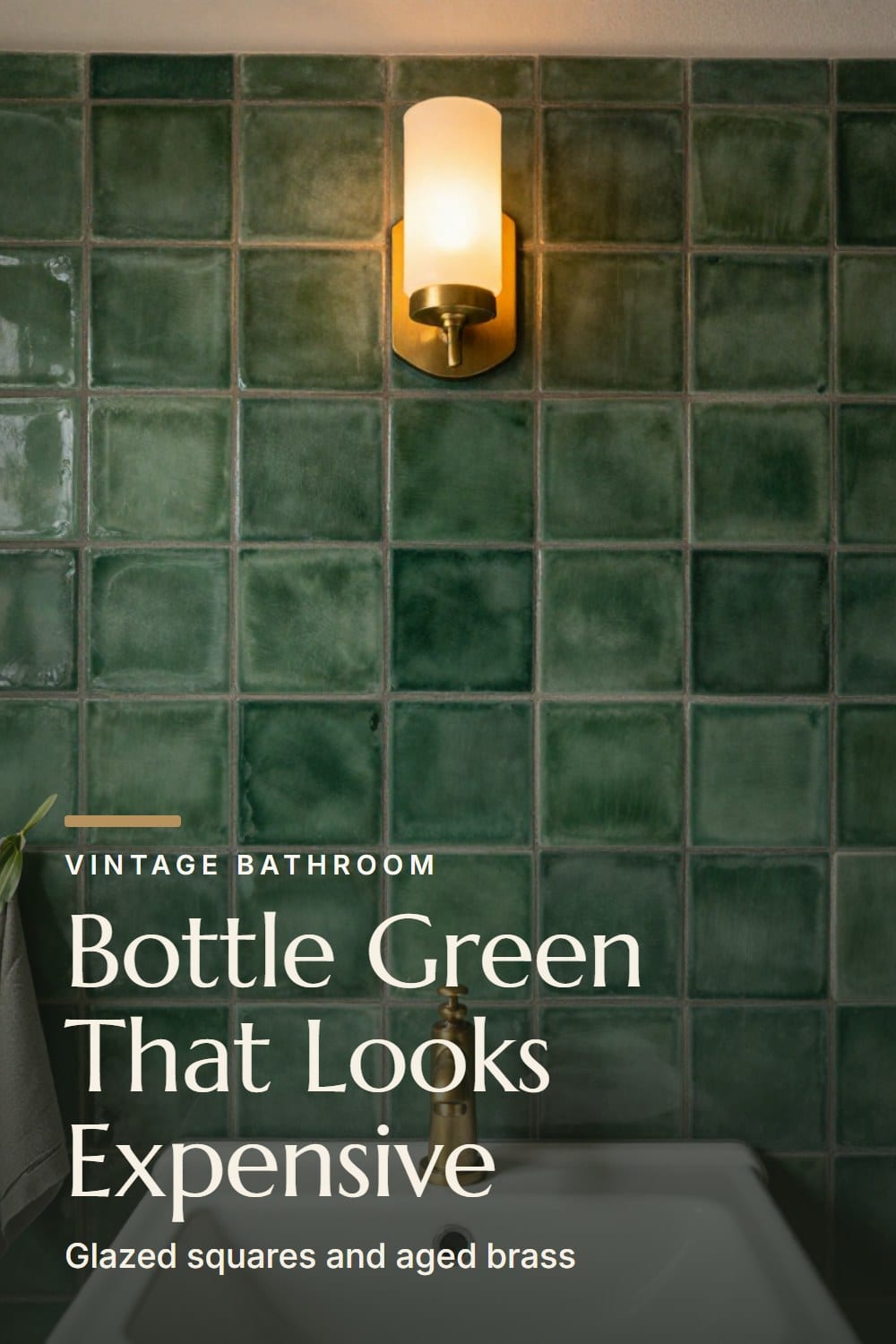
Here's my honest caution. Dark tile soaks up light. In a bath with one window, give bottle green a pale ceiling, warm sconces and a mirror across from the window. A friend skipped the mirror and her bath felt like a cave by four in the afternoon. We added a round mirror and it fixed most of it.
Pair it with unlacquered brass and a warm white above, and you have one of the oldest combinations in the book. Moody vintage bathroom ideas has more on dark walls and old brass.
Wainscot or floor to ceiling?
Both work. They just feel different.
Wainscot, with tile running to roughly 36 to 48 inches and finished in a bullnose cap, is the calmer choice. It uses less tile, lets a painted wall do half the talking, and suits mint and sage especially well. Four feet is a common height in older baths, and it divides the wall in a way that feels settled.
Floor to ceiling feels like a spa and is wonderful in deep green, particularly in a bath of about 5 by 8 feet where the tile wraps you in color. In a very pale mint it can read heavy. Whatever you choose, take the tile to the ceiling around the tub or shower, where the splashing is.
In our hall bath I wish the tile ran about 8 inches higher beside the tub. The paint above the old line has peeled twice. Learn from that.
Grout color is half the look
People spend weeks on the tile and ten seconds on the grout, and then the grout decides the mood.
- White grout looks crisp and retro on mint. It also shows every bit of soap film and age.
- Warm gray grout softens the whole wall and hides the years. It's what I'd choose for sage and celadon.
- Grout that matches the tile gives a quiet, tone-on-tone look, lovely on deep green.
- Dark gray or charcoal grout on bottle green is graphic and bold. Great in a modern-leaning bath, a lot in a traditional one.
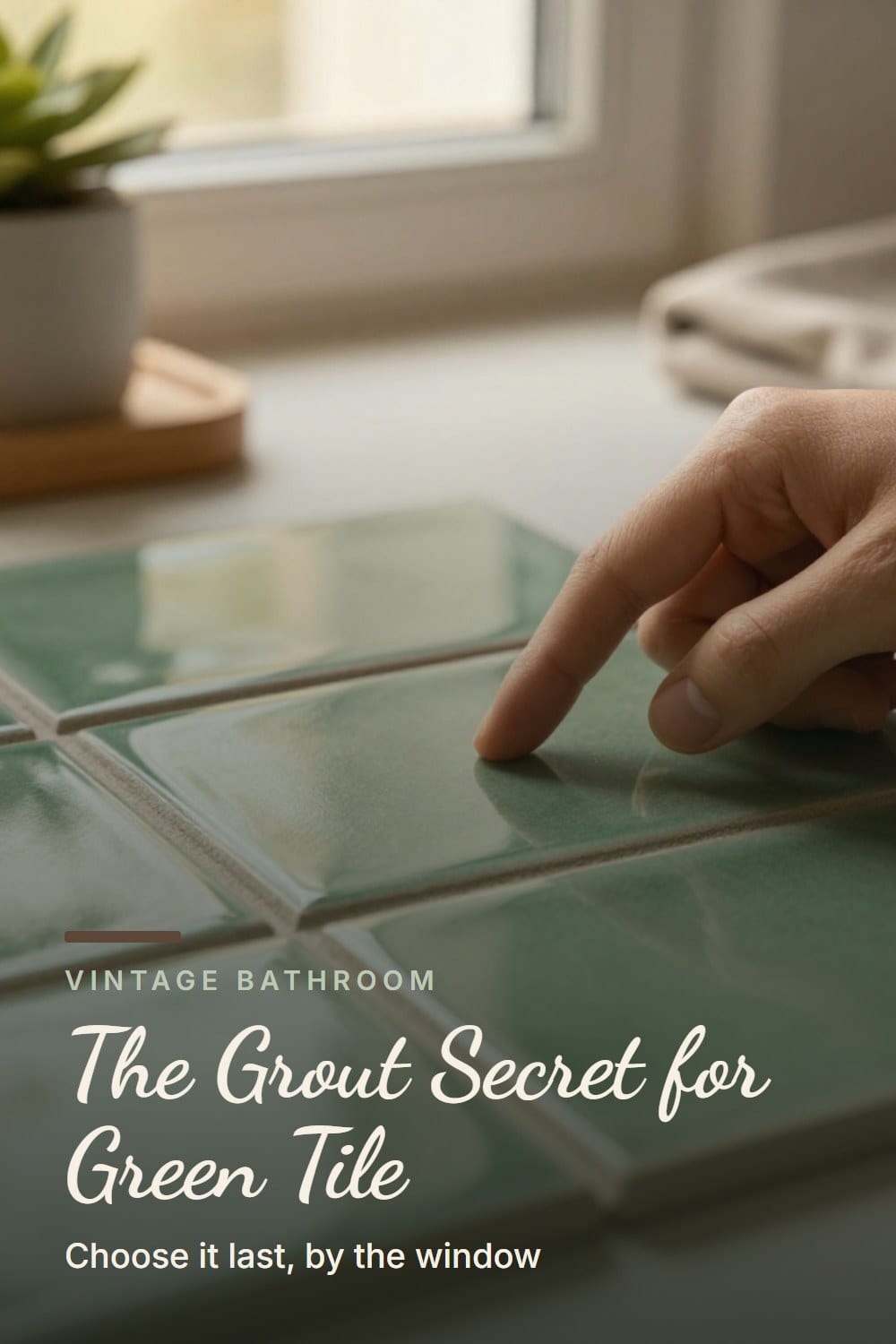
Cement grout is porous, so seal it once it has cured, and give it the maker's cure time (usually a couple of days) before the first shower. Epoxy grout needs no sealing and resists stains, but it's harder to work with.
Which metals suit which green
Pick one metal for the taps and repeat it on the towel bar and sconce. Then let the green choose it.
- Mint and seafoam: polished nickel or chrome. They agree with the cooler green and keep it bright.
- Sage and celadon: aged brass or nickel. Brass warms the gray, and nickel keeps it clean.
- Bottle and forest: unlacquered brass or aged bronze. The warm metal glows against the deep glaze.
Unlacquered brass darkens and spots as it ages, which is exactly why people love it and why some people can't live with it. Decide which kind of person you are before you order. Cross handle faucets and unlacquered brass explains how it wears.
What to put on the walls and floor beside green tile
Above wainscot, a warm white or soft cream is the safest wall color, and it flatters all three greens. A pale plaster-like finish is lovely with mint. A warm greige works with sage. Bottle green can take a deep cream. I'm keeping to color families on purpose: look at any paint in the room's real light, morning and evening, before you decide. Vintage bathroom paint colors that work with old tile has the full guidance.
For floors, small white hexagon tile with a warm gray grout works with every green. A black-and-white checkerboard gives mint its most classic partner. Read checkerboard bathroom floor ideas for size and layout, and hexagon vs penny tile if you're torn between the two small shapes.
If your floor is already black and white, how to decorate a black and white tile bathroom shows how to keep it warm next to green.
Why green tile looks dated, and the quick fixes
If your green bath feels stuck in time, the tile is rarely the problem. These five things are.
- Cold bulbs. Anything above 3000K turns mint clinical. Switch to 2700K.
- Stark white walls. They flatten the green. Move to a warm white.
- Too much green. Green towels, a green rug and green walls on top of the tile erase the tile. Let it be the only green.
- Mixed metals. Chrome taps with a brass sconce look accidental. Choose one finish.
- Clutter on every surface. Old tile deserves a bare edge, so clear the tub rim and the sink ledge.
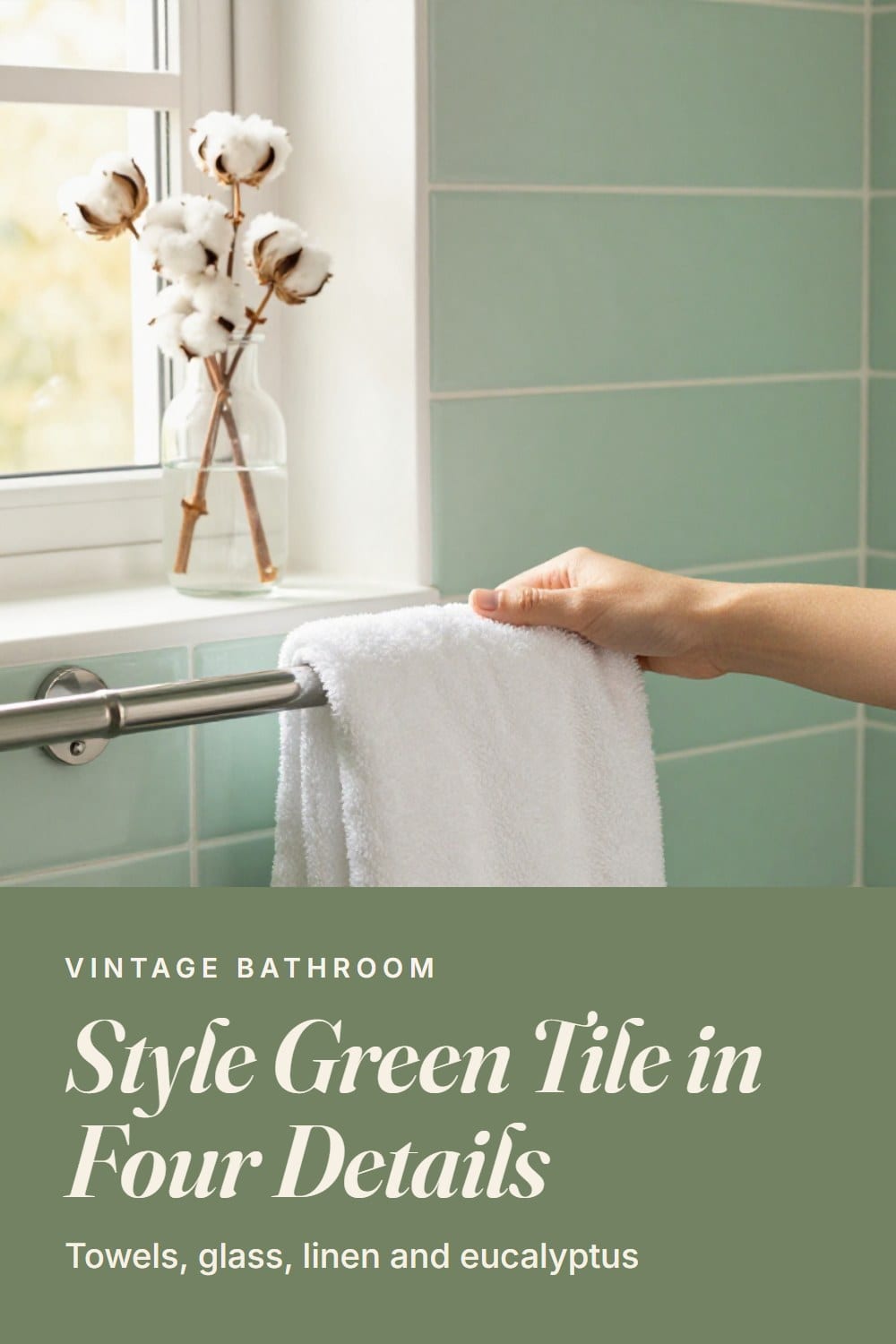
Once you fix those, add the small things that make a bath feel finished: thick white or oatmeal towels folded over a nickel bar, a clear glass jar of cotton balls, a sprig of eucalyptus, a sheer linen curtain at the window. Choose washable fabric near water, and expect it to need laundering.
A checklist before you commit to green
- Name your family of green: mint and seafoam, sage and celadon, or bottle.
- Check the tile and a white towel together in daylight.
- Decide wainscot (about 36 to 48 inches) or floor to ceiling.
- Hold the grout sample against the real tile before you buy it.
- Choose one metal for the taps, towel bar and sconce.
- Put a 2700K bulb with a CRI of 90 or higher over the mirror.
- Have old adhesive, floor tile and paint tested before any demolition.
My advice: if you already have the tile, live with it for a month under warmer light before you decide anything. Most green baths I've seen needed a better bulb and a warmer wall, not a sledgehammer. Everything else sits inside the complete guide to a vintage bathroom that lasts.
The Green Tile Pairing Sheet
The printable is being finished. It will live here, free, with no sign-up wall.
Frequently asked
What color goes with green bathroom tile?
Is green tile out of style?
Should I run green tile to the ceiling?
What grout color is best for green tile?
Sarah Whitmore
she keeps the teak, she oils it in spring
Sarah has furnished the same porch three times and finally stopped. She writes about what actually survives a decade outdoors — which wood silvers, which fabric fades, and which inexpensive piece quietly reads the same as the expensive one.
SarahMore from this corner
 Vintage Bathroom
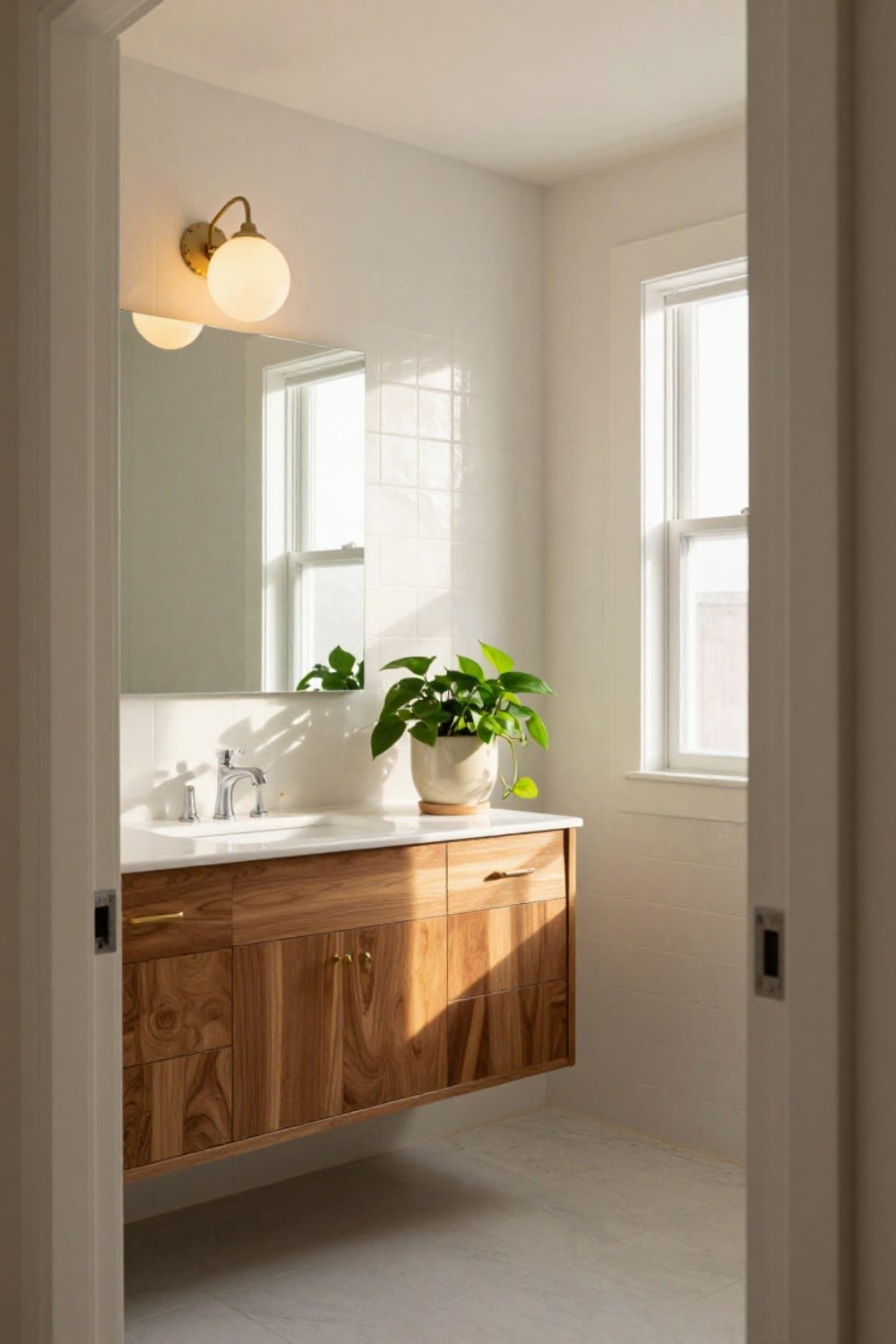
Mid Century Bathroom Ideas for a House Built in the 1950s and 60s
Mid century bathroom ideas for a ranch or split-level: the floating vanity, square and penny tile, globe lights, a wide mirror, and which original features to keep and update around.
Oct 31, 2026 · 12 min read
 Vintage Bathroom
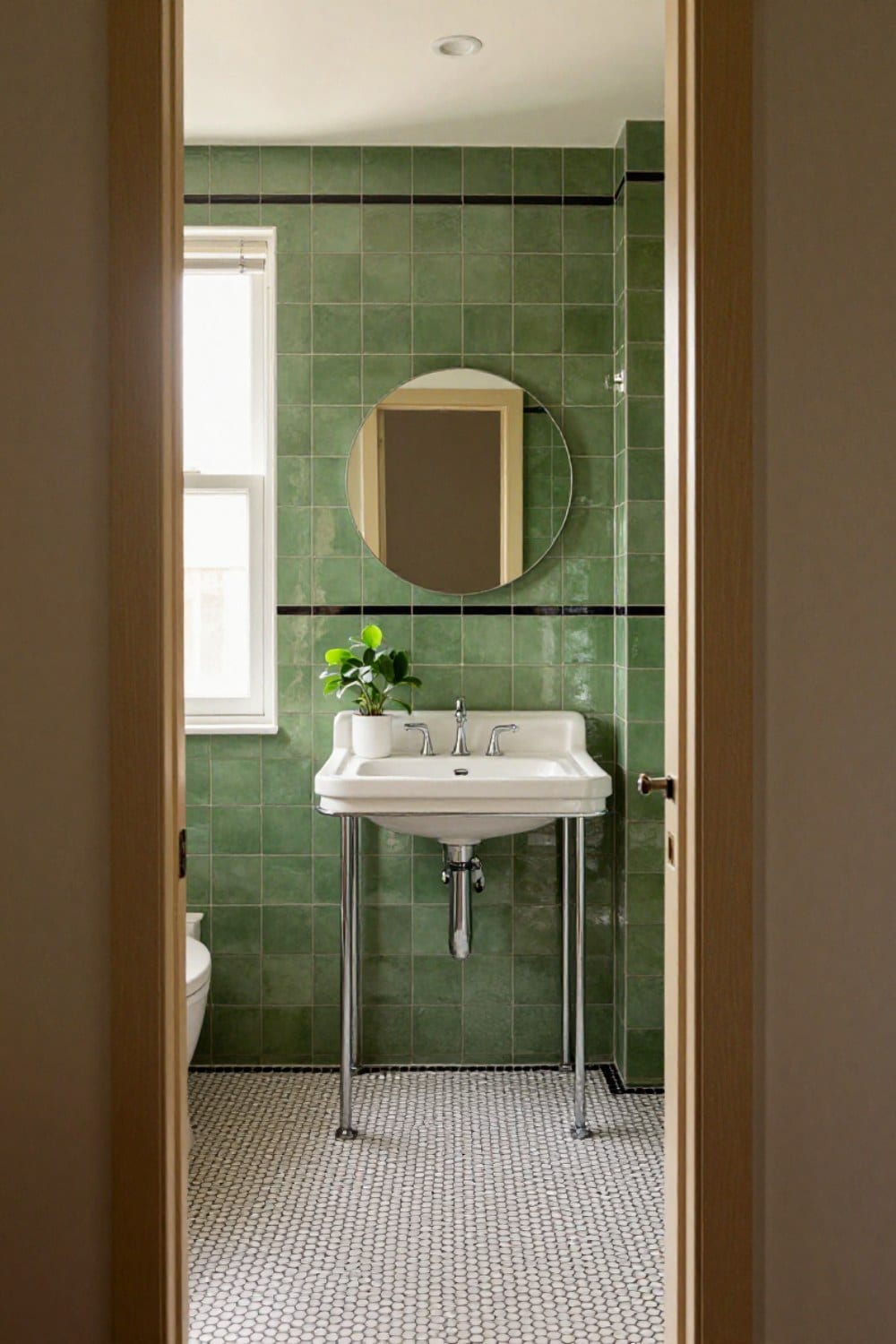
Art Deco Bathroom Ideas That Feel Classic, Not Costume
Art deco bathroom ideas scaled for a real house: the one-statement rule, black and white or green and black tile with a border, round mirrors, frosted sconces, a console sink on chrome legs, and the mistakes that make it look like a set.
Oct 31, 2026 · 11 min read
 Vintage Bathroom
 Tile Ideas: The Patterns and Colors That Never Date
Vintage bathroom tile ideas that still look right decades on: the hex, penny, subway and checkerboard patterns, the glaze colors worth keeping, the grout rule that matters most, and how to decide between repair and reproduction.
Oct 29, 2026 · 12 min read