Vintage Bathroom Tile Ideas: The Patterns and Colors That Never Date
Vintage bathroom tile ideas that still look right decades on: the hex, penny, subway and checkerboard patterns, the glaze colors worth keeping, the grout rule that matters most, and how to decide between repair and reproduction.

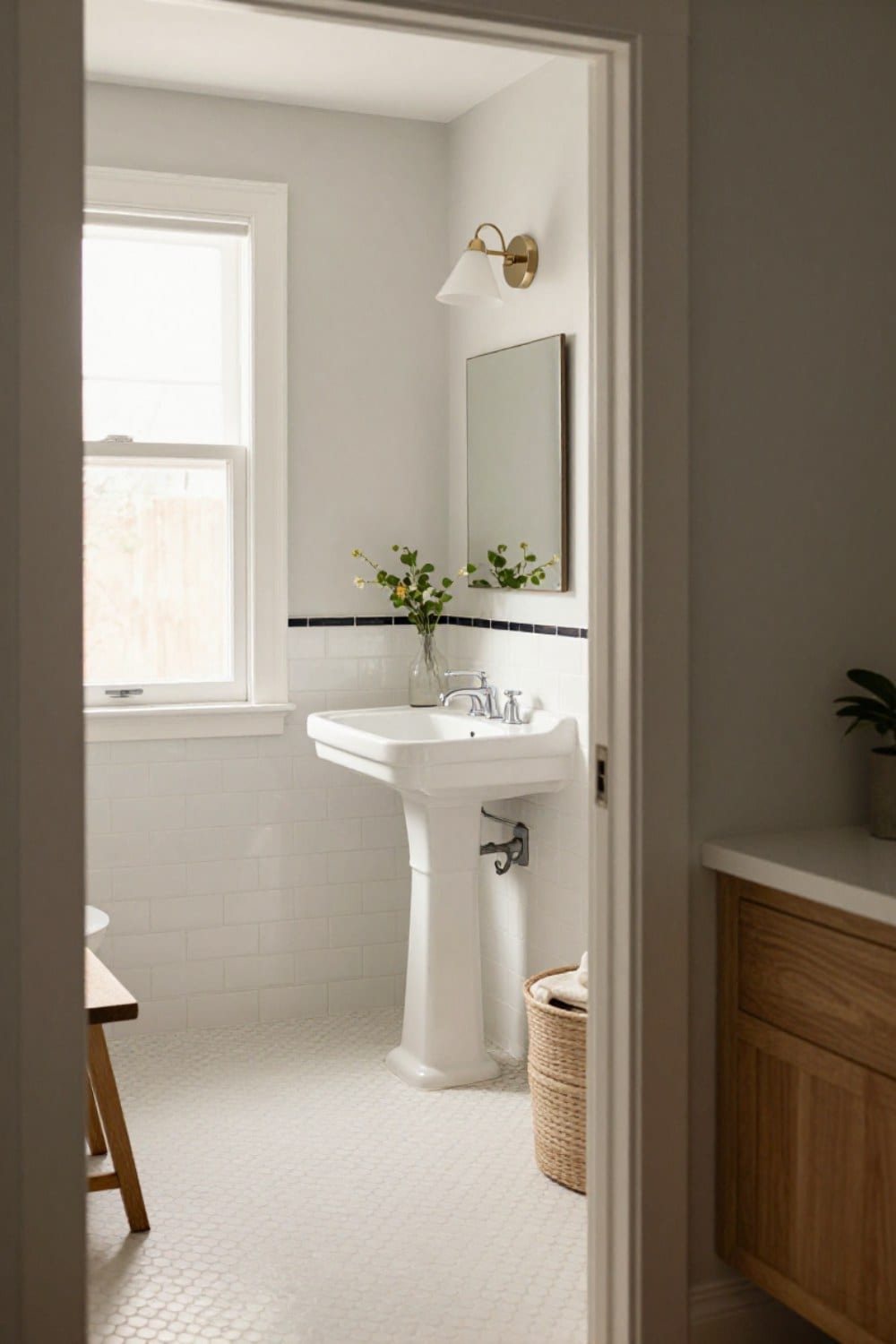
Vintage bathroom tile ideas usually start with a floor you can already picture. Little white hexagons, a grout line gone soft and gray, a pink wall that has been there longer than you have. That picture is the whole goal.
Tile is the one thing in a bathroom you can't swap out next season, so it sets the mood for everything else. I found that out in our 1928 house. The original hex floor was cracked in two places and grubby at the edges, and for a year I assumed it had to go. Then a tile setter I trust looked at it and said, 'You can buy new tile any day. You can't buy ninety years of wear.' We kept it. It's still the best thing in the room.
This is the hub for the whole tile conversation. You'll get the shapes, sizes and colors that never date, the grout rule that matters more than most people expect, how high to run wall tile, and how to choose between repairing what you have and buying reproduction. Each section points to a longer guide when you want the detail.
What makes bathroom tile look vintage
Size is the biggest clue. Old bathroom tile is small. Floors were laid in mosaics an inch or two across, and walls in 3x6 or 4x4 pieces. Every one of them was set by hand, which means you can see the grout lines and the slight give in the surface.
Restraint is the second. A period bathroom usually has one main color, one trim band in black or a deeper shade, and one floor pattern. Not six. When a new bathroom feels busy, it's almost always because it's trying to be three eras at once.
The third clue is the edge. Vintage tile walls stop with a rounded bullnose cap or a slim trim piece, never a raw metal strip. It's the detail people copy least and notice most. If you want the wider picture of what else makes a room read as old, how to make a bathroom look vintage covers the other pieces, and retro bathroom styles walks through the decades.
Floor tile ideas: hex, penny, basketweave and checkerboard
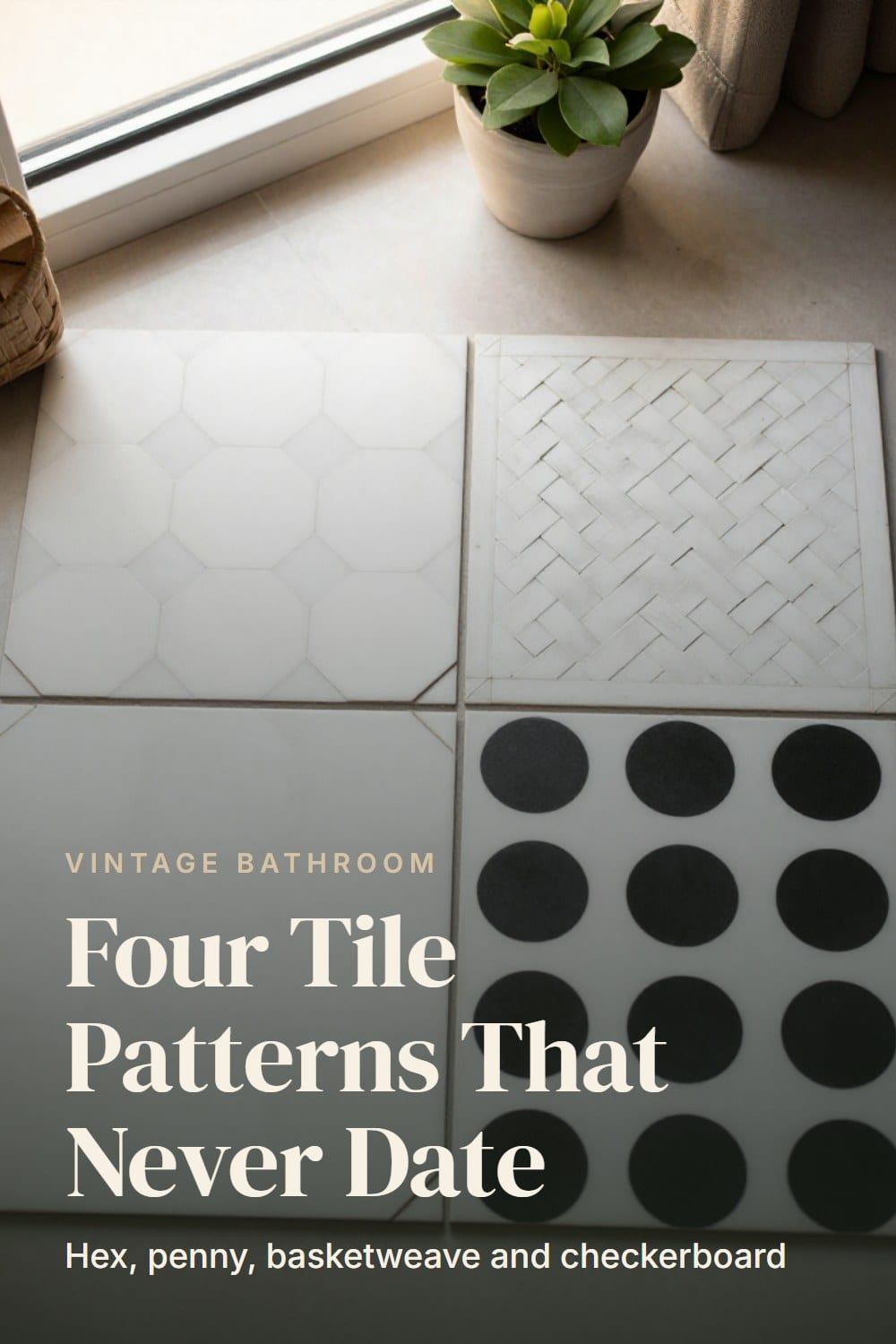
Floors are where vintage tile is most recognizable and most forgiving. Four shapes cover nearly every period floor you'll see.
Hexagon mosaic
The 1920s classic. Hex mosaics are usually 1 inch or 2 inches across, sold on mesh sheets, and traditionally unglazed vitreous porcelain, so the color runs all the way through. A chip shows the same color underneath instead of a white crater. White hex with a thin black or colored border band is the version most people picture.
Penny round
Penny tile is round, about 3/4 inch across, and set close. It has more grout lines than hex, so the floor reads a little softer and more textured underfoot. It's a lovely choice for a bathroom with curves, like a pedestal sink or a clawfoot tub. The full comparison is in hexagon vs penny tile.
Basketweave
Small rectangles laid in pairs, turned ninety degrees from the next pair, so the floor looks woven. Old versions often had a tiny black or colored square at each crossing. Basketweave is quieter than checkerboard and looks wonderful with a tub in the corner.
Checkerboard
Squares in two colors, laid straight or on the diagonal. The size matters more than anything. I tried a 12 inch black and white check in our powder room and it felt like a diner. Drop to 4 inch squares and the same pattern feels like an old house. Checkerboard bathroom floor ideas goes through size, color and layout properly.
Wall tile: subway, square tile and the trim band
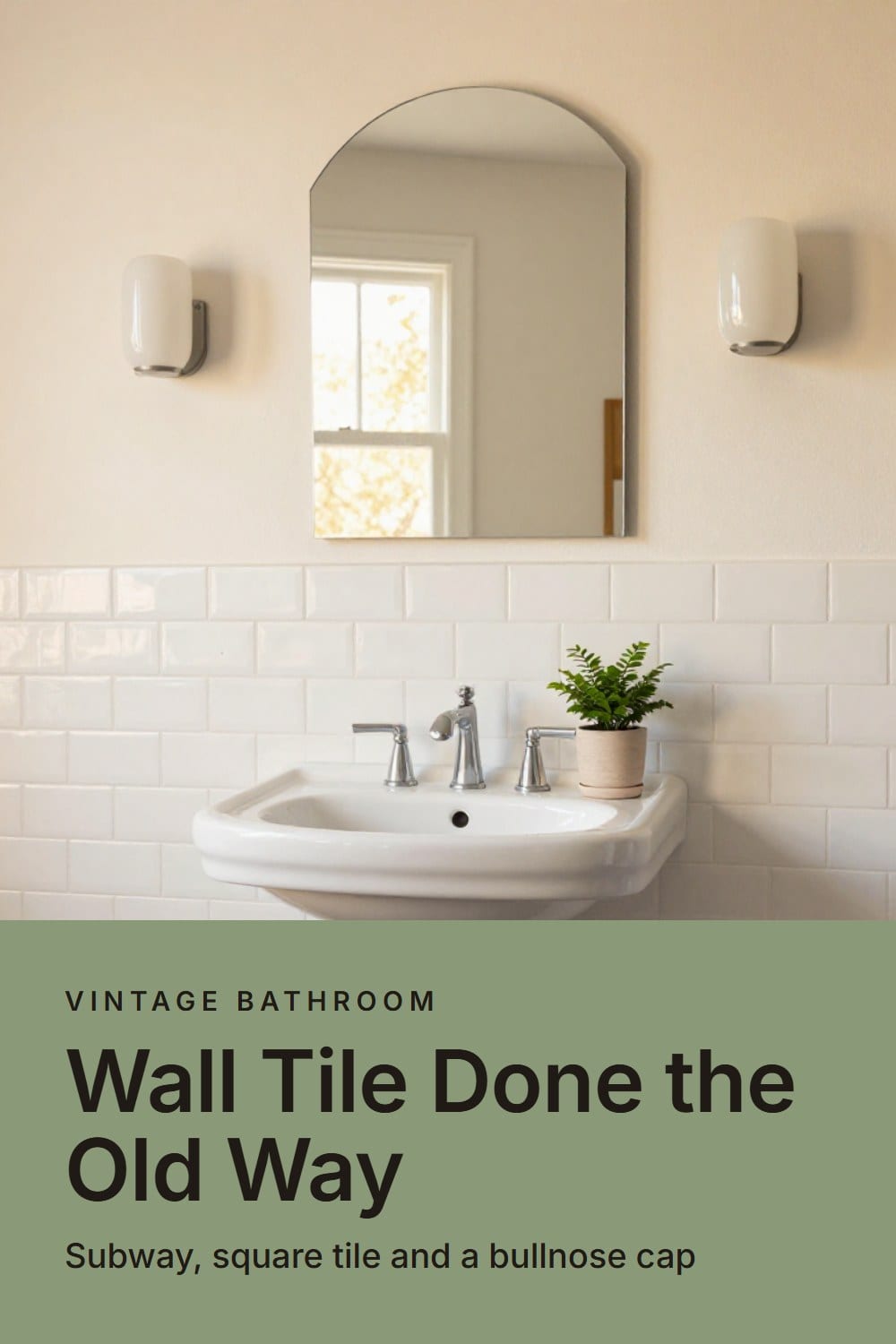
Two wall tiles do most of the work in old bathrooms. The 3x6 subway is laid in a running bond, each course offset by half a tile, and finished at the top with a bullnose cap. The 4x4 glazed square is laid on a straight grid, often with a contrasting band one row from the top or bottom.
Height decides whether it looks stately or looks like a stripe. Older bathrooms commonly ran wall tile to about 48 inches, with tub and shower walls going higher, sometimes to the ceiling. I land at 48 inches in a room with a pedestal sink, because the cap then sits near the top of the faucet and the eye reads one clean line.
A tile line that stops at an awkward spot, like 30 inches or right through a window, is the quickest way to make a wainscot look accidental. Tie the height to something real: a window sill, the top of a tub rim, the back of a sink.
Vintage tile colors that hold up
Colored glazes are why so many of us fall for old bathrooms. These are the ones that keep looking right.
- Pink. The 1950s favorite, and the most misunderstood. A soft rose or powder pink with a black or deep gray band looks grown-up. Pam Kueber of Retro Renovation started the Save the Pink Bathrooms effort for good reason. How to decorate a pink tile bathroom shows how to live with it.
- Mint and sage green. Cool and calm, and lovely against warm white walls. Green tile bathroom ideas covers the mint, sage and bottle green end.
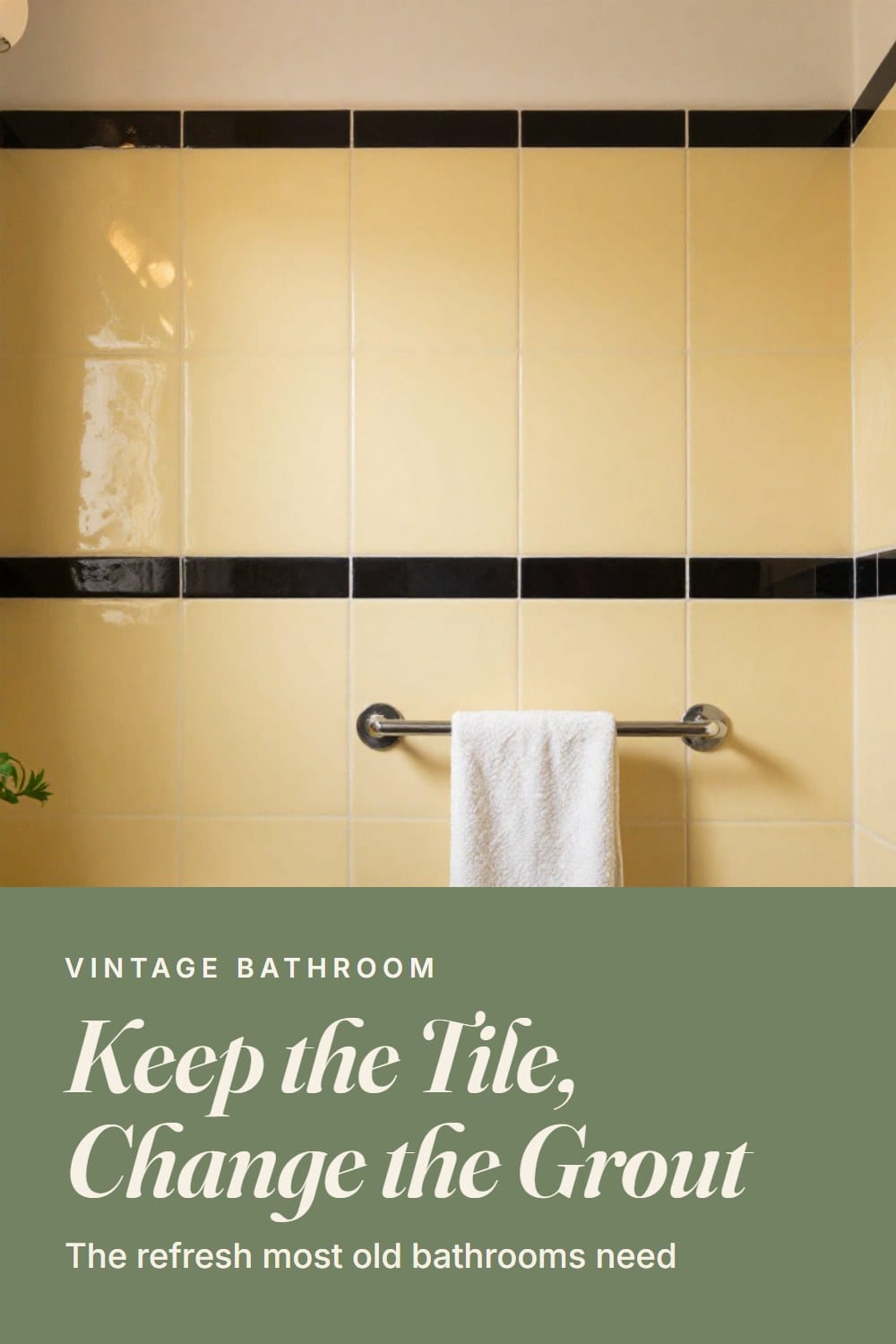
- Butter yellow. Warm and a little sunny. It needs white or cream around it, or it tips toward mustard.
- Powder blue. Cooler than pink, softer than gray. It looks best with polished nickel.
- Black. Strongest as a trim band, a border or a checkerboard half. A black and white tile bathroom can feel warm, with the right wood and light.
The rule I follow is one color field plus white or black. A pink wall with a white floor and a black band is a bathroom. Pink walls, a mint floor and a yellow tub is a candy shop. For the era-by-era version, see 1920s bathroom ideas and 1950s bathroom ideas.
The grout color rule that ages tile well
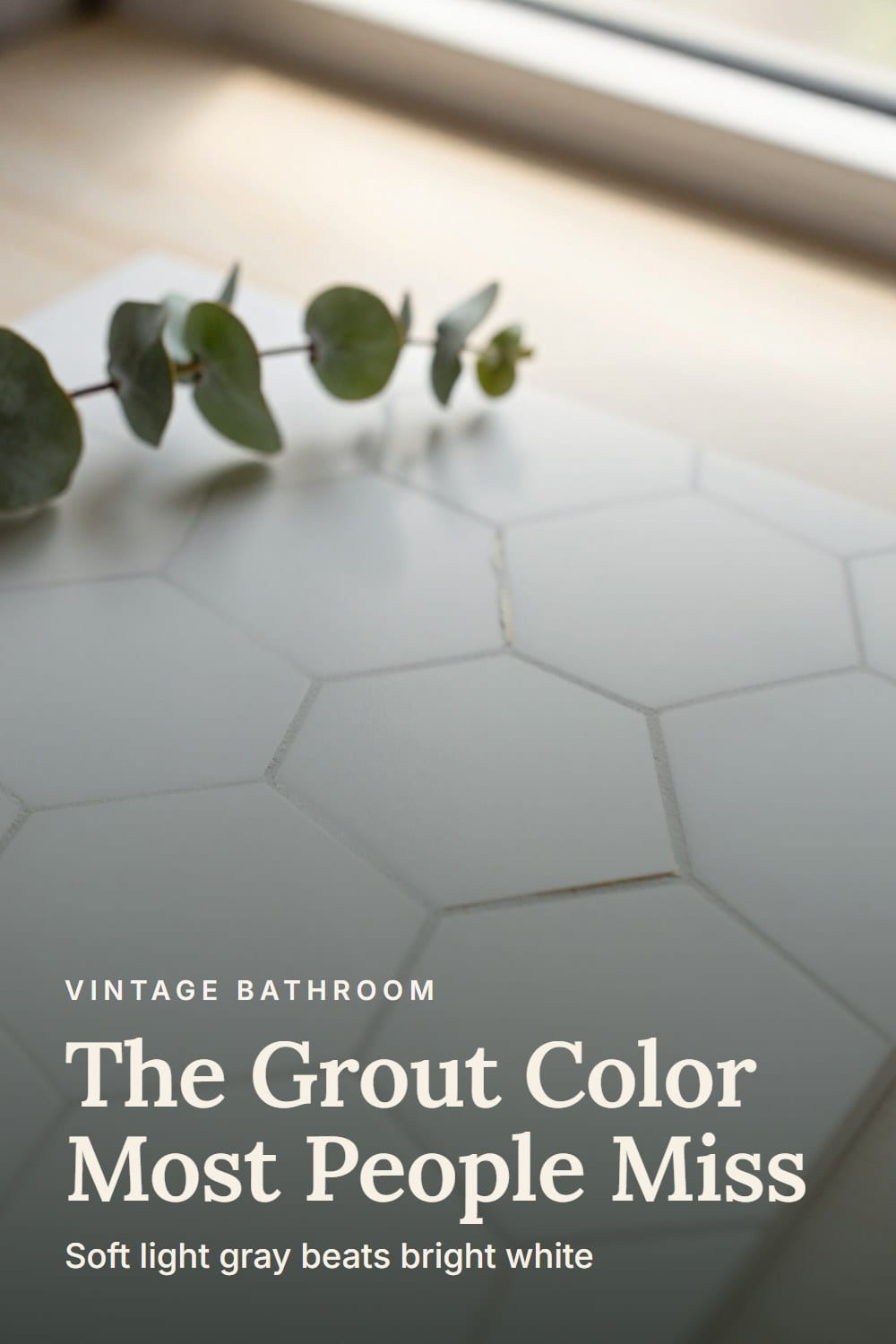
Use a soft, light gray. Not bright white, and not charcoal. Light gray ages better than bright white for a few plain reasons.
Bright white grout against white tile turns a floor into graph paper. Every line shouts. It also shows every ring of soap film and every trace of mildew within a year or two. A warm light gray is closer to what old grout looks like after decades, so a brand-new floor looks settled on day one.
On colored tile, go a shade deeper than the tile instead of matching it. On black and white, soft gray calms the contrast. Dark grout on white hex is a bold graphic choice, and it can be beautiful, but it's a statement, not a default.
Cement grout needs time and sealing. Let it cure for as long as the package says, often 48 to 72 hours, before it gets wet, then seal it. Epoxy grout resists stains better but is harder to work with and has a slightly plastic look up close. When it's time to clean what you have, how to clean old bathroom tile and grout goes through it gently.
Glazed or matte: which goes where
Glossy glazed tile belongs on the walls. It wipes clean and bounces light around the room. Matte or unglazed tile belongs on the floor, where grip matters.
That pairing is the old arrangement and it's a good one. Check the slip rating on the box for any floor that will get wet. Many tile setters look for a dynamic coefficient of friction of 0.42 or higher. Small mosaics help too, because all those grout lines add grip.
Fine hairline cracks in an old glaze, called crazing, are a sign of age, and plenty of us love them. They're also why you never scrub old tile with abrasive powder. A scratched glaze can't be un-scratched.
Keep your original tile or buy reproduction
Keep it, if it's structurally sound. Old tile was fired hard, the glaze is deep, and the color is one you can no longer buy off the shelf. Most problems people want to rip out are grout and caulk problems, which are fixable.
Start by regrouting in that soft gray and replacing the caulk at the tub with a flexible bathroom caulk. Grout is rigid and cracks where two surfaces meet and move. Replace the few cracked tiles from a salvage yard or an architectural reclamation shop. It takes patience, but a matched antique tile beats a new near-match.
When replacement is the only answer, buy reproduction. Several makers produce tile in the old sizes and colors, including the cap, base and corner pieces. Check that the trim range exists before you fall for the field tile. A beautiful 3x6 with no bullnose looks unfinished, and that missing piece is where most reproduction bathrooms go wrong.
Order 10 to 15 percent extra for cuts and breakage. If you want it to look less new, choose a glaze with a slightly uneven surface, pick standard rather than rectified edges, and keep the grout line visible at roughly 1/8 inch with soft gray grout. Perfect precision is the enemy of the old look.
Mistakes that make vintage tile look wrong
- Choosing bright white grout. It turns the floor into a grid and shows every stain.
- Going too big. A 12 inch check or a large-format floor reads modern, even in old colors.
- Using glossy tile underfoot. It's beautiful until it's wet.
- Skipping the trim pieces. Without a cap, base and corner pieces, wall tile looks unfinished.
- Stopping the wall tile at a random height. Tie it to a sill, a rim or a faucet.
- Mixing too many colors and patterns. One field color and one band is plenty.
- Demolishing before testing. Old mastic and old paint deserve a lab check first.
A seven-point checklist before you choose vintage tile
- Decide what the room is, and choose one era to follow.
- Pick one field color and one trim color. Look at both in daylight.
- Keep floor pieces small: 3/4 inch to 2 inch mosaics, or 4 inch checks.
- Use glossy tile on walls, matte or unglazed tile on floors.
- Choose a soft light gray grout and request a sample card.
- Confirm the trim range exists: cap, base and corner pieces.
- Have any old tile adhesive and paint tested before you start.
My advice is to bring home a few real samples and tape them to the wall for a week. Tile looks different in warm 2700K bulb light than it does in a showroom, and a week is long enough to know.
Where to go next
Once the tile is settled, the rest of the room falls into place. The wall color comes next, and vintage bathroom paint colors that work with old tile goes through color families that suit each glaze. For the full picture of the room, vintage bathroom ideas is the complete guide, and vintage bathroom decor covers the finishing pieces.
The Vintage Tile Planner
The printable is being finished. It will live here, free, with no sign-up wall.
Frequently asked
What tile looks vintage in a bathroom?
What grout color is best for vintage tile?
Should I replace or repair old bathroom tile?
What height should vintage wall tile go?
Sarah Whitmore
she keeps the teak, she oils it in spring
Sarah has furnished the same porch three times and finally stopped. She writes about what actually survives a decade outdoors — which wood silvers, which fabric fades, and which inexpensive piece quietly reads the same as the expensive one.
SarahMore from this corner
 Vintage Bathroom
Mid Century Bathroom Ideas for a House Built in the 1950s and 60s
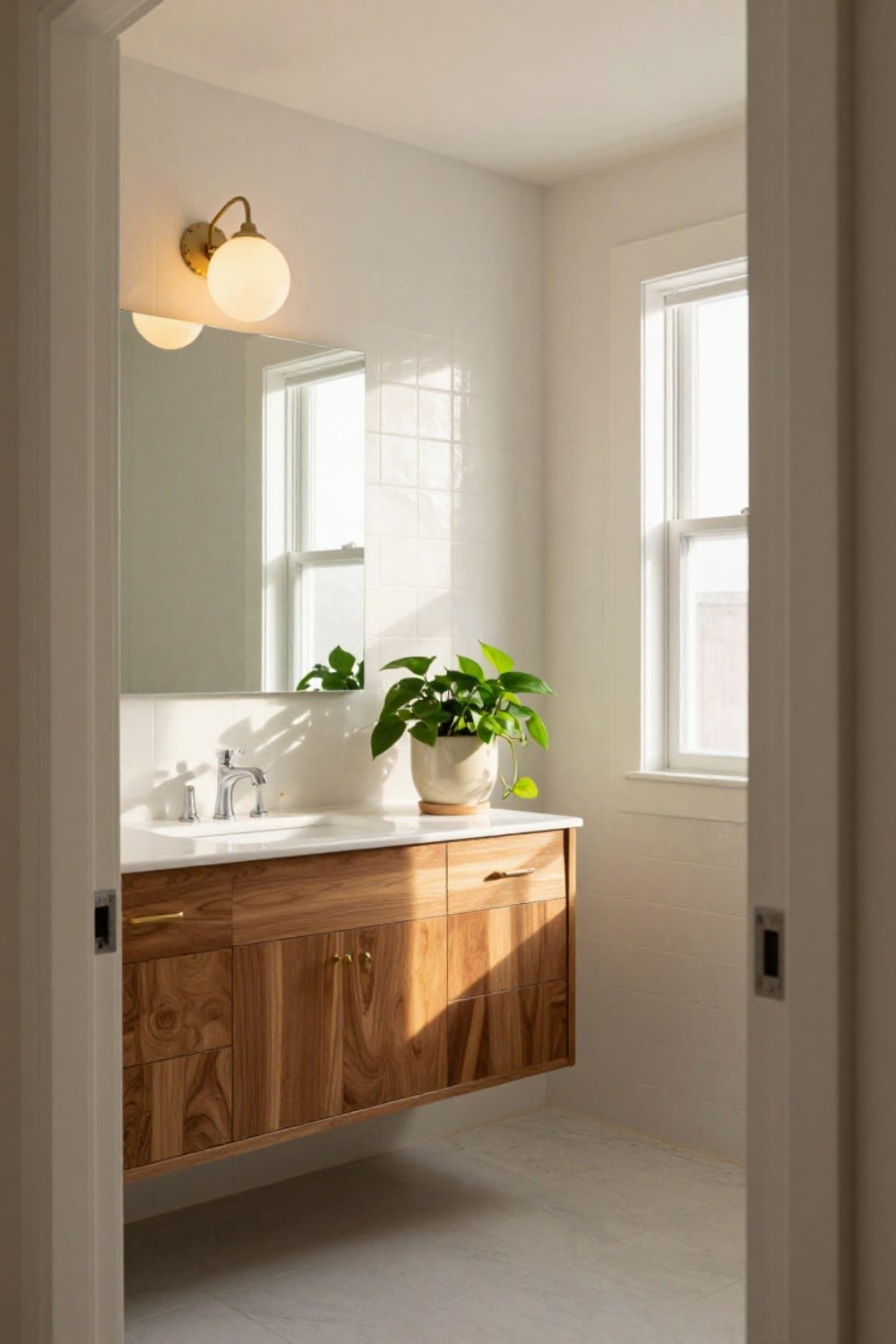
Mid century bathroom ideas for a ranch or split-level: the floating vanity, square and penny tile, globe lights, a wide mirror, and which original features to keep and update around.
Oct 31, 2026 · 12 min read
 Vintage Bathroom
Art Deco Bathroom Ideas That Feel Classic, Not Costume
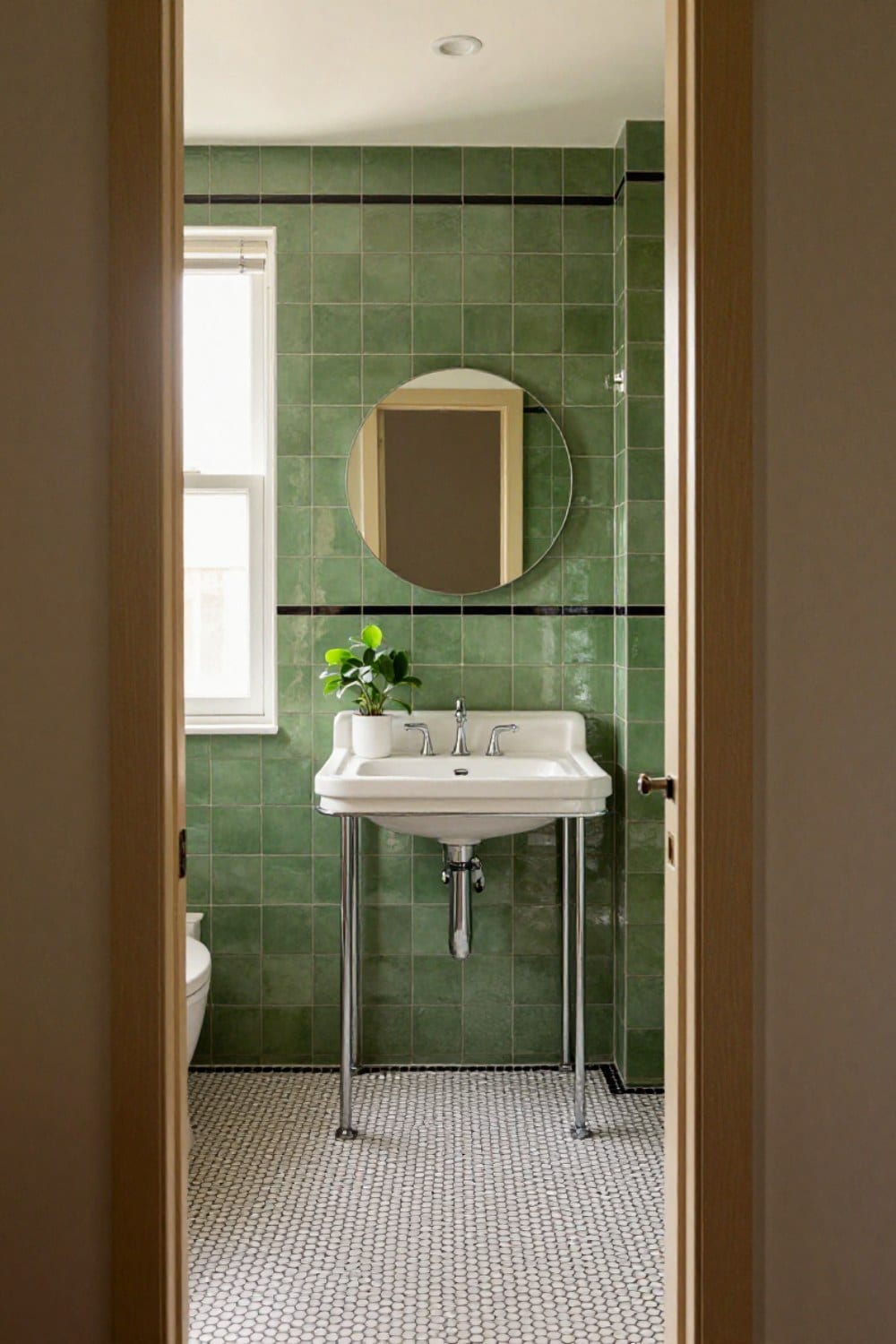
Art deco bathroom ideas scaled for a real house: the one-statement rule, black and white or green and black tile with a border, round mirrors, frosted sconces, a console sink on chrome legs, and the mistakes that make it look like a set.
Oct 31, 2026 · 11 min read
 Vintage Bathroom
 Lighting: Sconces, Schoolhouse Globes and the Right Bulb
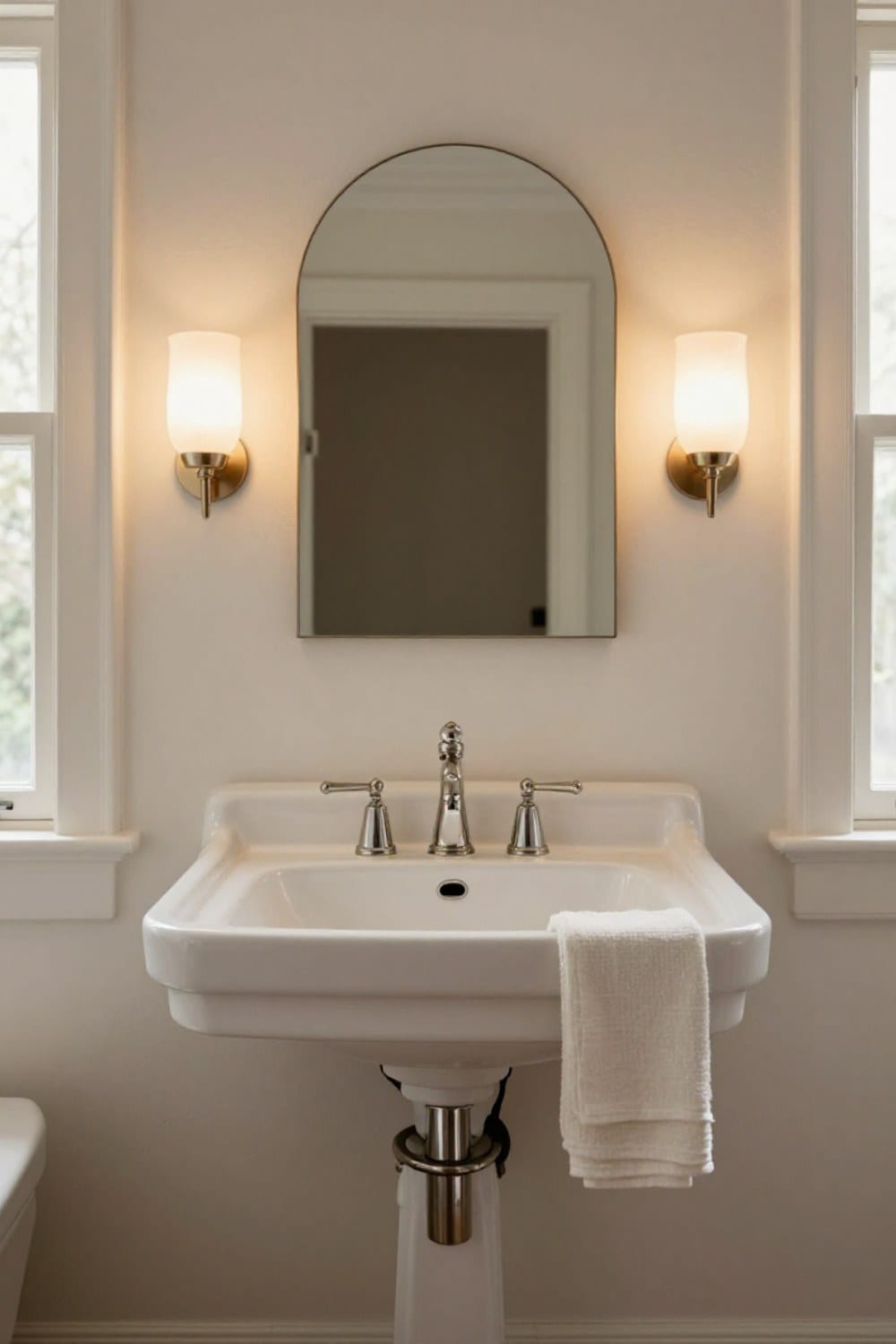
Vintage bathroom lighting that looks period and still flatters a face: sconces at eye height, schoolhouse and milk glass globes, nickel or brass, damp-rated fixtures, and the warm high-CRI bulb that makes skin look right.
Oct 26, 2026 · 12 min read