Mid Century Bathroom Ideas for a House Built in the 1950s and 60s
Mid century bathroom ideas for a ranch or split-level: the floating vanity, square and penny tile, globe lights, a wide mirror, and which original features to keep and update around.

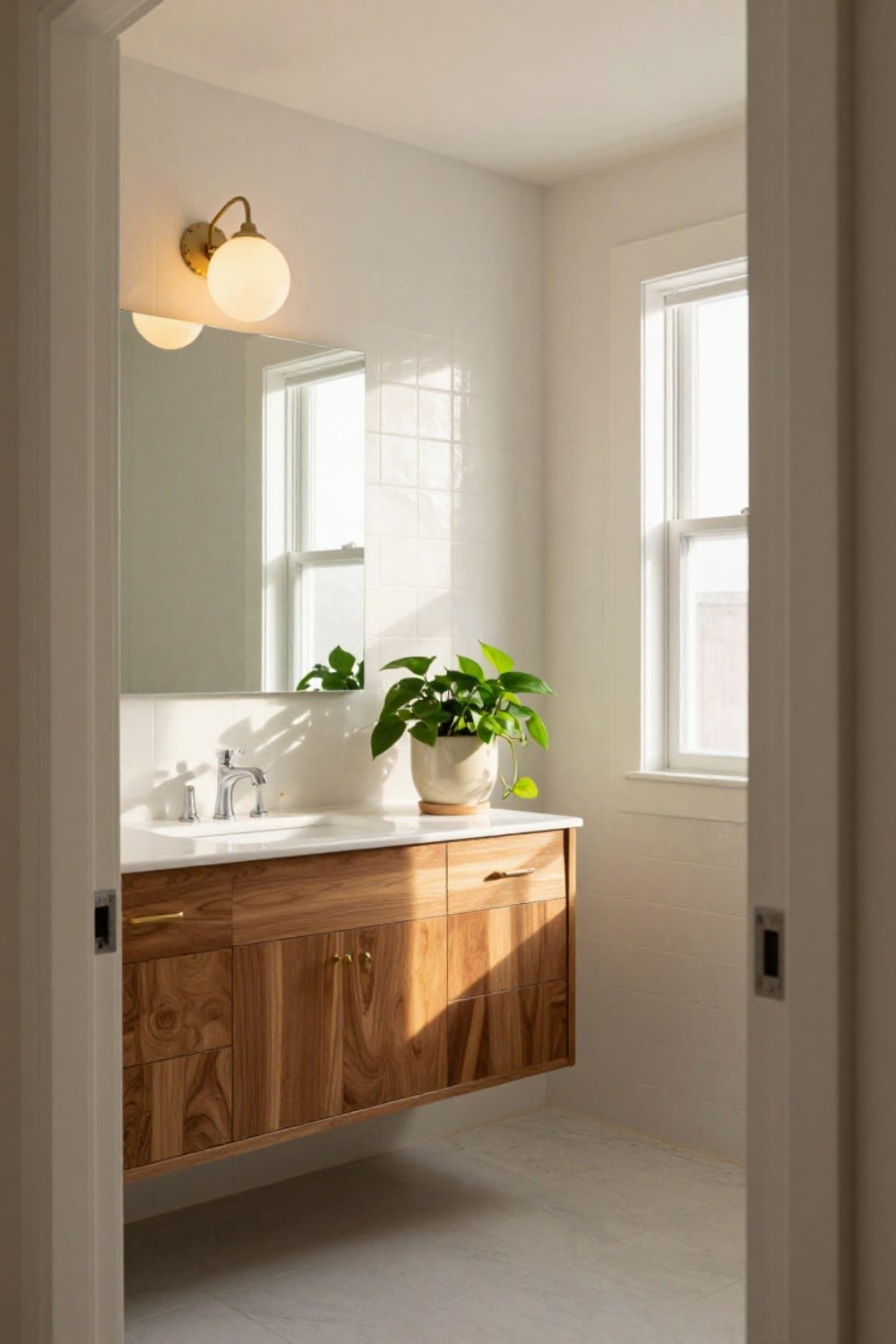
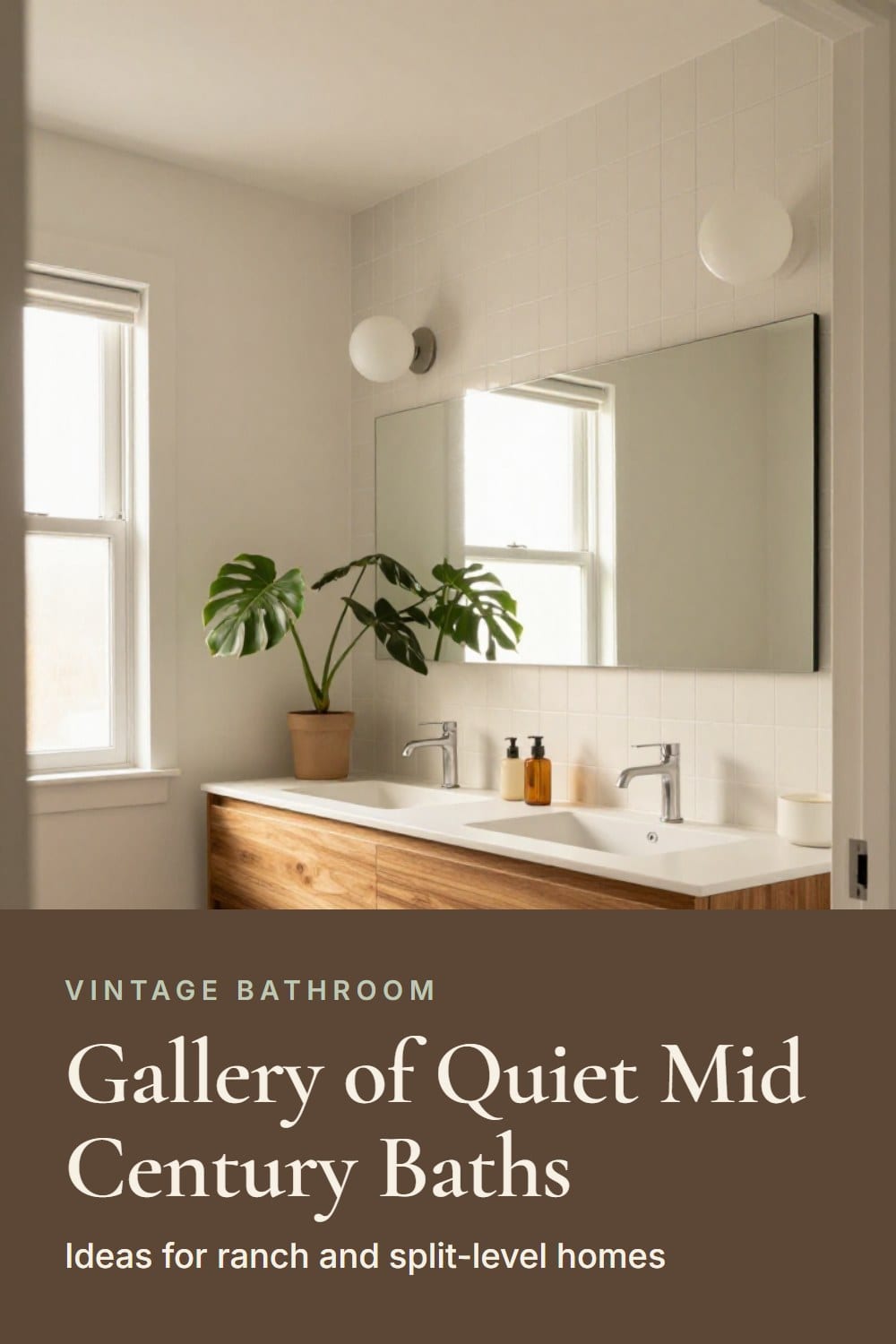
Mid century bathroom ideas usually start with the same picture: a walnut vanity floating over a pale floor, one round light glowing above it, and nothing in the room trying too hard. That calm is the whole look. And if your house was built in the 1950s or 60s, you may already own half of it.
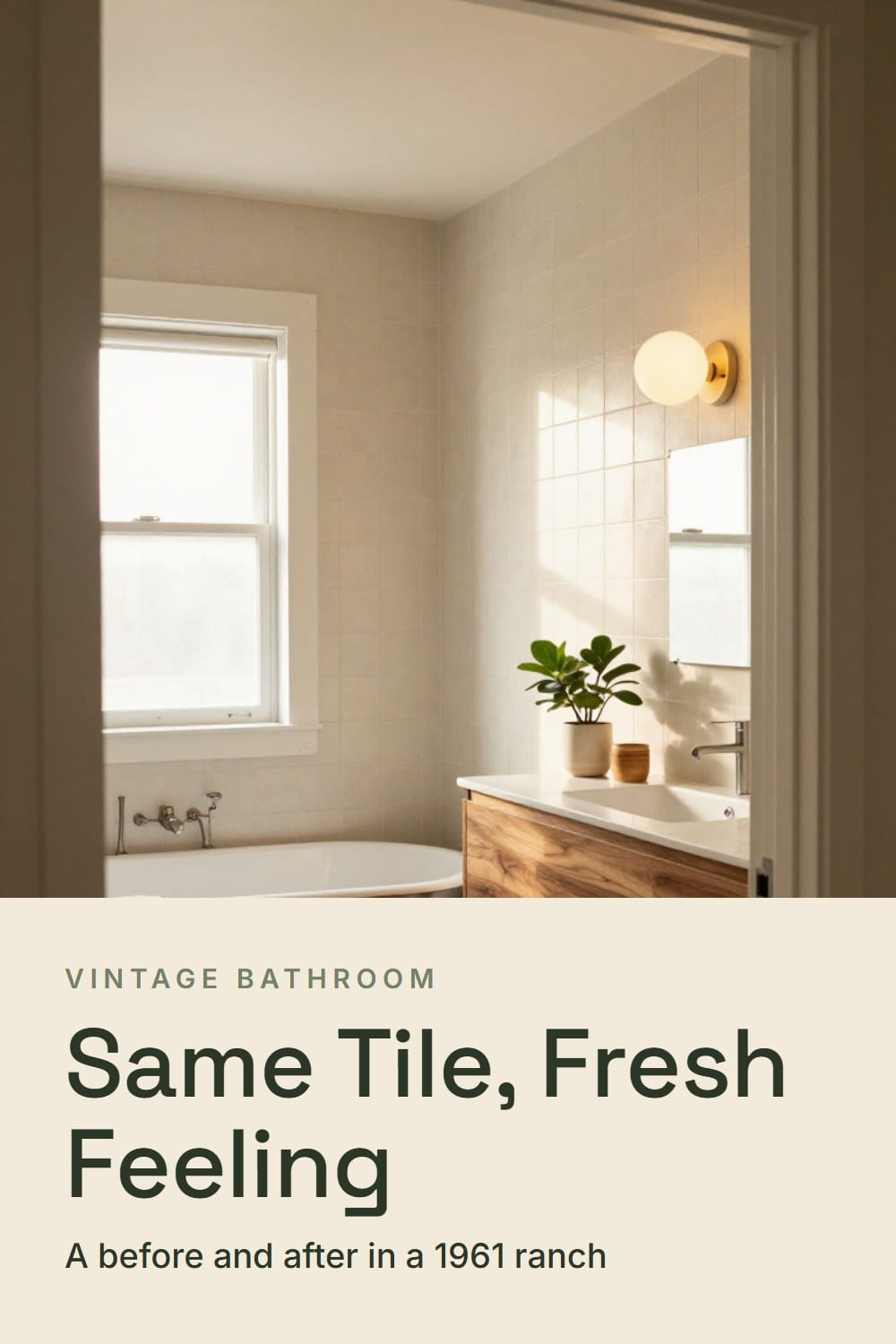
I learned this in my sister's 1961 ranch. She wanted to gut the bathroom the week she moved in. Then we looked at what was actually there: glossy square tile in good shape, a steel tub set into a tiled surround, a recessed medicine cabinet, a long window high on the wall. We kept all of it. Two weekends later, with a new vanity, a new light and a bigger mirror, the room looked deliberate instead of tired.
This guide is for the ranch or split-level bath. It covers what to keep, what to change around it, and the point where mid century slides into the 1970s. For the wider tour of the decades, start with retro bathroom styles.
What actually makes a bathroom mid century
Mid century design runs from roughly the late 1940s to the mid 1960s, and the bathrooms of that era were modest. A builder's ranch bath is often about 5 by 8 feet, with one tub, one sink and one window. The design answer was to keep everything low, level and quiet.
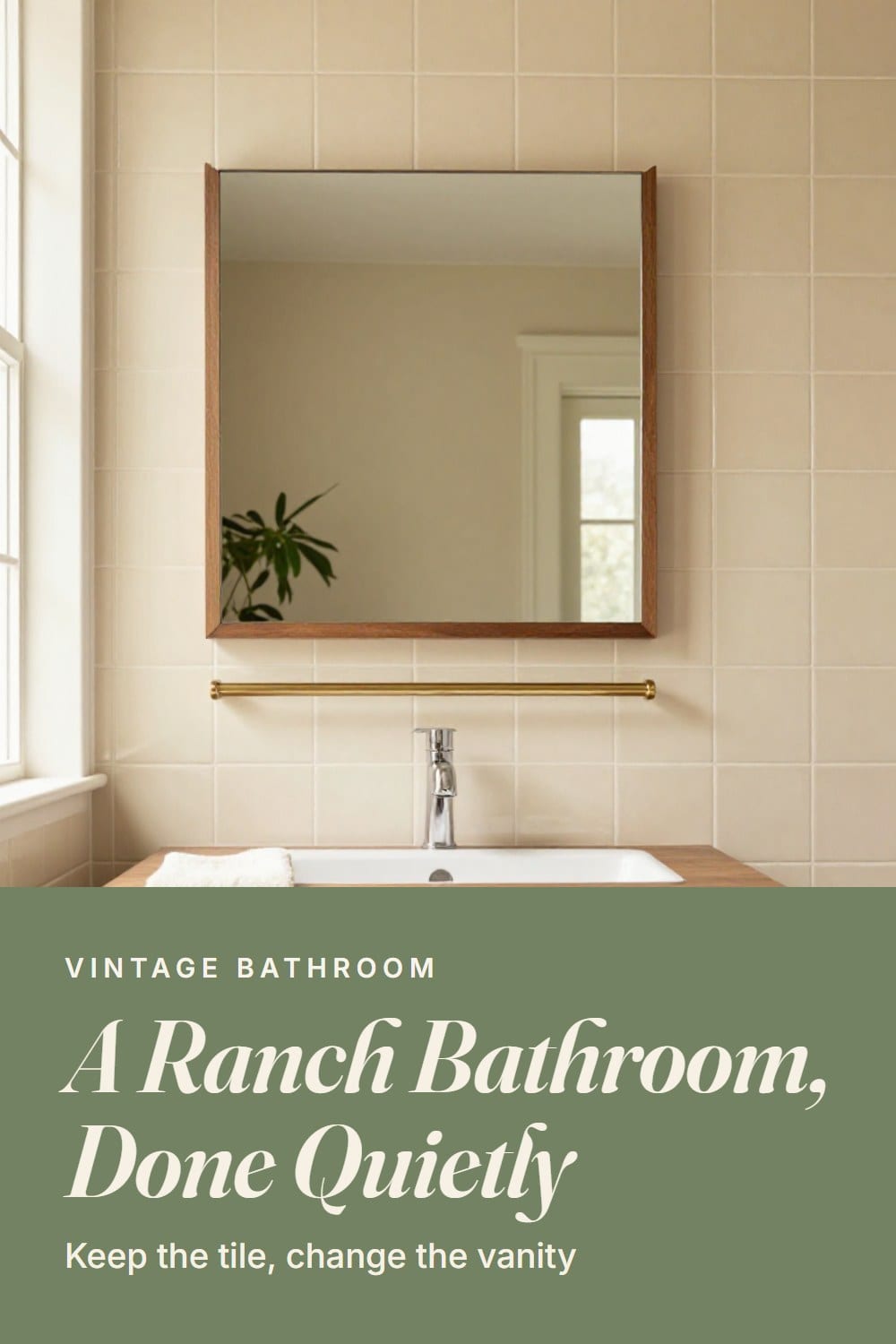
You can spot the look from the doorway by four things. Long horizontal lines, like a wide mirror and a ribbon window. Natural wood, usually walnut or teak. Simple geometry, such as squares, circles and straight grids. And color held back, with warm whites, putties and a single muted accent.
It overlaps with the pastel bath of the 1950s, but it isn't the same room. If your tile is pink or mint and you want to lean into that, 1950s bathroom ideas covers the pastel side. This guide is the wood-and-line side, and it works just as well in a house built last year.
Mid century bathroom ideas that start with what you already have
Before you buy anything, walk the room and list what's original. Keep whatever is hard to replace and hard to find. The vanity and the light are easy to buy. A tile wall laid in 1962 is not.
- Glossy square wall tile, usually 4 1/4 inches, still firmly bonded to the wall.
- A built-in tub with a tiled surround, steel or cast iron.
- A recessed medicine cabinet or a tiled wall niche.
- A high ribbon window, or a pane of glass block.
- Colored fixtures in good condition. A pink or mint tub is rarer than any new one.
If you have colored tile, treat it as the accent and keep everything else quiet. How to decorate a pink tile bathroom and green tile bathroom ideas both show how.
A floating vanity does the most work
If you change one thing, change the vanity. A wall-hung vanity in walnut, or a teak-look finish, with a flat slab front, is the single most recognizable piece of a mid century bath. It also fixes a practical problem: lifting the cabinet off the floor makes a tight bathroom feel wider.
Here's what I'd specify. A width of 30 to 48 inches. A top mounted around 34 to 36 inches high. Drawers instead of doors, because they look cleaner and are easier to reach into. And 10 to 12 inches of floor left showing underneath, so the tile appears to run on behind it.
Wall-hung means structure. A vanity with a stone top and a sink can weigh well over 100 pounds once it's loaded, so it needs to bolt into studs or plywood blocking added behind the drywall. If you're opening the wall anyway, add the blocking then.
Prefer a vintage piece? A low mid century credenza can become a vanity with a plumber and a few careful cuts. Vintage bathroom vanity ideas walks through converting one.
Square tile, penny tile and terrazzo
Mid century tile is about order. Squares and circles, laid in a straight grid, with no pattern fighting for attention. That's the opposite of a staggered subway brick.
Square tile is the native choice for walls: glossy, 4 1/4 inches, in white, putty or a muted color. If yours is original, keep it. If you're adding new, choose a straight stack and a thin grout line, around 1/16 to 1/8 inch.
Penny round is the floor classic. The little discs are roughly 3/4 inch across and come on mesh sheets, so they follow an uneven old floor well. Terrazzo, which is chips of marble set in cement or resin, is the other mid century floor. Real poured terrazzo is a serious project, but terrazzo-look porcelain tile gives the same speckle and lays like any other tile.
Choose one tile family per room and let it do the talking. For a closer comparison, read hexagon vs penny tile, and for patterns that don't date, vintage bathroom tile ideas is the place to start.
Grout color matters more than people expect. Stark white grout against warm tile looks like a grid of scratches, and a warm gray settles it down. Terrazzo needs sealing with a penetrating sealer every year or two, and acids like vinegar will etch it, so keep to a pH-neutral cleaner.
Globe lights and a mirror wide enough to matter
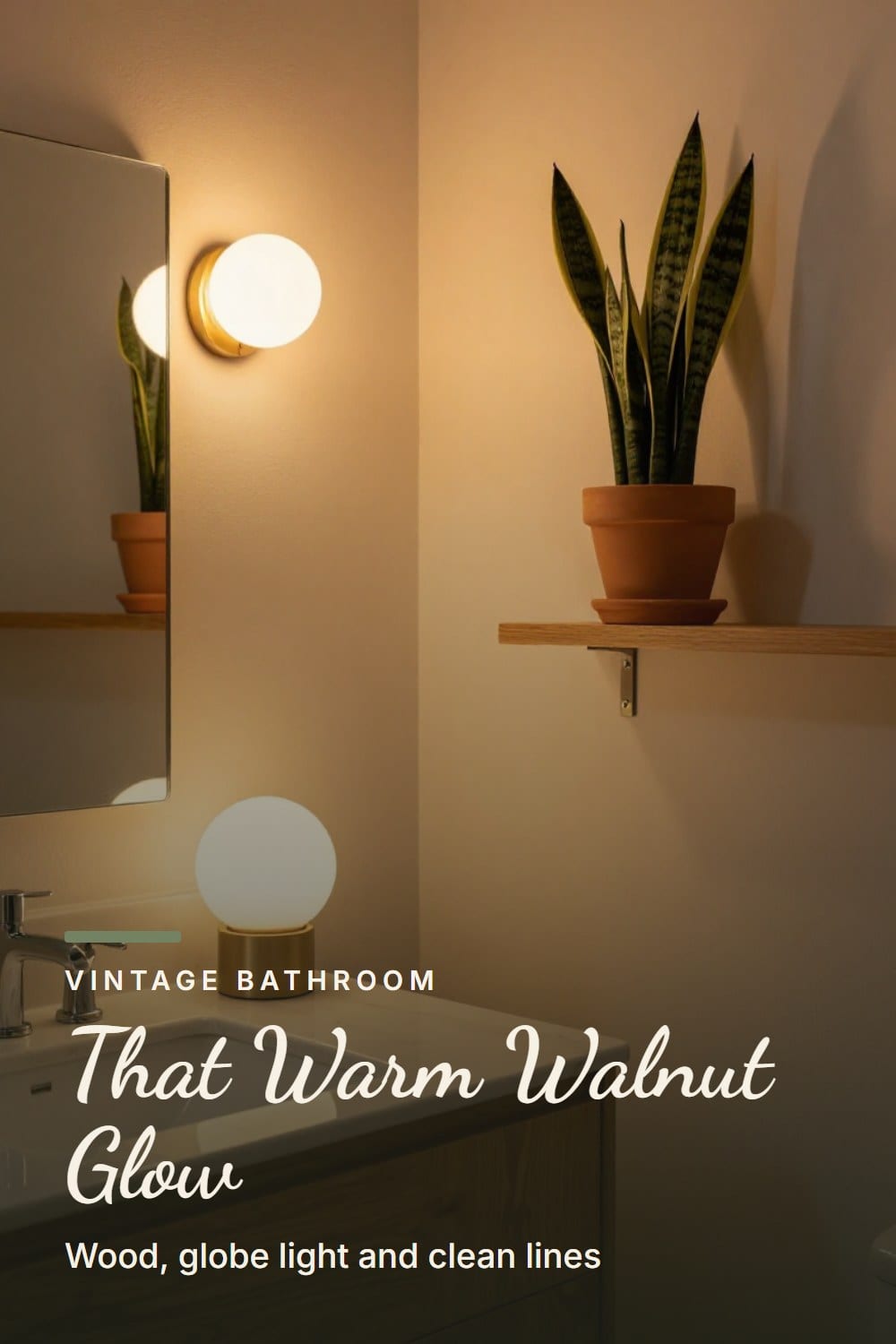
Light is where the room gets its personality. The mid century answer is the opal glass globe: round, softly diffused, 8 to 12 inches across. One centered above the mirror is enough. Two flanking it is the formal version.
Use a warm bulb, 2700K, with a color rendering index (CRI) of 90 or higher, so the walnut looks like walnut and not like cardboard. Fixtures over a tub or shower have to be damp- or wet-rated, and rewiring a vintage fixture is an electrician's job. Those pretty bubble-style pendants made of fabric or paper over wire belong in a bedroom, not over a shower.
Then the mirror. Go wide. A mirror nearly as wide as the vanity, with plain edges or a thin wood or brass frame, echoes the horizontal line of the whole room. Mine was a tall narrow rectangle for years, which looked like a door leaning against the wall. Switching to a long low one made the sink wall look twice as finished.
More on bulbs, shades and sconces is in vintage bathroom lighting.
Chrome, brushed brass and the faucet
Chrome was the metal of the 1950s, and it's still correct. Brushed brass fits the 1960s warmth and looks lovely against walnut. Pick one to lead and, at most, one to support. A chrome faucet with a brass mirror frame is a pairing. Chrome, brass, black and gold together is a mistake.
Mid century faucets are slim and horizontal, a single lever or two small handles with a low spout. If your house still has older cross handles, they're worth keeping, and cross handle faucets shows how they age. Whichever you pick, match the towel bar and the cabinet pull to it.
Walls, color and one good planter
Keep the walls warm and light. A warm white or a soft putty lets the wood and tile be the color. For a bolder wall behind the vanity, a deep teal-green or a muted olive works, and the greener it is, the more you want walnut beside it. I'm staying in color families on purpose. Look at any sample in the room's own light at three times of day. Vintage bathroom paint colors has the full breakdown.
Use eggshell or satin for the finish, and run the fan during every shower and for about 20 minutes after. Paint peels fast in steam without it.
Then add one plant. A glazed ceramic planter on the counter, a shelf or the window sill, holding a pothos, snake plant or fern, brings in the organic shape that mid century rooms lean on. One is plenty. A hanging macramé planter is a 1970s move, so leave that one out.
Leave a ribbon window bare, or hang a simple roller shade. If you need privacy, a frosted film on the glass keeps the light and the line.
Where mid century slides into the 1970s
The line is thinner than you'd think. If your bath feels heavy or dated instead of warm and clean-lined, one of these is usually the reason.
- Shag mats and avocado or harvest gold fixtures. That's the 1970s, not the 1960s.
- Dark wood paneling on every wall. One wood piece is mid century. A room of it is a den.
- Four metal finishes in one room. Keep to chrome or brass, with one supporting finish at most.
- A narrow mirror over a wide vanity. The proportion looks off from the doorway.
- A crowded counter. A soap dish, one planter and a folded towel are enough.
Want a moodier take once you've got the basics? Moody vintage bathroom ideas goes darker, and art deco bathroom ideas shows the earlier, more glamorous era.
A checklist before you buy anything
- Walk the room and mark every original feature worth keeping.
- Get old tile, mastic and paint tested before any demolition or sanding.
- Choose a floating vanity, 30 to 48 inches wide, and plan the wall blocking.
- Pick one tile family and lay it in a straight grid with warm gray grout.
- Buy a damp-rated globe light and a 2700K bulb with a CRI of 90 or higher.
- Hang a mirror nearly as wide as the vanity.
- Limit yourself to one or two metal finishes and one planter.
If I had to pick a first move, I'd change the light and the mirror before anything else. They're the quickest to do and they change the whole room. Buy fewer, better pieces, and keep them for years. The rest of the cluster lives in vintage bathroom ideas.
The Mid Century Bath Planner
The printable is being finished. It will live here, free, with no sign-up wall.
Frequently asked
What makes a bathroom mid century?
Should I keep my original 1950s or 60s bathroom tile?
What color goes with mid century bathroom tile?
What kind of light fits a mid century bathroom?
Sarah Whitmore
she keeps the teak, she oils it in spring
Sarah has furnished the same porch three times and finally stopped. She writes about what actually survives a decade outdoors — which wood silvers, which fabric fades, and which inexpensive piece quietly reads the same as the expensive one.
SarahMore from this corner
 Vintage Bathroom
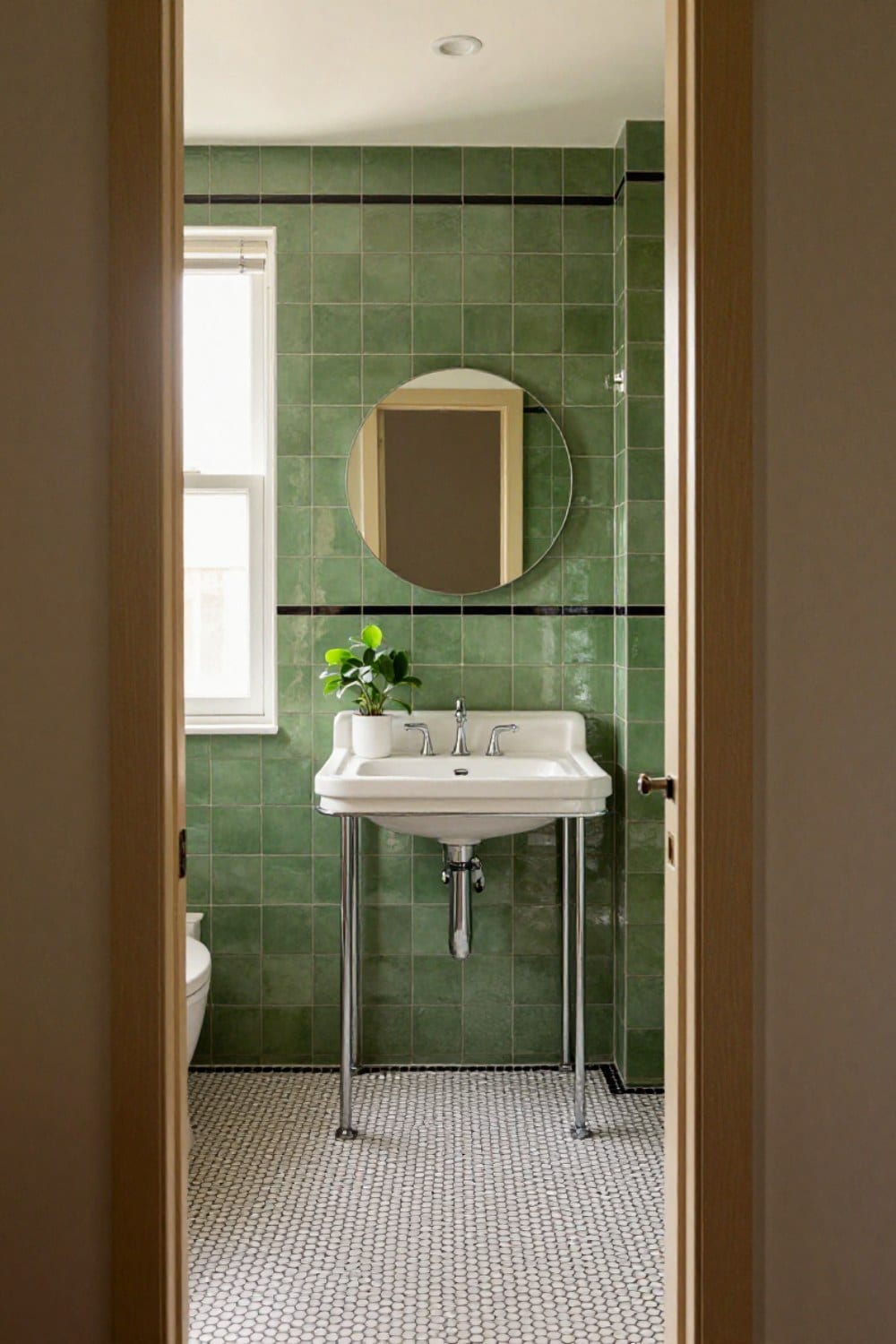
Art Deco Bathroom Ideas That Feel Classic, Not Costume
Art deco bathroom ideas scaled for a real house: the one-statement rule, black and white or green and black tile with a border, round mirrors, frosted sconces, a console sink on chrome legs, and the mistakes that make it look like a set.
Oct 31, 2026 · 11 min read
 Vintage Bathroom
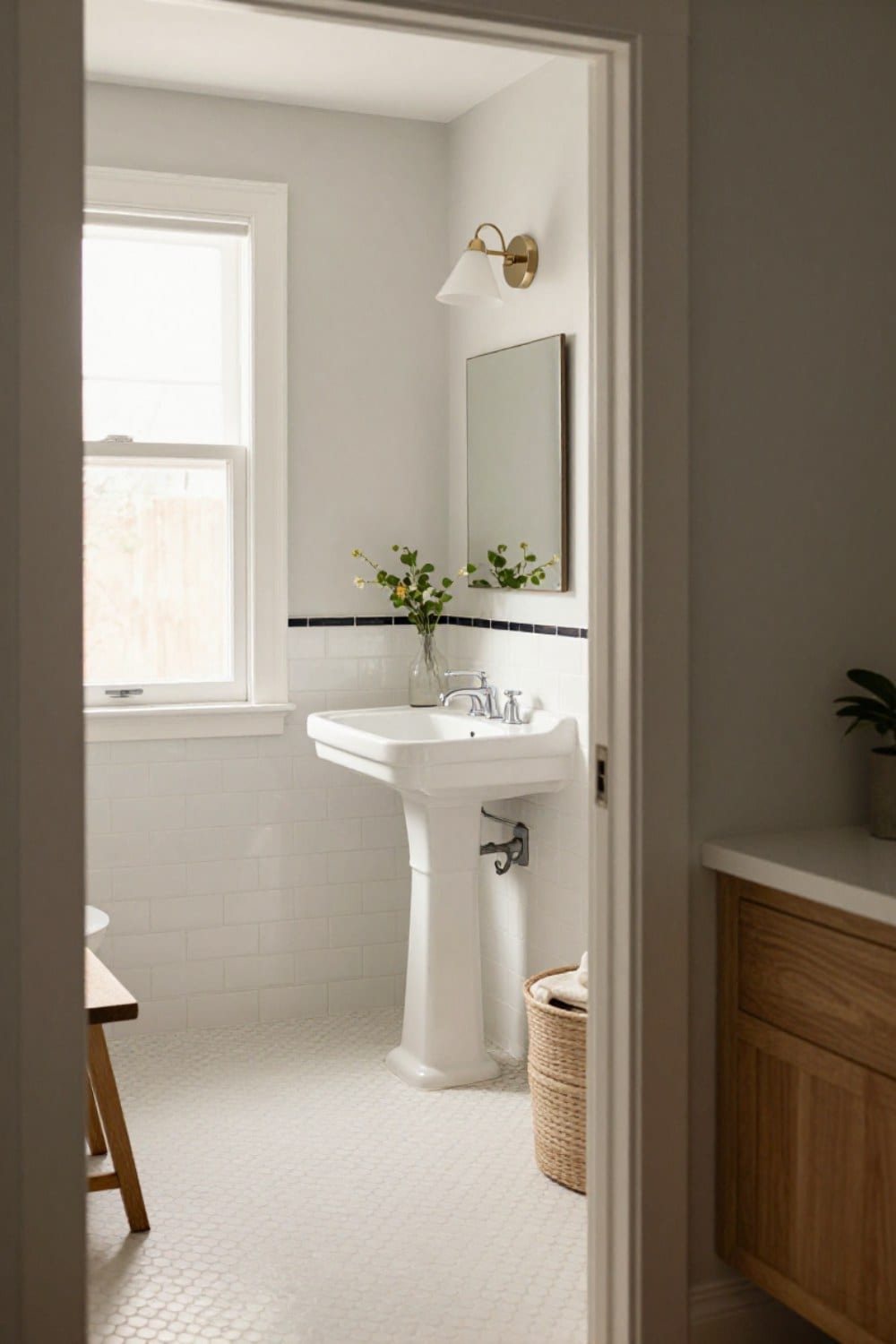
 Tile Ideas: The Patterns and Colors That Never Date
Vintage bathroom tile ideas that still look right decades on: the hex, penny, subway and checkerboard patterns, the glaze colors worth keeping, the grout rule that matters most, and how to decide between repair and reproduction.
Oct 29, 2026 · 12 min read
 Vintage Bathroom
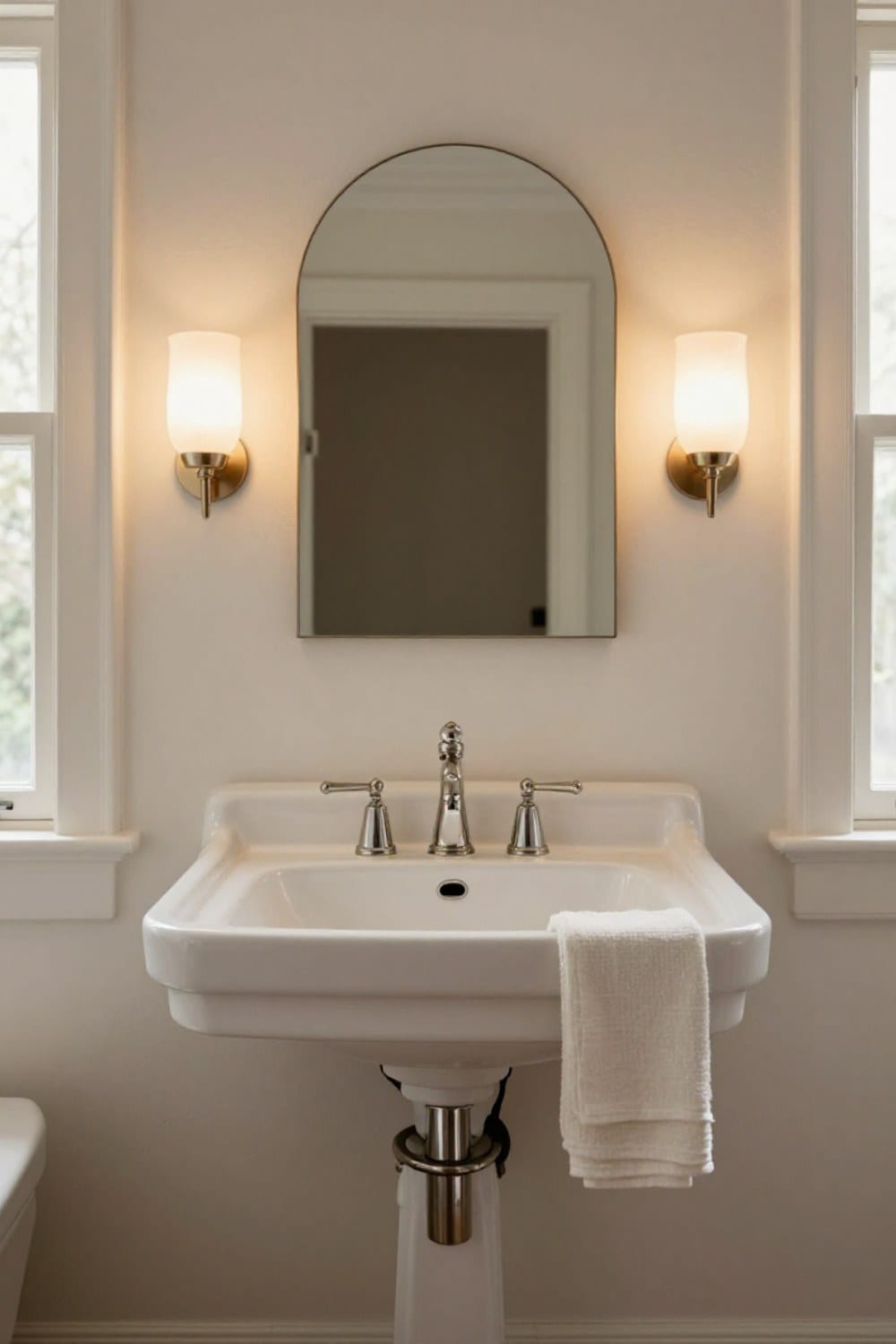
 Lighting: Sconces, Schoolhouse Globes and the Right Bulb
Vintage bathroom lighting that looks period and still flatters a face: sconces at eye height, schoolhouse and milk glass globes, nickel or brass, damp-rated fixtures, and the warm high-CRI bulb that makes skin look right.
Oct 26, 2026 · 12 min read