Cross Handle Faucets and Unlacquered Brass: Vintage Taps That Age Well
How to choose a cross handle faucet for a vintage bathroom: cross handles versus levers, porcelain buttons, hole spacing, finishes that age well, and what unlacquered brass really does over the years.

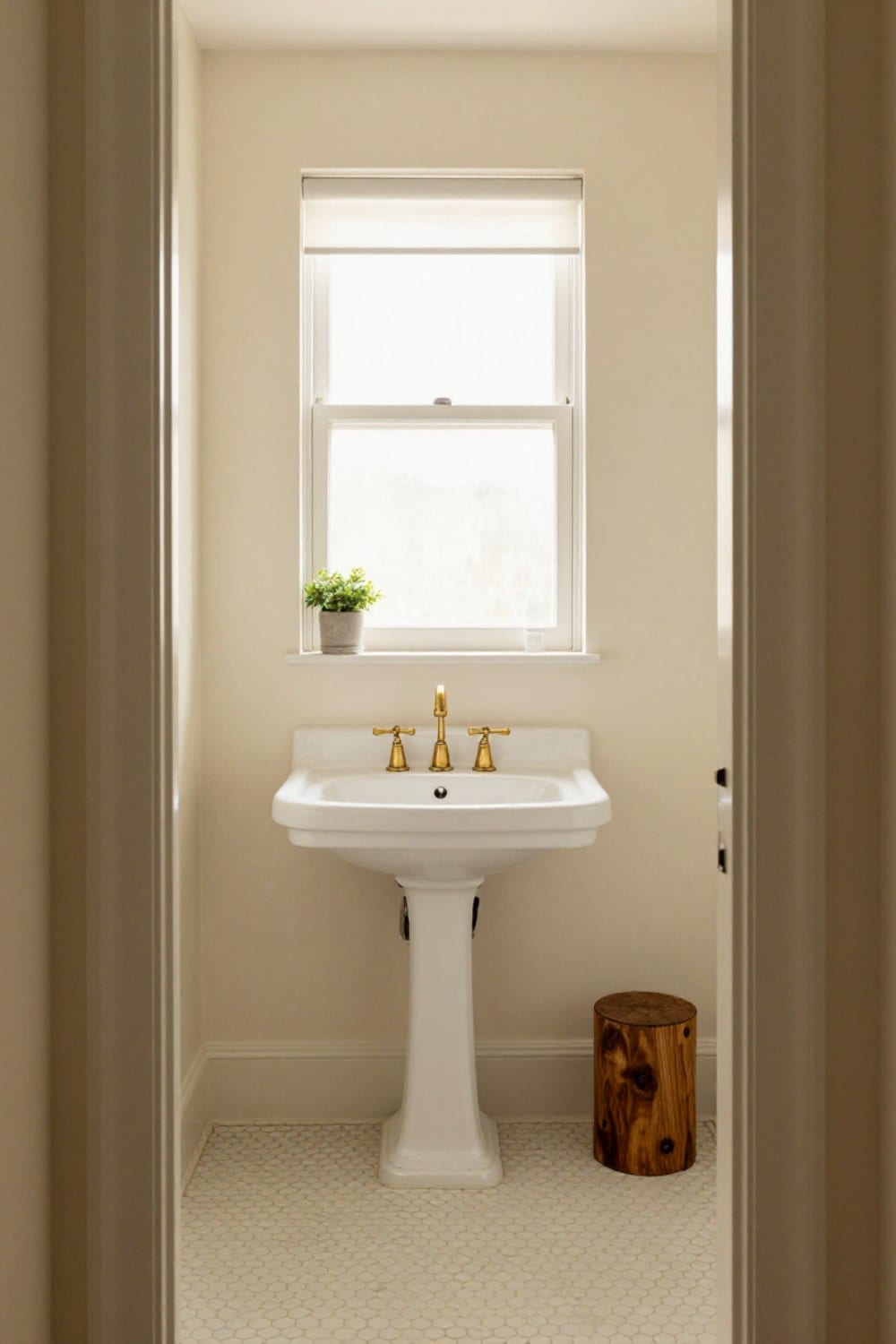
A cross handle faucet bathroom is the quickest way I know to make a new sink look like it has always been there. Four slim spokes, a white porcelain button at the center, a spout with a gentle curve, and the room suddenly has a past.
I'll admit where I started, though. When we bought our 1928 house the original taps were long gone, and someone in the 1980s had fitted a chrome single-lever faucet that looked wrong against the hex floor from the first day. I replaced it with the first cross handle faucet that matched a picture I'd saved. It looked right for about three winters. Then the finish began to pit, and I learned what the picture hadn't told me.
This is the guide I wish I'd had. It covers cross handles against levers, the porcelain buttons, which hole spacing your sink wants, the finishes that age well, what unlacquered brass really does once it is on your sink, and the parts inside that decide whether a faucet lasts. The rest of the finishing layer lives in vintage bathroom decor.
Why the faucet matters more than it looks like it should
It is a small object doing a big job. You see it every time you walk in, and you touch it a dozen times a day. A thin one wobbles. A handle that spins loose after a year tells you how the rest was made.
It also sets the metal for the whole room. Choose the faucet first and the towel bar, the sconces and the cabinet pulls can follow it. Choose them first and you lose an afternoon holding up near misses in the hardware aisle.
Cross handles or levers: which will you actually live with
Cross handles are the classic. Four arms, roughly 2 to 3 inches across, that give you something to grip from any angle. They were standard on bathroom taps from the early 1900s well into the 1930s, which is why they feel so right beside hex tile, a pedestal sink and polished nickel. The 1920s bathroom ideas guide shows that whole combination at work.
Levers are a single arm, and they are easier with wet, soapy hands. They aren't out of period, either. Plenty of 1930s bathrooms had slim metal levers, and they sit well in a deco or mid century room.
My rule: cross handles for a house built between 1900 and 1935, slim levers for one built between 1935 and 1965, and either if you love it. The look matters. So does who uses the sink.
If cross handles worry you, look for a larger diameter and a grooved grip, because a bigger handle gives you more leverage. Quarter-turn cartridges (more on those below) help too, since the handle only has to travel a short way.
Porcelain buttons and the period look
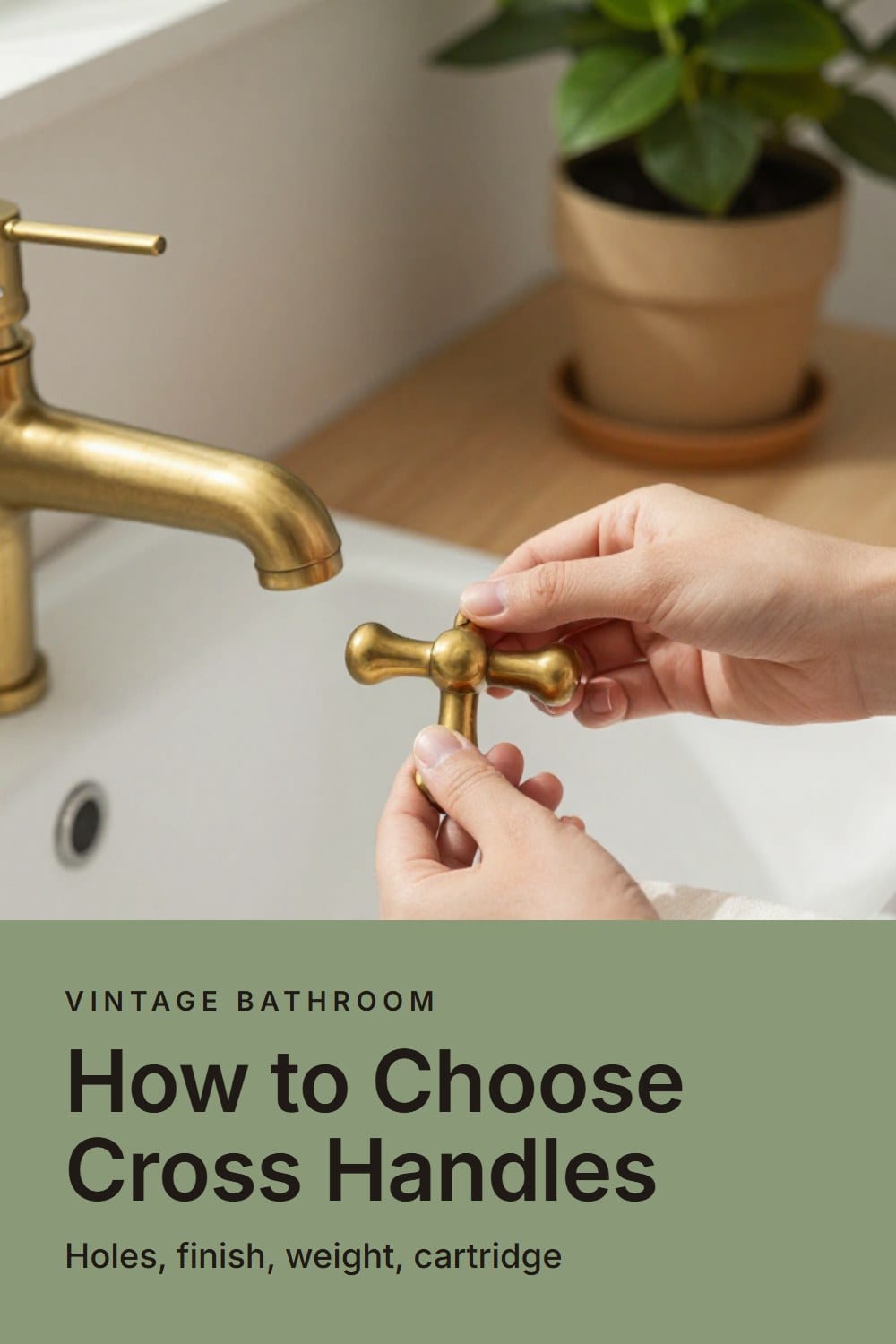
The small white disc in the center of many cross handles is a porcelain button. It is marked H and C, or Hot and Cold, usually in black lettering, with hot on the left and cold on the right. Old taps used them so nobody had to guess in a dim room. Now they are the fastest signal that a faucet is meant to look old.
Do you want them? In a true 1920s or 1930s bath, yes. They look right and they are the detail guests notice. In a later house, a plain metal center cap is quieter and reads as classic rather than period.
Two honest cautions. The buttons can chip if a ring knocks them, and the lettering on lesser reproductions rubs off. Before you buy, check that the maker sells replacement buttons separately. Good lines do.
A cross handle faucet bathroom starts with the holes in your sink
Before you fall for a faucet, look at the sink. The number of holes and the distance between them decide which faucet fits. Count them. Then measure from the center of one hole to the center of the next. Do that before anything goes in a cart.
Widespread
Three pieces: a spout in the middle and a handle on each side, with the outer holes usually 8 inches apart, center to center. The handles stand on their own, which is exactly the old look. It suits console sinks, washstands and many pedestal sinks, and it is my first choice whenever the sink allows it.
Centerset
One base carries the spout and both handles, with the handles 4 inches apart. A great many pedestal sinks from the 1920s to the 1950s were drilled for this. Look for a slim base and handles that stand clear of it. A wide plate with one sweeping line reads contemporary.
Wall mount
The spout and handles come out of the wall, which keeps the sink top clear and looks very much of its time. It suits a wall-hung or console sink. It also means opening the wall, and the spout has to reach far enough to land over the drain. A plumber should rough it in, and the sink should be chosen first. If you are still weighing sinks, pedestal sink storage ideas and vintage bathroom vanity ideas cover the choices.
Bridge
Two cross handles joined to a central spout by an exposed pipe. The style began in kitchens and moved into bathrooms because it looks so right on a console sink. Spacing is often around 8 inches, but check the maker's number against your holes.
The finishes that age well
The finish decides what the faucet looks like in year five. Some get better. Some get tired. Here is how I would rank them for an old house.
Polished nickel
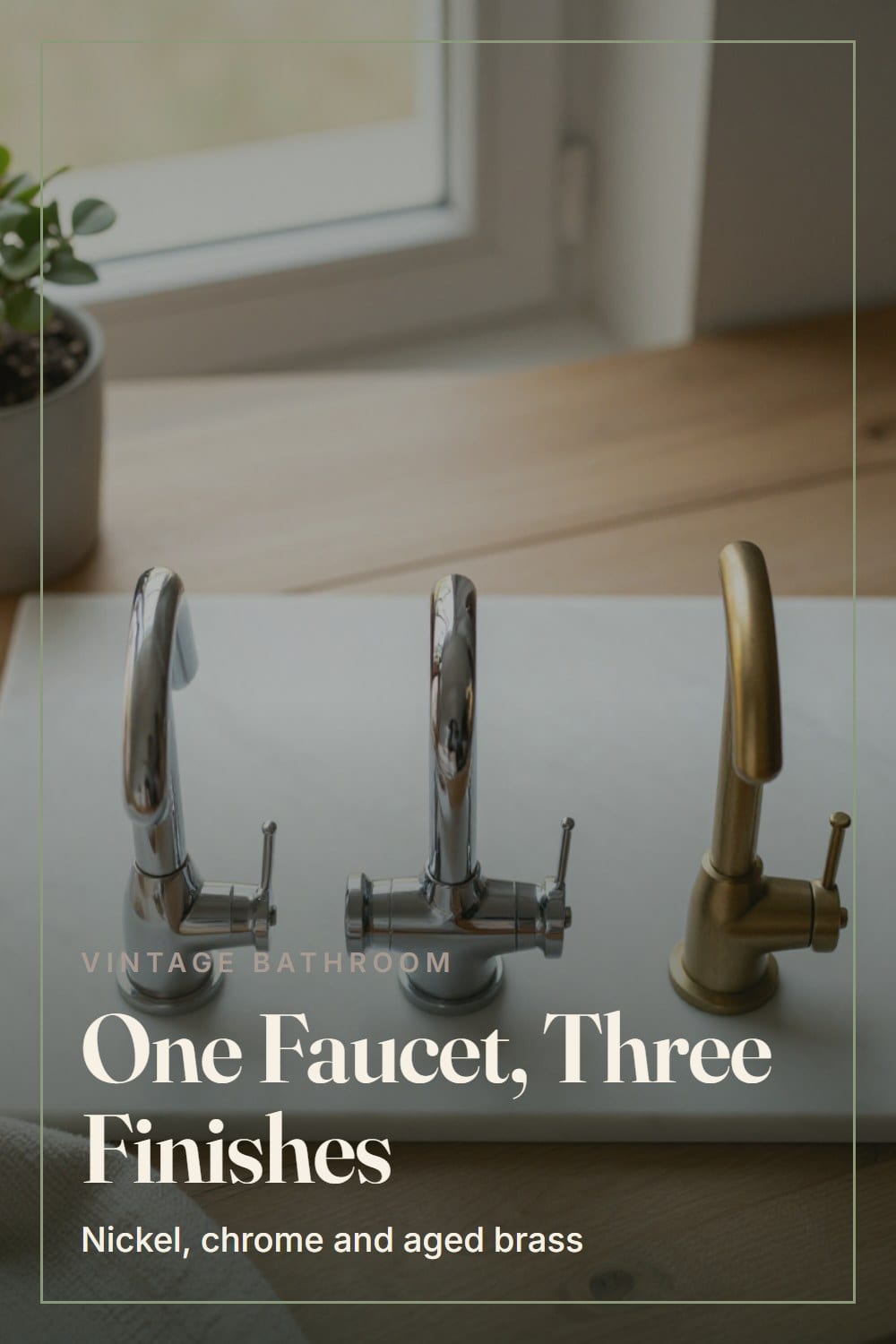
Warm silver with a faint gold undertone, softer than chrome. It was the finish of the 1920s, and it is still the one I would choose for a hex-tile bathroom. It shows water spots, and over time it develops a gentle haze that most people find lovely. A soft cloth brings the shine back.
Chrome
Bright, cool and tough. It became the standard in the late 1930s and suits 1940s, 1950s and mid century baths well. Good chrome is easy to live with. The thin, flashy kind is where the trouble starts, because a plated layer over a light body can pit or flake.
Unlacquered brass
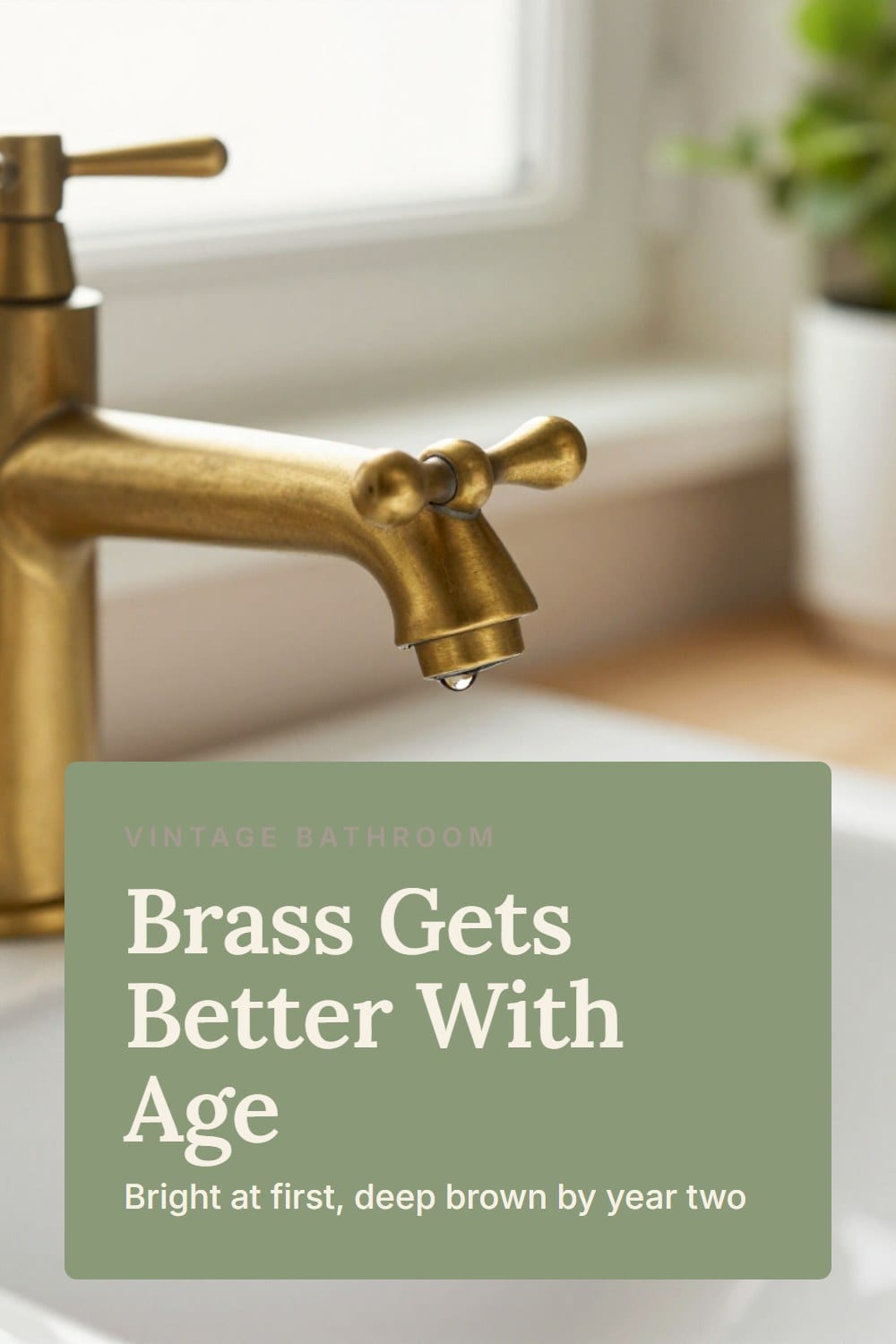
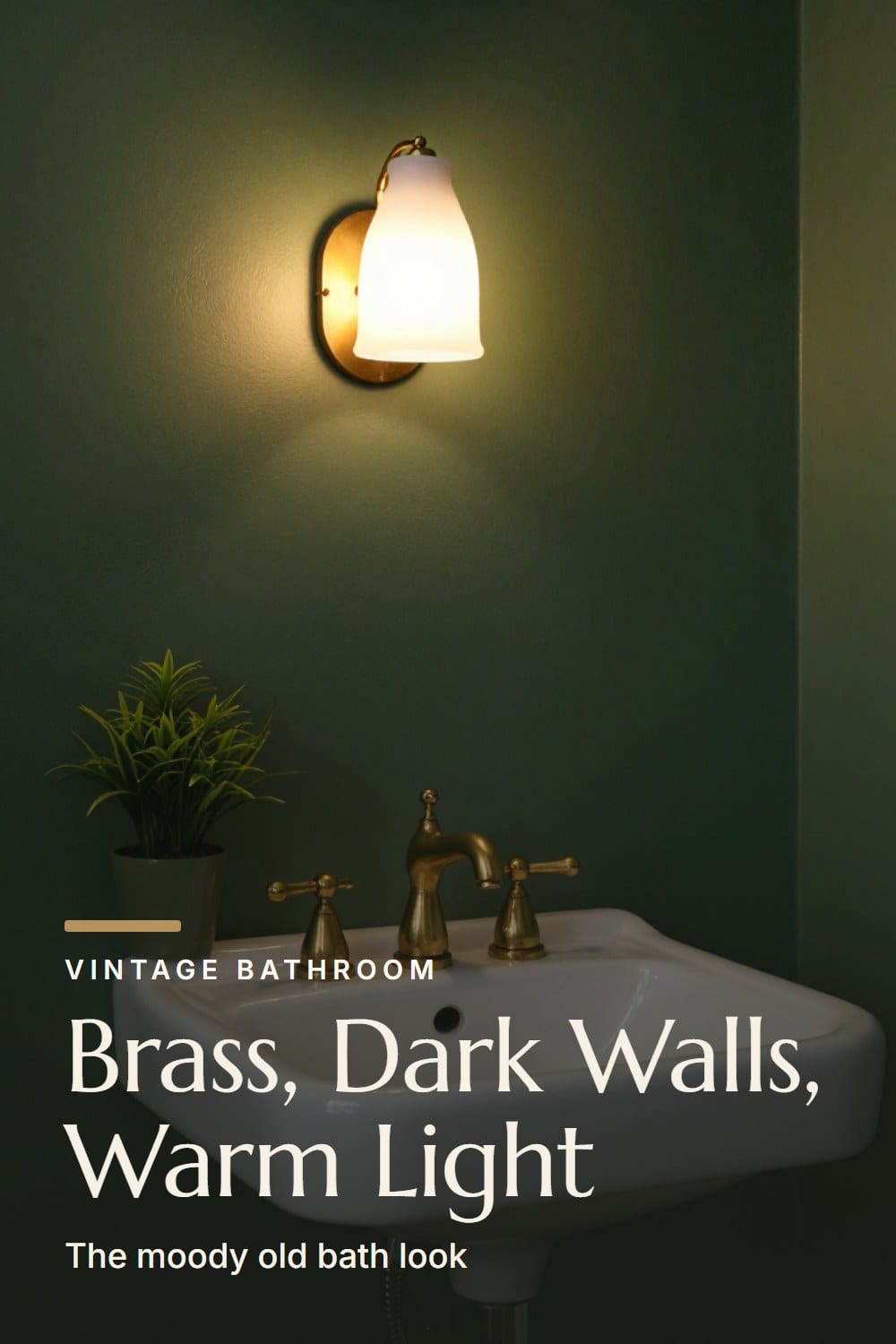
Raw brass with no coating. It starts out bright and slightly pink, then darkens to golden brown. No two faucets age quite alike. It is my favorite finish and also the one that deserves the most honest warning, so it gets its own section below. It is lovely against dark walls in a moody vintage bathroom.
Lacquered brass
Brass sealed under a clear coat. It stays shiny and stays the same until the coat wears or blisters, usually near the spout and handles first, and then it ages in patches. The only fix is stripping it, and that is a job. Buy lacquered if you want brass that stays gold. Buy unlacquered if you want it to age. Don't put one of each in the same room.
Matte black
Crisp, graphic and very much a feature of the last decade. In a new house it can look great. Against old tile and plaster it reads as a new idea in an old room, and it shows hard water spots as chalky marks. I don't recommend it for a vintage bath.
Living with unlacquered brass
Here is the timeline from my own powder room, where the faucet has been in for four years. The first week, it looks like a new penny: bright, slightly rosy. By the end of the first month the handles have darkened where your fingers land and the spout has a faint cloud near the base.
Around month six it turns patchy. This is the stage people dislike, and it is the stage to be patient through. The brass is still deciding what it will look like. By the end of the second year it settles into a deep, even brown with a soft glow, and no photograph I took in the first week looks like it.
You have two choices. Let it go: wipe it with a damp cloth, dry it and let the finish deepen. Or polish it: a gentle brass polish on a soft cloth brings back the gold, and it will darken again in a few weeks. I polished ours twice the first spring, then stopped, because I liked the brown better than the shine.
What is inside matters more than the finish
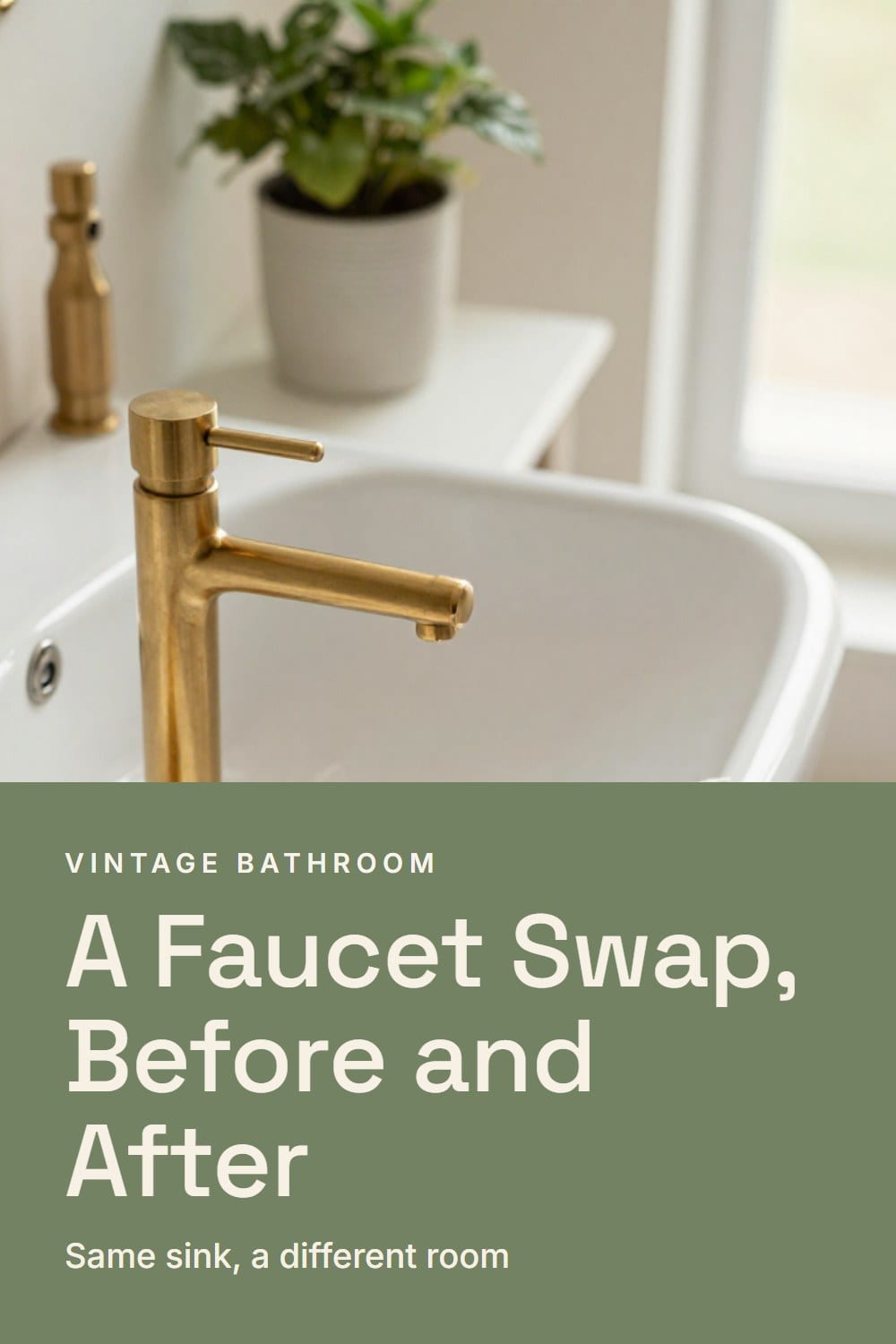
Pick up the faucet before you buy it, if you can. Solid brass is heavy. A body that feels light in your hand is usually thinner metal or plated zinc. Mine was the second kind, and that is exactly why the finish on my first cross handle faucet pitted in three winters.
Next, ask what is inside. A ceramic disc cartridge is the modern part that keeps old looks working. It turns a quarter or half turn, it doesn't rely on a rubber washer, and it rarely drips. Older compression valves take several turns and eventually need a new washer. They are repairable and charming, but you will repair them.
Where to invest, where to keep it simple
A solid brass widespread faucet with ceramic disc cartridges
It is the part you use every day. A heavy brass body doesn't pit, the cartridges can be replaced, and the finish ages into something better than new.
A plain metal towel bar and robe hook in the same finish
They carry no water and no moving parts, so a matching finish is enough. Hang them where a bar stands in the room and leave the engineering to the faucet.
Matching the tub filler and the shower
Buy the sink faucet, tub filler and shower trim from the same maker in the same finish. Brass and nickel vary between companies as much as white paint does. A polished nickel from one maker can look yellow beside another's silvery gray, and you will see the difference every time you step out of the tub.
For a freestanding tub, the filler can stand on its own supply lines, mount to the wall, or sit on the tub rim. Rim-mounted fillers are usually drilled 7 inches center to center, so check the tub before you shop. The clawfoot tub bathroom ideas guide covers placement and the shower question. Cast iron tubs are very heavy, so have a contractor check the floor framing before you commit.
In the shower, use cross handles on the valve so the room reads as one. An exposed riser with a simple shower head looks period. Keep to one metal on the plumbing, then add one other metal at most, usually in the lighting. Vintage bathroom lighting shows how to choose it. Anything above a tub or shower has to be damp or wet rated.
Faucet mistakes that make a vintage bath look off
- Buying before measuring. The holes in the sink decide the faucet, not the other way around.
- Mixing nickel on the sink with chrome on the towel bar. In daylight the difference is obvious.
- Choosing matte black for a room built in 1928.
- Hot and cold marked on the wrong sides of the button.
- A spout that ends short of the drain, so every rinse splashes on the rim.
- Lacquered brass in a steamy bath when you wanted a patina.
- Handles too small to grip with a wet hand.
How to choose a cross handle faucet, in order
- Count the sink holes and measure center to center.
- Pick the finish for your house's decade: nickel for the 1920s, chrome for the 1940s and later, brass if you will enjoy the aging.
- Choose cross handles for early houses, slim levers for later ones.
- Decide on porcelain buttons or plain center caps.
- Lift it. Solid brass feels heavy, and ceramic disc cartridges are worth looking for.
- Buy the tub filler and shower trim from the same maker in the same finish.
If you do one thing this week, take a tape measure to the holes in your sink and write the two numbers down. Everything else follows from them.
The Faucet Finish and Spacing Sheet
The printable is being finished. It will live here, free, with no sign-up wall.
Frequently asked
Are cross handle faucets hard to use?
Does unlacquered brass turn green?
Can I put a cross handle faucet on a modern sink?
Should the tub filler match the sink faucet?
Sarah Whitmore
she keeps the teak, she oils it in spring
Sarah has furnished the same porch three times and finally stopped. She writes about what actually survives a decade outdoors — which wood silvers, which fabric fades, and which inexpensive piece quietly reads the same as the expensive one.
SarahMore from this corner
 Vintage Bathroom
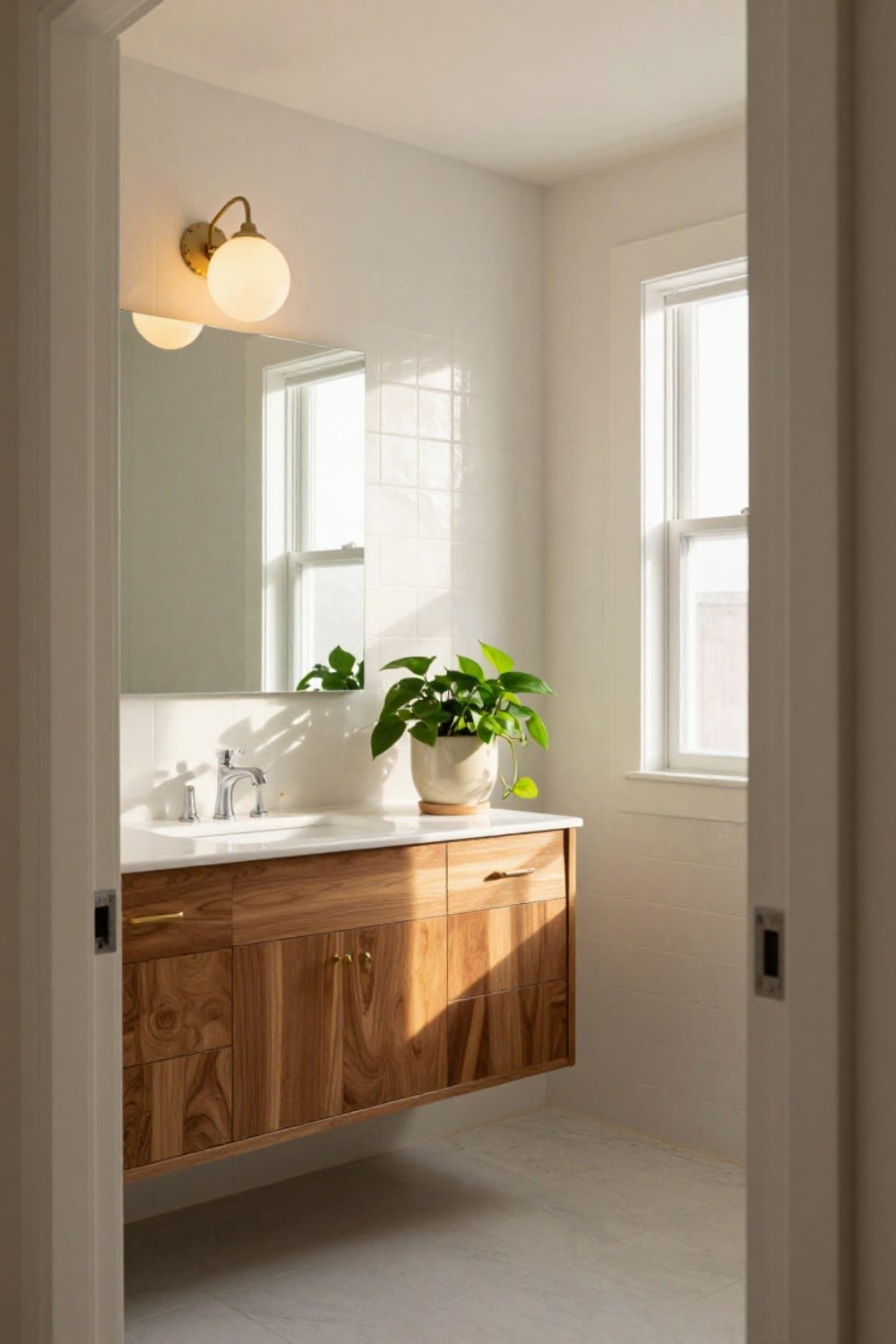
Mid Century Bathroom Ideas for a House Built in the 1950s and 60s
Mid century bathroom ideas for a ranch or split-level: the floating vanity, square and penny tile, globe lights, a wide mirror, and which original features to keep and update around.
Oct 31, 2026 · 12 min read
 Vintage Bathroom
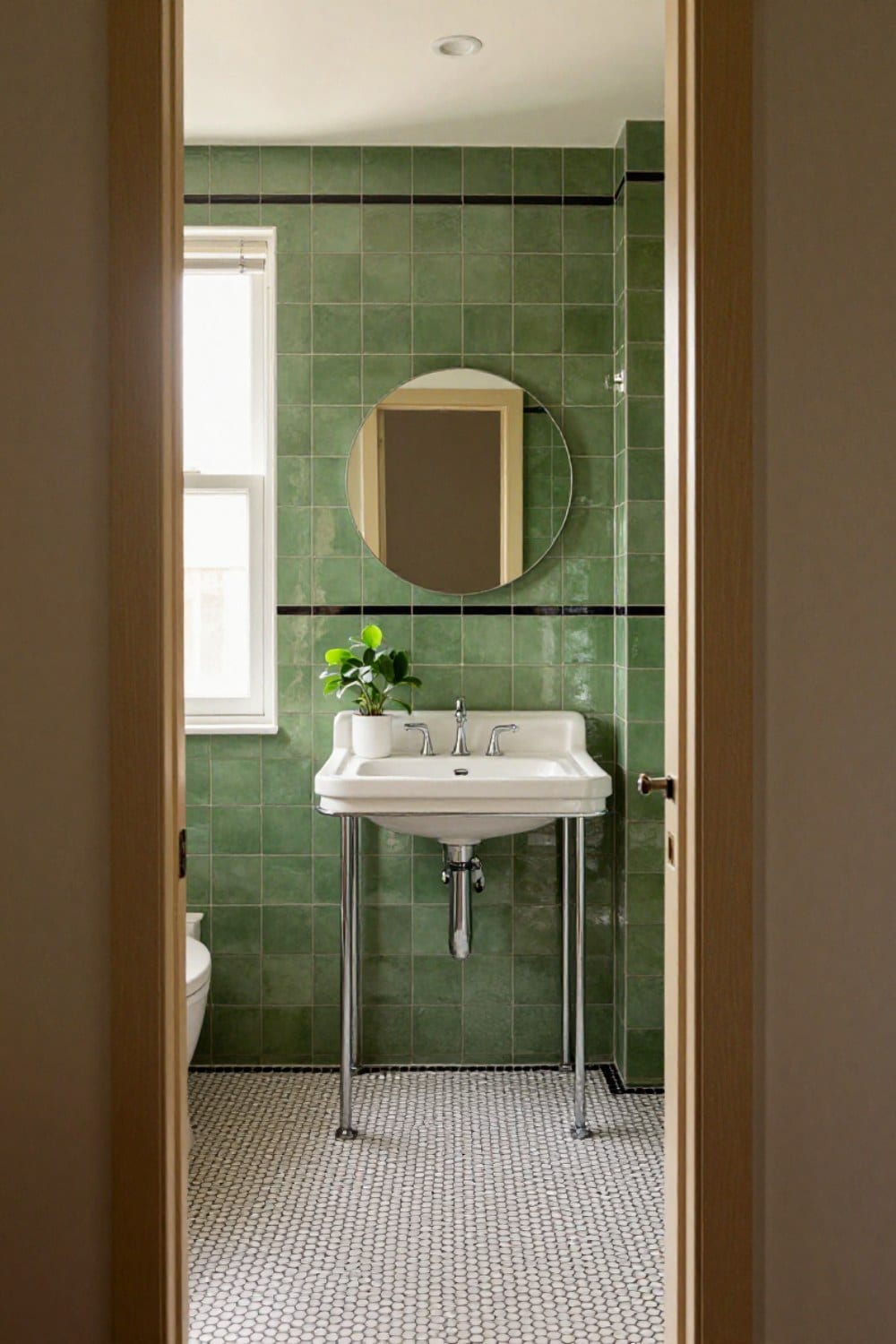
Art Deco Bathroom Ideas That Feel Classic, Not Costume
Art deco bathroom ideas scaled for a real house: the one-statement rule, black and white or green and black tile with a border, round mirrors, frosted sconces, a console sink on chrome legs, and the mistakes that make it look like a set.
Oct 31, 2026 · 11 min read
 Vintage Bathroom
 Tile Ideas: The Patterns and Colors That Never Date
Vintage bathroom tile ideas that still look right decades on: the hex, penny, subway and checkerboard patterns, the glaze colors worth keeping, the grout rule that matters most, and how to decide between repair and reproduction.
Oct 29, 2026 · 12 min read