Clawfoot Tub Bathroom Ideas: Placement, Floors and the Shower Question
Clawfoot tub bathroom ideas for a house you plan to keep: cast iron or acrylic, where the tub should stand, wall-mounted or floor-mounted fillers, how to add a shower, and the tile that belongs underneath.

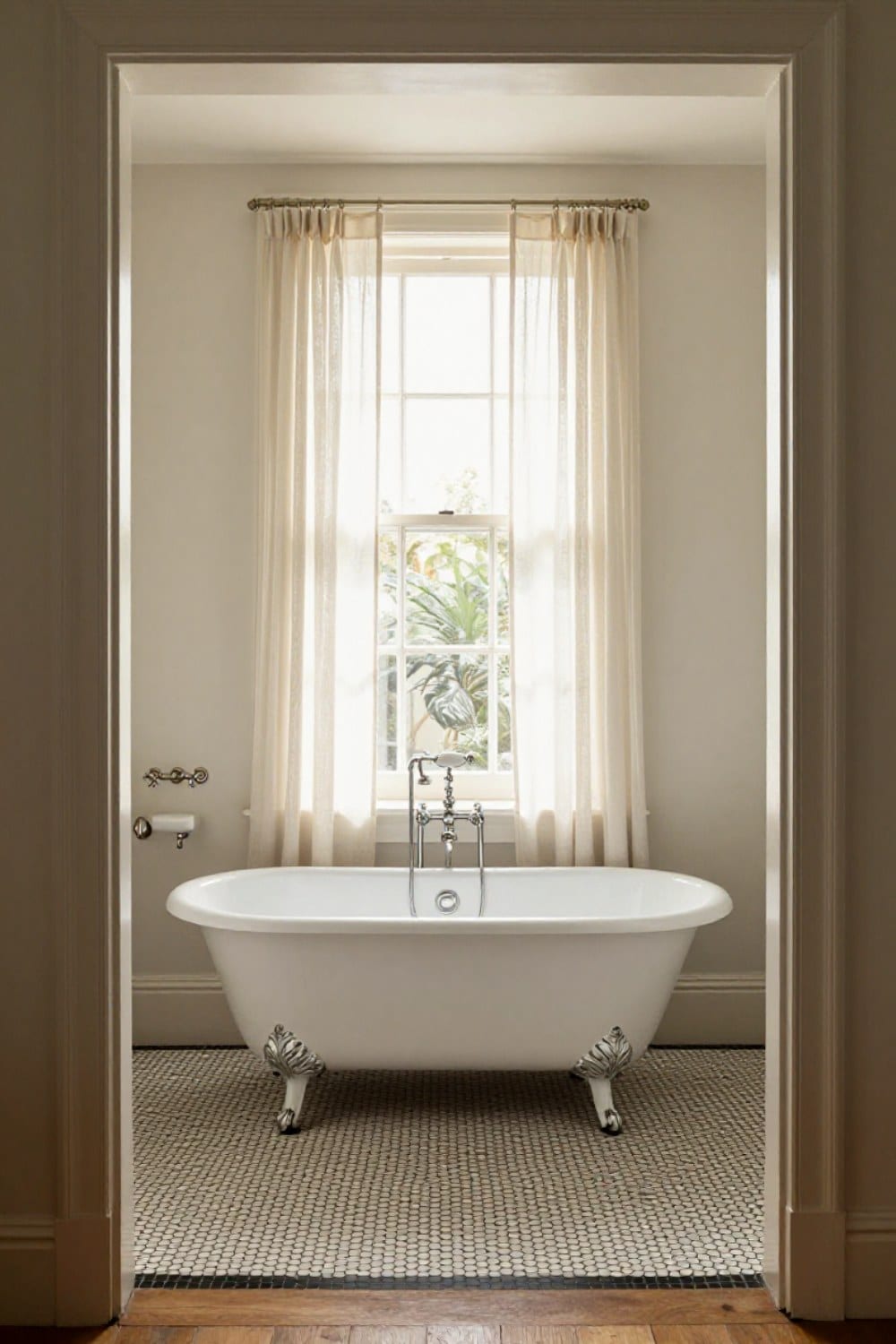
Clawfoot tub bathroom ideas almost always begin with the same photograph: a white tub on four feet, a window behind it, light spilling across the floor. It's the one fixture that makes a bathroom feel like it has a history, even in a house built last decade.
Here's what the photograph skips. The tub is heavy, it needs a few inches behind it so you can clean, and it has no wall to hang a shower curtain from. I live with one, and I'd choose it again. But I'd choose it with a plan.
This guide goes in the order I wish I'd made the decisions: the material, the shape, where it stands, the taps, the shower, the floor underneath, and what to do if you already own an old one that looks tired. It sits inside our vintage bathroom decor series, which covers the finishing pieces around it.

Cast iron or acrylic, and what you're really buying
Cast iron is the original. It's an iron body with a thick porcelain enamel fired onto it, and it holds heat for a long while, so a bath stays warm. It also weighs roughly 250 to 400 pounds empty. Water weighs about 8 pounds a gallon, and a tub holds dozens of gallons, so a full one is a serious load.
That's why the first call isn't to a tub shop. It's to a contractor who can look at the floor framing from below. On a slab or a well-supported floor it's usually fine. On an upstairs bathroom with original joists, ask before you order. I didn't, and we spent an anxious week on a question an hour with a contractor would have settled.
Acrylic reproductions look nearly the same from the doorway and weigh a fraction as much. They're easier to carry up stairs and easier on a floor you're unsure about. The trade is feel. Acrylic loses heat faster, flexes a little underfoot, and scratches more easily than enamel.
My rule: for an upstairs bath with old framing, acrylic is a sensible, honest choice. For a ground-floor bath you'll keep for decades, look hard at cast iron, new or salvaged. A salvaged tub needs one extra step. Ask whether the surface has been reglazed, and check the drain and overflow for chips and rust, because a chip in the enamel is a repair, not a charming flaw.
Roll-top, slipper or double-ended
Three shapes cover most of what you'll find, and the real difference is where you rest your back.
- Roll-top. The rim rolls outward all the way around, so you can lean on any edge. It's the easiest to find and the easiest to pair with a faucet that sits on the rim.
- Slipper. One end rises higher than the other, so you recline against a proper back support. The tall end wants a wall behind it, which makes this shape good for a corner or an alcove.
- Double-ended. Both ends slope up. It looks balanced from the doorway, which is why it turns up in so many magazines, and it works well when the taps sit at the middle of a long side.
I made a mistake here. I fell for a slipper tub on a shop floor and never lay down in one. Lie down in the shape before you buy it. If a shop won't let you, a salvage yard usually will.
Most of these tubs run 54 to 72 inches long and 28 to 31 inches wide. Measure the room, and measure every doorway and turn the tub has to travel through, because a cast iron tub can't be tipped and twisted the way a sofa can.
Where to put a clawfoot tub
A clawfoot is a piece of furniture standing on a floor, so give it the same thought you'd give a bed. Center it on something.
The best spot is under a window, centered, so the first thing you see from the door is light on the curve of the tub. If the window sits off to one side, centering the tub on the wall still reads calmer than centering it on the room. The next best spot is the long wall, tucked in with its back to the plaster.
Leave room behind it. About 6 inches is enough to get a hand and a cloth in. I pushed ours to within an inch of the wall for looks, and a month later I was fishing a dropped washcloth out from behind with a coat hanger. The underside and the back collect dust faster than you'd expect.
On the side where you step in, leave about 24 inches clear. A corner saves floor but makes the tub hard to clean on two sides, so I'd only choose a corner for a slipper tub whose tall end belongs there. If the room is narrow, look at the 54 to 60 inch lengths and run the tub along the long wall.
Tell your plumber exactly where the tub will stand before the floor is closed up. Supply lines and the drain are fixed once the work is done, and moving a tub 6 inches afterward means seeing the pipes.

Floor-mounted or wall-mounted tub fillers
The taps are the other half of the picture, and they come in two families.
A rim-mounted faucet sits on the edge of the tub and needs holes drilled in it. Original tubs usually came drilled with the holes about 7 inches apart, so check yours before you shop. A wall-mounted filler comes out of the wall on a spout with cross handles beside it, and the tub needs no holes at all. A floor-mounted freestanding filler rises from the floor on its own pipe, and it's the choice when the tub sits away from any wall.
If the tub goes against a wall, wall-mounted is the tidy answer. Nothing sits on the rim and there's nothing to clean around. If it floats in the room, only a floor-mounted filler looks right, and it needs plumbing run up through the floor, so that's a rough-in decision. Don't make it after the tile is down.
For the finish and the handle style that age well, read cross handle faucets and unlacquered brass. Whatever you choose, ask the plumber to confirm the spout clears the rim with room for a hand underneath.
How to add a shower to a clawfoot tub
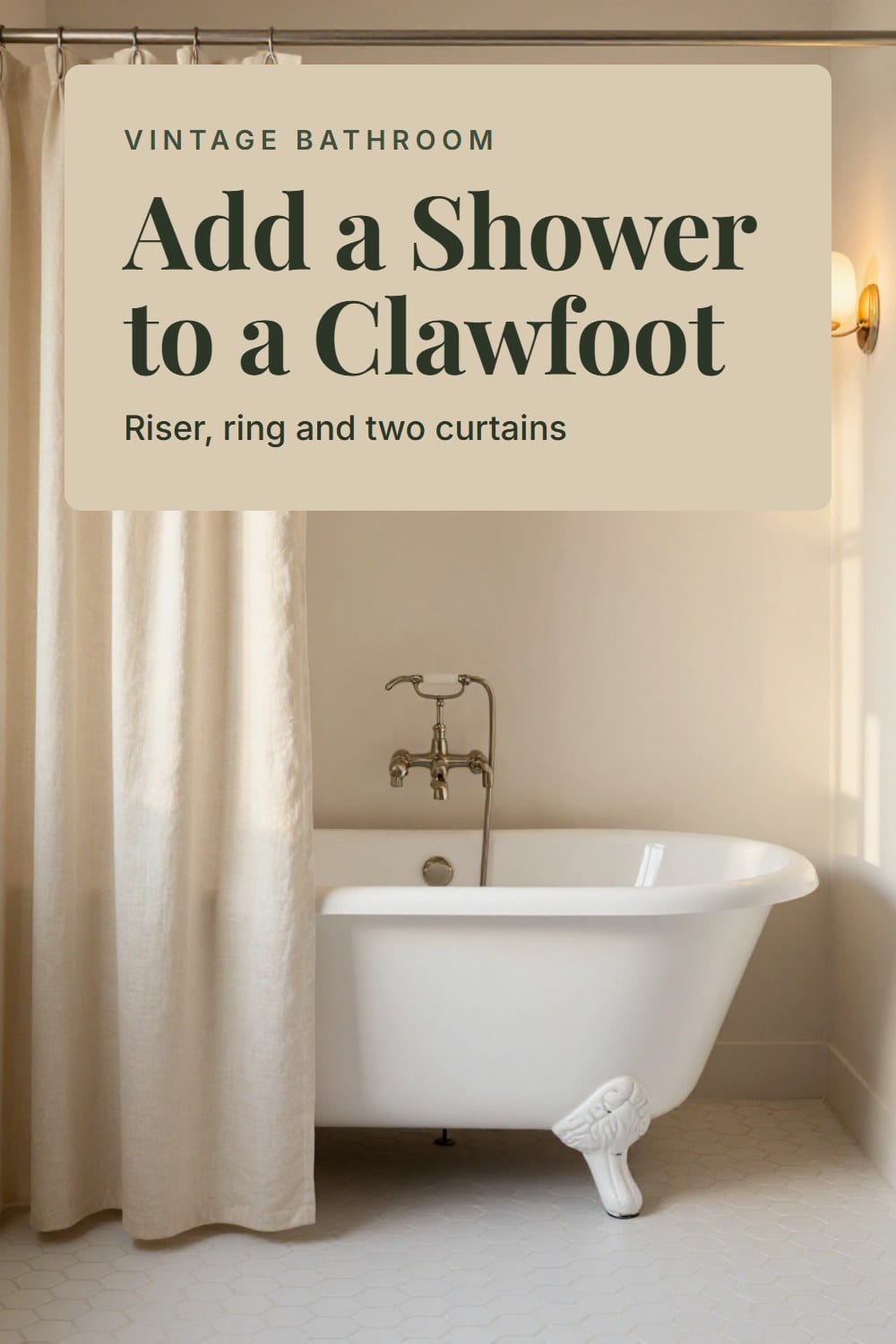
This is the question under every search for these tubs, and the honest answer is yes, with a few extra parts. A clawfoot has no wall to hold a curtain, so the curtain hangs from a ring.
The ring is oval, rectangular or round, and it hangs from the ceiling on rods or mounts to a wall. It circles the tub so the water stays inside. An oval ring follows the outline of the tub, which is why it looks right and a straight rod doesn't. Choose a ring a few inches wider than the rim all the way around.
Then use two curtains. An inner liner hangs inside the tub and keeps the water in. An outer curtain hangs outside the ring, and that's the pretty one: striped linen, a heavy cotton, whatever suits the room. Every clawfoot shower photo with a beautiful curtain has a plain liner hidden behind it.
The shower itself is usually a riser, an exposed pipe that rises from the tub filler with a round showerhead on top. It ties into the supply lines, so it's a plumber's job. Set the head high enough that you can stand without ducking, about 6 feet up or more.
What floor tile goes under a clawfoot tub
Tile the whole floor, not a rectangle around the feet. The tub should stand on something that looks finished.
My pick for a vintage look is a small mosaic: 3/4 inch hex or 1 inch penny round, in porcelain with a matte finish. All those grout lines give wet feet some grip, and they match the era of the tub. If you're torn between the two, hexagon vs penny tile goes through it. Black and white keeps the room classic. A pale gray with warm white grout is gentler.
Skip glossy tile near the tub. A wet glaze is slick, and you're stepping over a high rim. Look for a tile rated for floors, and ask the setter about a penetrating sealer on the grout.
The feet are the other concern. Four feet carry the whole load on four small points, so the floor has to be flat and firm. Ask the setter to use cement backer board or a proper mortar bed, and let the tile and grout cure fully before the tub goes in. Ask about a flat metal or hardwood pad under each foot to spread the load.
If you're pulling up an old floor first, stop and test. Old 9x9 floor tile, the black mastic under older tile, and some joint compounds can contain asbestos. Have it tested before you tear it out or sand it. Floors this age can hide a lot, and a lab test is the only way to know.
Refinishing a tub you inherited with the house
If the house came with a tub, don't rush to replace it. The enamel on old cast iron is thick, and the wear you see is often the top glaze rather than the body of the tub. Reglazing, also called refinishing, puts a new surface on it. It is a professional job. The prep involves etching and sanding, the coating is sprayed, and the fumes are strong while it cures.
Have the old surface tested for lead before anyone sands it. Some early enamels and glazes contained it, and sanding makes dust. A good refinisher will ask about that before they start.
With gentle care, a refinish lasts years. Gentle means a non-abrasive cleaner, a soft sponge, and no scouring powder. Skip rubber mats stuck to the surface, and fix a chip before water gets under the coating. The old body is heavy and well made, which is exactly why it's worth keeping.
Finishing the room around the tub
Once the tub is placed, the room needs only a few things, and they should earn their place.
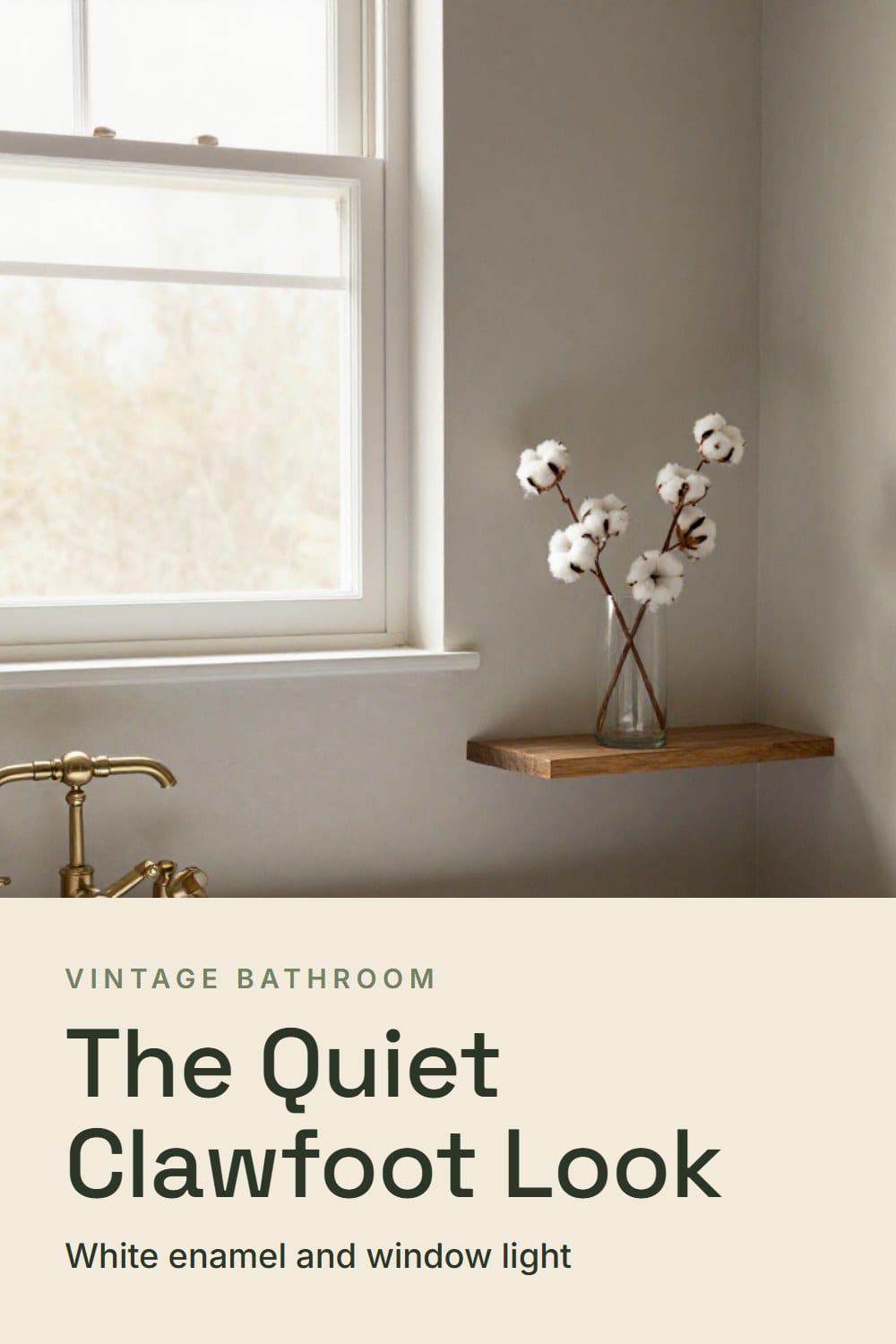
A wooden stool or a narrow table within reach holds a folded towel and a bar of soap on a dish. A towel rail on the wall, not on the tub, keeps the line of the rim clean. A sprig of eucalyptus on the stool smells good in the steam.
Light matters more than anything else you add. Wall sconces on either side of a mirror, or a pendant that hangs well clear of the tub, in a warm 2700K bulb, make the enamel glow instead of glare. Anything over the tub or shower must be rated for damp or wet locations, and wiring a vintage fixture is an electrician's job. Vintage bathroom lighting covers the options.
If you want pattern on the walls, vintage bathroom wallpaper ideas explains how to keep paper alive in the steam. And a pedestal sink keeps the floor open beside the tub, so look at pedestal sink bathroom storage ideas for where the towels and jars can go.
Mistakes I'd help you skip
- Ordering a cast iron tub before anyone has checked the floor framing.
- Buying a slipper tub without lying in one first.
- Pushing the tub flush against the wall, so nothing can be cleaned behind it.
- Picking a straight shower rod for a tub that wants an oval ring.
- Setting glossy tile under wet feet at the rim.
- Hanging a ring and two wet curtains from plaster alone.
A seven-point checklist before you order
- Have a contractor check the floor framing for the weight of a full tub.
- Choose the material: cast iron for a ground floor you'll keep, acrylic for older framing.
- Lie down in the shape, roll-top, slipper or double-ended, before you buy.
- Measure the tub, the room and every doorway the tub must pass.
- Pick the filler to match the wall: wall-mounted, or floor-mounted if the tub floats.
- Plan the oval ring and two curtains, and check the ceiling anchor.
- Choose a matte mosaic floor and plan the setter's work before the tub arrives.
My advice is to settle the floor question first and the tub second. Everything else follows from that. Buy the pieces you'll keep for years, and let the rest of the room catch up.
The Clawfoot Tub Planning Sheet
The printable is being finished. It will live here, free, with no sign-up wall.
Frequently asked
Do I need to reinforce the floor for a clawfoot tub?
Can you put a shower in a clawfoot tub?
How far should a clawfoot tub sit from the wall?
How long does a refinished clawfoot tub last?
Sarah Whitmore
she keeps the teak, she oils it in spring
Sarah has furnished the same porch three times and finally stopped. She writes about what actually survives a decade outdoors — which wood silvers, which fabric fades, and which inexpensive piece quietly reads the same as the expensive one.
SarahMore from this corner
 Vintage Bathroom
Mid Century Bathroom Ideas for a House Built in the 1950s and 60s
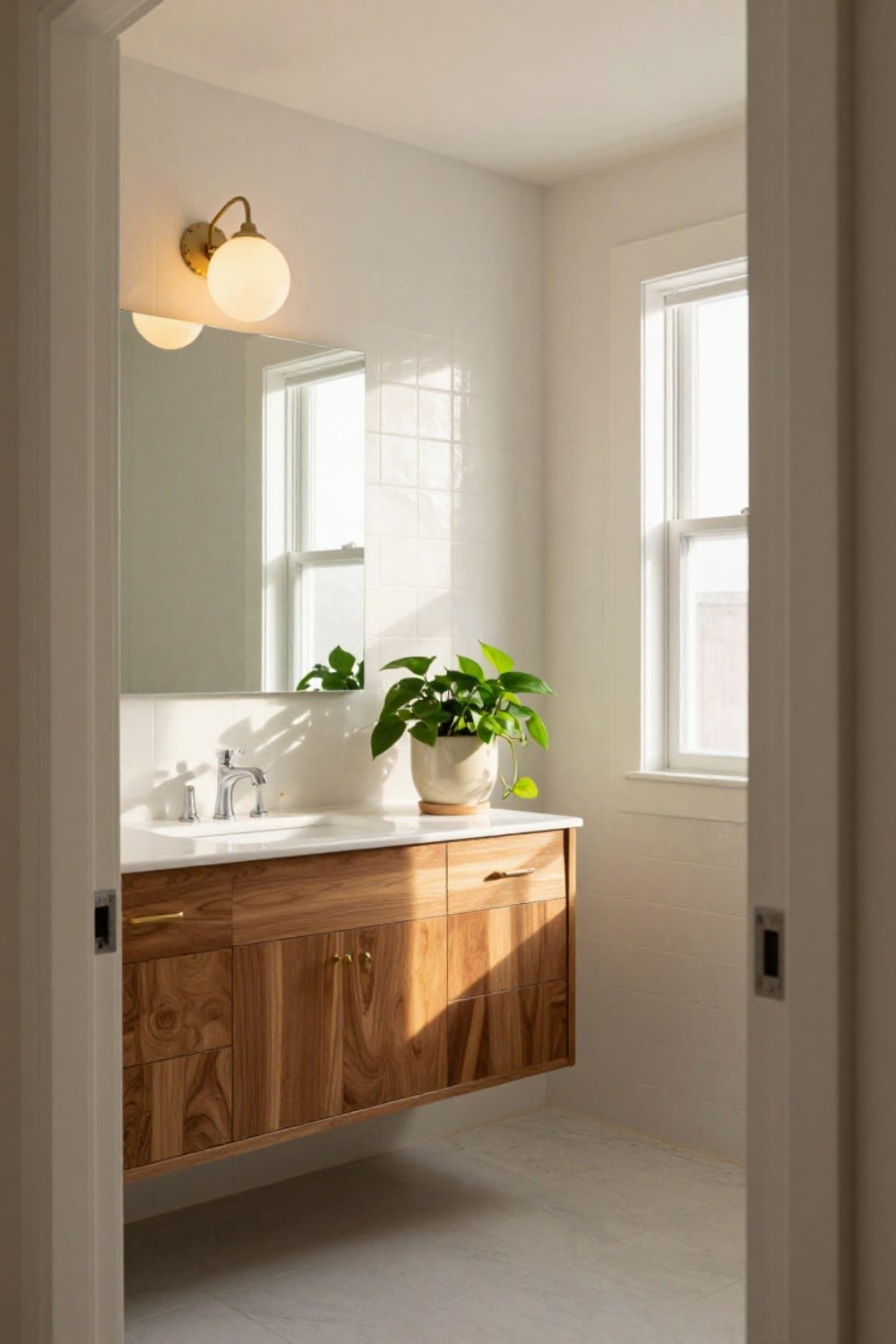
Mid century bathroom ideas for a ranch or split-level: the floating vanity, square and penny tile, globe lights, a wide mirror, and which original features to keep and update around.
Oct 31, 2026 · 12 min read
 Vintage Bathroom
Art Deco Bathroom Ideas That Feel Classic, Not Costume
Art deco bathroom ideas scaled for a real house: the one-statement rule, black and white or green and black tile with a border, round mirrors, frosted sconces, a console sink on chrome legs, and the mistakes that make it look like a set.
Oct 31, 2026 · 11 min read
 Vintage Bathroom
 Tile Ideas: The Patterns and Colors That Never Date
Vintage bathroom tile ideas that still look right decades on: the hex, penny, subway and checkerboard patterns, the glaze colors worth keeping, the grout rule that matters most, and how to decide between repair and reproduction.
Oct 29, 2026 · 12 min read