Vintage Bathroom Wallpaper Ideas (and How to Make It Last in the Steam)
Vintage bathroom wallpaper ideas for an old house: the patterns that suit a 1920s to 1950s bath, how to choose the scale, where to stop the paper above a wainscot, and the prep and fan habits that keep it from peeling.

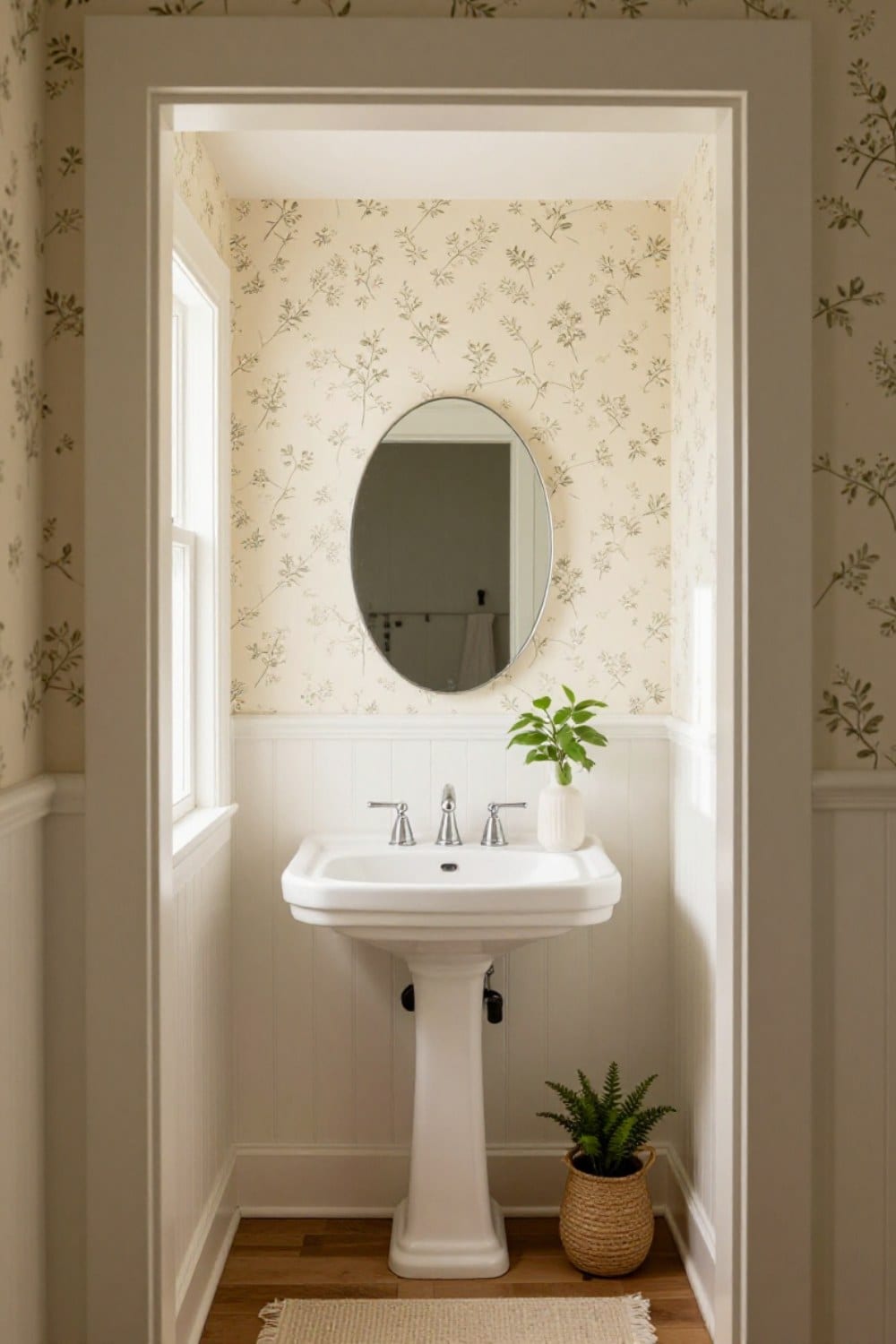
Vintage bathroom wallpaper is the fastest way I know to make a plain old bathroom feel like someone with opinions designed it. It is also the thing everybody warns you off. Steam, splashes, curling corners. They aren't wrong to worry. They're wrong to stop there.
Our 1928 house has a powder room off the back hall and a full bath upstairs, and I've papered both. The powder room paper is six years old and looks better than the day it went up. The first paper I hung upstairs was a delicate, uncoated floral. It let go above the tub inside one winter. Same house, same hands, very different result, and the difference was almost entirely what I bought and how I prepped the wall.
This guide covers which patterns suit an old bath, how to pick the scale, where the paper should stop above a wainscot, and the prep, ventilation and care that decide whether it lasts. It's one spoke of our vintage bathroom decor guide, which covers the rest of the finishing pieces.
Can you put wallpaper in a bathroom with a shower?
Yes, with conditions. A powder room, which has a toilet and a sink and no shower, is the easy case. Paper every wall. A full bath with a tub or shower is a conditional yes: the right paper, a sealed wall, a working fan and some distance from the spray.
That last part matters. I keep paper a couple of feet from anywhere water actually lands, and farther is better. The wall at the showerhead gets tile or paint instead. A tub with a curtain and a strong fan is a very different place from an open shower with no vent, so be honest about which one you have.
That honesty is most of the job. A bathroom that fogs the mirror for an hour will beat any wallpaper ever made. Fix the fan first, then buy the roll.
Which patterns suit a vintage bathroom?
Six families of pattern look right in a 1920s to 1950s bath. Each has its own personality, so choose by the mood you want, not by the photo you saved at midnight.
Small florals
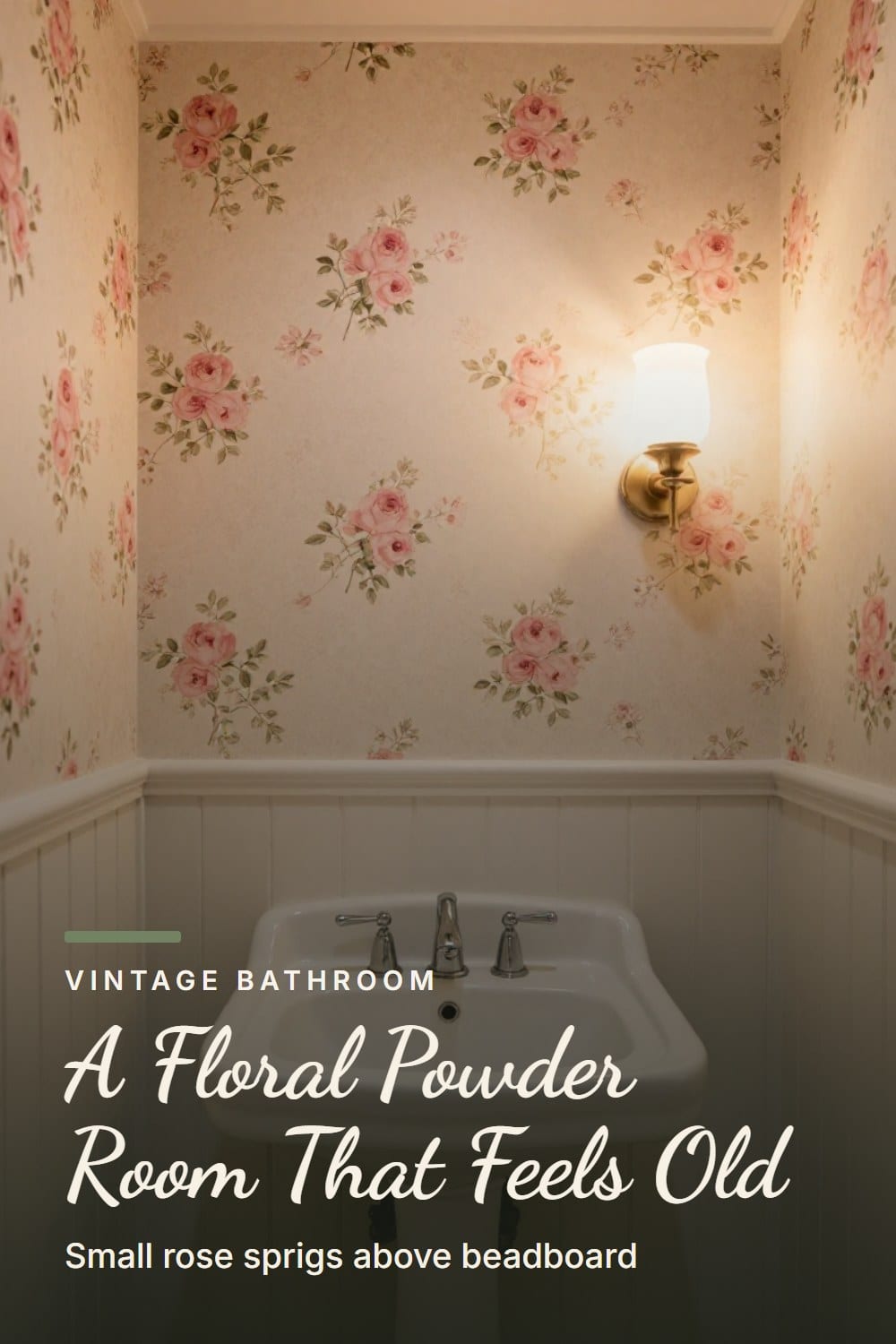
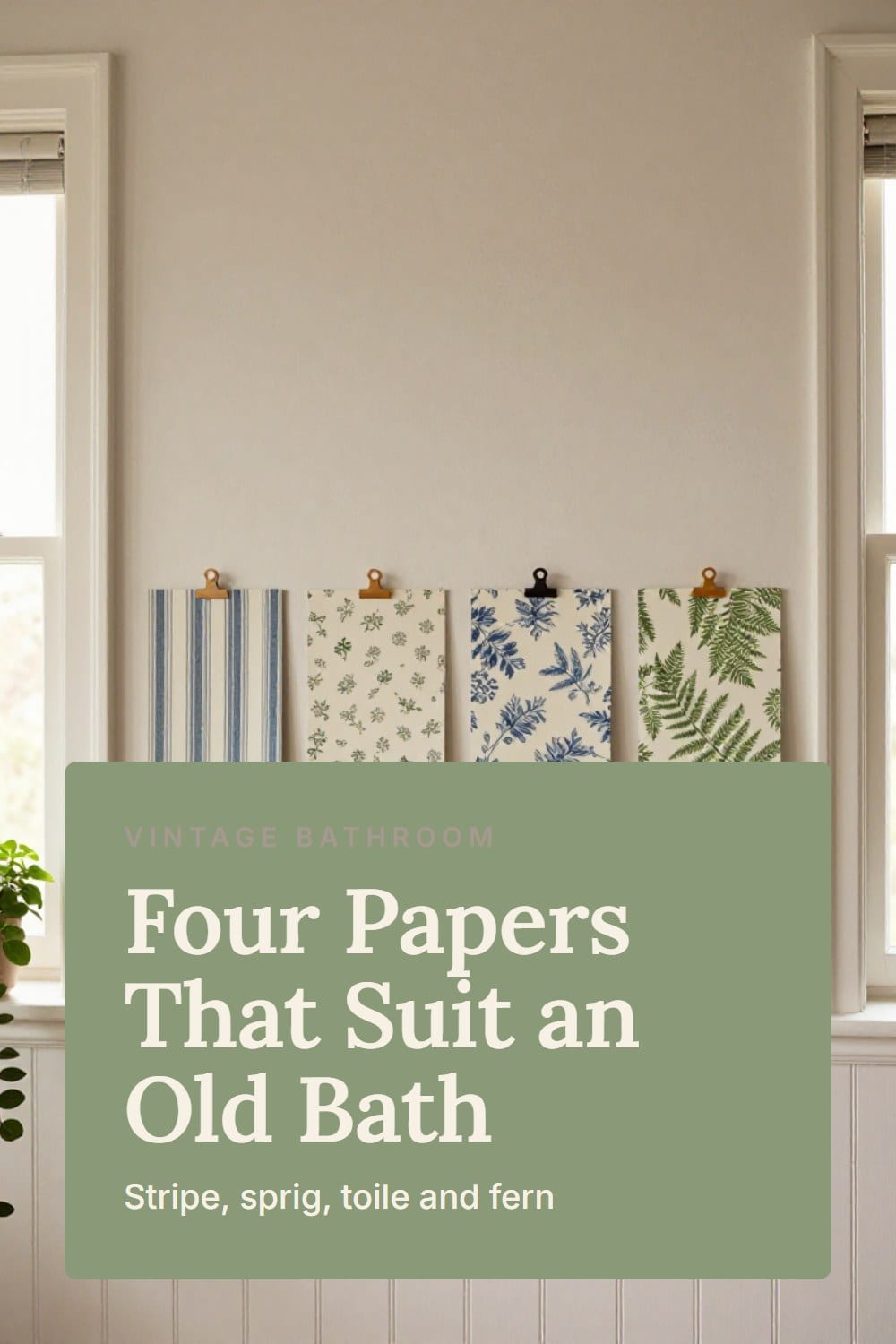
Ditsy florals, meaning small scattered blooms with a repeat of a few inches, are the classic powder room choice. They look quiet from across the room and charming up close. Roses on a cream ground feel 1930s. Tiny sprigs on pale blue or green feel 1950s.
This is the pattern I'd hand a nervous first-timer. Mine is a small sprig on a warm cream ground, and it's the paper people compliment without being able to say why. If you want to push further into florals, grandmillennial bathroom ideas goes there.
Chintz
Chintz is the big, glossy-looking cabbage rose print, often on a dark or cream ground. It's the grandmother's-house paper, and it's back. It needs a room that can carry it: lots of white woodwork, a plain floor, and nothing else with a pattern.
I once paired chintz with a patterned shower curtain. The room looked like a sofa had lost an argument with a window. One pattern per bathroom.
Toile
Toile is a scene drawn in one color: figures, farmland, garlands, usually in blue, red, black or sage on cream. It's the easiest pattern to make look expensive, because the single-color drawing keeps it calm. A pastoral toile with a white pedestal sink in front of it is very hard to get wrong.
Botanical
Botanical papers use ferns, leaves, fruit and branches, often drawn like a page from an old plant book. They sit well beside brass and dark wood, and they suit a bathroom because they feel like a garden. On a deep green or ink ground they edge into the look in moody vintage bathroom ideas.
Stripes
A stripe is the quietest vintage choice. A narrow ticking stripe feels 1920s, and a wider awning stripe feels 1950s. Stripes also make a low ceiling read taller, which old bathrooms often need.
The catch is that walls in old houses are rarely plumb, and a stripe announces every lean. Hold a level against your corners before you commit.
Scenic papers
Scenic or mural-style paper, meaning landscapes, birds on branches and garden views, is the showpiece. It belongs in a powder room, on one wall or all four, and nowhere near a shower. People spend two minutes in a powder room, and a scenic paper rewards two minutes.
How big should the pattern be?
Scale is the thing most people get wrong, so measure the room before you fall for a sample.
In a powder room around 5 by 6 feet, a small to medium pattern with a repeat of 2 to 6 inches wraps the room like a cozy box. A big pattern with a repeat of 18 inches or more can work in a tiny room too, but only if you commit on every wall. Half measures look nervous.
In a full bath, mid-scale patterns with a repeat of about 6 to 12 inches behave best. You're looking at walls broken up by a tub, a window and a door, and a huge scenic repeat gets chopped into confusing pieces.
Always order a sample and tape it to the wall for a week. Look at it in morning light, then under the lamp at night. A 2700K bulb warms a cream ground and can turn a cool blue slightly gray, which is covered in the vintage bathroom lighting guide.
I once chose a pattern off a screen. The blue arrived looking like a hospital curtain. A sample is small, and it is never wrong.
Where the paper should stop above a wainscot
The most convincing old bathrooms use paper above a wainscot, not floor to ceiling. It's the classic arrangement: a hard, wipeable surface where the splashes land, and paper where nothing touches it.
Beadboard wainscot usually runs 32 to 36 inches tall with a narrow cap rail. Tile wainscot in a 1920s bath often ran higher, anywhere from about 4 to 5 feet, finished with a bullnose or a small ledge. Vintage bathroom tile ideas shows which tile patterns pair best with paper above.
Paper that stops at a rail has a built-in finish. No raw edge, no awkward cut. Where paper meets a tile cap, I run a thin bead of clear, paintable caulk along the joint so water can't wick behind the edge.
Paint the beadboard and rail in satin or semi-gloss, in a warm white or a color pulled from the paper itself. Not the loudest color in the print. The quietest. The vintage bathroom paint colors guide has color families that work.
I once stopped a paper half an inch above the rail, thinking it looked tidy. It looked like a mistake. Tuck the edge right behind the cap, or run it clean to the rail.
Powder room or full bath: two different jobs
In a powder room, paper every wall, and pick the dramatic pattern. This is where chintz, scenic papers and dark botanicals live. Nobody showers in there, and nobody lingers.
In a full bath, paper one or two walls, away from the tub. The wall behind a pedestal sink or the wall opposite the tub is ideal. Keep the rest in tile, paint or beadboard. If you have a pedestal sink, pedestal sink bathroom storage ideas shows how to keep the wall above it uncluttered so the pattern gets seen.
The papers that survive steam
Here's what nobody tells you at the paper shop: not every wallpaper is built for a bathroom. The material matters more than the pattern.
Vinyl-coated and solid vinyl papers are the ones I trust in a full bath. The surface sheds water and wipes clean. Look for the word washable or scrubbable on the care label. Those are tested terms. 'Water resistant' is vaguer.
Non-woven papers, a blend of fibers rather than pulp, tolerate humidity better than old-fashioned paper. They also come off the wall in whole sheets years later, which your future self will appreciate.
Delicate papers such as uncoated, hand-printed, grasscloth, foil and flocked belong in a powder room or nowhere. One splash can stain them. My failed upstairs floral was uncoated paper, gorgeous for about four months.
The prep that stops wallpaper peeling
Peeling is almost never the paper's fault. It's the wall. Here's the order I follow now.
- Test before you touch. If the house predates 1978, the paint on the walls may contain lead, and old wallpaper backing or joint compound can hide other surprises. Have it tested before you scrape or sand.
- Clean and repair. Wash off soap film and any mildew with a mild detergent solution, and never mix bleach with ammonia or acids. Patch cracks in the plaster and let the patch dry completely.
- Prime the wall. A pigmented acrylic wallpaper primer seals the plaster, gives the paste something to grab and lets you strip the paper later without tearing the wall. On glossy old paint, a bonding primer often does the job with less sanding. Let it dry fully, usually overnight.
- Use the adhesive the maker names. Vinyl papers usually want a heavy-duty, mildew-resistant adhesive. Pre-pasted paper is fine in a powder room, but in a full bath I brush on a quality paste anyway. Don't thin it with water.
- Roll the seams. After about ten minutes, when the paste has begun to set, press each seam flat with a seam roller, then wipe the excess paste off with a damp sponge. Seams are where steam gets in.
- Keep the room dry. Give the paste a full 48 hours before any hot shower, then run the fan.
Run the fan for 20 minutes after every shower
Ventilation is the quiet half of all this. Run the fan during the shower and for about 20 minutes afterward. Leave the door ajar. Squeegee the wet tile if you can.
A weak, noisy fan does little. Old houses sometimes have a fan venting straight into the attic, which only moves the moisture upstairs. Check that the duct runs outdoors. And if you have no fan at all, add one before the wallpaper, not after. Fan wiring is an electrician's job.
Hang it yourself or hire a paperhanger?
A powder room is a good first project. Four walls, no tub, and a handful of rolls. A full bath with a window, a door and a sink is where I'd hire someone.
Pattern matching is the real skill. A straight match lines up side by side. A drop match offsets every other strip and wastes more paper. Buy one extra roll beyond your measurement, from the same print run, and check the lot number on each one. A standard American double roll nominally covers about 56 square feet, but pattern repeat eats into that.
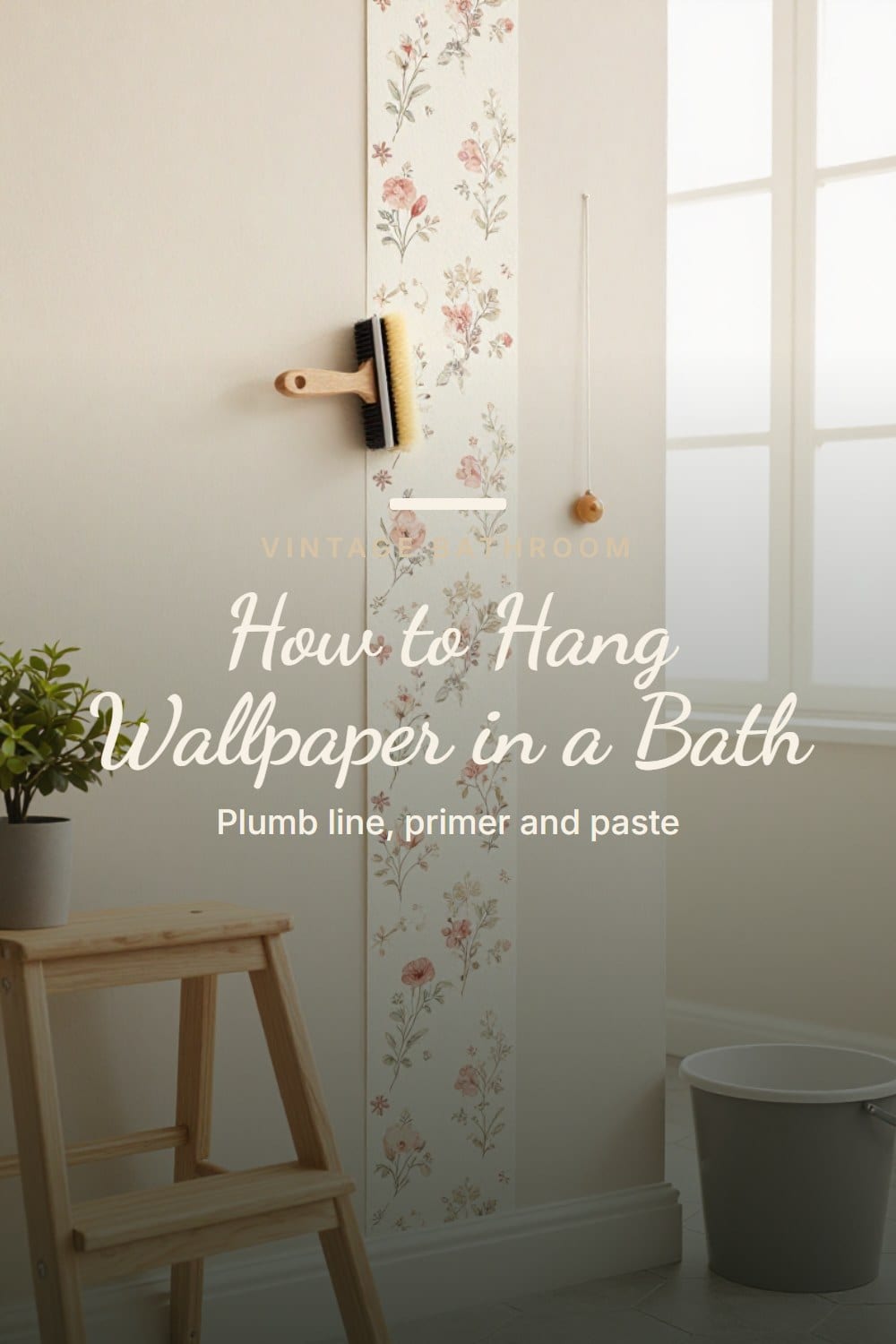
Old walls are never straight, so hang the first strip to a plumb line, not to the corner. I hung our powder room with a friend. It took a Saturday and half a Sunday, and there's one bubble I could still point to. Upstairs, I replaced the failed floral with a vinyl-coated paper and paid a paperhanger. Worth every minute.
Five vintage bathroom wallpaper ideas to borrow
- A small rose sprig on cream above white beadboard. Powder room, pedestal sink, nickel faucet. The softest place to start.
- Blue and white toile with a polished nickel mirror. Keep the woodwork white and the floor plain.
- A narrow green ticking stripe above a chair rail in a 1920s full bath, with the stripe kept to the wall opposite the tub.
- A fern print on a deep green ground in a powder room, with an aged brass sconce for warm 2700K light.
- A scenic paper on one wall behind the vanity, the other walls left in plain plaster color. Quiet everywhere except the one place you look.
A checklist before you order a roll
- Decide powder room or full bath, and where the water lands.
- Choose washable, vinyl-coated paper for any bath with a shower.
- Size the pattern repeat to the room, and tape a sample up for a week.
- Pick where the paper stops: a rail, a tile cap or the ceiling.
- Test the walls for lead before you scrape or sand.
- Buy a wallpaper primer and the adhesive the maker names.
- Check the fan, and plan on 20 minutes after every shower.
If you're planning the whole room, vintage bathroom ideas covers the order to do things in. Start with the fan, then the wall, then the paper. Buy fewer, better rolls and keep them for years.
The Vintage Bathroom Wallpaper Planner
The printable is being finished. It will live here, free, with no sign-up wall.
Frequently asked
Can you put wallpaper in a bathroom with a shower?
What kind of wallpaper is best for a bathroom?
How do you stop bathroom wallpaper from peeling?
Should I paper all the walls or just one?
Sarah Whitmore
she keeps the teak, she oils it in spring
Sarah has furnished the same porch three times and finally stopped. She writes about what actually survives a decade outdoors — which wood silvers, which fabric fades, and which inexpensive piece quietly reads the same as the expensive one.
SarahMore from this corner
 Vintage Bathroom
Mid Century Bathroom Ideas for a House Built in the 1950s and 60s
Mid century bathroom ideas for a ranch or split-level: the floating vanity, square and penny tile, globe lights, a wide mirror, and which original features to keep and update around.
Oct 31, 2026 · 12 min read
 Vintage Bathroom
Art Deco Bathroom Ideas That Feel Classic, Not Costume
Art deco bathroom ideas scaled for a real house: the one-statement rule, black and white or green and black tile with a border, round mirrors, frosted sconces, a console sink on chrome legs, and the mistakes that make it look like a set.
Oct 31, 2026 · 11 min read
 Vintage Bathroom
 Tile Ideas: The Patterns and Colors That Never Date
Vintage bathroom tile ideas that still look right decades on: the hex, penny, subway and checkerboard patterns, the glaze colors worth keeping, the grout rule that matters most, and how to decide between repair and reproduction.
Oct 29, 2026 · 12 min read