Moody Vintage Bathroom Ideas: Dark Walls, Old Brass and Warm Light
Moody vintage bathroom ideas for an old house: which dark colors suit an original bath, why flat paint fails in steam, how to keep the tile as the contrast, and the warm bulbs that make it all glow.

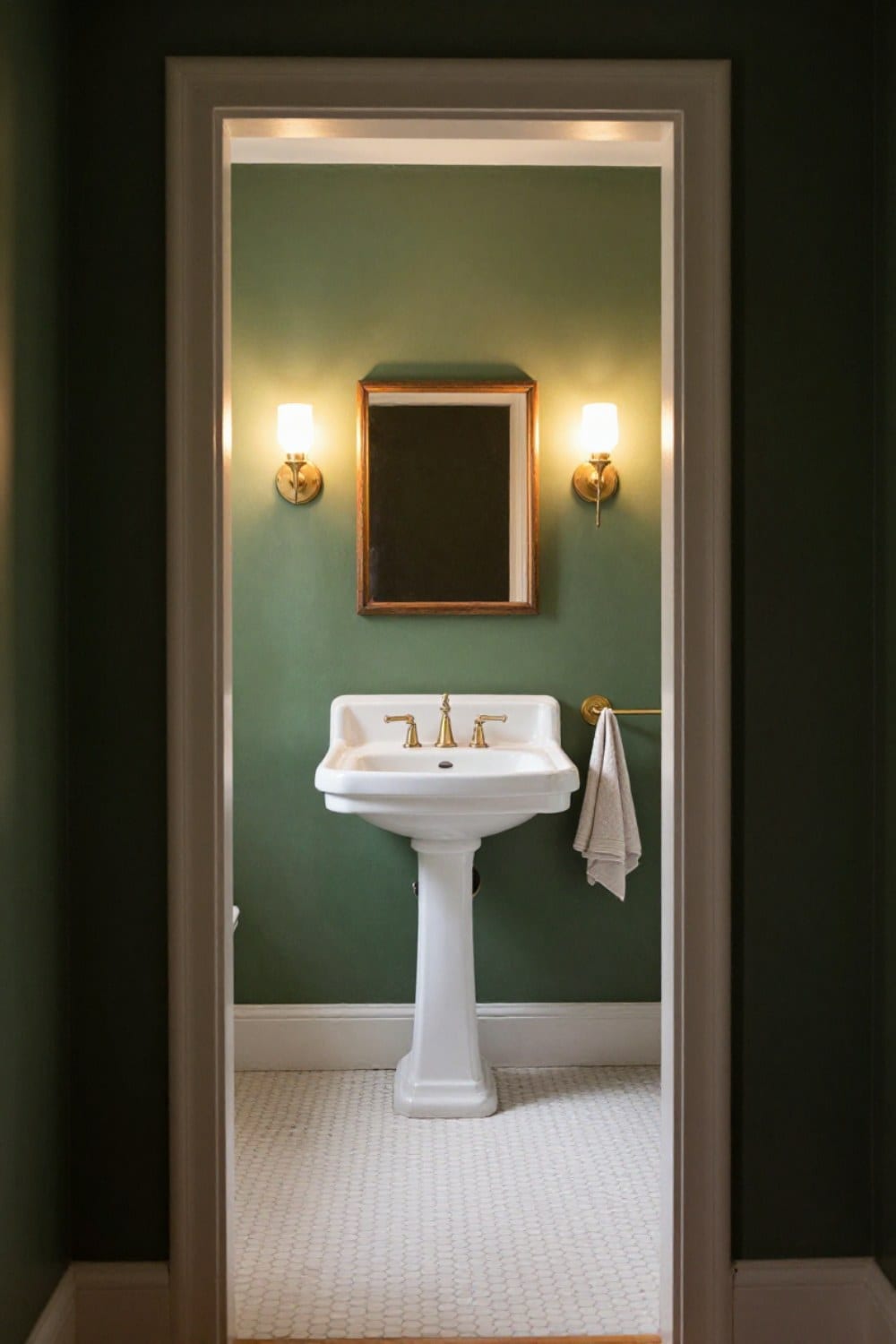
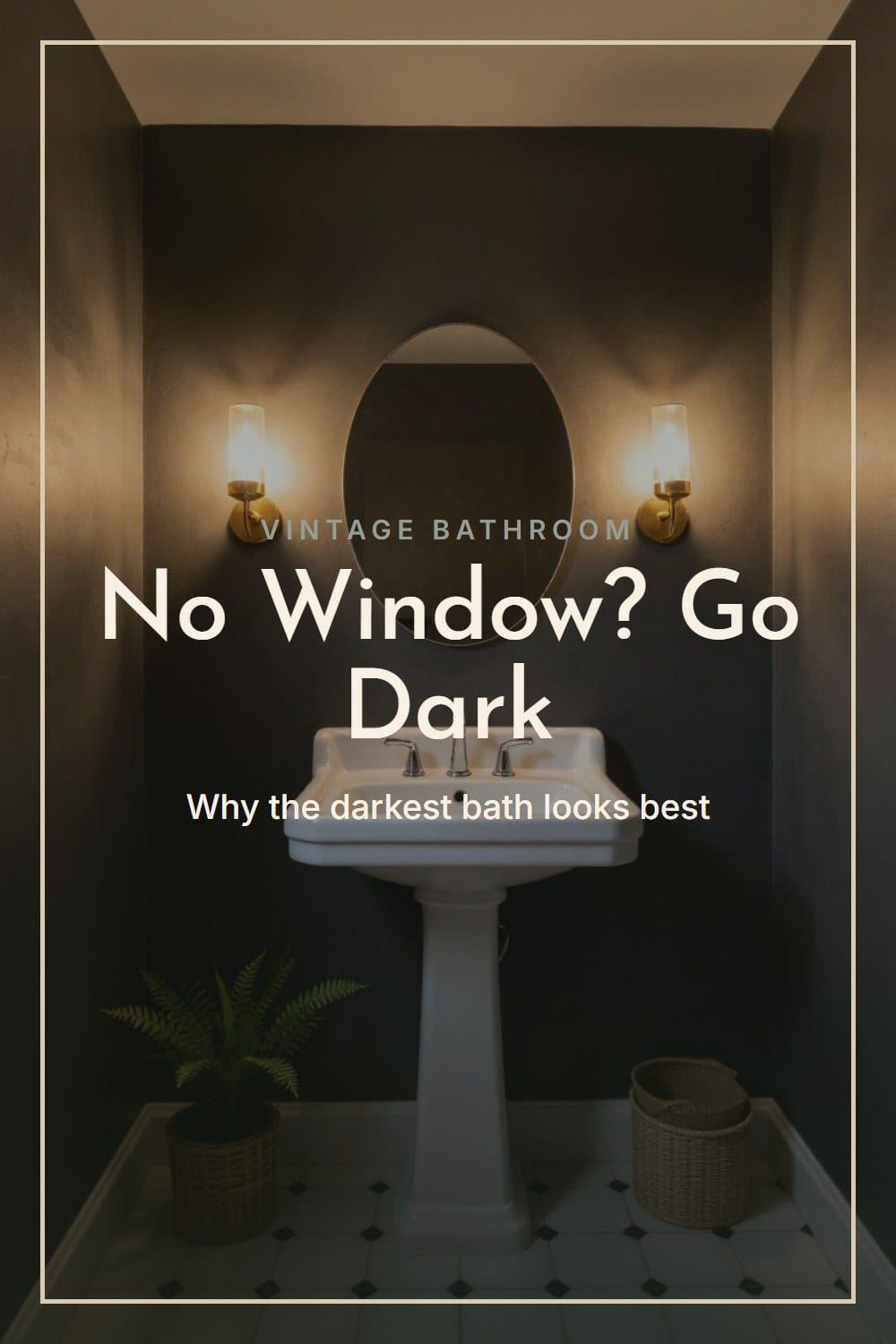
Moody vintage bathroom ideas begin with one small act of nerve: painting the walls of an old bathroom something other than white. Deep green. Oxblood. Ink blue. Charcoal. Then you let the original tile, a little aged brass and a few warm bulbs do the rest.
I resisted this for years. Our 1930s bath has a white hex floor and a pedestal sink, and I was sure a dark wall would turn it into a closet. I was wrong. The first night I switched on the sconces, the room looked as if it had always been that color.
Here's what I learned along the way: how to pick the color, which finish survives steam, why the tile matters more once the walls go dark, how to light the room and what to hang in it. I'll be straight about the fan, too.
Why dark walls suit an old bathroom
Old bathrooms come with things you can't change. A pedestal sink that's been there since the Truman years. A tub against the wall. Plaster that has seen ninety winters. White paint puts a spotlight on every one of those. A deep color gives them a backdrop and lets them look like character instead of problems.
The tile is the other half of it. A 3/4 inch hex floor or a 3x6 subway wainscot reads as crisp and deliberate against a dark wall. Against white drywall paint, the same tile can look like it's missing its frame.
My first attempt was a light gray-green, a safe halfway step. It made the white tile look dingy and the room look unfinished. Halfway is the one place a moody bathroom doesn't work. Go properly dark or leave it alone.
Choosing your dark: green, oxblood, ink blue or charcoal
All four work in an older house. They just feel different, so match the color to the mood you want at 9 p.m.
- Deep bottle green. The classic. It sits beautifully beside brass and white tile and feels like a library. If your tile is already green, the green tile bathroom ideas guide shows how to layer greens without clashing.
- Oxblood. A brown-leaning red, rich and a little theatrical. It glows under warm light and is the one I'd pick for a powder-room-sized bath.
- Ink blue. Navy leaning toward black. It's the calmest of the four and flatters cream tile.
- Charcoal. A soft black with a hint of warmth. It's the most modern of the group, so add brass and wood to keep it old-house.
Pick a color with a warm undertone, because you'll be lighting it with warm bulbs. A cool blue-green looks fine in daylight and turns icy at night. I'm staying in color families on purpose here. Brush a big sample on the wall, look at it in the morning and again with the lights on at night, and live with it for a few days. The vintage bathroom paint colors guide goes deeper on pairing with existing tile.
Eggshell or satin: why flat paint fails in steam
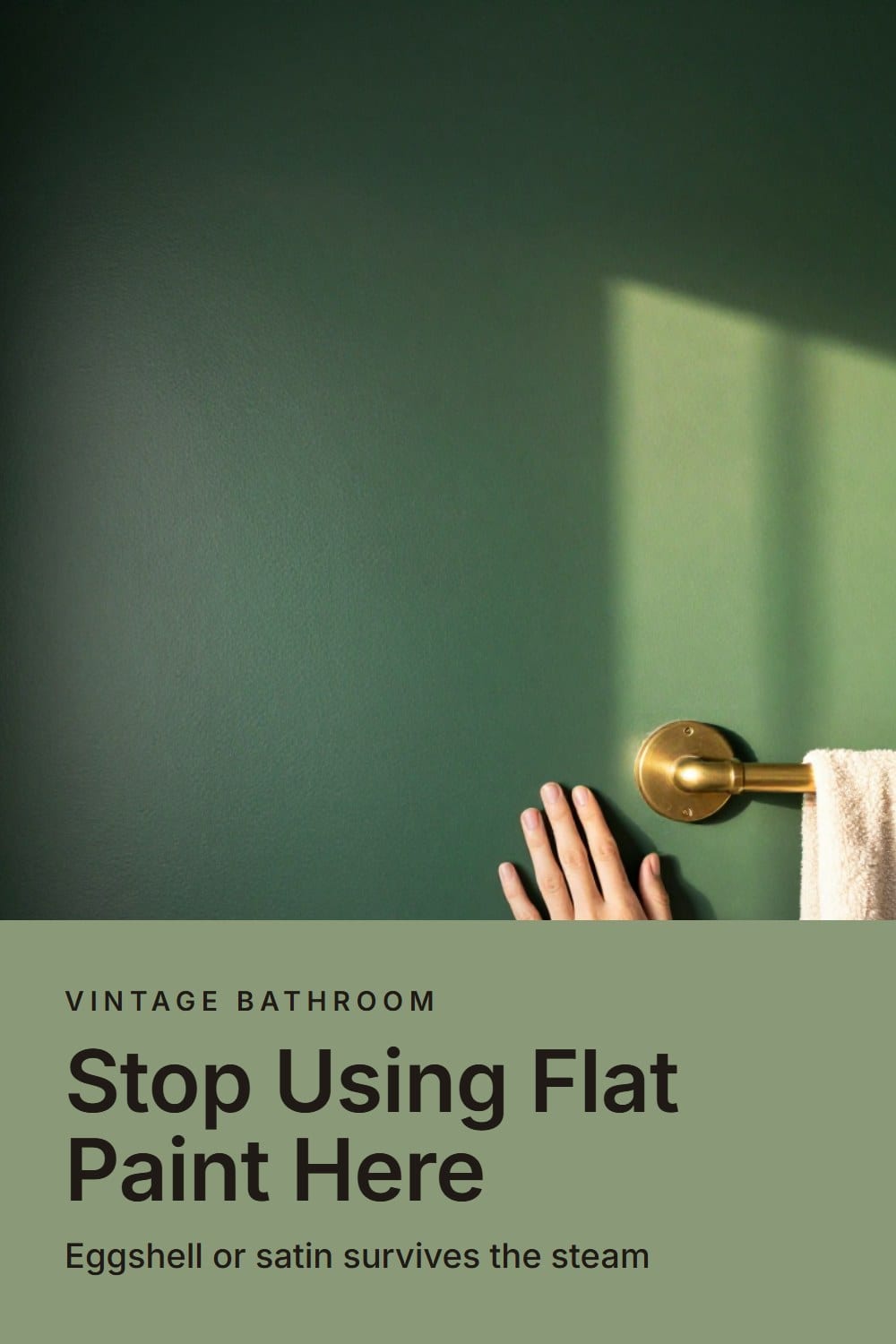
Flat paint is porous. Steam and splashes soak in, and when you wipe a spot, you leave a shiny, polished patch that shows forever on a dark wall. That's the whole reason flat paint doesn't belong in a bathroom.
Eggshell has a faint sheen and wipes clean. Satin has a bit more and wipes cleaner. I use satin on the wall beside the tub and sink, where the splashes land, and eggshell on the upper walls and ceiling. High gloss is out: it shows every ripple in old plaster, and old plaster ripples.
Look for a paint made for bathrooms, with mildew resistance built into the formula, and prime first. Paint feels dry in hours but takes a few weeks to cure fully, so check the can for the exact time. Keep showers short and the fan on for the first couple of weeks, or the finish can soften.
Let the tile be the contrast
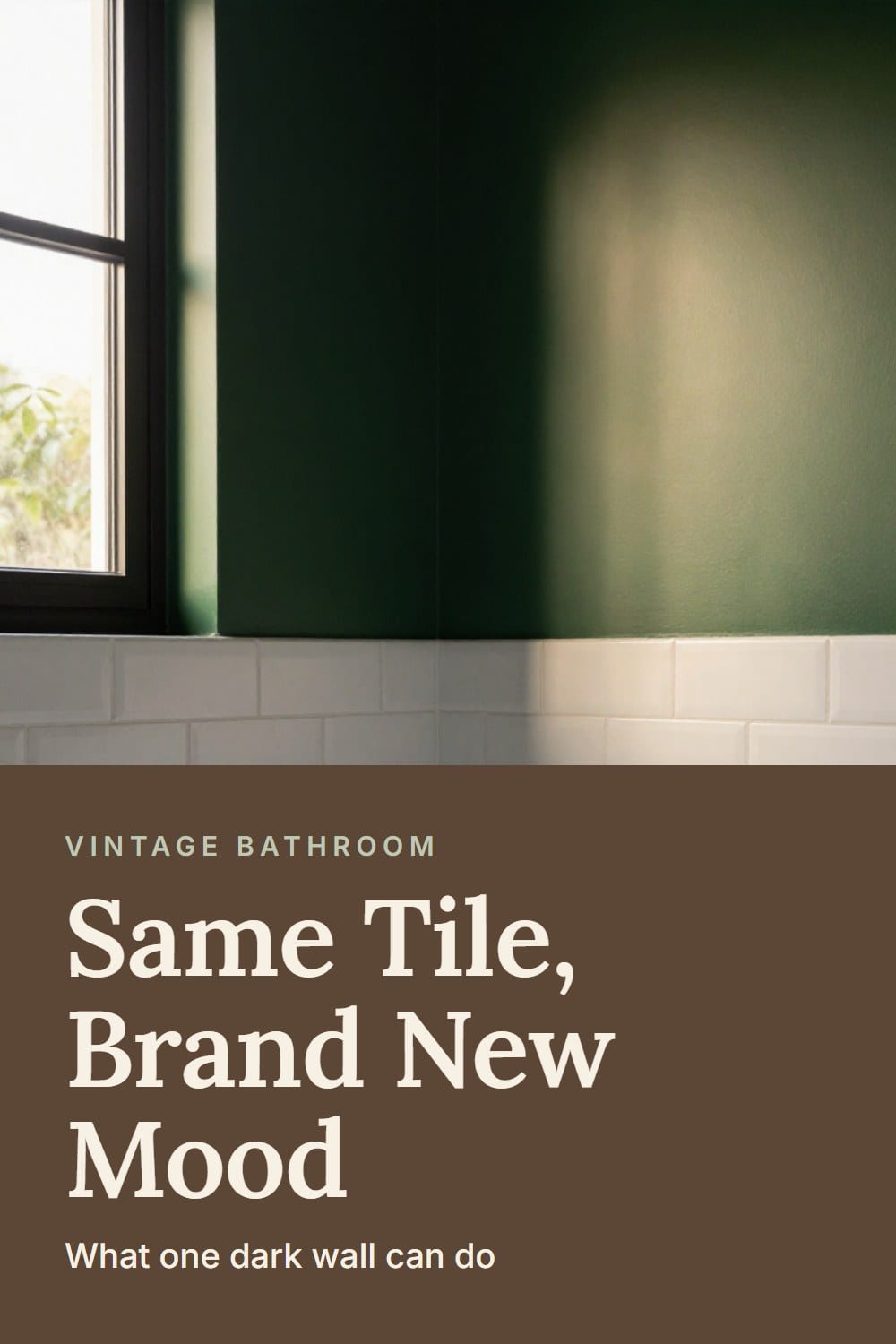
A dark wall is only half of the picture. The other half is the tile staying light. White hex, cream subway and black-and-white checks all pop against green or ink blue, so don't be tempted to paint or tint the tile to match. The contrast is what makes the room look vintage and not just dark.
Where the paint meets the tile matters. Old wainscot usually runs 36 to 60 inches high and finishes with a narrow cap tile. Cut the paint line right along that cap with a good angled brush and a steady hand. A crisp edge is half the expensive look.
That means the grout has to be clean, because dark walls make dingy grout stand out. The guide to cleaning old bathroom tile and grout covers it without damaging the glaze. If your tile is black and white, decorating a black and white tile bathroom shows how to keep it warm. And if it's pink, a charcoal or ink blue wall is a wonderful partner, as in how to decorate a pink tile bathroom.
Aged brass, and one other metal at most
Brass is the metal that makes dark walls feel warm. A towel bar, a sconce, a pair of cross handles on the tap. Aged or unlacquered brass darkens and picks up soft marks over the years, and it looks better for it.
Be honest with yourself about upkeep, though. Unlacquered brass spots wherever water dries on it. Wipe it with a dry cloth if the spots bother you, or let it settle into its own patina. I let mine go, and I like it more each winter. The cross handle faucets and unlacquered brass guide covers how it ages.
If your original taps are polished nickel, keep them. Brass accessories beside a nickel faucet look collected, as long as you stop at two metals. A third makes the room look like a hardware aisle.
Warm light is the real secret
Paint gets the credit, but light makes a moody bathroom. Choose bulbs at 2700K, which is the soft amber of an old incandescent, and a CRI of 90 or higher so the greens and reds look true. Put them on a dimmer. At full brightness the room is practical. Turned down to a third, it feels like evening in someone's house.
Place two sconces on either side of the mirror at about 60 to 66 inches from the floor, roughly at face height. A single ceiling light throws shadows under your eyes and makes a dark room feel like an interrogation. Side light is kinder.
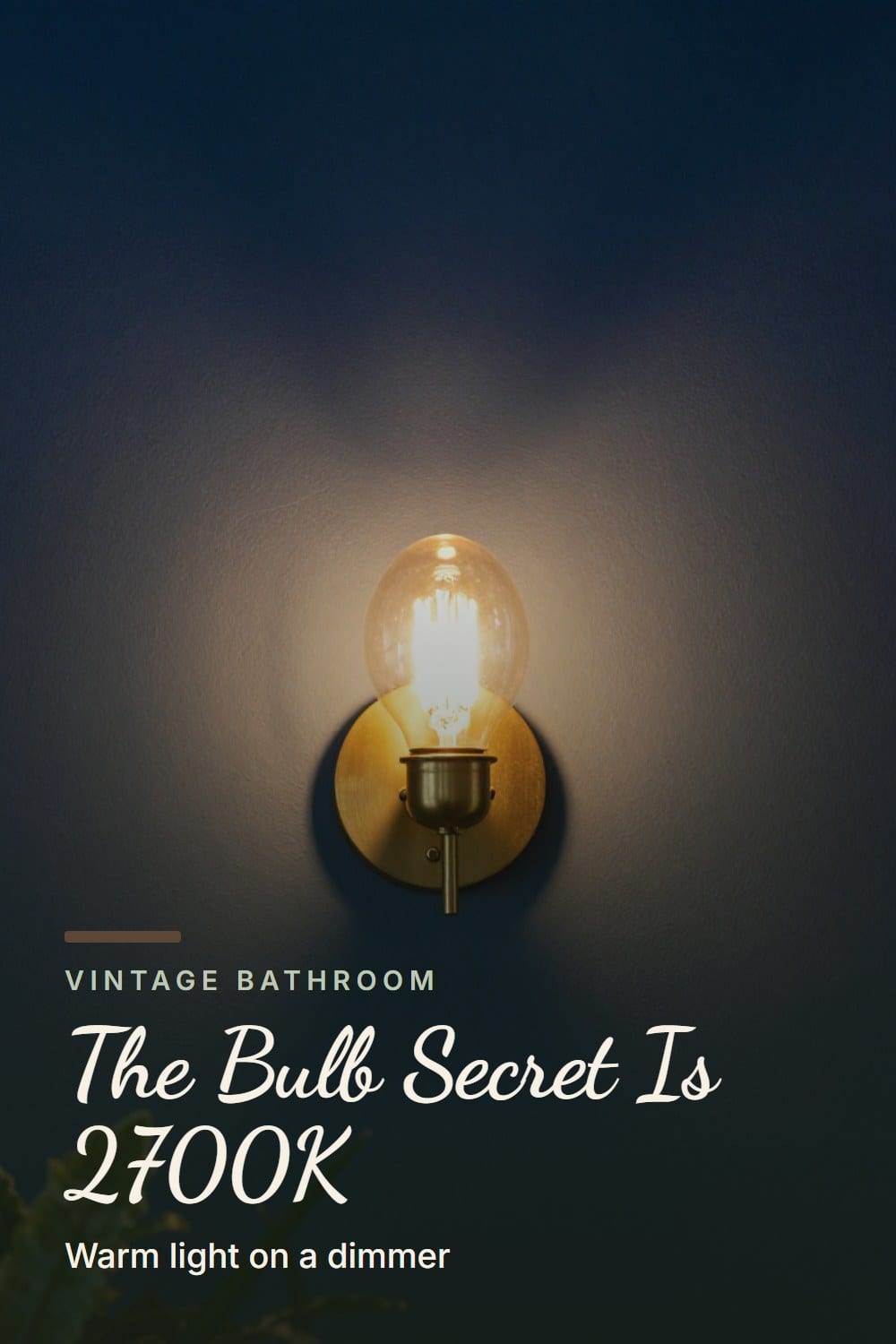
I made the mistake of leaving a 4000K bulb in the first sconce for a month. Our green walls looked like a hospital stairwell. One bulb swap fixed the entire room, which is rather the point of this section.
Two safety notes. Any fixture over a tub or shower needs to be damp- or wet-rated, and rewiring a vintage fixture is a job for an electrician. Make sure the dimmer is rated for your bulbs too, or the light will flicker. The vintage bathroom lighting guide covers sconces and schoolhouse globes in more detail.
What to hang, lay down and set on the shelf
Once the walls and the light are right, the room needs a few quiet pieces. Not many.
A runner. A faded runner about 2 by 5 feet fits between the tub and the sink and softens a hard tile floor. Choose one in cotton or a washable blend, not heirloom wool, because bathroom rugs get splashed. Put a non-slip pad underneath and wash it regularly.
Art with weight. One small oil painting or a dark-framed print looks like a library on a bathroom wall. Hang it on the wall farthest from the shower and behind glass if it's a print. Steam is hard on old canvases.
A plant that tolerates low light. Pothos, a ZZ plant and a cast iron plant all cope with a dim, humid room. Even they need some light eventually, so in a bathroom with no window, rotate the plant out to a brighter room every week or two.
More finishing pieces are in the vintage bathroom decor guide. And if you'd rather have pattern than paint on a wall, vintage bathroom wallpaper ideas shows how to make it last in the steam.
Moody vintage bathroom ideas for a bath with no window
Nobody told me this part. A windowless bathroom is the best candidate for a dark wall. White paint in a room with no daylight turns gray by 10 a.m., and you've lost the clean look you wanted anyway. A deep color simply looks chosen.
Small baths benefit too. A deep color blurs where the walls end, and the room reads as snug rather than cramped. Painting the ceiling the same color wraps it all in one shade, and you stop seeing corners. Use eggshell on the ceiling, and let the fan do its job there.
Lighting does all the work in a room with no window, so spend your attention on the sconces and the dimmer. If you plan one overhead fixture, add a second light source at mirror height. The glow should come from the sides.
The ventilation talk
I'll say this once, plainly. Dark paint hides mildew spots longer than white does. That doesn't mean they aren't there. A dark bathroom without a working fan will grow mildew just like a white one. You'll simply find out later.
Run the fan during every shower and for about 20 minutes after. Check that it vents outdoors, not into the attic, and that it actually moves air. A sheet of toilet paper held to the grille should cling to it. Once a month, wipe the ceiling corners and the wall behind the tub with a damp cloth.
Mistakes that turn a dark bathroom into a cave
- Using flat paint. It stains in steam and shows every wipe mark.
- Leaving a cool 4000K bulb in the sconce. Warm walls need warm light.
- Relying on one ceiling fixture. Add side light at mirror height.
- Skipping the fan because the paint seems fine. Mildew hides, then arrives.
- Sanding old paint before testing it for lead.
- Going dark on the floor, walls and ceiling all at once. Keep the tile light as the contrast.
A checklist before you open the paint can
- Pick one dark color family, with a warm undertone.
- Brush a large sample and look at it day and night for three days.
- Test old paint for lead before any sanding.
- Buy bathroom-rated paint in eggshell or satin, plus primer.
- Swap every bulb for 2700K, CRI 90 or higher, on a dimmer.
- Confirm that fixtures over the tub are damp- or wet-rated.
- Check the fan vents outdoors and plan to run it 20 minutes after each shower.
Start with one wall and the bulbs. You'll know within a week whether you want the rest. Mine took about a day.
The Moody Bathroom Planner
The printable is being finished. It will live here, free, with no sign-up wall.
Where to go from here
To see where a dark bath sits among the decades, the retro bathroom styles guide walks from the 1920s to the 1960s. For something lighter, 1920s bathroom ideas keeps white hex and polished nickel front and center. Art deco bathroom ideas are the natural next step if you like drama, and grandmillennial bathroom ideas offers a softer, floral route. The whole picture is in vintage bathroom ideas.
Frequently asked
Will a dark color make my small bathroom look smaller?
What paint finish is best for a dark bathroom?
What bulbs make a moody bathroom look good?
Does dark paint hide mildew?
Sarah Whitmore
she keeps the teak, she oils it in spring
Sarah has furnished the same porch three times and finally stopped. She writes about what actually survives a decade outdoors — which wood silvers, which fabric fades, and which inexpensive piece quietly reads the same as the expensive one.
SarahMore from this corner
 Vintage Bathroom
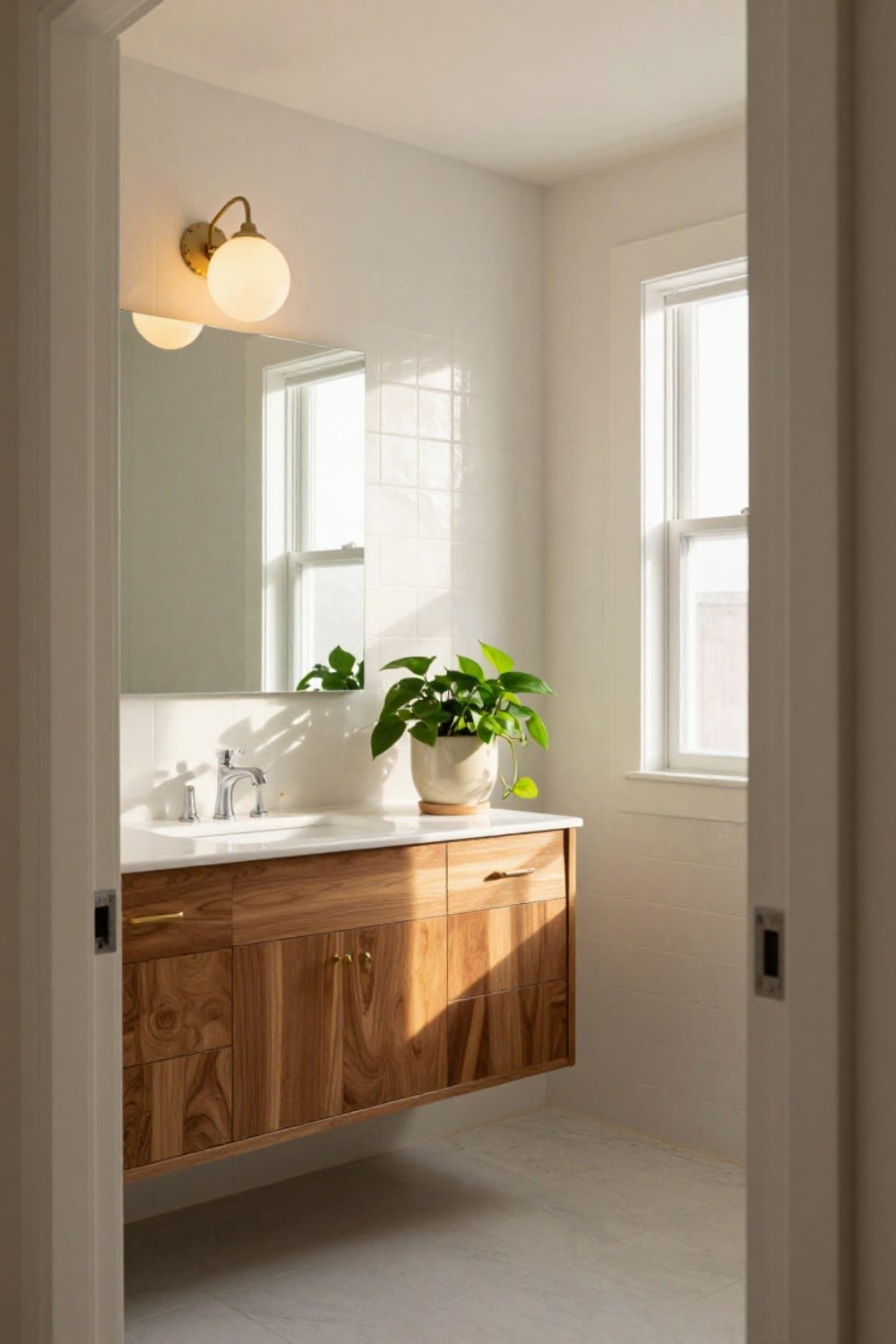
Mid Century Bathroom Ideas for a House Built in the 1950s and 60s
Mid century bathroom ideas for a ranch or split-level: the floating vanity, square and penny tile, globe lights, a wide mirror, and which original features to keep and update around.
Oct 31, 2026 · 12 min read
 Vintage Bathroom
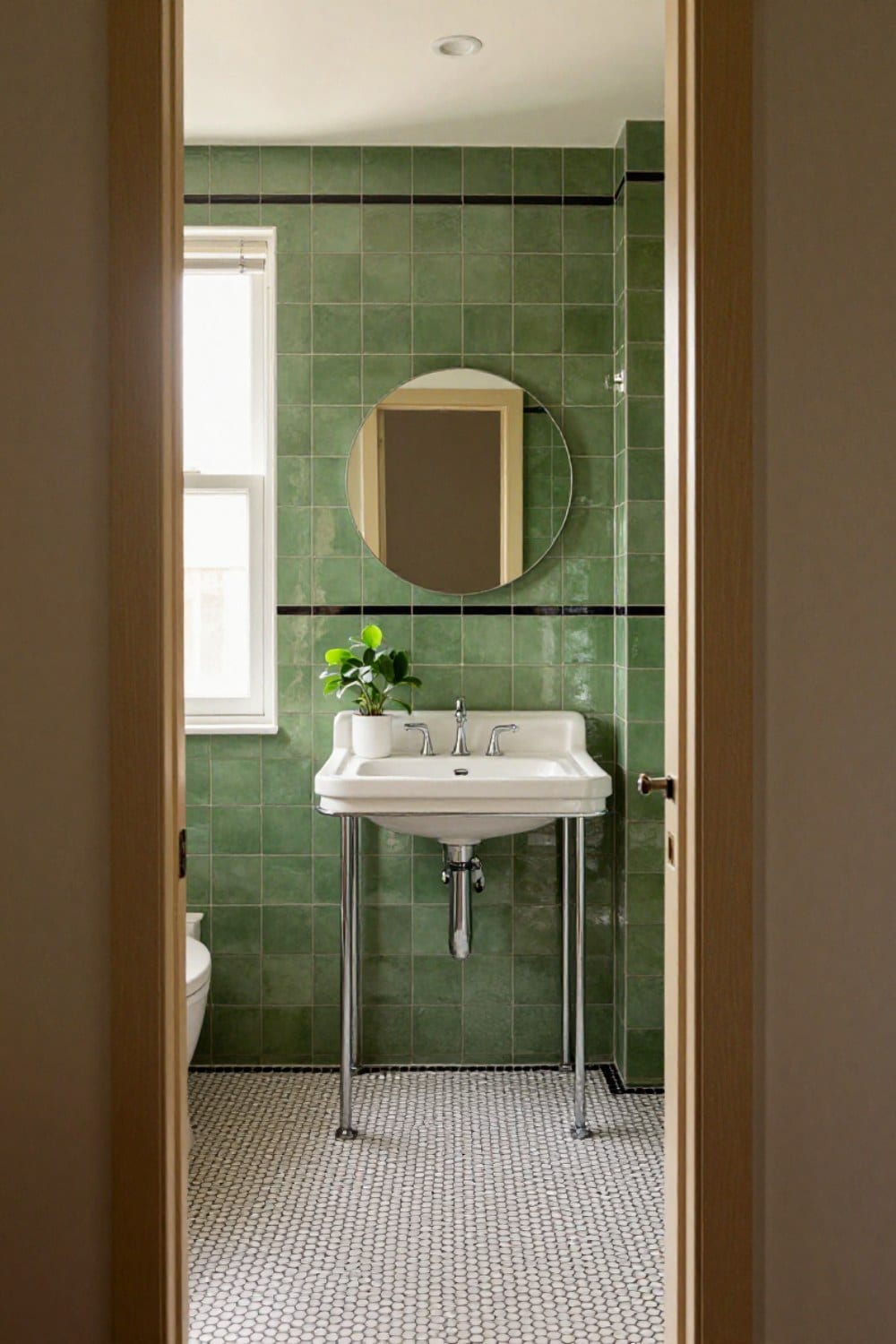
Art Deco Bathroom Ideas That Feel Classic, Not Costume
Art deco bathroom ideas scaled for a real house: the one-statement rule, black and white or green and black tile with a border, round mirrors, frosted sconces, a console sink on chrome legs, and the mistakes that make it look like a set.
Oct 31, 2026 · 11 min read
 Vintage Bathroom
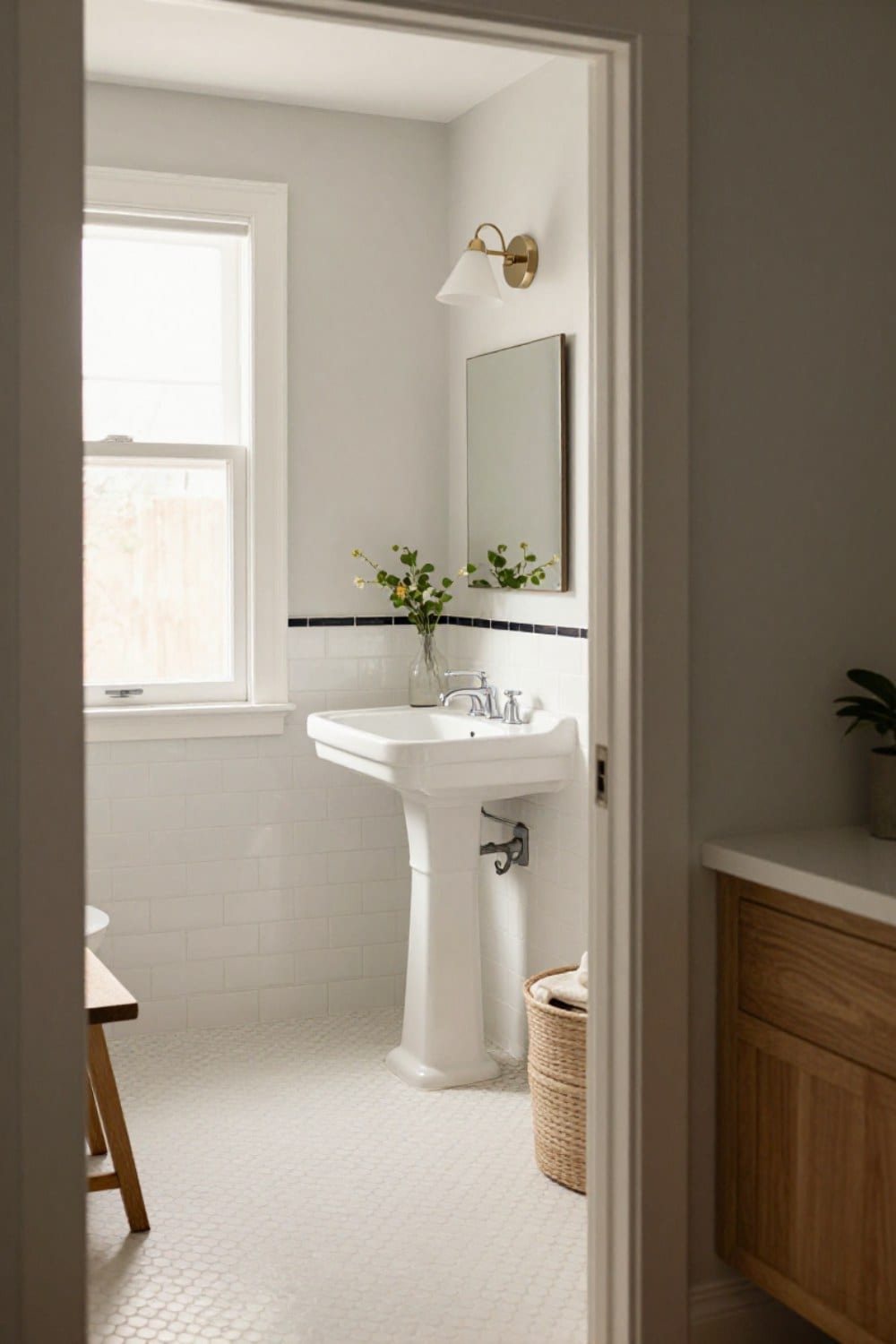
 Tile Ideas: The Patterns and Colors That Never Date
Vintage bathroom tile ideas that still look right decades on: the hex, penny, subway and checkerboard patterns, the glaze colors worth keeping, the grout rule that matters most, and how to decide between repair and reproduction.
Oct 29, 2026 · 12 min read