1920s Bathroom Ideas: White Hex Tile, Pedestal Sinks and Polished Nickel
1920s bathroom ideas for an older house: the white hex floor, subway wainscot with a bullnose cap, pedestal and console sinks, clawfoot and apron tubs, and why polished nickel (not chrome) is the period finish.

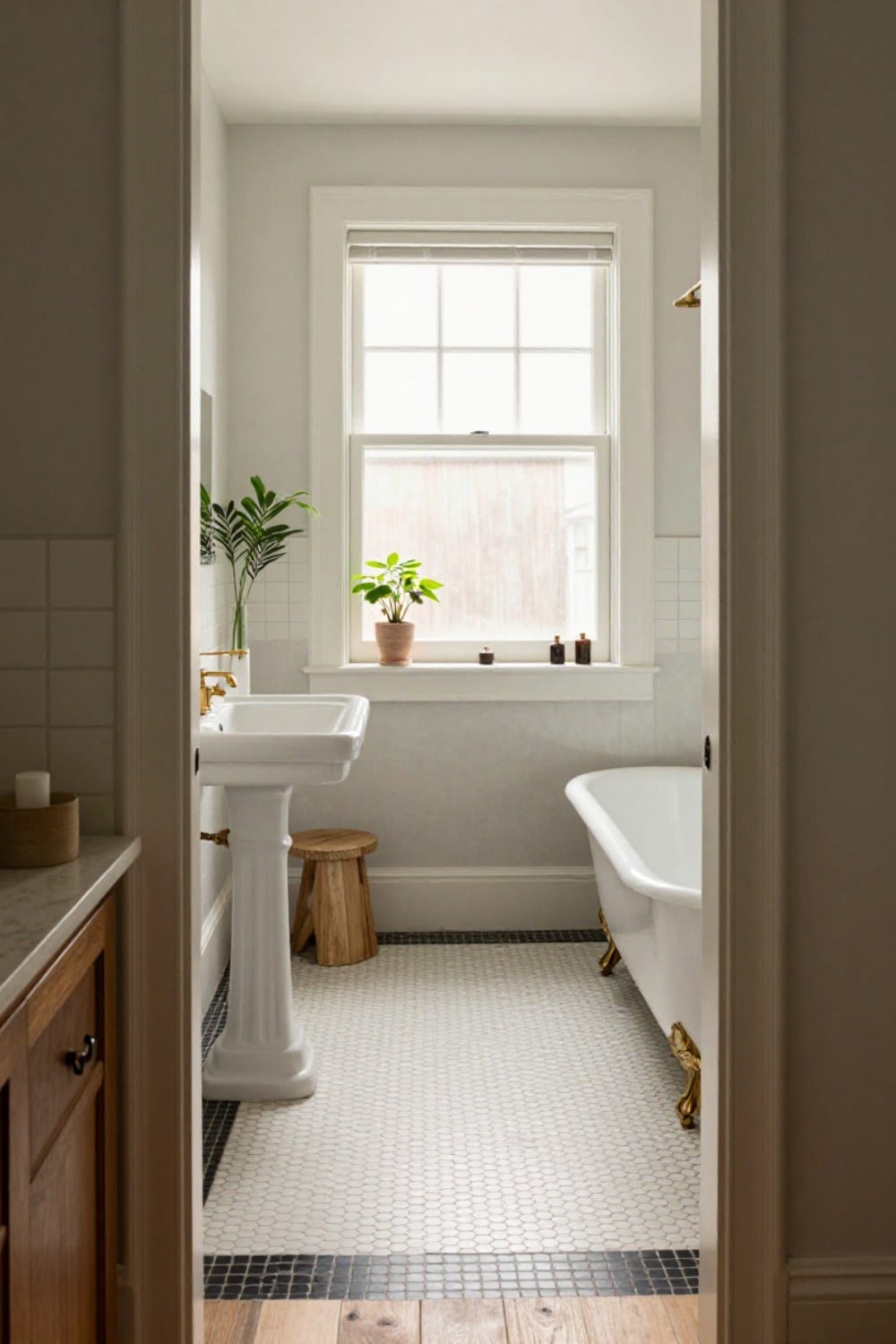
1920s bathroom ideas usually start with a picture in your head. White tile that gleams. A pedestal sink. A faucet with a soft silver glow. Nothing that looks like it arrived in a box last spring.
The good news is that the whole look is built from a handful of honest materials, and nearly all of them are still made. Our house went up in 1928, and for six years I lived with its original bathroom, hex floor and all. I got plenty wrong before I got it right. I once scrubbed the floor with a gritty cleaning powder because I was impatient, and it dulled a patch the size of a dinner plate. It never came back.
This guide goes through the pieces in the order your eye finds them: floor, walls, sink, tub, metal, and the color above the tile. It also covers what to keep and what to look for when you need a reproduction. If you'd like the bigger picture first, the decade-by-decade guide to retro bathroom styles puts the 1920s next to every era that followed.
What a 1920s bathroom actually looked like
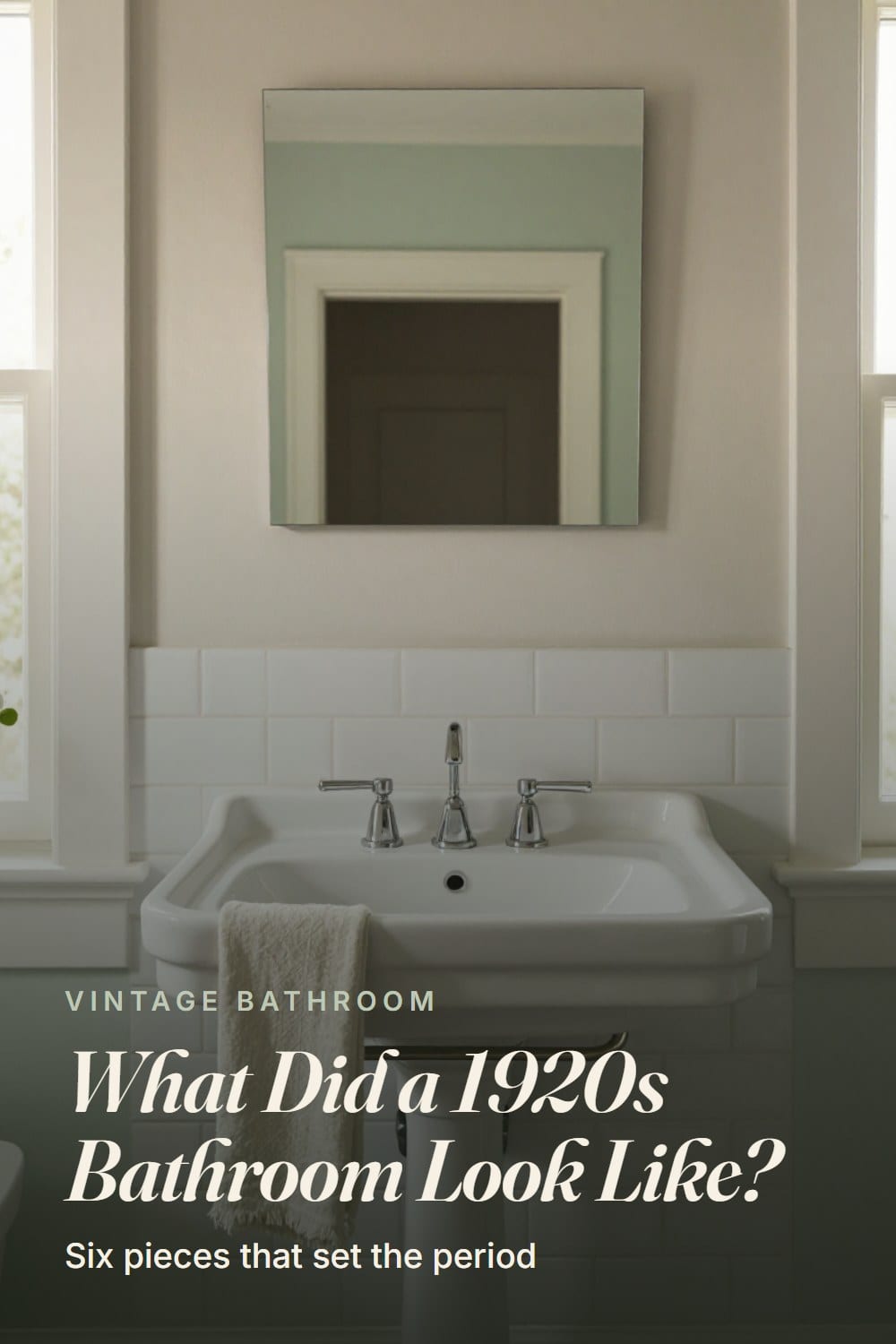
By the 1920s the bathroom had become a proper room in most new American houses, and builders designed it around one idea: everything should wipe clean. Hard, white, glossy surfaces. Very little wood. Fixtures you could see the floor beneath.
A bungalow or colonial revival bathroom from those years usually had the same cast of characters:
- A white hex tile floor with a black border band.
- White 3x6 subway tile on the walls, capped with a rounded bullnose edge.
- A porcelain pedestal sink, or a wall-mounted console sink on slim legs.
- A clawfoot tub, or a built-in tub with a tiled apron front.
- Nickel-plated fittings, with cross handles on the taps.
- A recessed medicine cabinet with a beveled mirror.
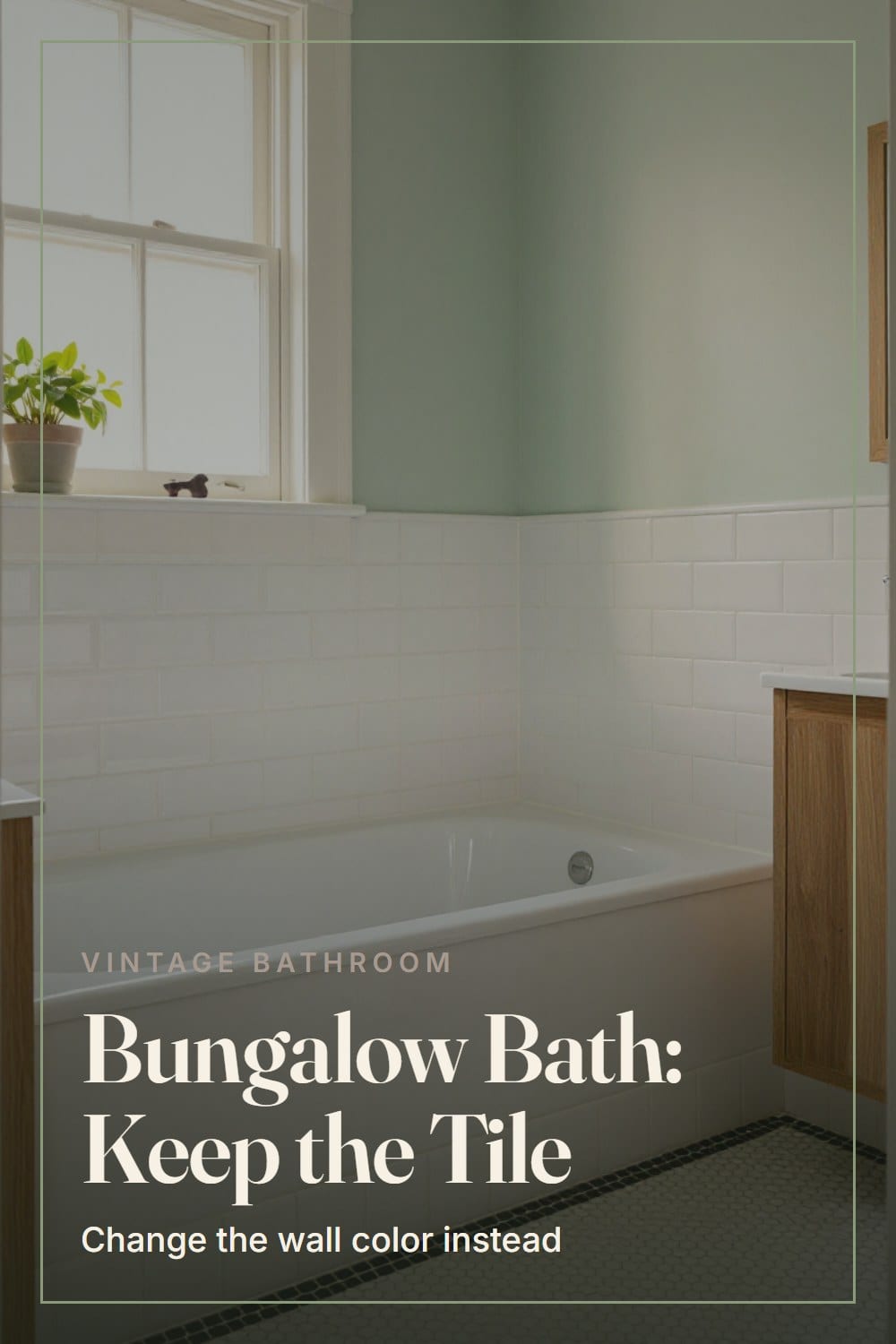
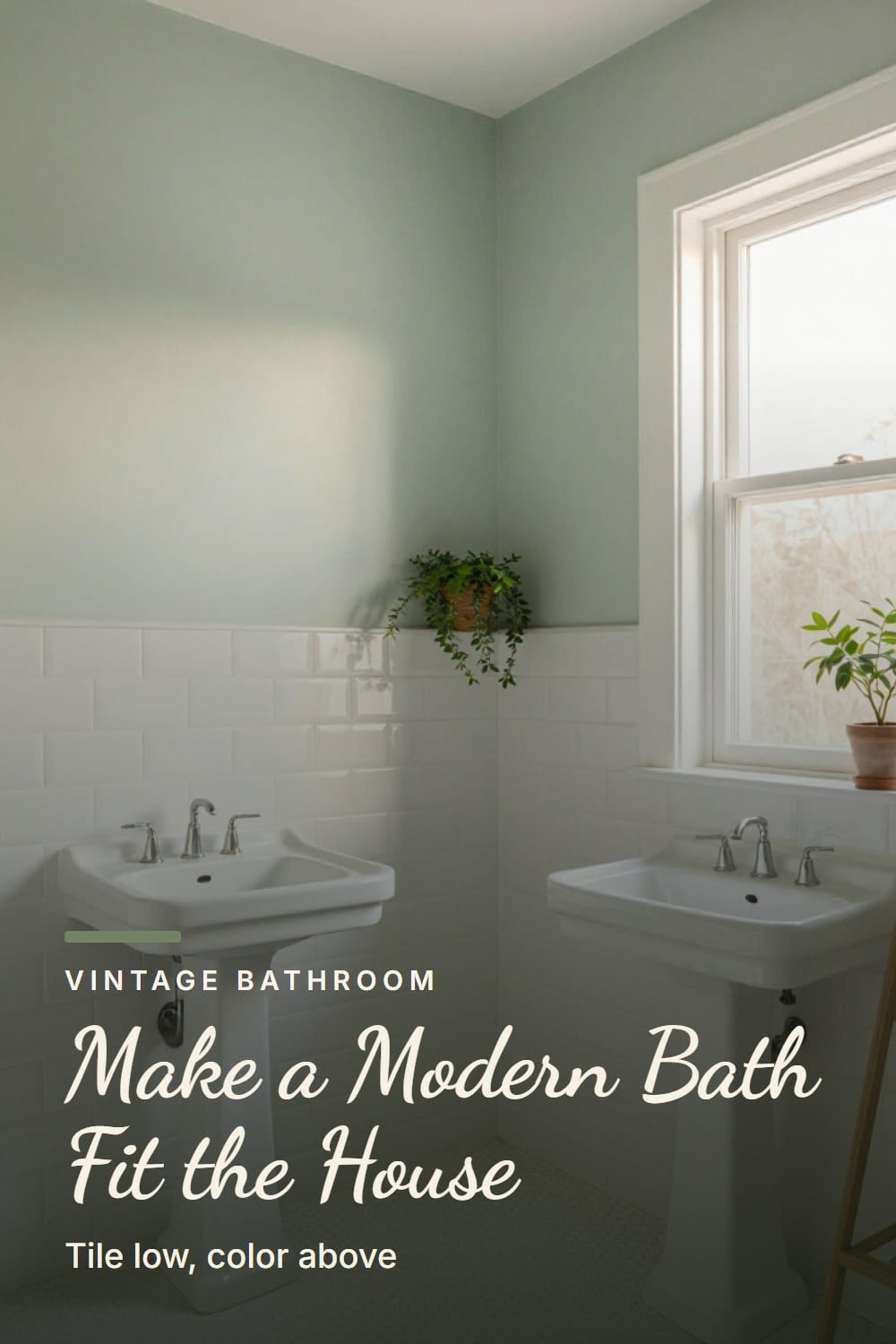
Color lived above the tile, on plaster, in a soft shade. It never competed with the white. If your bathroom has even half of that list, you are closer to the look than you think.
1920s bathroom ideas start at the floor
The floor does more than any other surface to say 1920s. The tile was small unglazed porcelain mosaic, laid in a honeycomb of six-sided pieces. The two sizes to know are 3/4 inch and 1 inch across, sold in sheets with the pieces already spaced.
Most of the field was plain white. Then came the detail that makes it feel like a house and not a hospital: a border of black hexes one or two rows deep, or a small flower motif where six black pieces ring a white one. The border follows the walls and turns every corner. It is what a good tile setter was proud of.
Grout matters more than people expect. Stark white grout flattens the pattern, and dark gray turns the white into a grid. A warm gray or a soft off-white lets each hex read as its own little shape. I regrouted ours in a color I'd call oatmeal stone, and the floor looked ten years younger.
If the original floor is there, keep it. If you are laying a new one, look for unglazed porcelain mosaic in the 1 inch size for most rooms, and the 3/4 inch for a floor that wants to feel finer. The hexagon vs penny tile guide helps you pick between the two classic mosaics, and how to decorate a black and white tile bathroom shows how to keep that contrast warm.

White subway wainscot and the bullnose cap
The walls were tiled partway, not to the ceiling, except around the tub. This is called wainscot, and the height is where most modern attempts go wrong. The right range is 48 to 60 inches. I know because I taped a line at 36 inches on a test wall first. It looked like a kitchen backsplash that had wandered into the wrong room.
The tile itself was a glossy white 3x6, laid in a running bond, which is the brick pattern with each row offset by half a tile. At the top sits a bullnose cap, a trim tile with one rounded edge that finishes the run so it doesn't end in a raw line. At the bottom, a cove base curves the tile into the floor so there is no sharp corner to collect dust.
Keep the grout lines thin, around 1/16 inch, and the glaze slightly uneven. Old tile has a faint ripple you can see in window light. A flat, machine-perfect tile from a showroom lacks it, and the eye catches that even when it can't say why.
Around the tub, run the tile higher, to at least 60 inches. Many original rooms tiled right up to the ceiling there.
Pedestal sinks and console sinks
A pedestal sink is a porcelain basin on a single column that hides the pipes. In a 1920s bathroom it is the standard answer, and it works because it shows the floor. You see more tile, so the room feels larger and lighter than one with a boxy cabinet.
Typical widths run 20 to 24 inches. Look for a shallow integral backsplash, a built-in overflow slot in the basin, and a soft, rolled rim.
The other period option is a console sink: a wide porcelain top held up by two or four slim metal legs, often nickel-plated. It gives you a little more counter than a pedestal does and still keeps the floor visible.
The honest trade-off is storage. Pedestals have none. I've written up pedestal sink bathroom storage ideas that keep the old-house look, and if you'd rather have a cabinet, vintage bathroom vanity ideas covers converted dressers and washstands.
Clawfoot tubs and built-in apron tubs
Two tubs define the decade. The clawfoot stands free on four feet, usually around 60 inches long. The built-in apron tub sits in an alcove with a finished front, often tiled to match the wainscot, and in plenty of bungalows it is the original.
A cast iron clawfoot weighs roughly 250 to 400 pounds empty, and far more once it holds water and a person. Have a contractor check the floor framing before you commit to one, especially on an upper floor. This is not a step to skip. Placement, floors and the shower question are in clawfoot tub bathroom ideas.
If a built-in tub's enamel has gone dull or chipped, refinishing is usually kinder than replacing. The tub is often cast iron and will outlast anything you put in its place. Vintage enamel and old coatings can contain lead, so have it tested before anyone sands or strips it, and hire a pro who works with the proper containment.
Why polished nickel, not chrome
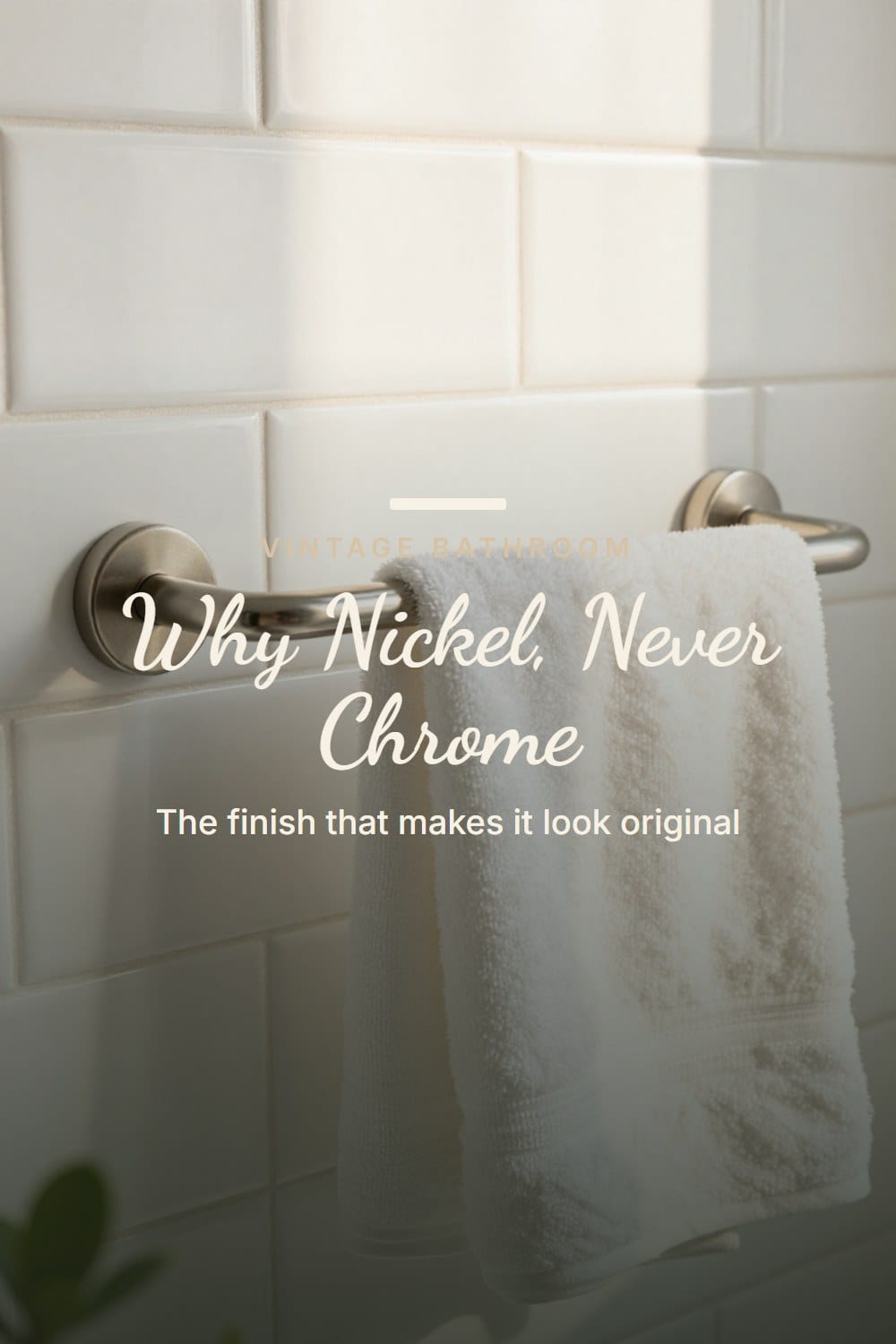
This is the detail people ask me about most. Through most of the 1920s, bathroom fittings were nickel-plated brass. Chrome plating was newer and only began to take over toward the end of the decade and through the 1930s. So polished nickel is the period answer, and chrome is what you get if you buy the thing next to it on the shelf.
You can see the difference in daylight. Chrome is cool, mirror-bright and a little blue. Nickel is warmer and softer, with a faint golden cast, and it ages into a gentle glow instead of staying hard and flat. Against white tile and creamy grout, that warmth is exactly right.
Ask for polished nickel, not satin or brushed, and look at a sample by a window before you order. Finish names vary from maker to maker, and the same word can mean two different looks. Then use that one metal across the whole room. I once set a chrome towel bar beside nickel taps, and in daylight one looked blue and the other gold. The bar went back that weekend.
Cross handles, a recessed cabinet and the small details
Period taps have cross handles: four short arms on a post, often with a small porcelain button in the center. Many original sinks had two separate spigots, one for each temperature, rather than a single mixing spout. If that is what you have, keep it. They are charming, and you learn to run the water to the temperature you want. For reproductions that age well, cross handle faucets and unlacquered brass compares the options.
The medicine cabinet was recessed into the wall between the studs. Standing studs are usually 16 inches apart on center, which leaves about 14 1/2 inches of clear opening, and that is why so many old cabinets are the same width. A beveled-edge mirror on the door catches the light and makes the room feel deeper.
Then the little built-ins: a ceramic soap dish set into the tile, a recessed paper holder, a nickel towel bar. They are easy to overlook, and they are what makes a room feel designed instead of decorated.
For light, milk glass sconces on either side of the mirror are the right look. A bulb around 2700K keeps the white tile warm and flattering. Any fixture over the tub or shower must be damp- or wet-rated, and rewiring a vintage fixture is an electrician's job, not a weekend project. More ideas live in vintage bathroom lighting and in vintage bathroom decor.
What color goes on the plaster above the tile
The plaster is where a 1920s bathroom gets its mood. The original colors were soft and a little grayed: pale celadon green, butter yellow, warm putty, a dusty blue. I am staying in color families here on purpose. Test any paint in the real light of your room at three times of day before you commit.
I made a mistake worth sharing. I painted the plaster above our white tile a stark white first. It made the tile look yellow and tired, and the whole room went flat. A soft celadon green fixed it in a single afternoon. The tile looked clean again because the wall gave it something to be white against.
Use an eggshell or satin finish in a bathroom, since flat paint marks easily, and run the fan during every shower and for about 20 minutes after. Plaster and paint fail in steam without it. The vintage bathroom paint colors guide goes through the families that work with old tile.
What to keep, repair or replace
My rule for an original bathroom is simple: repair before you replace. A 1920s tile job, properly set, has already lasted a century. Most of what looks like failure is small.
- Dull or stained grout: clean it gently first, then regrout only the lines that are failing.
- A few loose or cracked tiles: rebed them and match the replacements from salvage.
- Worn tub enamel: have it professionally refinished, after testing for lead.
- Tired nickel: have a plating shop restore it, or polish it by hand with a soft cloth.
- A leaky or stuck tap: replace the washers and the packing, not the whole fitting.
When something is truly beyond saving, shop for reproductions in the right materials: unglazed porcelain mosaic, glossy white ceramic subway, vitreous china sinks, and solid brass fittings with a nickel finish. Salvage yards are worth a Saturday.
If your bathroom is newer and you want this feel without gutting it, how to make a bathroom look vintage without gutting it is where to start. And if you're drawn to the glossy, geometric end of the decade, art deco bathroom ideas shows how to do it without the costume.
Mistakes that make a 1920s bathroom look off
- Wainscot that stops too low. Anything shorter than 48 inches reads like a backsplash.
- Stark white grout between the hex tiles, which flattens the pattern.
- Chrome fittings next to nickel ones, which shows in daylight.
- A floating vanity or a vessel sink, which hides the floor and breaks the period.
- A cool, bright-white wall above the tile. Choose a soft color family instead.
A checklist to carry to the salvage yard
- Floor: white unglazed hex, 3/4 or 1 inch, with a black border.
- Walls: glossy 3x6 white subway, 48 to 60 inches high, with a bullnose cap.
- Grout: warm gray or soft off-white, thin lines.
- Sink: porcelain pedestal or console, 20 to 24 inches wide.
- Tub: clawfoot or tiled apron, after a floor-framing check.
- Metal: polished nickel throughout, with cross handles.
- Cabinet: recessed, with a beveled mirror.
- Light: milk glass sconces, damp-rated near the tub, 2700K bulbs.
- Color: a soft plaster shade above the tile, tested in real light.
Start with the floor and the metal, and live with the room for a month. The rest tends to sort itself out. Buy fewer, better pieces, and keep them for years. You can also browse the full set of vintage bathroom tile ideas or return to the complete guide to a vintage bathroom that lasts.
The 1920s Bathroom Planner
The printable is being finished. It will live here, free, with no sign-up wall.
Frequently asked
What tile size is right for a 1920s bathroom floor?
Is polished nickel or chrome right for a 1920s bathroom?
How high should subway tile wainscot go?
Should I replace or repair original 1920s bathroom tile?
Sarah Whitmore
she keeps the teak, she oils it in spring
Sarah has furnished the same porch three times and finally stopped. She writes about what actually survives a decade outdoors — which wood silvers, which fabric fades, and which inexpensive piece quietly reads the same as the expensive one.
SarahMore from this corner
 Vintage Bathroom
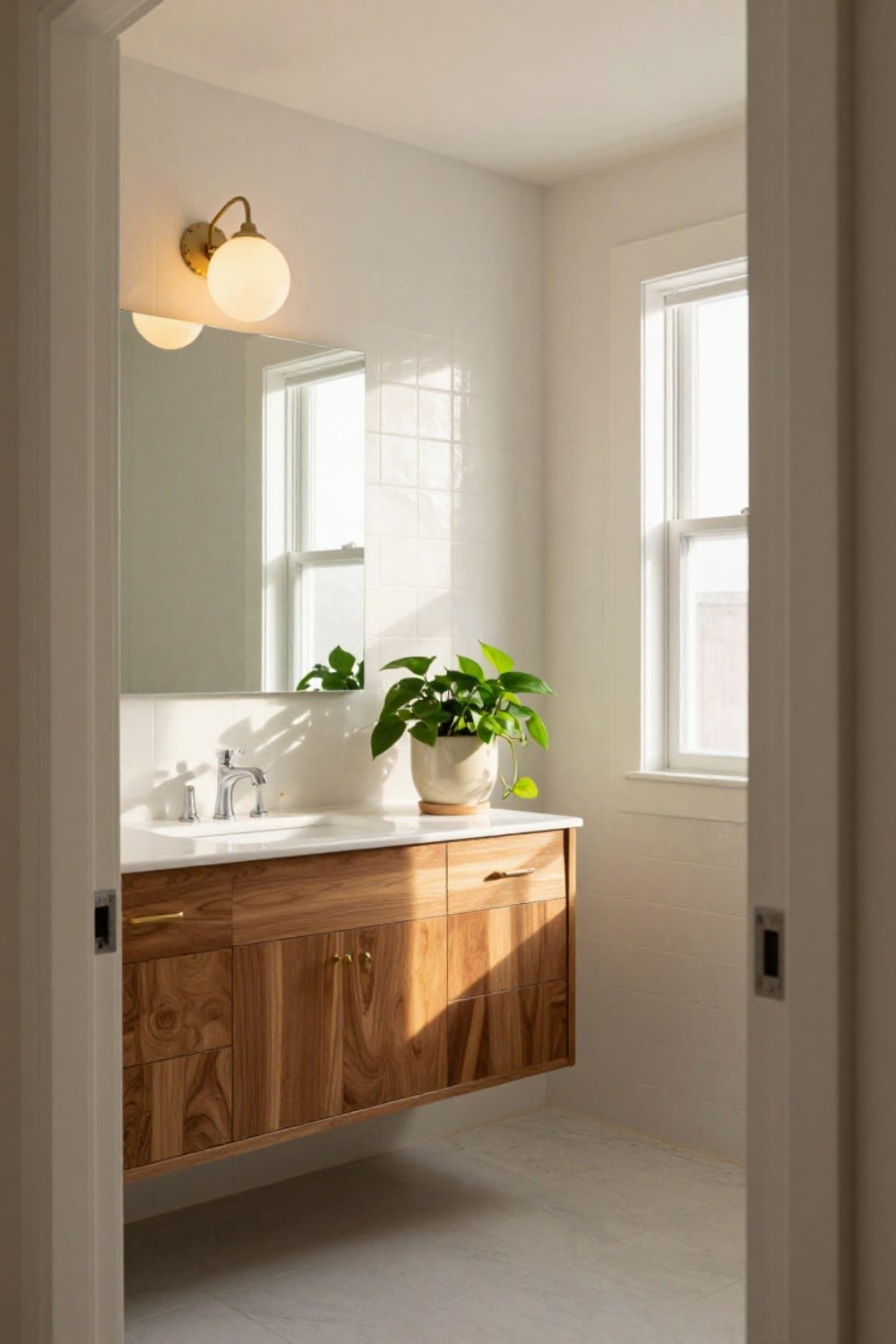
Mid Century Bathroom Ideas for a House Built in the 1950s and 60s
Mid century bathroom ideas for a ranch or split-level: the floating vanity, square and penny tile, globe lights, a wide mirror, and which original features to keep and update around.
Oct 31, 2026 · 12 min read
 Vintage Bathroom
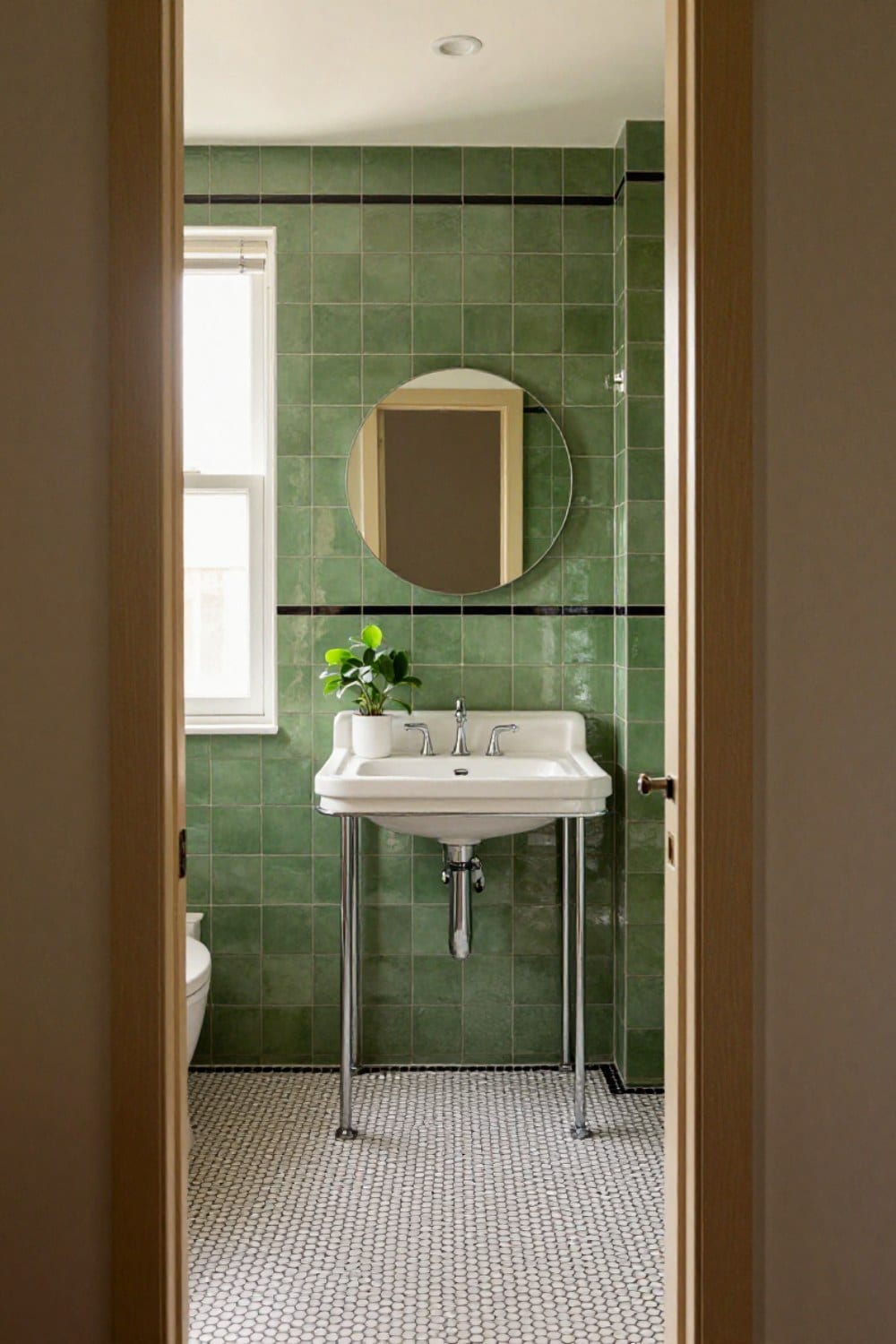
Art Deco Bathroom Ideas That Feel Classic, Not Costume
Art deco bathroom ideas scaled for a real house: the one-statement rule, black and white or green and black tile with a border, round mirrors, frosted sconces, a console sink on chrome legs, and the mistakes that make it look like a set.
Oct 31, 2026 · 11 min read
 Vintage Bathroom
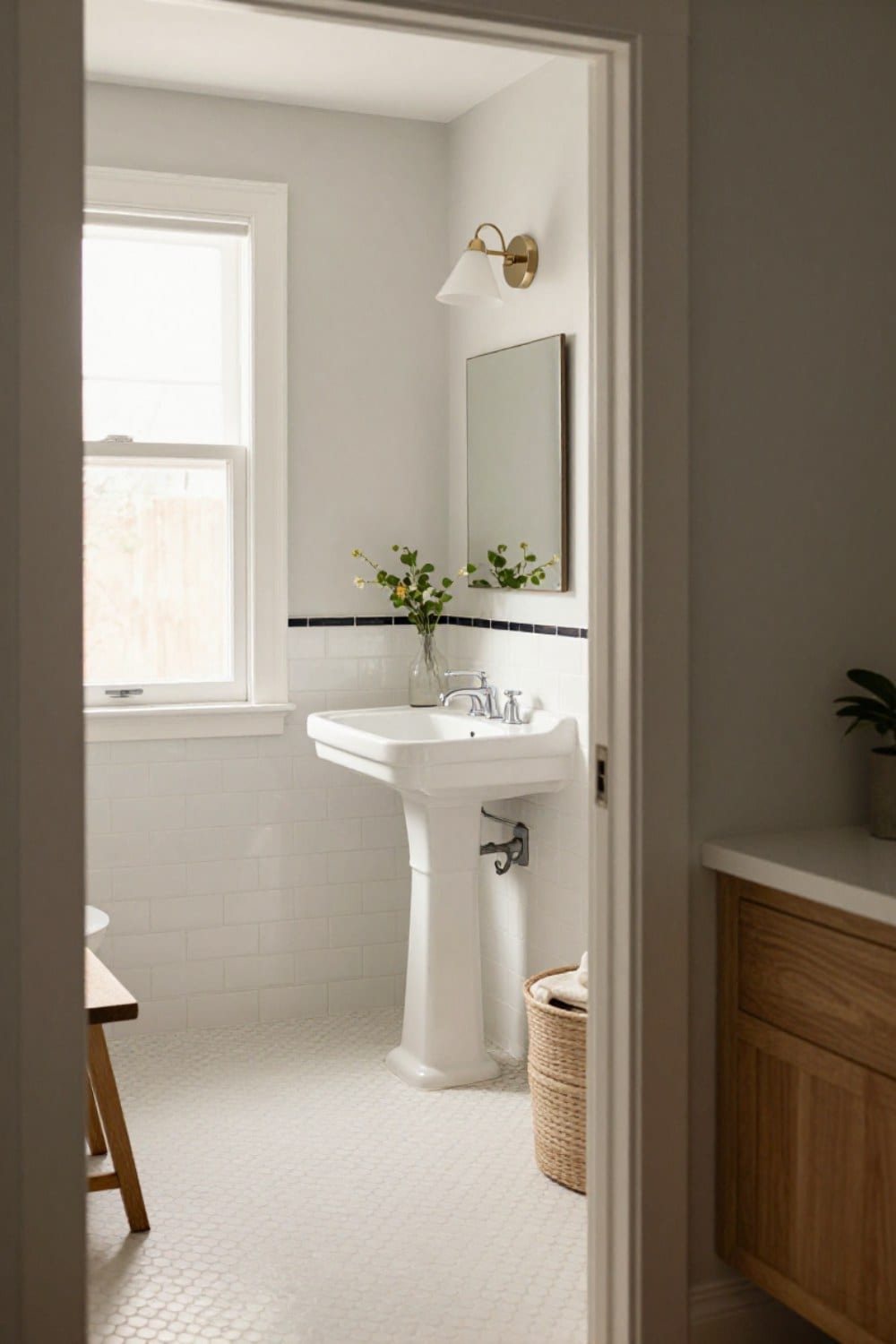
 Tile Ideas: The Patterns and Colors That Never Date
Vintage bathroom tile ideas that still look right decades on: the hex, penny, subway and checkerboard patterns, the glaze colors worth keeping, the grout rule that matters most, and how to decide between repair and reproduction.
Oct 29, 2026 · 12 min read