Vintage Bathroom Lighting: Sconces, Schoolhouse Globes and the Right Bulb
Vintage bathroom lighting that looks period and still flatters a face: sconces at eye height, schoolhouse and milk glass globes, nickel or brass, damp-rated fixtures, and the warm high-CRI bulb that makes skin look right.

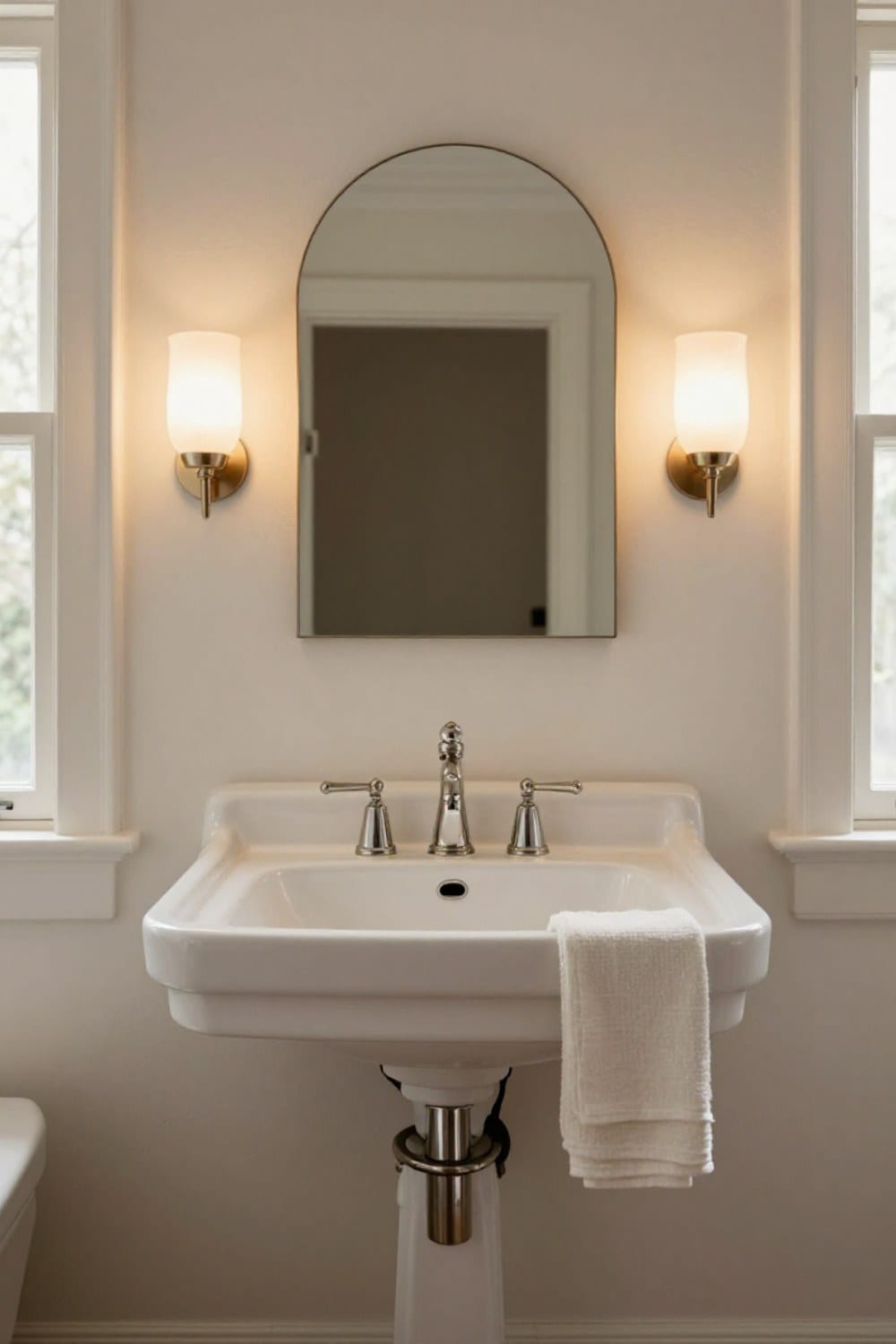
Vintage bathroom lighting has one job that nobody talks about enough. It has to look like it belongs to the house and still make your face look like your face at seven in the morning. Most fixtures manage one or the other.
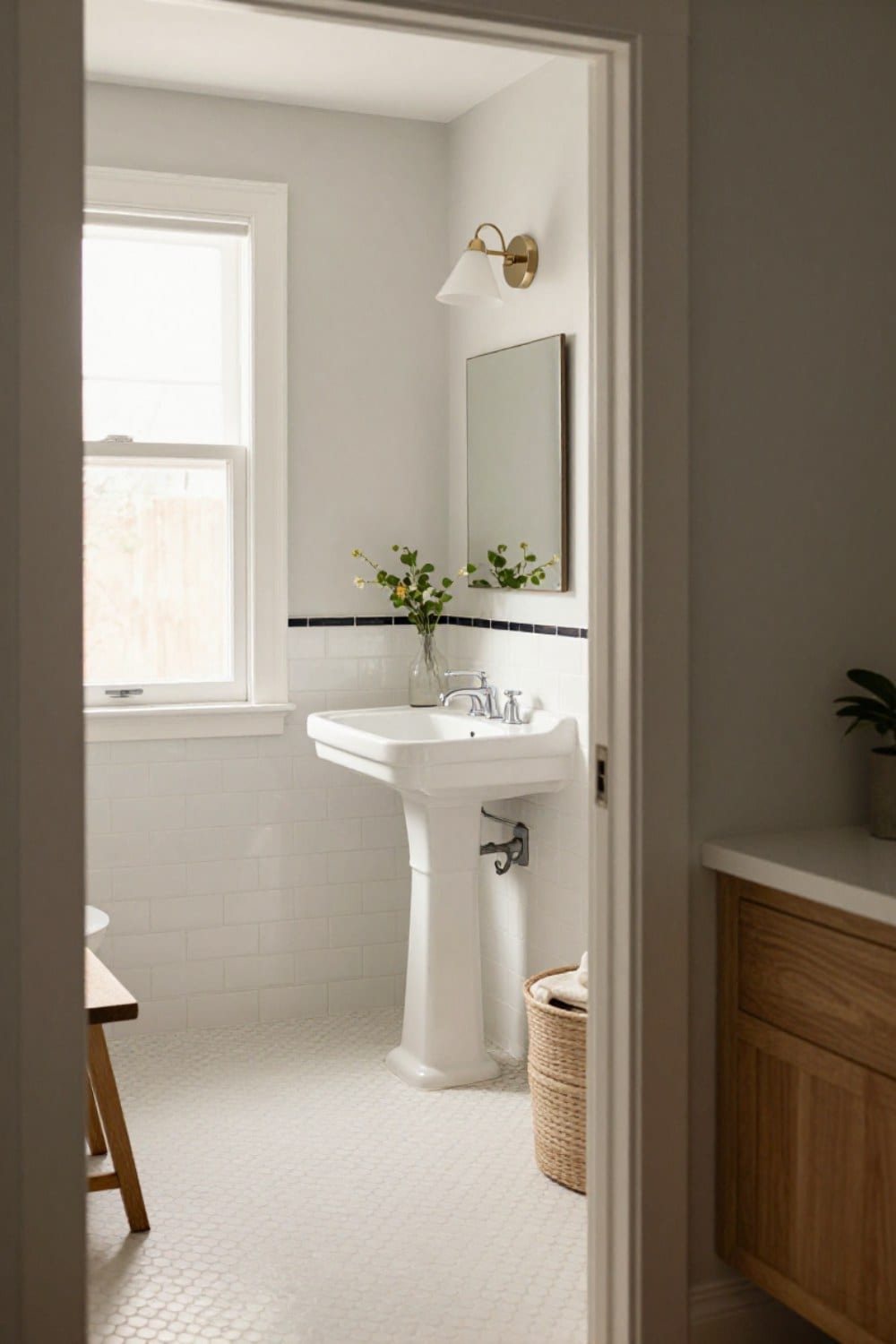
Our 1928 bathroom came with a single bar light over the medicine cabinet and white hex tile on every surface. It looked right from the doorway. Standing at the sink, I looked tired, tinted and about ten years older. It took me far too long to see that the room was fine and the light was the problem.
This is the guide I wish I'd had: where the sconces go, which glass to pick, nickel or brass, what the damp ratings mean, and the one bulb spec that fixes skin tone. It sits inside the bigger picture of vintage bathroom decor, where the finishing pieces live.
What good vintage bathroom lighting actually does
A bathroom asks more of its light than any other room. You shave, wash your face, check a tooth, put on mascara. You also soak in the tub at night and want that same room to go soft.
Old bathrooms solved this with layers, even if nobody called them that. A fixture at the mirror for the face. A ceiling light for the room. Sometimes a small light by the tub. The glass was almost always opal, frosted or ribbed, so the bulb never glared at you.
That's the pattern to copy. You don't need a museum reproduction. You need glass that diffuses, a finish that matches the hardware, and a bulb that doesn't turn everyone green.
Why a pair of sconces beats one bar above the mirror
A single fixture mounted above the mirror throws light down from the forehead. It lights the top of your head, then leaves hollows under the eyes and a shadow beneath the chin. It's the light of a police interview.
Two fixtures, one on each side of the mirror, light the face from the sides, where it needs it. The shadows fill in. Skin looks even. It's also how most old bathrooms were wired, which is why the pair looks so natural against plaster and tile.
I swapped our bar for a pair and stopped dreading the bathroom mirror within a week. Nothing else I've done in that room paid off as fast.
Where to hang bathroom sconces
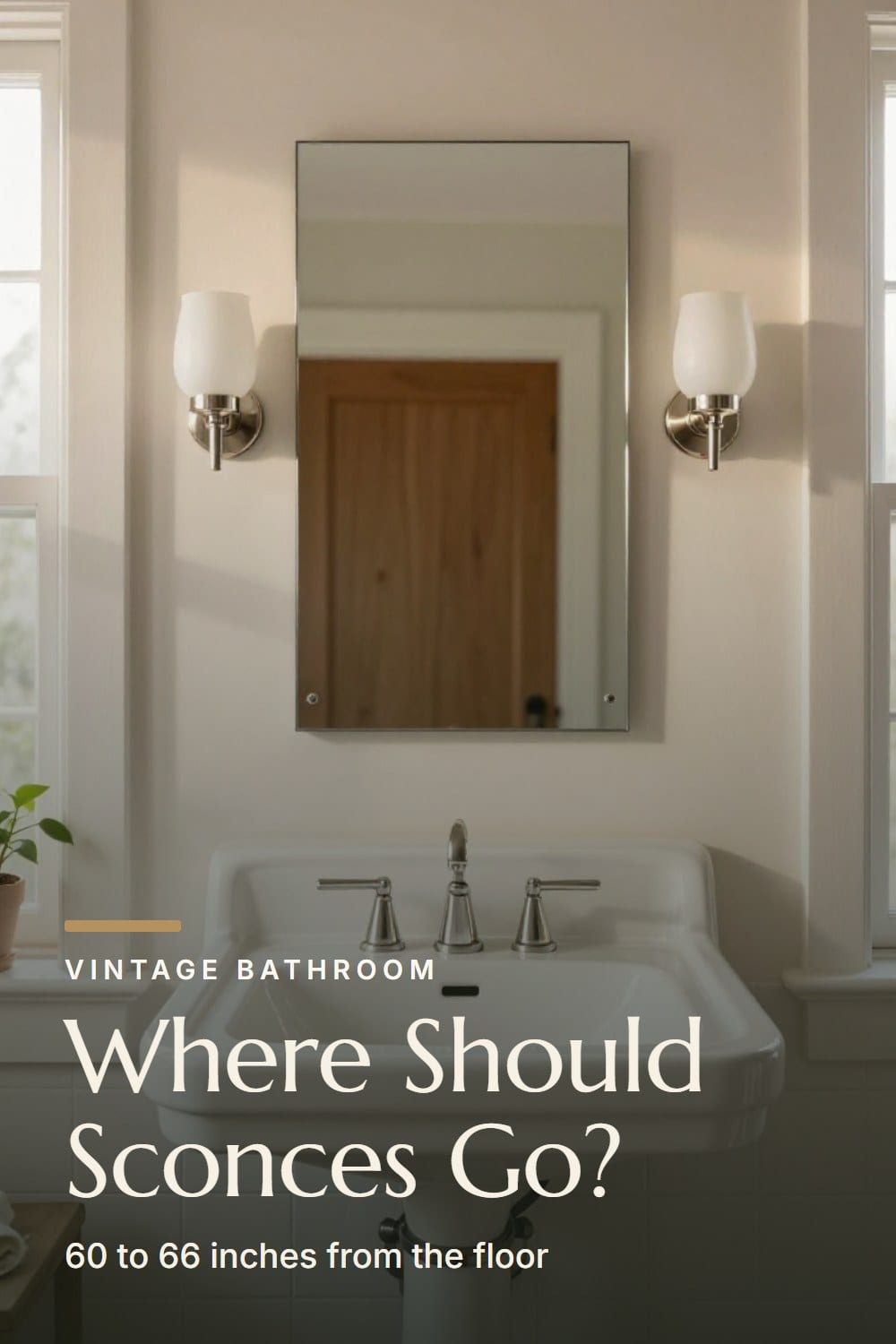
Height is the part people guess at, so here are real numbers. Aim to put the center of each fixture at roughly 60 to 66 inches from the floor. That lands near eye level for most adults and keeps the bulb itself out of your direct sightline.
Spacing comes next. Space the pair about 28 to 36 inches apart, measured center to center, and set them a few inches outside the mirror edge so the light reaches your face and not just the glass. On a narrow mirror that means the sconces nearly touch the frame. On a wide one they sit comfortably apart.
Schoolhouse globes, milk glass and fluted shades
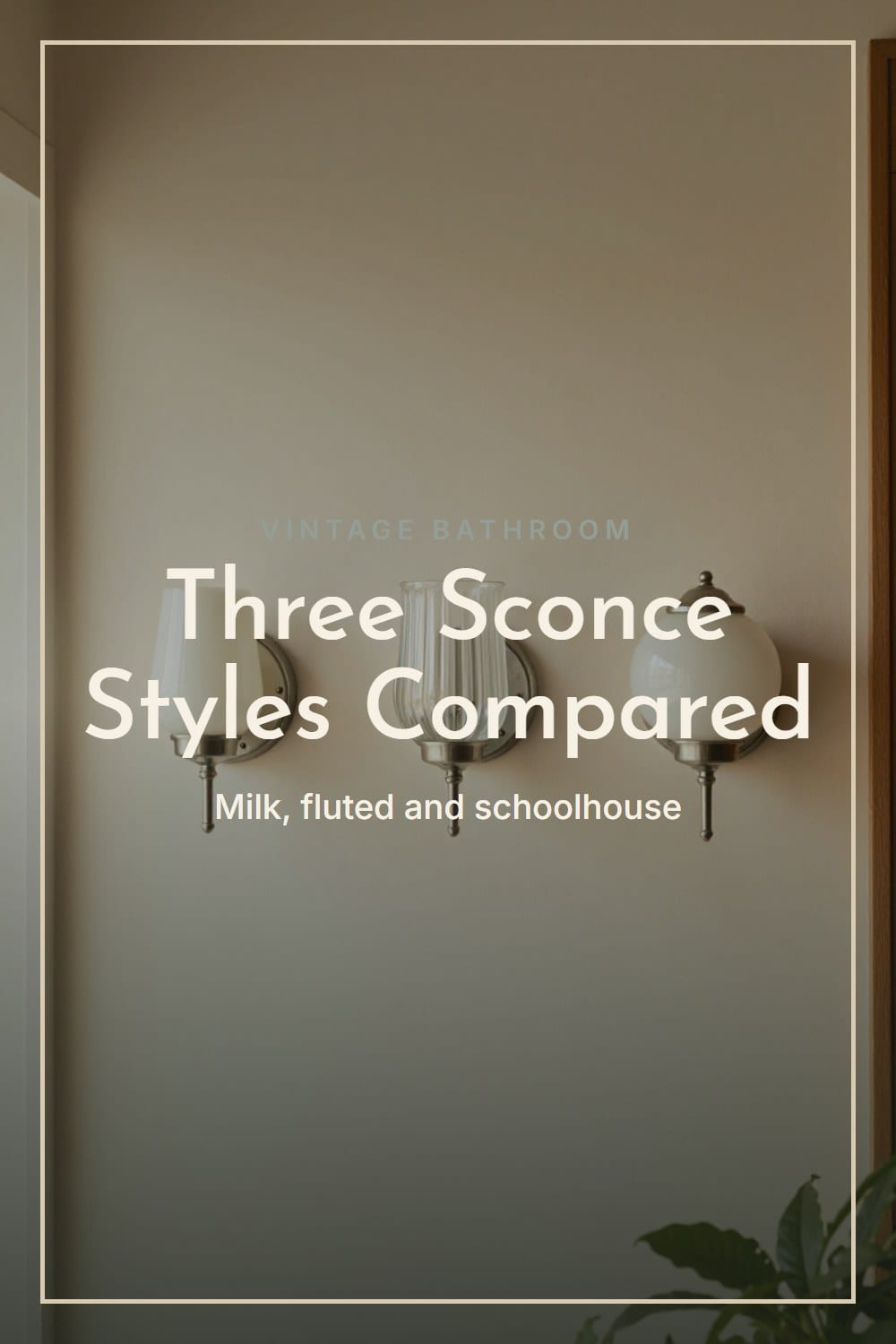
Glass decides the whole mood. Three kinds do most of the work in an old-house bathroom, and each suits a different era.
Schoolhouse globes
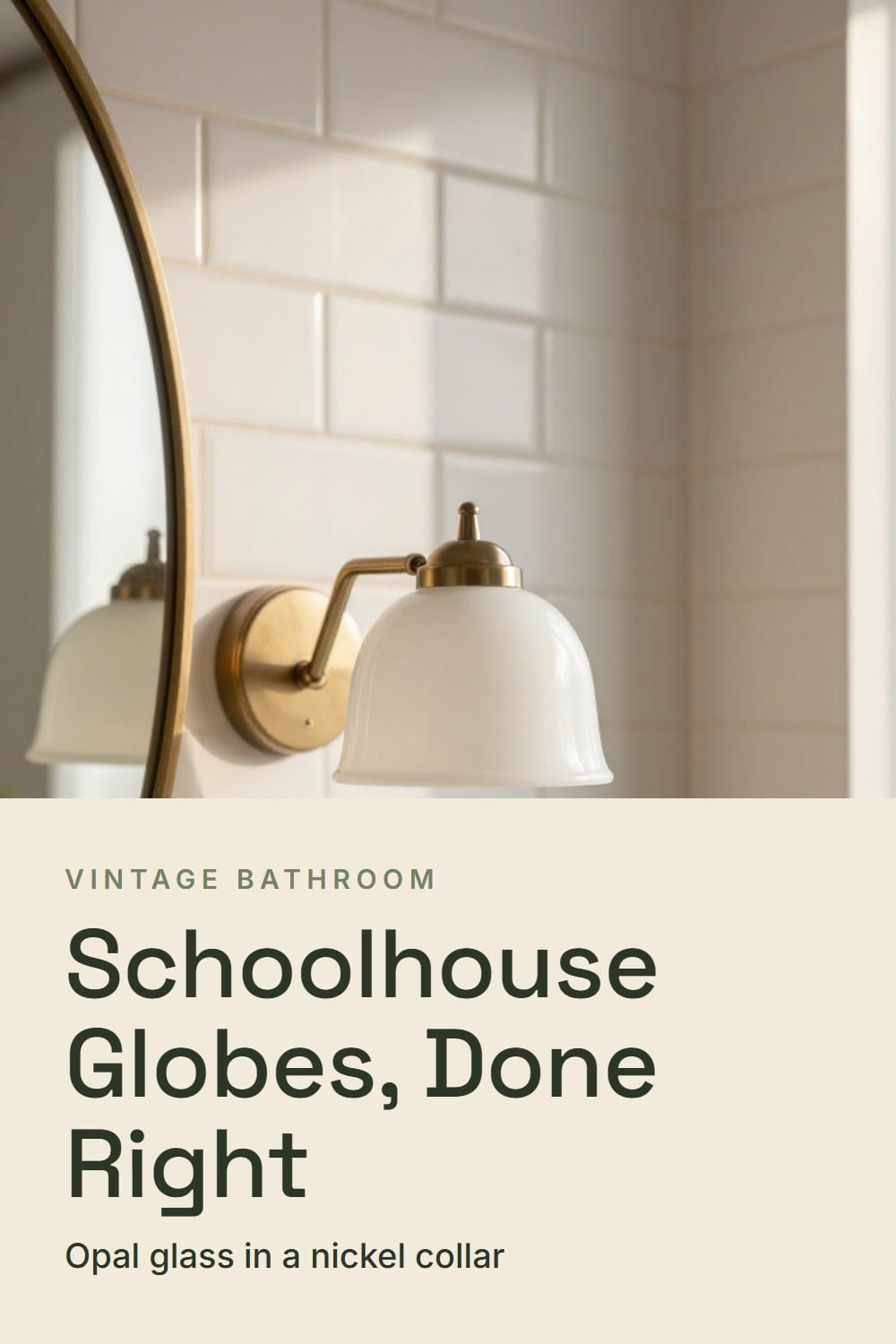
A schoolhouse light is a round or slightly flattened globe of opal glass with a short neck, sitting in a simple metal collar. It's the most forgiving shape I know. It reads 1920s to 1940s, and it also looks fine next to a modern vanity.
For a sconce, a globe around 6 to 8 inches wide looks balanced beside a standard mirror. Much bigger and it dominates the wall. If the globe is clear on the lower edge and white above, that's a classic detail worth keeping an eye out for.
Milk glass and opal
Milk glass is opaque white with a faint glow, and it hides the bulb completely. It's the softest option and the one I'd choose for a bathroom that gets used in the dark. Opal is the lighter cousin: slightly more translucent, slightly brighter. Both look quiet on a plaster wall, and both pair with white hex tile without a fight.
Frosted and fluted glass
Frosted glass is etched to a sandy finish. Fluted, or ribbed, glass has vertical ridges that bend the light into soft stripes. Both give a slightly deco feel, and they suit a 1930s bathroom or anything with black trim and chrome. If your room leans that way, read art deco bathroom ideas for how far to take it.
Nickel or brass for the fixture finish
Both are correct. The question is which one the rest of the room already speaks.
Polished nickel is soft, a little warm, and very 1920s. It sits happily beside white tile, a pedestal sink and a nickel towel bar. If your faucets are already nickel, it's the natural choice. 1920s bathroom ideas walks through that whole look.
Brass is warmer and richer. Lacquered brass stays shiny. Unlacquered brass darkens over the years, picks up a soft patina and gets better with age. It loves a deep wall color and wood. A moody room with dark paint wants brass, which is the thinking behind moody vintage bathroom ideas.
Whichever you pick, repeat it. If the sconces are nickel and the taps are nickel, the towel bar should be nickel too. Mixing metals can work, but only if one finish clearly leads and the second appears twice, never once. A single stray brass fixture reads like an accident. For the tap side of this decision, see cross handle faucets and unlacquered brass.
The ceiling fixture: flush or semi-flush
The sconces handle faces. The ceiling light handles the room, and it's the one people forget until the sconces leave the corners dim.
With a standard 8-foot ceiling, choose a flush mount. A shallow bowl of opal or frosted glass sitting close to the plaster, around 10 to 14 inches across, is plenty. With a 9-foot ceiling or higher, a semi-flush fixture on a short stem looks more proportional and sends light further into the corners.
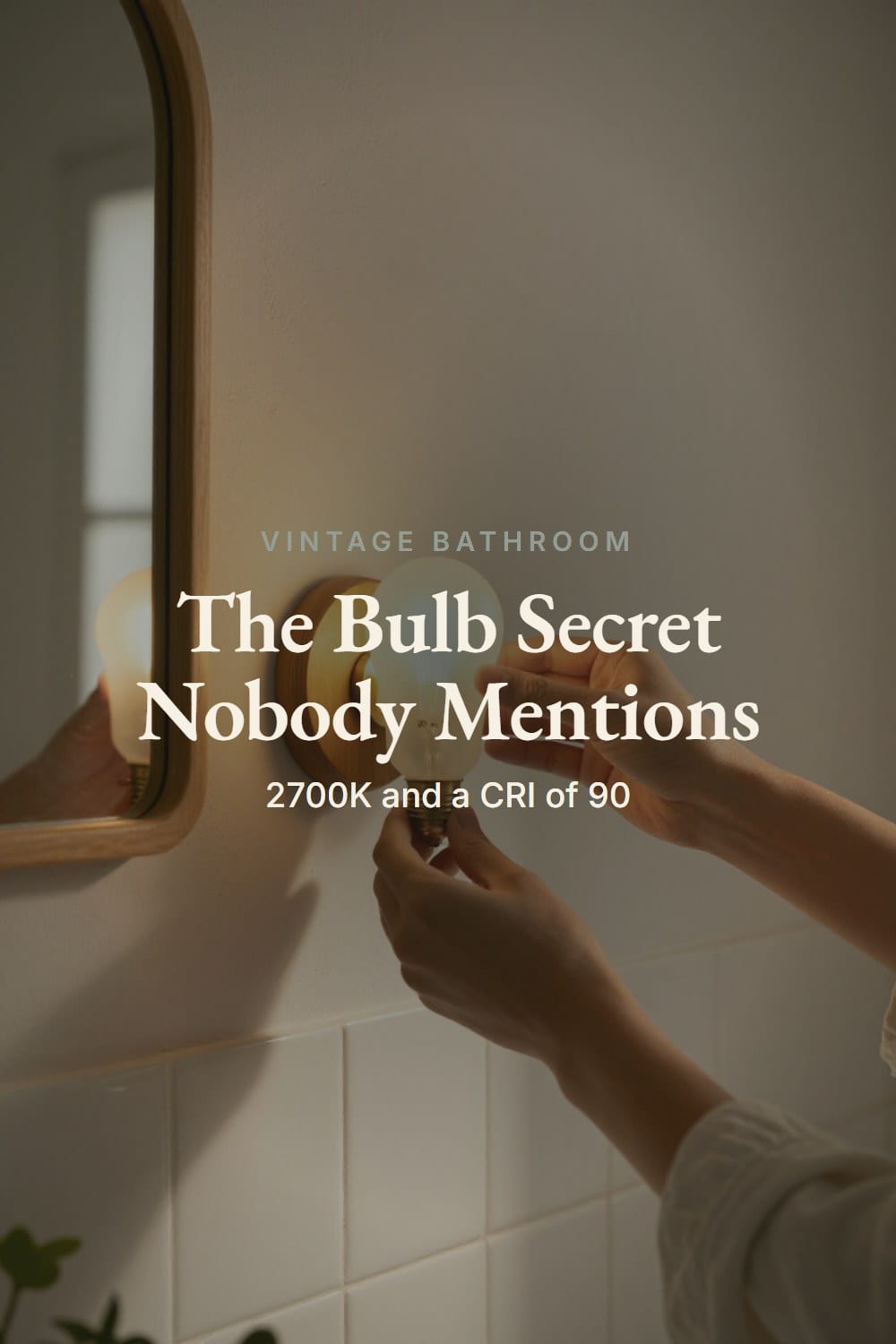
The bulb secret nobody mentions
I'll admit my worst lighting mistake had nothing to do with fixtures. Years ago I put bright white LED bulbs into a perfectly nice pair of sconces, because the package said daylight. The room instantly looked like a hospital corridor, and the old tile turned a flat blue-gray.
Two numbers fix this. The first is color temperature, measured in Kelvin. For a vintage bathroom, choose 2700K, the warm yellow-white of an old incandescent bulb. Anything above about 3000K starts to feel clinical, and 5000K daylight bulbs are the ones that make a bathroom look like an exam room.
The second is CRI, or color rendering index, which describes how truthfully a bulb shows color. Look for a CRI of 90 or higher. At lower numbers, skin looks flat and slightly gray, and pink tile looks muddy. At 90 or more, a face looks like a face.
Brightness matters too, but less than you'd think. As a rough guide, around 700 to 800 lumens per sconce is a comfortable level for grooming. Behind frosted or opal glass, that reads soft rather than harsh. If the glass is dense milk glass, go to the higher end.
Dimmers and the evening version of your bathroom
A dimmer is what turns a good bathroom light into a restful one. Full brightness at seven a.m. for the face. Low and golden at night for the bath.
Put the sconces on one dimmer and the ceiling fixture on a separate switch, if the wiring allows. Most nights you'll want the sconces alone. Check that the dimmer is rated for LED bulbs and that the bulbs themselves say dimmable on the box. An old dial dimmer with a new LED bulb is the classic recipe for flicker and humming.
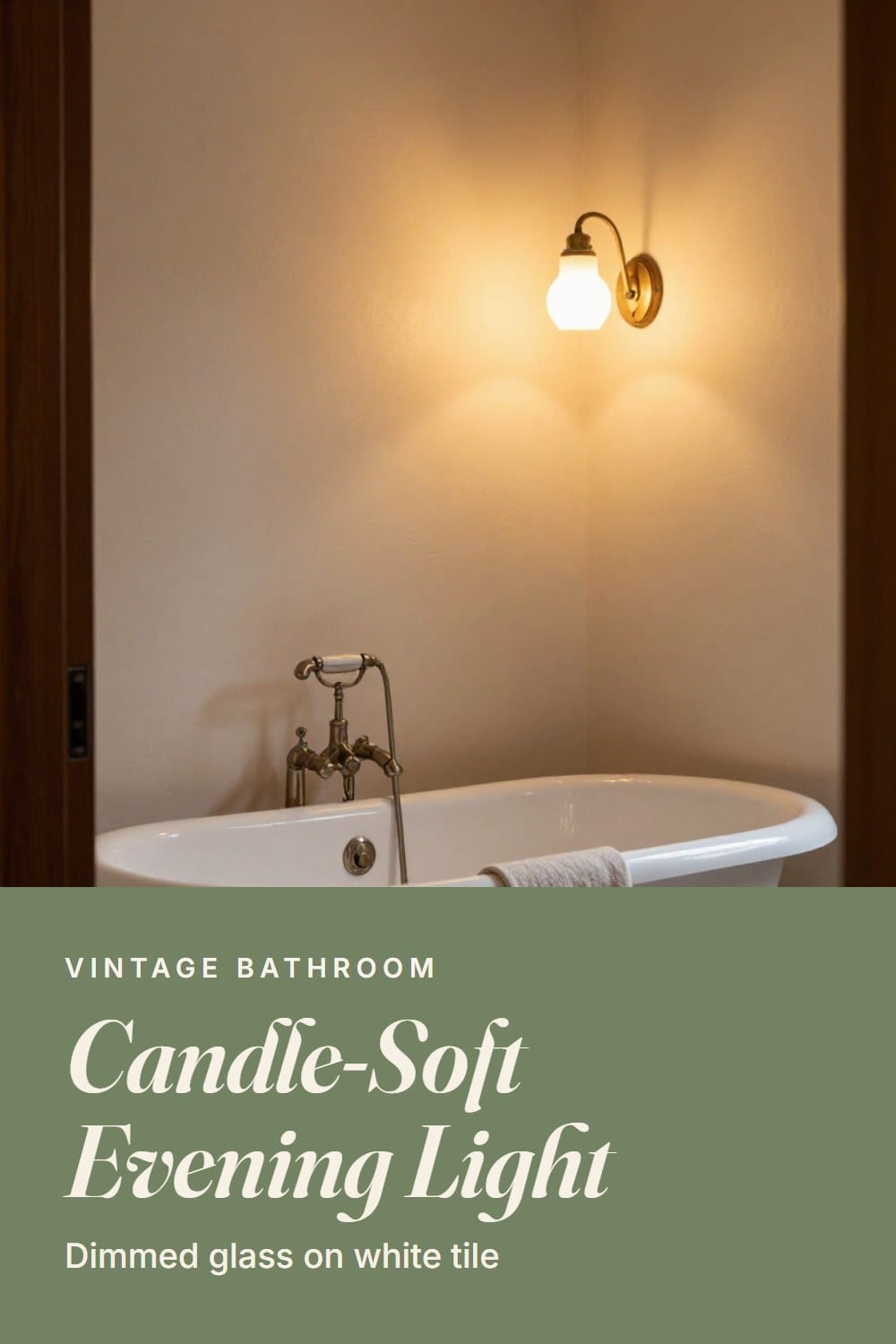
A quick note on mood. Dimmed to a third, 2700K bulbs behind milk glass cast a candle-like glow on white tile. It's the nearest thing I've found to a spa without a single spa product. Gray winter mornings feel gentler too, because the room is lit before the window is.
Damp-rated and wet-rated: what the labels mean
Bathrooms are wet, and light fixtures carry a safety rating that says how much wet they can take. There are three levels worth knowing.
- Dry-rated fixtures are for rooms where moisture never gets near them. Not for a bathroom.
- Damp-rated fixtures handle steam and the occasional splash. These suit sconces beside the mirror and most ceiling lights.
- Wet-rated fixtures are built for direct water. They belong inside a shower enclosure, where spray can reach the fixture.
As a general guide, any fixture over a tub or in the zone around it, roughly 3 feet out and 8 feet up from the tub rim, needs to be damp-rated at a minimum. Inside the shower spray, it needs to be wet-rated. Local codes differ, so ask your electrician to confirm what applies to your house.
This catches people who fall for a beautiful antique sconce. Real vintage fixtures are rarely rated for anything. If you love one, an electrician can sometimes rewire it and fit it with modern parts, but it may still not be suitable close to water. Put the antique piece in the dry part of the room and use a damp-rated reproduction over the tub.
What to keep from an original fixture
If your bathroom still has its original lights, don't throw them out in a rush. Some of the best pieces are the ones that came with the house.
Keep the glass. Original opal and milk glass shades are heavy, evenly made and often better than what you can buy now. Keep a solid cast brass or nickel body, if the plating is intact. Keep a ceiling fixture with a good shape even if the wiring needs replacing.
Replace the wiring, the sockets and anything that has frayed cloth insulation or cracked porcelain. That part is for an electrician. A pro can usually rewire a good old fixture so the outside stays original and the inside is safe.
Don't strip or sand old finishes at home until the paint and plating have been tested for lead. A gentle clean with mild soap and a soft cloth does more than you'd expect, and a dull patina is often the part that makes a fixture look old in a good way.
Mistakes that make a vintage bathroom look harsh
If your bathroom feels a little off, one of these is almost certainly the cause.
- Using one bar light above the mirror. It lights the top of your head and shadows your eyes.
- Choosing 5000K daylight bulbs. The room turns blue and the tile goes flat.
- Skipping the CRI number. A bulb below 90 makes skin and pink tile look dull.
- Hanging sconces too high or too low. Stay near 60 to 66 inches from the floor.
- Picking clear glass with a visible filament. It puts a bright spot straight into your eye.
- Mixing three metal finishes. Pick one lead and repeat it.
- Putting a dry-rated fixture over the tub. Check the label.
How to light a vintage bathroom in order
If you're starting from nothing, here's the order that wastes the fewest steps. It leans on what you already know about the room, so it pairs well with how to make a bathroom look vintage.
- Look at the room at its worst hour, usually early morning or night. That's the light you're fixing.
- Pick the finish that matches your taps and towel bar: nickel or brass.
- Choose the glass: schoolhouse, milk glass, frosted or fluted.
- Check the damp rating for every fixture near the tub or shower.
- Hang the sconces at 60 to 66 inches, about 28 to 36 inches apart, after a tape test.
- Add a flush or semi-flush ceiling fixture that suits your ceiling height.
- Buy 2700K bulbs with a CRI of 90 or higher, all at once.
- Put the sconces on a dimmer that suits LED bulbs.
Light changes how everything else in the room looks, tile and paint included. If you're still deciding on color, vintage bathroom paint colors is worth reading once the fixtures are in. And if the mirror wall is also home to a converted dresser, vintage bathroom vanity ideas covers what hangs where. Everything comes together in the complete vintage bathroom guide.
The Vintage Bathroom Lighting Planner
The printable is being finished. It will live here, free, with no sign-up wall.
Frequently asked
How high should I hang bathroom sconces?
What color temperature is best for a vintage bathroom?
Can I use an antique light fixture in a bathroom?
Should bathroom lights be nickel or brass?
Sarah Whitmore
she keeps the teak, she oils it in spring
Sarah has furnished the same porch three times and finally stopped. She writes about what actually survives a decade outdoors — which wood silvers, which fabric fades, and which inexpensive piece quietly reads the same as the expensive one.
SarahMore from this corner
 Vintage Bathroom
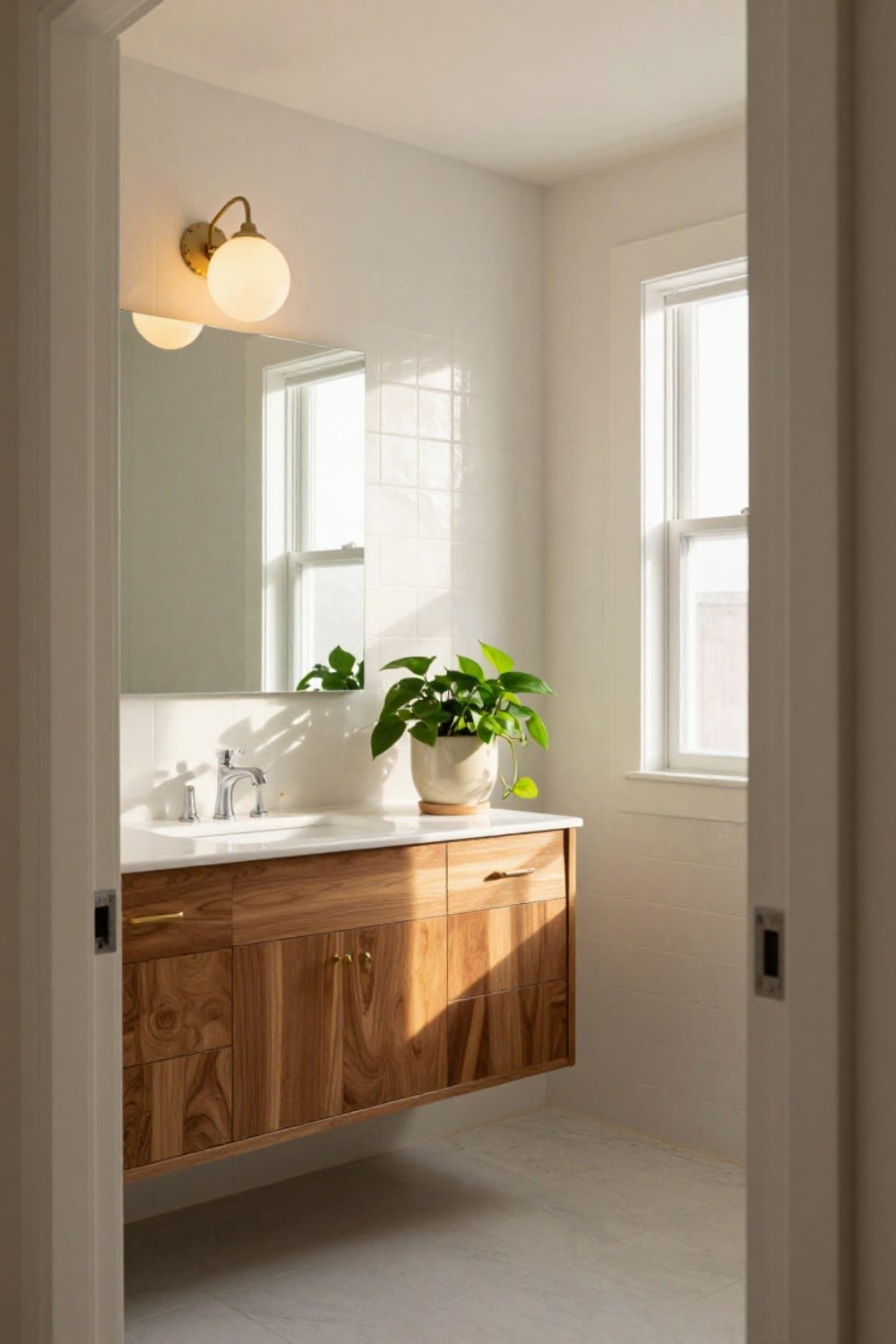
Mid Century Bathroom Ideas for a House Built in the 1950s and 60s
Mid century bathroom ideas for a ranch or split-level: the floating vanity, square and penny tile, globe lights, a wide mirror, and which original features to keep and update around.
Oct 31, 2026 · 12 min read
 Vintage Bathroom
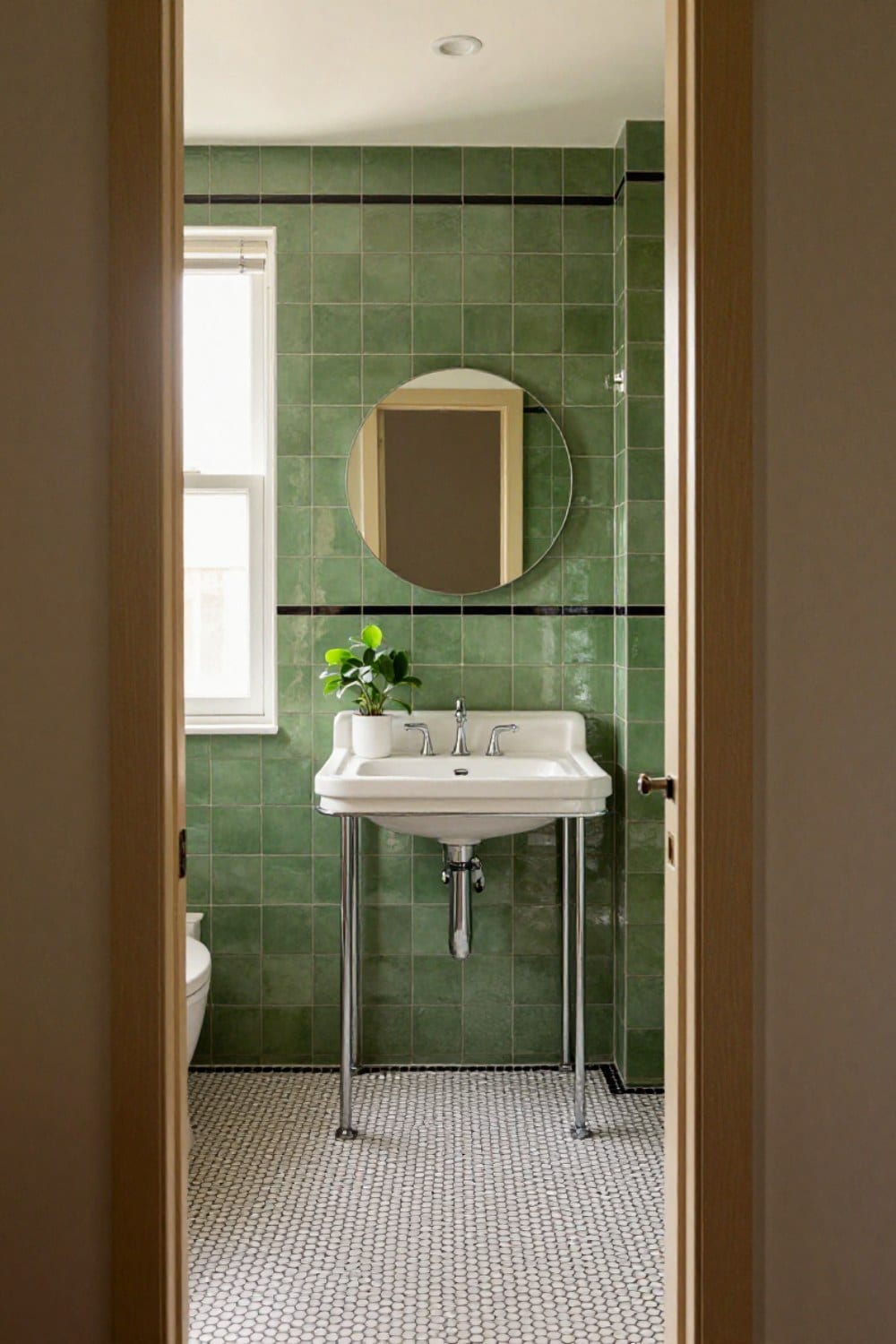
Art Deco Bathroom Ideas That Feel Classic, Not Costume
Art deco bathroom ideas scaled for a real house: the one-statement rule, black and white or green and black tile with a border, round mirrors, frosted sconces, a console sink on chrome legs, and the mistakes that make it look like a set.
Oct 31, 2026 · 11 min read
 Vintage Bathroom
 Tile Ideas: The Patterns and Colors That Never Date
Vintage bathroom tile ideas that still look right decades on: the hex, penny, subway and checkerboard patterns, the glaze colors worth keeping, the grout rule that matters most, and how to decide between repair and reproduction.
Oct 29, 2026 · 12 min read