Olive Green Bedding Ideas: How to Make a Green Bed Look Collected
Olive green bedding ideas that make a bed look collected instead of matched: the three-tone rule, the fabrics that read expensive in green, what goes on top, and what belongs on the walls behind it.

This post contains affiliate links. As an Amazon Associate we earn from qualifying purchases — at no extra cost to you.
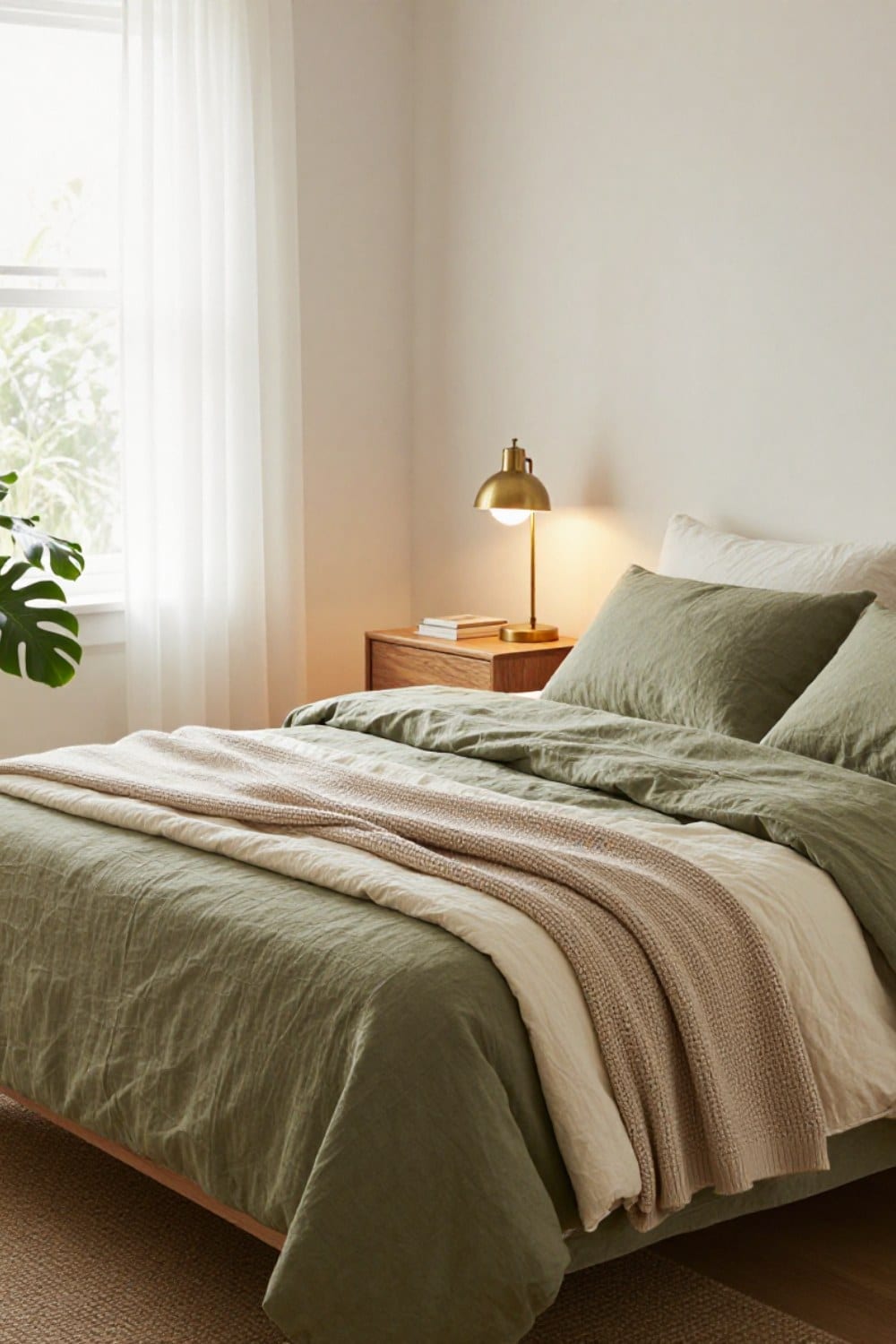
Olive green bedding ideas usually start with the same quiet hope: a bed that looks like someone with good taste put it together slowly, over years. Not a matched set pulled out of one bag. A bed that looks collected.
Here's what I learned the hard way. Green is easy to love and easy to get wrong, and it goes wrong in one particular way. It goes flat. A few winters ago I bought a sage duvet cover, sage sheets and two sage shams in the same week, and the bed looked like a pharmacy aisle. Same shade, same sheen, nothing to rest your eye on.
This is the hub for dressing a green bed. You'll get the one rule that fixes most beds, the fabrics that read expensive in green, what goes on top, and what belongs on the walls behind it. Each section points to a longer guide when you want the detail.
What a collected green bed actually looks like
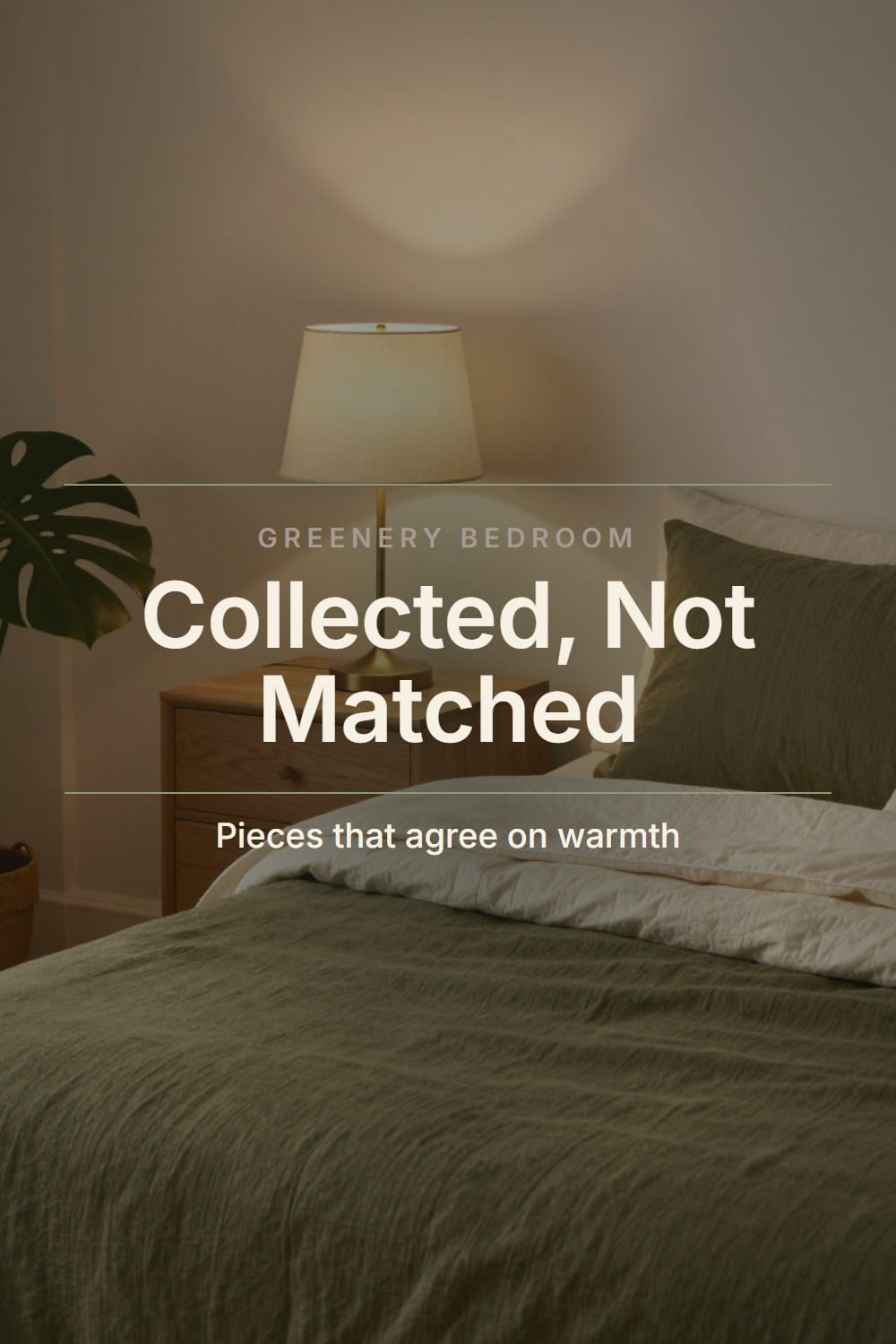
A collected bed has a few things in common, and a matching set isn't one of them. The pieces can come from different shops and different years, as long as they agree on temperature. Warm green sits with warm cream. Cool gray and stark white make olive look muddy.
It also looks slept in. Linen with soft creases, a quilt folded a little off square, a throw that landed where it landed. For years I made my bed with tight hospital corners and wondered why it felt like a hotel brochure. Now I smooth the top, fluff the shams once, and leave it.
Green earns this look more easily than most colors because it behaves like a neutral. Olive has enough yellow and gray in it to sit happily beside oak, brass, cream and rust. If you'd like the whole room built around it, olive green bedroom ideas covers the walls, the wood and the metal.
The three-tone bedding rule that fixes most green beds
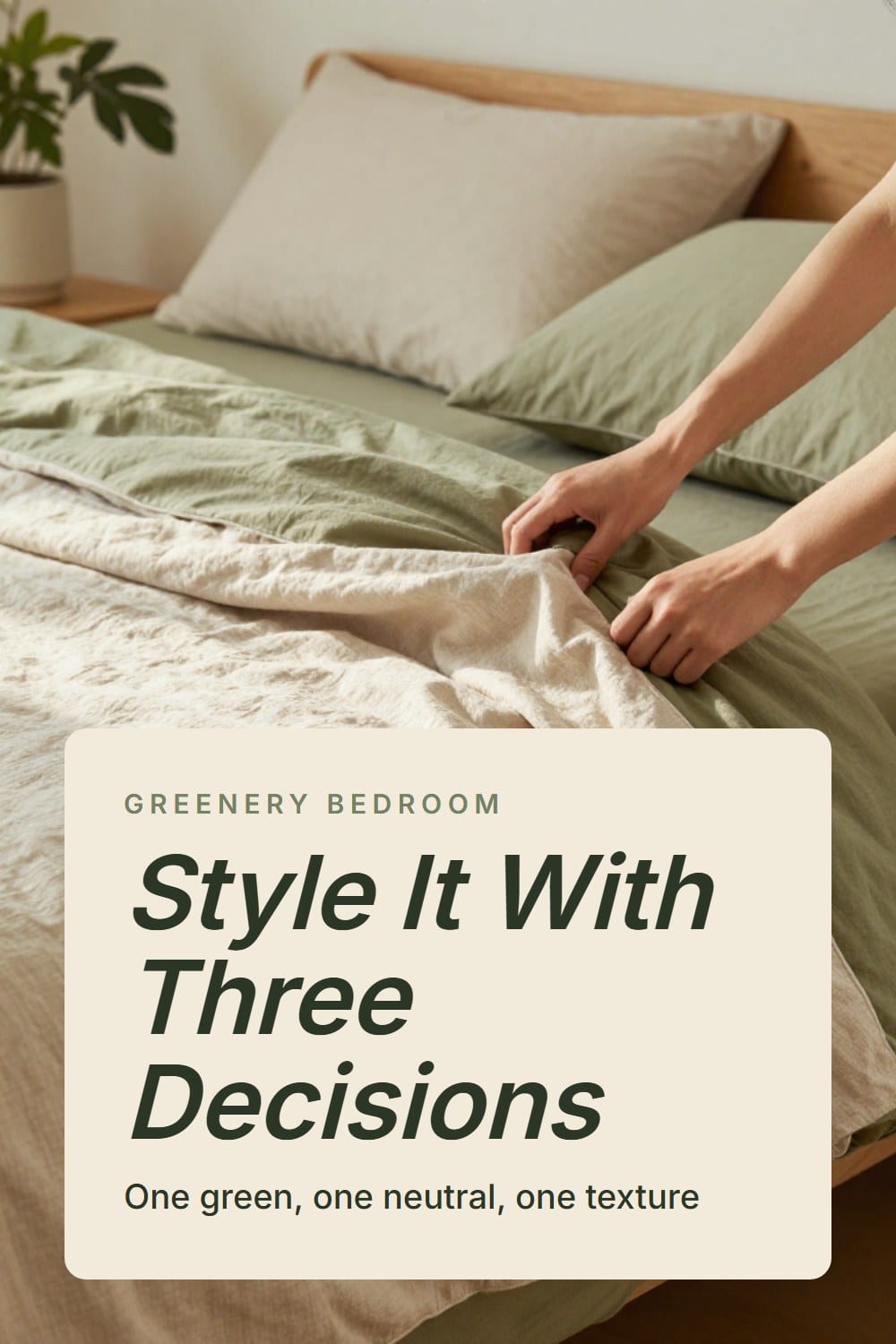
Here's the rule I give any friend who texts me a photo of her bed and asks what's wrong. Pick one green. Pick one neutral. Pick one texture.
The green is the main event, usually the duvet cover or quilt, whichever covers more of the bed. The neutral is everything resting beside it, in cream, oatmeal or a warm white, on the sheets, the shams and the foot of the bed. The texture is the single piece that looks different up close than the rest: a nubby knit throw, a quilted coverlet, one velvet pillow.
It works because the eye reads a bed from the doorway in about two seconds. One green, one calm neutral and one thing to look at tells it the bed was considered. Two greens that almost match tell it the opposite. Clearly different greens can work, a pale sage with an olive and a deep forest, but that's an advanced move and I'd earn it first.
My own version, from last winter: a washed olive linen duvet cover, cream percale sheets turned back at the top, one oatmeal knit throw across the foot. Three decisions. A neighbor asked who I'd hired.
How to choose between olive, sage and forest
Olive is the most forgiving of the three. It leans yellow-gray, it hides lint and wrinkles, and it likes wood. If you only trust one green, trust this one.
Sage is grayer and lighter, the softest of the three. It needs a warm neutral beside it, or it reads cold and a little clinical. The sage green bedroom ideas guide goes into the palette and the walls.
Forest is the dramatic one. It's lovely in heavy cotton or velvet and it can swallow a room. I chose it first because it photographed beautifully, and in our north-facing guest room it looked close to black by four in the afternoon every January. We switched to olive and the room woke up.
Which fabrics read expensive in green
Color gets the attention, but fabric is what makes a green bed look expensive or look like a sample. Four are worth knowing.
Washed linen
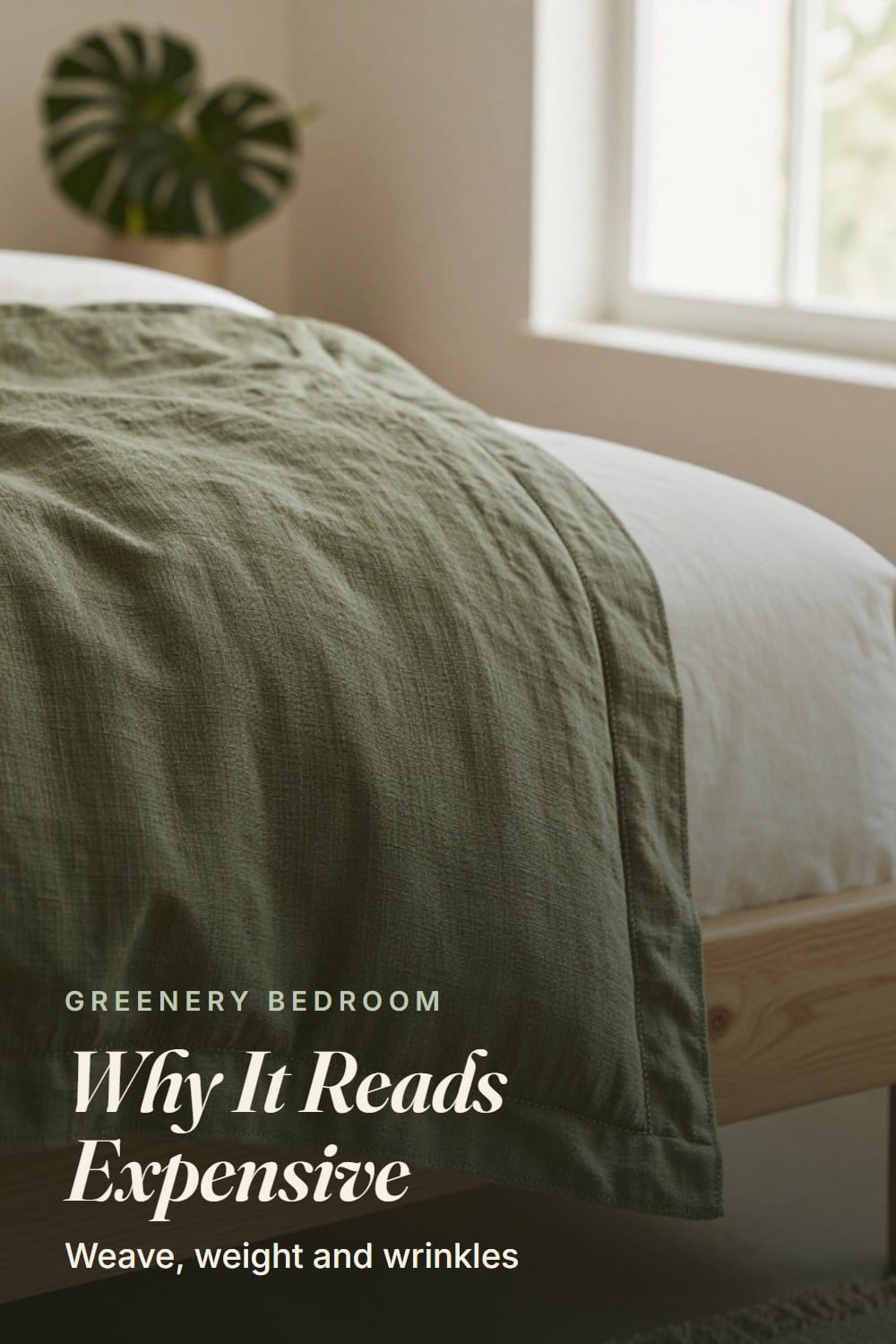
Linen is flax, and it softens with every wash. It also wrinkles, which is exactly why it looks lived in rather than fussy. Sheets are usually sold by weight, and around 160 to 190 GSM is the range I look for. Olive and washed linen is the most forgiving pairing I know. For the head-to-head with cotton, read linen vs cotton sheets, and for the cover itself, the best green linen duvet covers walks through sage, olive and forest.
Cotton percale
Percale is a one-over-one-under weave: crisp, matte and cool. It's the tailored one. A soft olive or sage percale pulled snug looks pressed even when it isn't. Sateen is a four-over-one-under weave that's smoother, slightly shiny and warmer, and it can pill. Thread count past about 400 is mostly marketing, so ignore the big number on the package.
Velvet
Velvet does the dressy work, so use it in small doses: one pillow, or a headboard. A deep forest velvet against pale linen is about the richest thing you can do to a bed. Green velvet headboard ideas covers the bigger commitment, and olive velvet bedding for winter covers the cold-month layer.
Gingham
Green gingham is the one pattern I'll put on a grown-up bed, as long as the check is large and everything around it is plain. It reads relaxed and a little French. Keep it to one pattern per bed. Green gingham bedding shows how to style it so it stays adult.
What goes on top: quilts, throws and euro shams
This is the layer that makes the three-tone rule visible, so it's worth getting right. For the full step-by-step, how to layer bedding like a designer has it. Here's the short version.
Start with a quilt or coverlet in your neutral, folded in thirds across the foot. That's usually where your texture lives too. A quilted cream coverlet against an olive duvet looks like it has been on the bed for ten years.
Add one throw, not three. Lay it across the foot or over a single corner rather than running it down the middle like a table runner. One throw looks chosen. Three look like a laundry pile.
Then the shams. Euro shams are 26 x 26 inches and stand upright against the headboard. Two of them go behind, with standard shams in front: 20 x 26 inches on a queen, or king shams at 20 x 36 inches on a king. My favorite trick is to make the euro shams the neutral, not the green. It breaks the color up and gives the eye somewhere to land.
What to put on the walls behind a green bed
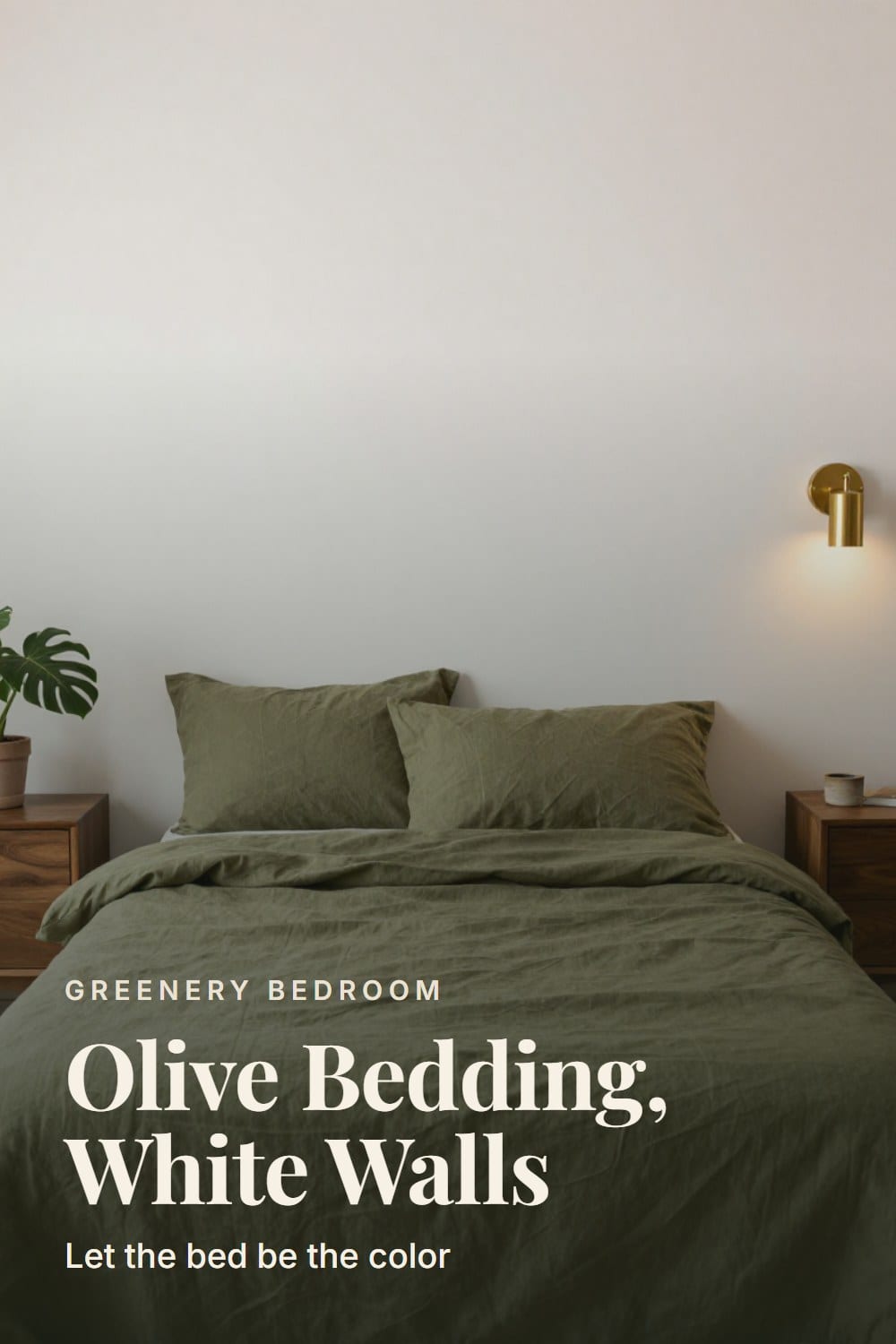
The wall decides whether the bed glows or disappears. A warm white wall lets olive bedding be the color in the room, which is the calmest way to do it. A wall close to the bedding's green can look rich and tonal, but only if the fabrics have plenty of texture to keep it from blurring.
Greige, soft clay and deep charcoal all work too, each in a different mood. I'm staying in color families on purpose here. Look at any paint in the room's real light, at three times of day, before you commit. The full breakdown is in what color walls go with green bedding, with six pairings that work.
Wood does a lot of quiet work in the same spot. A walnut or oak headboard, matching nightstands and a brass lamp give an olive bed the warmth that paint can't. If the room has none of that yet, start with one lamp.
Five olive green bedding ideas to borrow
Not sure where to start? These are the five combinations I keep coming back to. Each one begins with the three-tone rule.
- Olive linen, cream everything else. A washed olive duvet cover, cream percale sheets and an oatmeal quilt. The calmest version, and the one I'd start with.
- Olive percale and an oatmeal quilt. Crisp and tailored, with a nubby knit throw as the texture.
- Olive with rust and brass. Add one rust pillow and a brass lamp, and the green starts to look expensive.
- Olive gingham over plain linen. A large green check on the duvet, solid cream sheets, and no other pattern anywhere.
- Tonal greens. Pale sage linen with one deep forest velvet pillow. It's the only time I'd use two greens on purpose.
Olive green bedding through the seasons
A green bed is easy to carry through the year because you change the top layer and leave the base alone. The washed olive linen stays put.
In spring and summer, take the quilt off and keep one light throw at the foot. Linen sleeps cool and looks better as it crumples. In autumn, bring the knit throw back and swap in a heavier quilt. By winter you want a thick coverlet, a wool throw and, if you like, the velvet layer from above.
January is when most of us strip the bed and start over, and a green bed rewards that reset more than a white one does. It looks freshest when the base is plain and only one thing changes.
Mistakes that make a green bed look flat
If your green bed feels dull, one of these five is almost always the reason.
- Matching the duvet, sheets and shams in the same green. Everything blends and nothing reads.
- Pairing warm olive with a cool, stark white. The green turns muddy and the white turns harsh.
- Using one sheen all over. All sateen or all velvet looks flat in lamplight, so mix a matte with a soft shine.
- Piling on pillows. Two euro shams, two standard shams and one accent is plenty on a queen.
- Skipping the texture piece. Without a knit throw or a quilted coverlet, even good linen looks like a plain sheet.
A seven-point checklist before you buy anything
- Choose one green, and look at it in daylight.
- Choose one neutral that matches the green's warmth.
- Choose one texture piece: a knit throw, a coverlet or a velvet pillow.
- Make the two euro shams (26 x 26 inches) the neutral.
- Pick sheets by weave and weight, percale or linen, not by the biggest number.
- Settle the wall color family before the bedding arrives.
- Put a warm 2700K bulb in the bedside lamp.
My advice is to buy the washed olive linen duvet cover first and live with it for a month. The rest tends to sort itself out. Buy fewer, better pieces, and keep them for years.
Once you have settled on your one green and your one neutral, these are the olive and sage pieces I would look at. Choose a bed set first, then add the smaller layers.
Bedsure PureWoven cotton quilt set, olive green, queen
A quilted, cotton olive bedA cotton quilt set in olive green, sized for a queen bed.
Simple&Opulence olive green linen duvet cover set, queen
The linen duvet cover routeA linen duvet cover set in olive green for a queen bed, in the same fabric family as the cover I suggest starting with.
Simple&Opulence linen euro sham covers with piping, sage, pair
A softer green behind the pillowsLinen euro sham covers with piping, in sage and sold as a pair. Check the listed size against your inserts before ordering.
Simple&Opulence linen lumbar pillow covers, olive, pair
A small olive accentLinen lumbar pillow covers in olive, sold as a pair, to repeat the green at a smaller scale.
The Green Bed Styling Card
The printable is being finished. It will live here, free, with no sign-up wall.
Frequently asked
What color sheets go with olive green bedding?
Can I mix sage and olive on the same bed?
Is linen or cotton better for green bedding?
How many pillows should a green bed have?
Sarah Whitmore
she keeps the teak, she oils it in spring
Sarah has furnished the same porch three times and finally stopped. She writes about what actually survives a decade outdoors — which wood silvers, which fabric fades, and which inexpensive piece quietly reads the same as the expensive one.
SarahTimeless Manor is a participant in the Amazon Services LLC Associates Program, an affiliate advertising program designed to provide a means for sites to earn advertising fees by advertising and linking to Amazon.com. As an Amazon Associate we earn from qualifying purchases. This means if you click a link and buy something, we may receive a small commission at no additional cost to you. We recommend pieces we believe will still be on your patio in a decade — never on commission.
More from this corner
 Bedroom Sanctuary
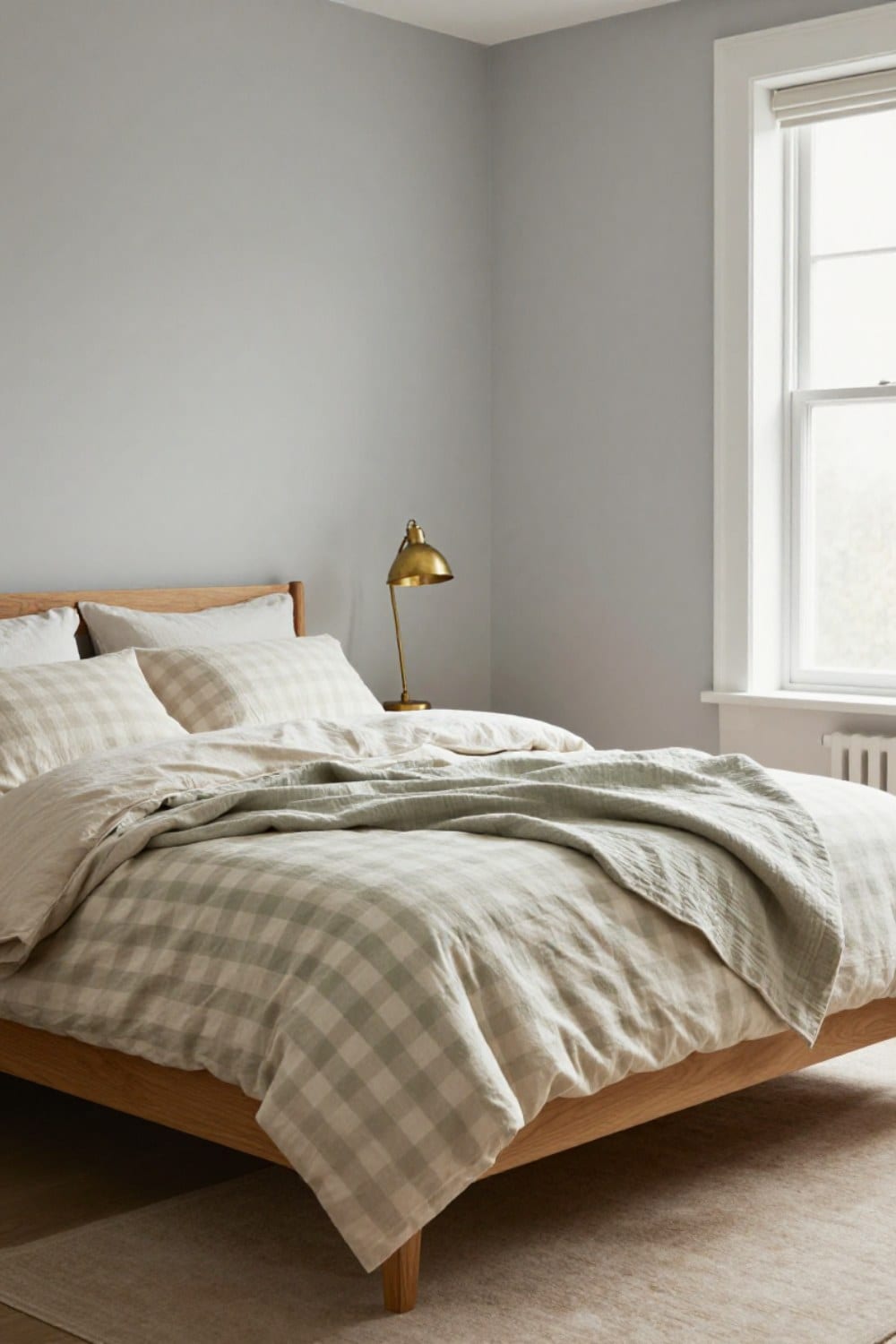
Green Gingham Bedding: How to Style It So It Looks Grown-Up
Green gingham bedding can look calm and collected instead of nursery. Here is how to choose the check size, keep it to one layer, mix it with other patterns and pair it with wood so the bed looks grown-up.
Oct 25, 2026 · 10 min read
 Bedroom Sanctuary
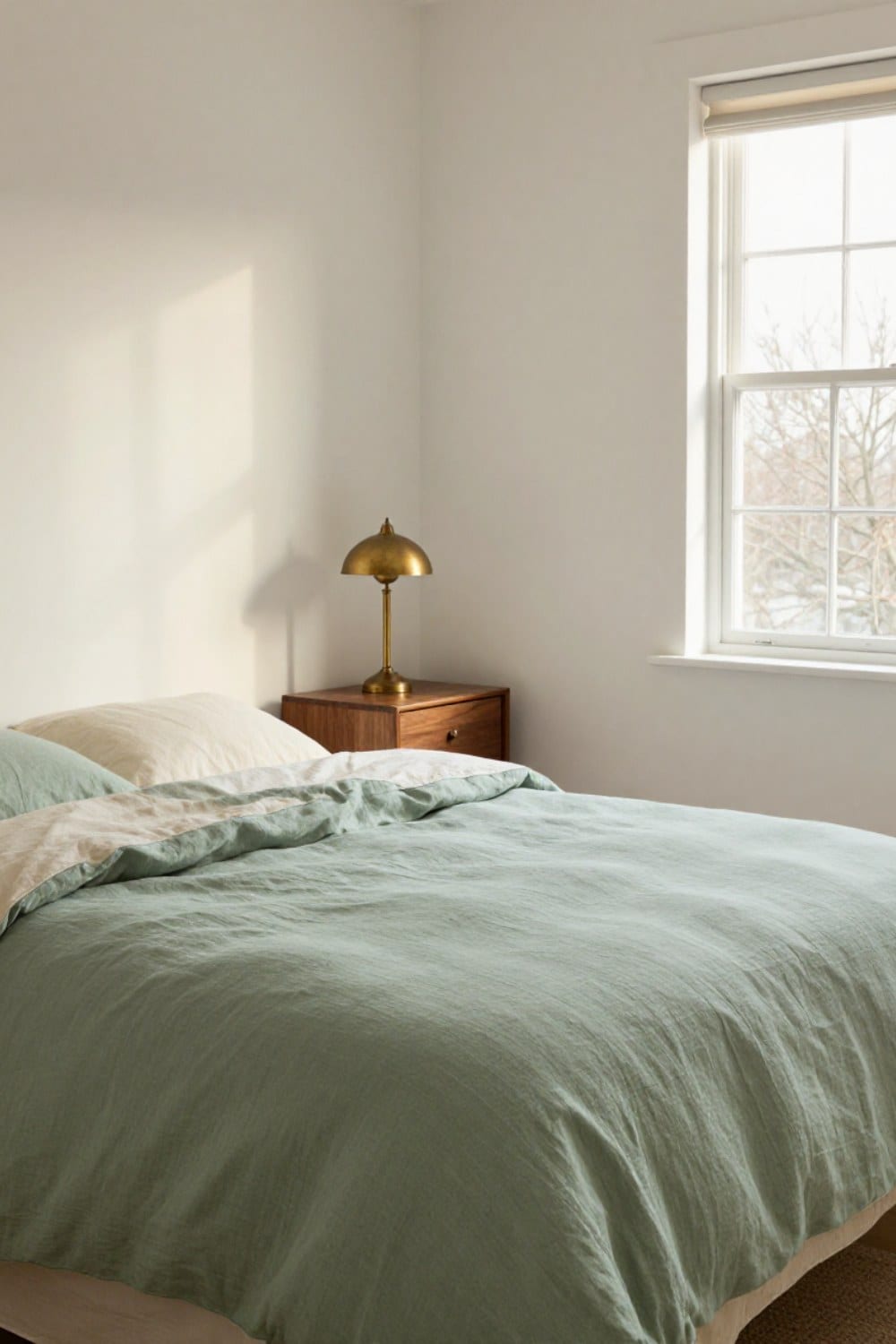
What Color Walls Go With Green Bedding? Six Pairings That Work
Six wall colors that make green bedding look chosen on purpose: warm white, greige, soft plaster pink, taupe, pale sage and deep chocolate or charcoal. Each one comes with the green it suits, how your light changes it, and the wood that ties it together.
Oct 20, 2026 · 11 min read
 Bedroom Sanctuary
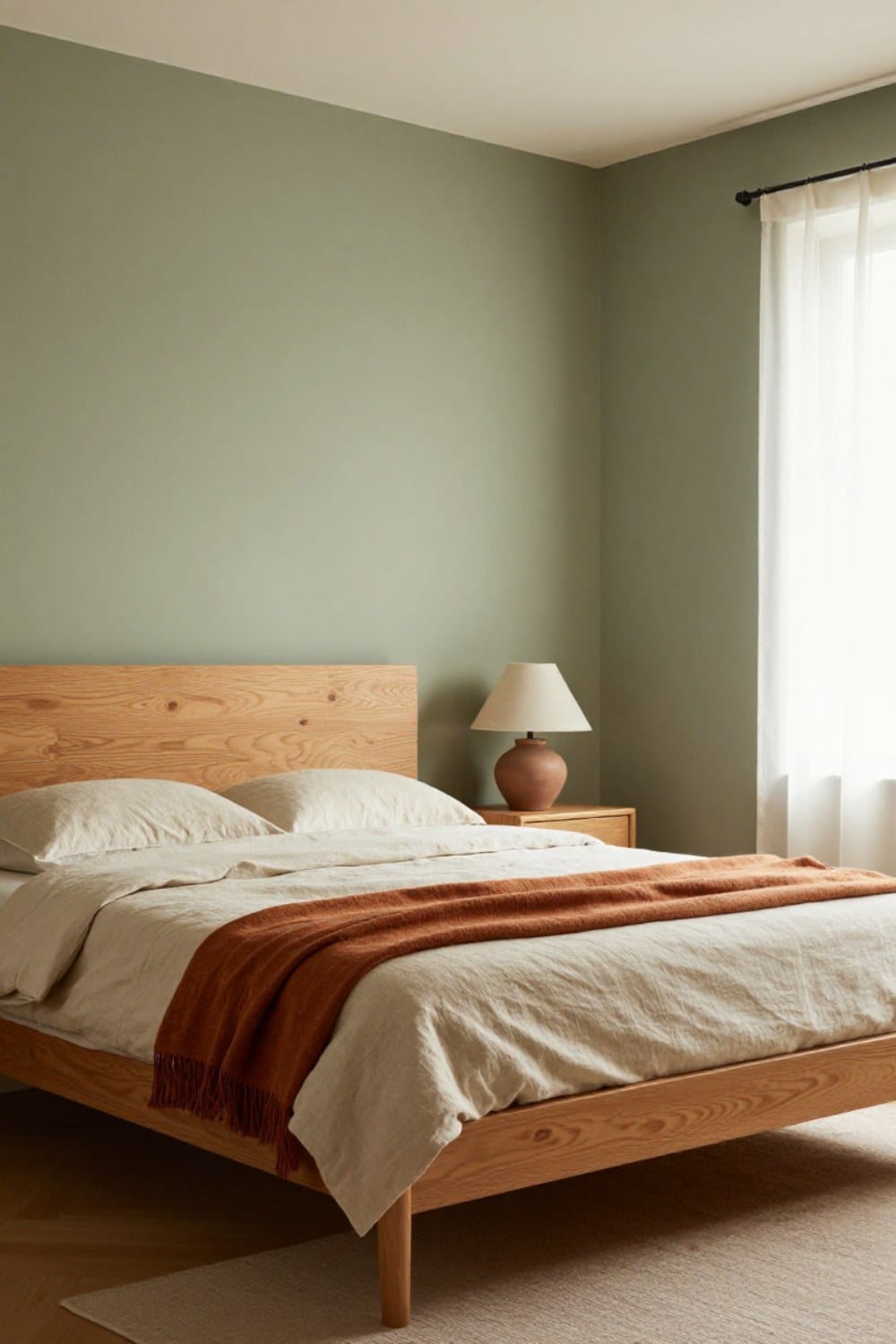
Sage Green and Terracotta Bedroom: A Warm Palette That Works With Wood
Sage green and terracotta is the easiest earthy palette to live with, as long as you get the proportions, the wood and the lightbulb right. Here is how I split it, where the clay goes, and what to swap each season.
Oct 20, 2026 · 10 min read