Linen vs Cotton Sheets: Which One Is Worth It for Your Bed
Linen vs cotton sheets, compared plainly: what linen, percale and sateen really feel like, what thread count and GSM mean, which suits hot and cold sleepers, and how each one looks in sage or olive.

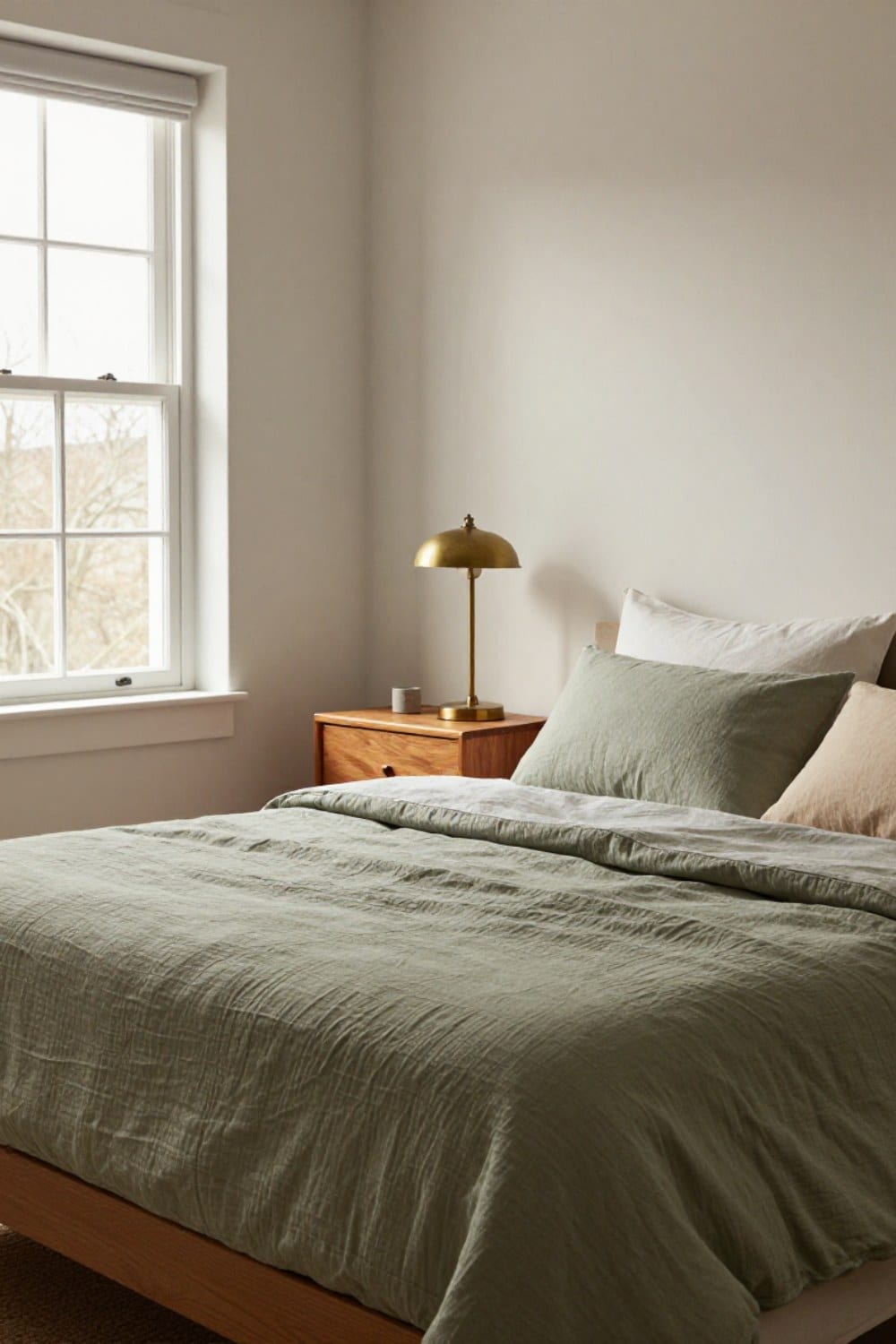
Every January I strip the guest bed, stand there holding a pile of sheets, and try to decide what the next set should be. I have bought both fabrics, returned one set, and kept another for years longer than I expected. So here is linen vs cotton sheets as honestly as I can put it, from someone who sleeps on all of it.
The short version: neither one wins everywhere. Linen is the breathable, long-lived, slightly rumpled one. Percale is the crisp, cool one. Sateen is the smooth, warm one. Which belongs on your bed depends on how you sleep and how you feel about wrinkles, and it has surprisingly little to do with the big number printed on the package.
This is a buy-fewer-better decision. Sheets touch you for about eight hours a night, so a set you love and keep for years deserves more thought than almost anything else on the bed. Here is how I work through it.
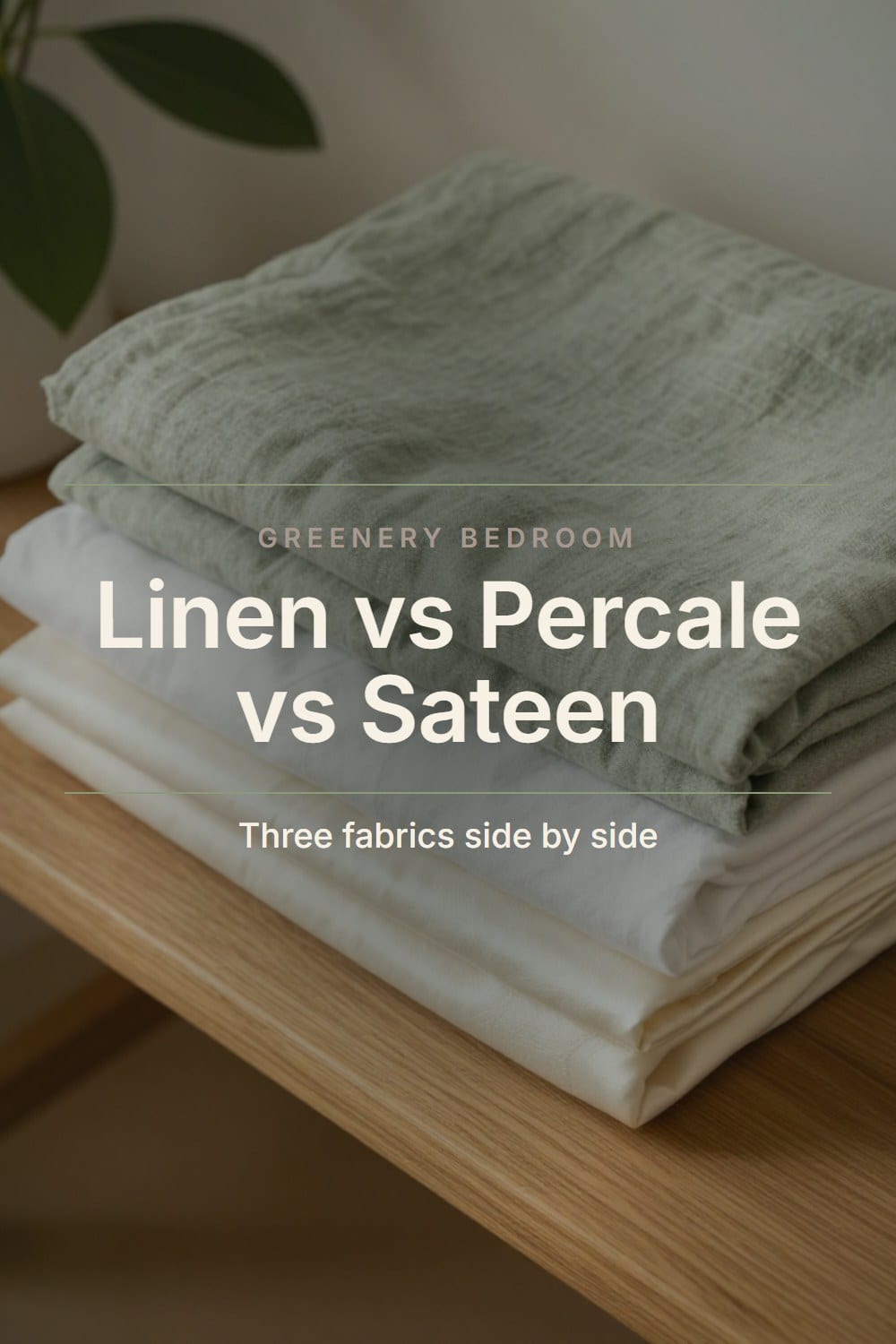
What linen sheets actually feel like
Linen is made from flax, a plant with long, strong fibers. The cloth that comes out of it has a slightly uneven, slubby surface you can see and feel, and that is a big part of why a linen bed looks relaxed even right after you make it.
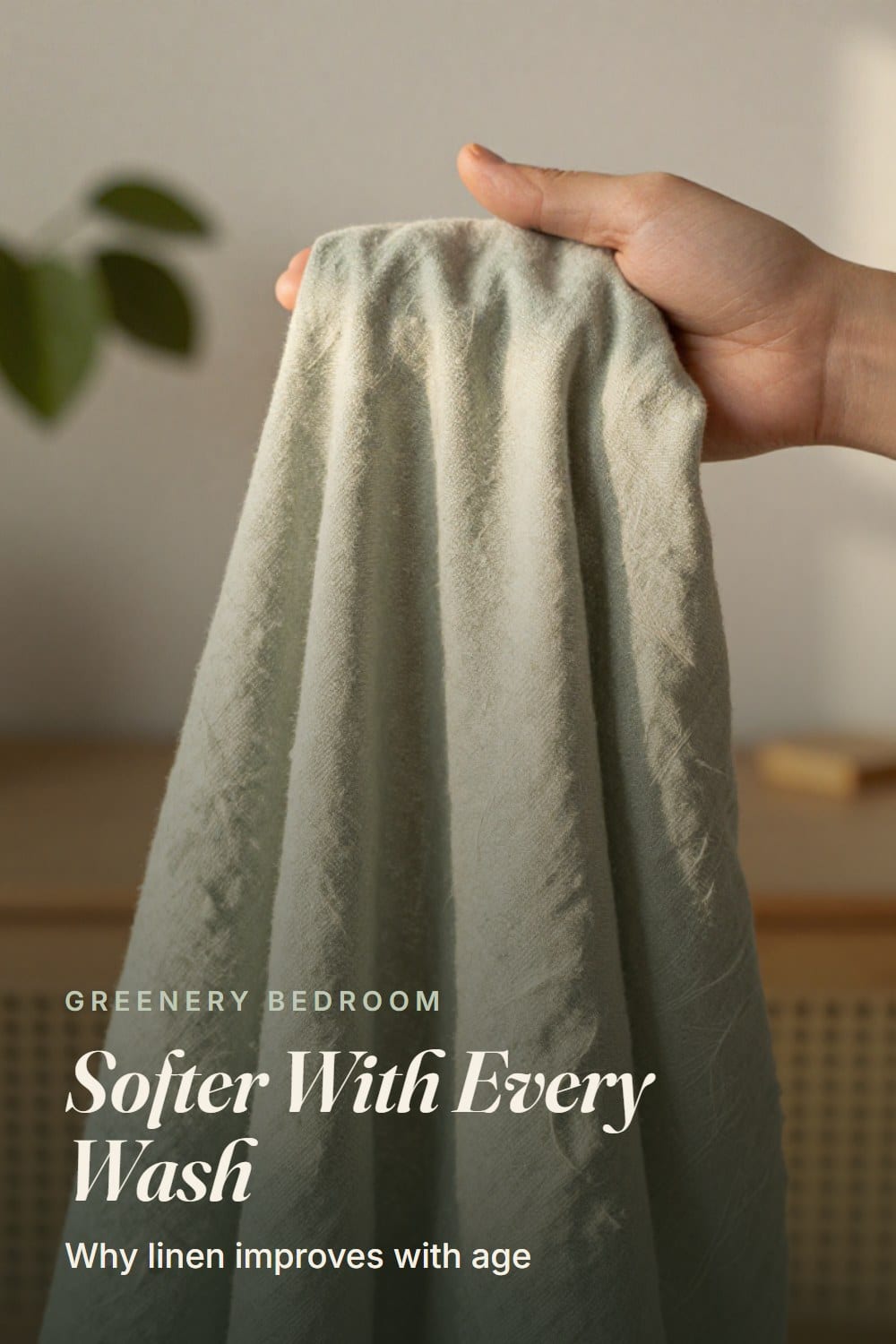
Fresh out of the package, linen can feel dry and a little scratchy, closer to a good kitchen towel than a pillowcase. That is normal. It is also the thing that sends people back to the store. Washing relaxes the fibers, and mine turned soft somewhere between the fifth and tenth wash. They kept softening well after that.
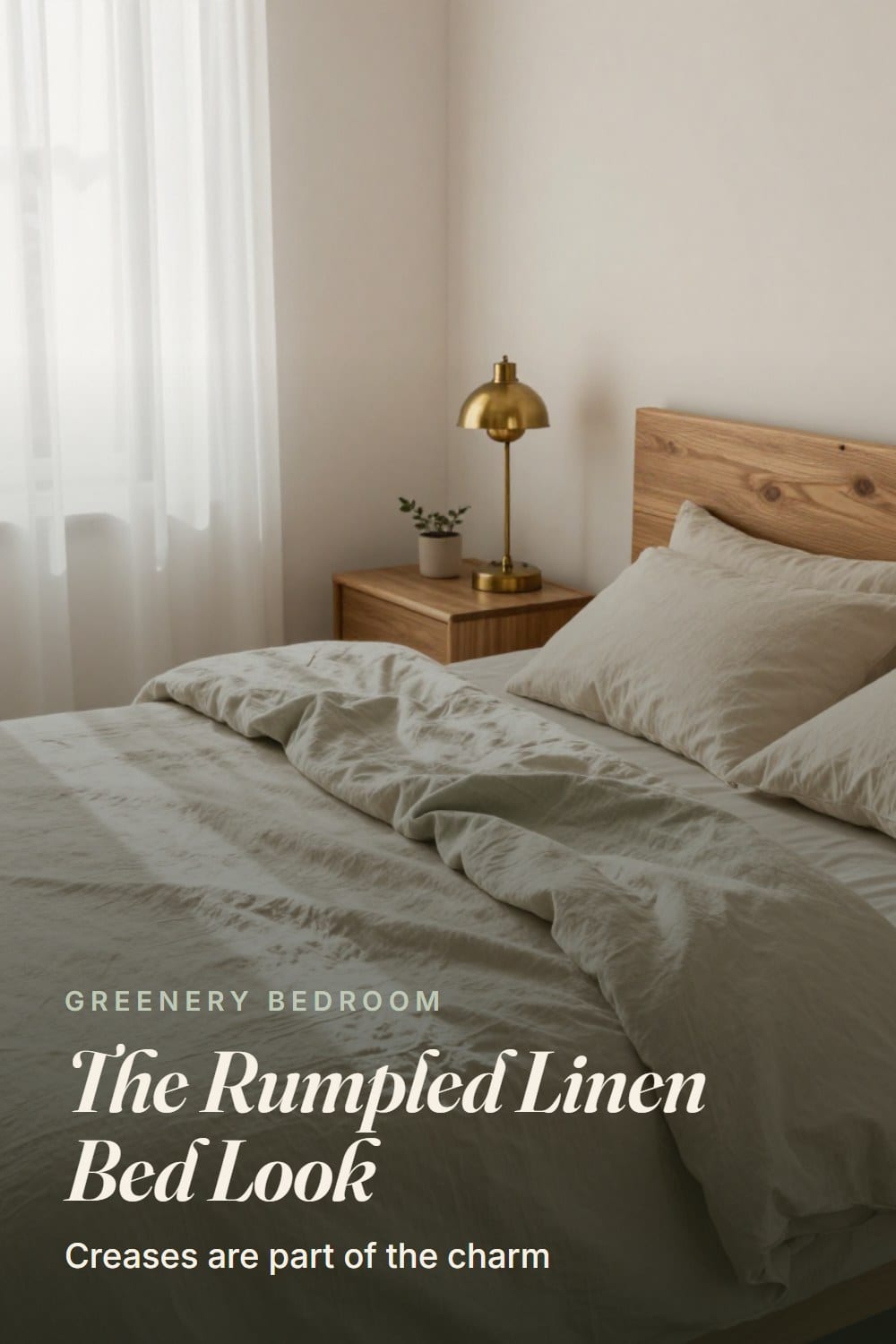
Linen wrinkles. Always. You can iron it, but I wouldn't bother. The creases are part of the look, the same way a linen shirt looks right slightly crumpled. If a smooth, tight bed is what makes you feel calm, linen will argue with you every morning.
Linen sheets are usually sold by weight, in grams per square meter, or GSM. For sheets the range is around 160 to 190 GSM. At the lighter end the cloth is airy and dries fast. At the heavier end it drapes better, feels more substantial and holds a little more warmth.
Cotton percale, the crisp and cool one
Percale is a plain weave: one thread over, one thread under, all the way across. That simple grid leaves tiny gaps for air, which is why percale feels cool against your skin. The finish is matte, with none of the shine you get from sateen.
The feel is what people call hotel crisp. Pull a percale sheet tight and it snaps. It creases lightly, and a quick morning smooth of the duvet puts it right again. It softens with washing too, though never into the slouchy softness of linen.
Good percale usually lands somewhere between 200 and 400 thread count. Go much higher and the cloth gets denser, which works against the airiness you bought percale for. Our own bed has plain white percale from spring through early fall, and I have never been tempted to change it.
Cotton sateen, and the set of mine that pilled
Sateen is woven four threads over, one under. Those long floats of yarn sit on the surface, which gives sateen its smooth, slippery hand and its soft sheen. It drapes beautifully and feels a little richer than percale the moment you touch it.
The trade is warmth and wear. That denser structure holds heat, so sateen sleeps warmer. And those same floats catch and rub, which is why sateen can pill and snag sooner than a plain weave.
I learned that the hard way. I bought a high thread count sateen set in pale gray because the package promised luxury. By the second winter it was pilling along the hip line, and the sheen read a bit slick in a bedroom I wanted to feel quiet. It wasn't a bad set. It was the wrong set for my room.
If you run cold, sateen has a real case. A well-made long-staple cotton sateen is lovely in January, and it is the one I would pick for a bed that never seems to warm up.
What thread count and GSM really mean
Thread count is the number of threads woven into one square inch of fabric, counting both lengthwise and crosswise. Past roughly 400, it is mostly a marketing number. Makers reach the huge figures by twisting several fine plies into one yarn and counting every ply, which makes the number bigger without making the sheet better.
What decides how a cotton sheet feels is the length of the fiber, the weave and the finishing. Long-staple cotton, such as Pima or Egyptian, spins into a smoother, stronger yarn than short fibers do. A 300 thread count percale in good long-staple cotton will usually feel better and wear longer than a 1,000 thread count sheet made from short fibers.
GSM works the other way, which is why I like it. It is simply weight, so it tells you how much cloth you are getting. You compare linen sheets by GSM. You compare cotton by weave first and thread count second, because setting a percale next to a sateen and comparing their numbers tells you almost nothing.
Linen or cotton sheets for hot sleepers and cold sleepers
If you wake up kicking off the covers, you want the most breathable cloth you can find, and that is linen. Flax fibers move moisture away from skin and dry quickly, so a linen bed feels fresh even on a humid night. Percale comes close behind.
If you wake up cold, the answer shifts. Sateen holds more warmth, and a heavier linen at 180 to 190 GSM sleeps warmer than the light stuff. Pair either one with a good quilt and a throw and the bed carries you through winter comfortably. For the cold-month top layer, olive velvet bedding for winter picks up where the sheets leave off.
Plenty of people end up with two sets, one for each half of the year: percale or light linen from May to September, heavier linen or sateen the rest of the time. Here is how I rank the options, coolest to warmest.
- Lightweight linen, around 160 GSM. The coolest and driest, and the quickest to dry on the line.
- Cotton percale. Crisp and airy, a close second.
- Heavier linen, around 190 GSM. Still breathable, with more body and a little more warmth.
- Cotton sateen. The smoothest of the four and the warmest.
How each one looks in sage or olive
This is the part nobody puts on the package. Fabric changes how a color behaves. Linen takes dye softly and a little unevenly, so sage looks chalky and lived-in and olive looks like it has been in the room for years. That slight variation is why linen is so forgiving next to warm wood and aged brass.
Percale reads crisper and flatter. The same sage in percale looks cleaner and more tailored, closer to a pressed shirt than a rumpled one, which suits a more formal room. Sateen deepens a color and gives it a faint glow. That can be lovely in forest green and a bit slick in a pale sage.
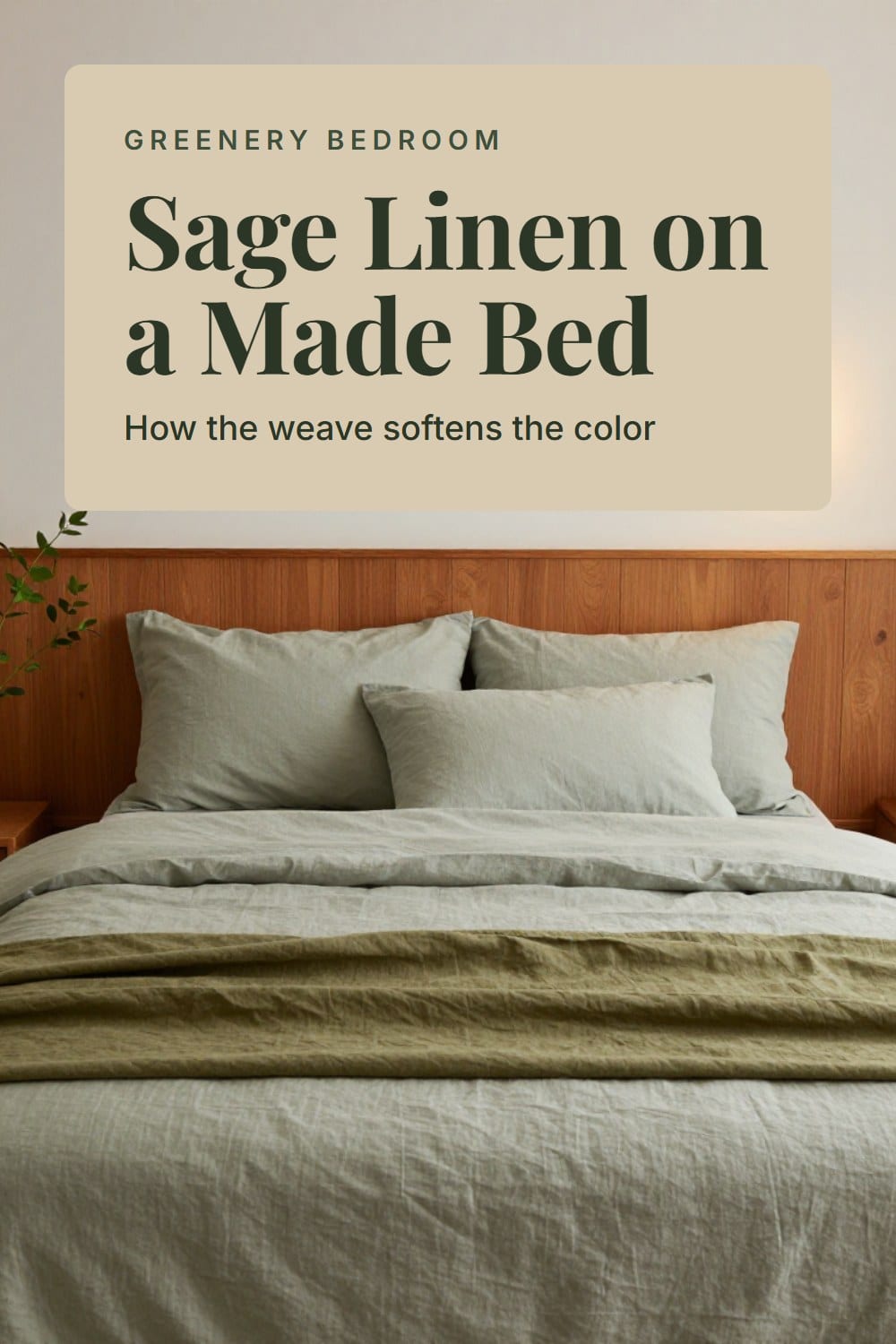
My guest room has sage linen sheets under a heavier olive duvet. The soft color and the rumpled cloth are the whole reason that bed looks collected. If you are still working out the palette, sage green bedroom ideas walks through it, and what color walls go with green bedding covers the wall behind the headboard. When paint is the open question, the best sage green paint colors for a bedroom keeps the choice to color families, so it holds up against any of these fabrics.
Mixing works too. I like linen sheets with percale pillowcases when I want something crisp near my face. Keep both in one color family and the mix reads as intentional. The three-tone rule behind that is in olive green bedding ideas, and everything that goes on top of the sheets is in how to layer bedding like a designer.
Are linen sheets worth it?
For most people who keep their bedding a long time, yes, with conditions. Linen fiber is strong, and in my experience a well-made set outlasts several rounds of ordinary cotton. It costs more on day one, but spread across the years you sleep on it, the math leans toward linen.
The conditions are real. You have to be fine with wrinkles. You have to wait out the first scratchy weeks. And you have to wash it properly, which is easy once you know how: how to care for linen bedding has the whole routine.
If you iron your sheets or want a taut, hotel-smooth bed, buy percale and enjoy it. There is no virtue in forcing yourself into linen. A good percale kept for years is just as much a buy-fewer-better choice. For the top layer, the best green linen duvet covers pairs well with either one.
My rule is two sets of whatever you choose, rotated, instead of five that all wear out at the same time. A set that gets a week off between washes lasts longer than one on constant duty.
How to choose between linen and cotton sheets in four questions
When a friend asks what to buy, I skip the fabric talk and ask her these.
- Do you sleep hot or cold? Hot sleepers: linen or percale. Cold sleepers: sateen or a heavier linen.
- Do wrinkles bother you? If they do, percale. If you like a lived-in bed, linen.
- Do you want crisp, slouchy or silky? Crisp is percale, slouchy and soft is linen, silky is sateen.
- How long will you keep them? For years, choose linen or a good long-staple percale. For a season or two, pick the simplest set you like and don't overthink it.
Answer those four and the choice usually makes itself.
Five sheet buying mistakes
I have made most of these, and watched friends make the rest.
- Chasing thread count past 400 instead of checking the fiber and the weave
- Judging linen after one night instead of after five or ten washes
- Buying sateen for a hot sleeper because it looked rich in the photo
- Choosing a color from a screen without allowing for the weave, since linen softens a color and percale sharpens it
- Buying many thin sets instead of two good ones to rotate
A checklist to carry into the store
Screenshot this, or take the printable below. Either way, check these six things before you commit.
- The fiber is named plainly: flax linen, or long-staple cotton
- The weave is named: percale or sateen
- Thread count sits between 200 and 400 for percale, or the weight is 160 to 190 GSM for linen
- The color suits your room, and you have seen it in daylight
- The pocket depth fits your mattress, measured in inches
- The care instructions are ones you will actually follow
Whichever you choose, put them on the bed and sleep a week before you decide anything. Sheets are the most personal thing in the room, and the right set is the one you stop thinking about.
The Green Bed Sheet Card
The printable is being finished. It will live here, free, with no sign-up wall.
Frequently asked
Which is better, linen or cotton sheets?
How many washes does it take for linen sheets to soften?
Does a higher thread count mean softer sheets?
Can I mix linen and cotton on the same bed?
Sarah Whitmore
she keeps the teak, she oils it in spring
Sarah has furnished the same porch three times and finally stopped. She writes about what actually survives a decade outdoors — which wood silvers, which fabric fades, and which inexpensive piece quietly reads the same as the expensive one.
SarahMore from this corner
 Bedroom Sanctuary
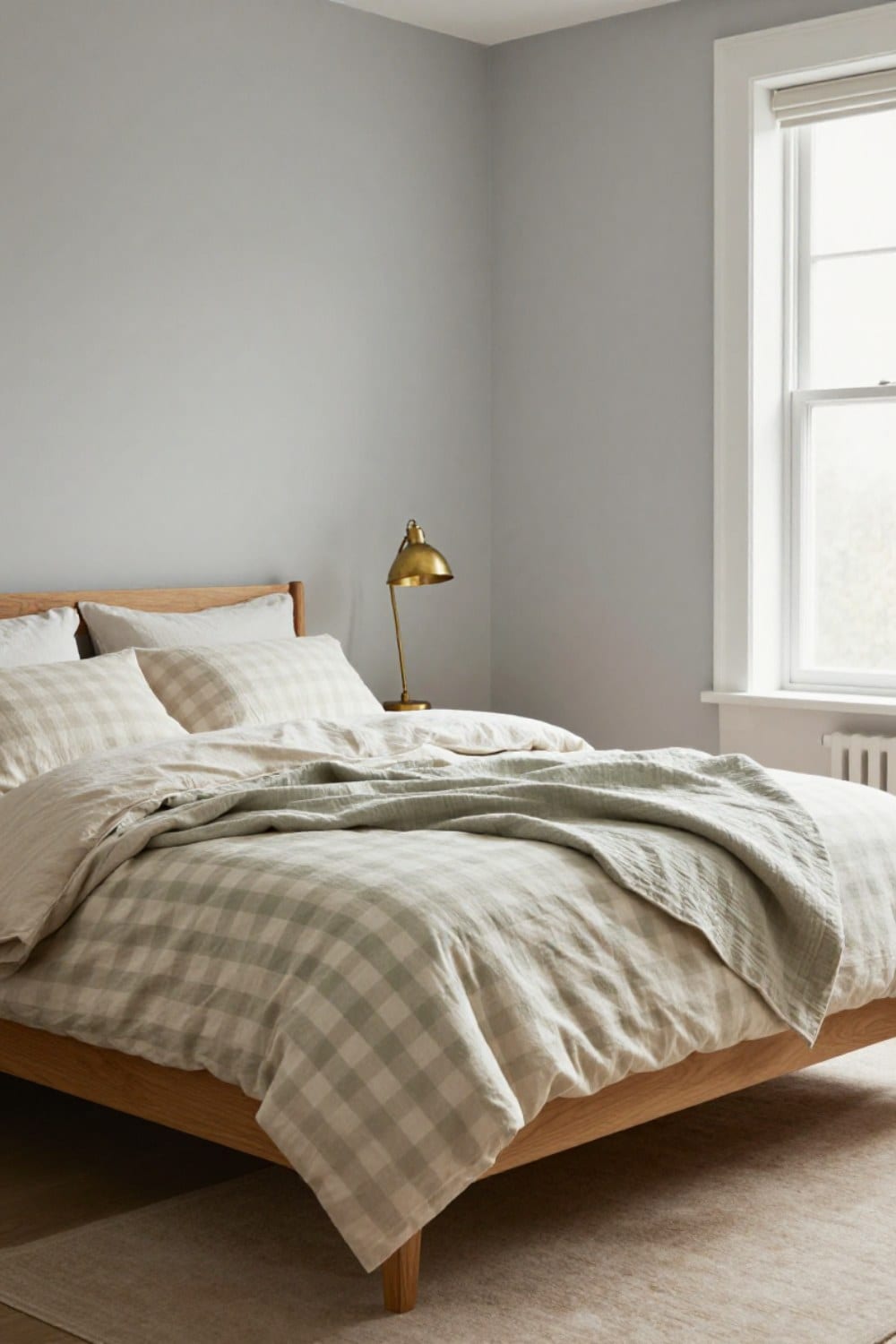
Green Gingham Bedding: How to Style It So It Looks Grown-Up
Green gingham bedding can look calm and collected instead of nursery. Here is how to choose the check size, keep it to one layer, mix it with other patterns and pair it with wood so the bed looks grown-up.
Oct 25, 2026 · 10 min read
 Bedroom Sanctuary
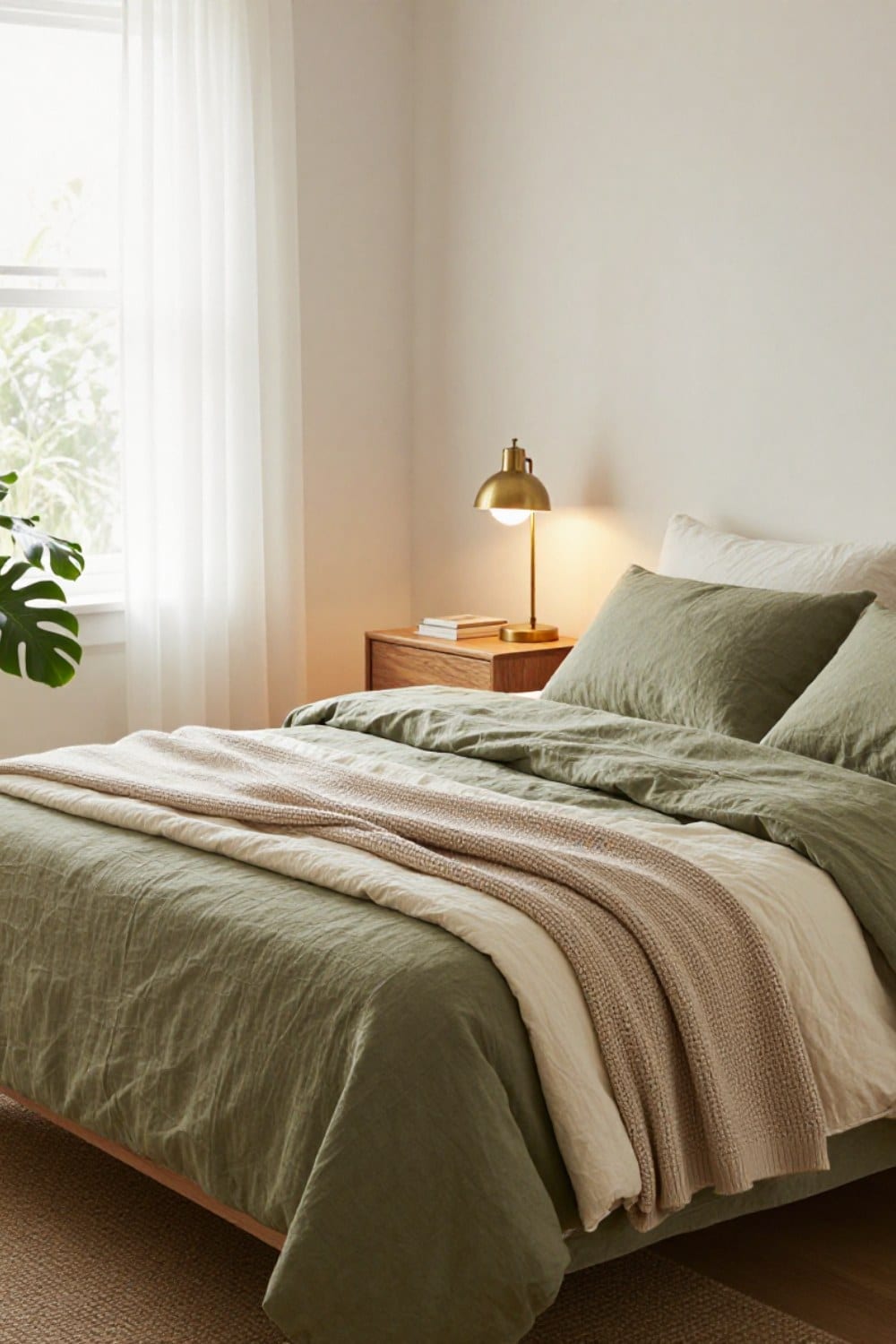
Olive Green Bedding Ideas: How to Make a Green Bed Look Collected
Olive green bedding ideas that make a bed look collected instead of matched: the three-tone rule, the fabrics that read expensive in green, what goes on top, and what belongs on the walls behind it.
Oct 22, 2026 · 11 min read
 Bedroom Sanctuary
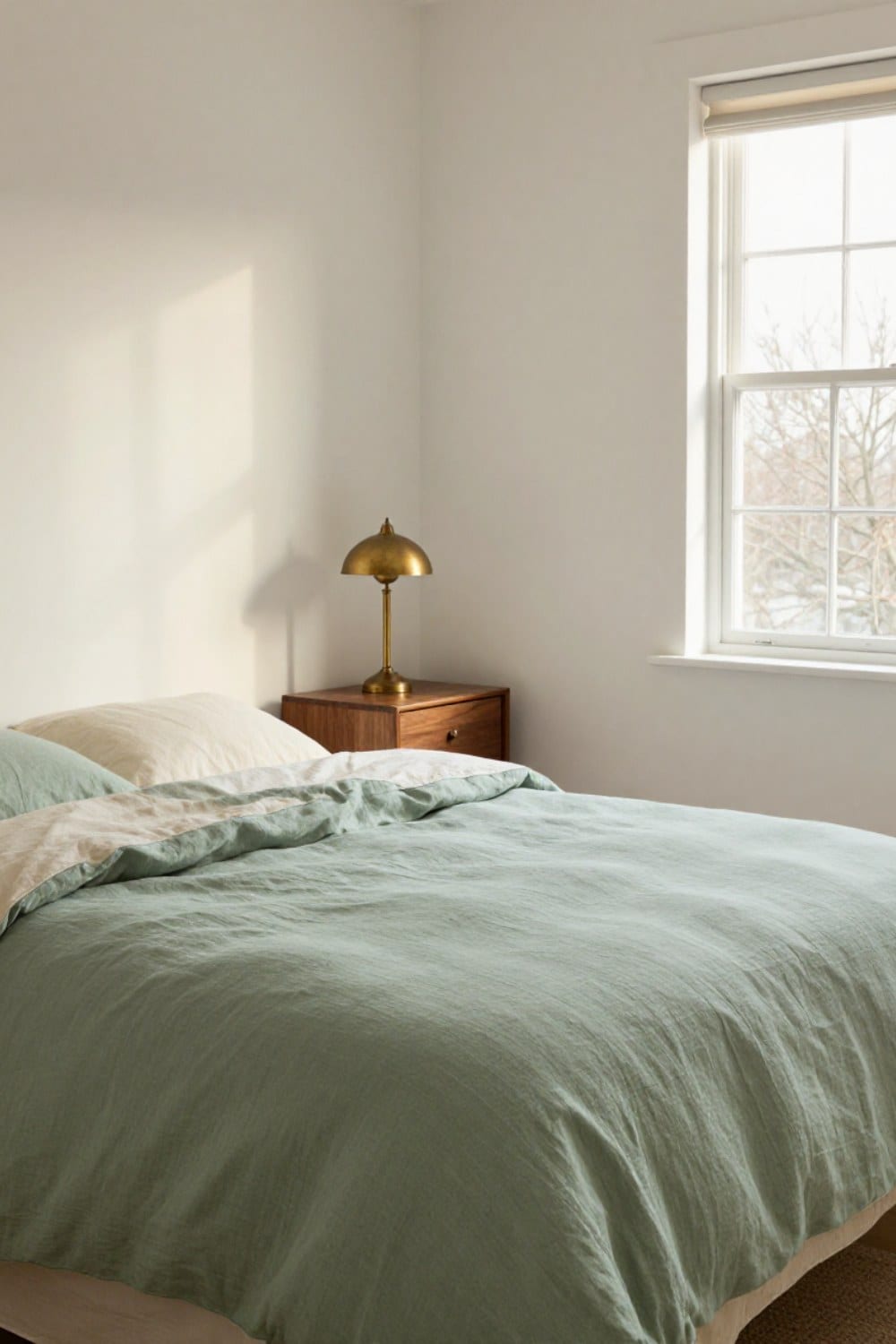
What Color Walls Go With Green Bedding? Six Pairings That Work
Six wall colors that make green bedding look chosen on purpose: warm white, greige, soft plaster pink, taupe, pale sage and deep chocolate or charcoal. Each one comes with the green it suits, how your light changes it, and the wood that ties it together.
Oct 20, 2026 · 11 min read