How to Care for Linen Bedding So It Gets Better Every Year
Eight plain steps for washing, drying, storing and rotating linen sheets, plus the honest reason green linen fades and how to slow it down.

This post contains affiliate links. As an Amazon Associate we earn from qualifying purchases — at no extra cost to you.
Linen looks a little worse on day one than it does on day nine hundred. That's the whole secret behind how to care for linen bedding: you aren't protecting a finished surface, you're helping a fabric get softer, looser and more itself with every wash.
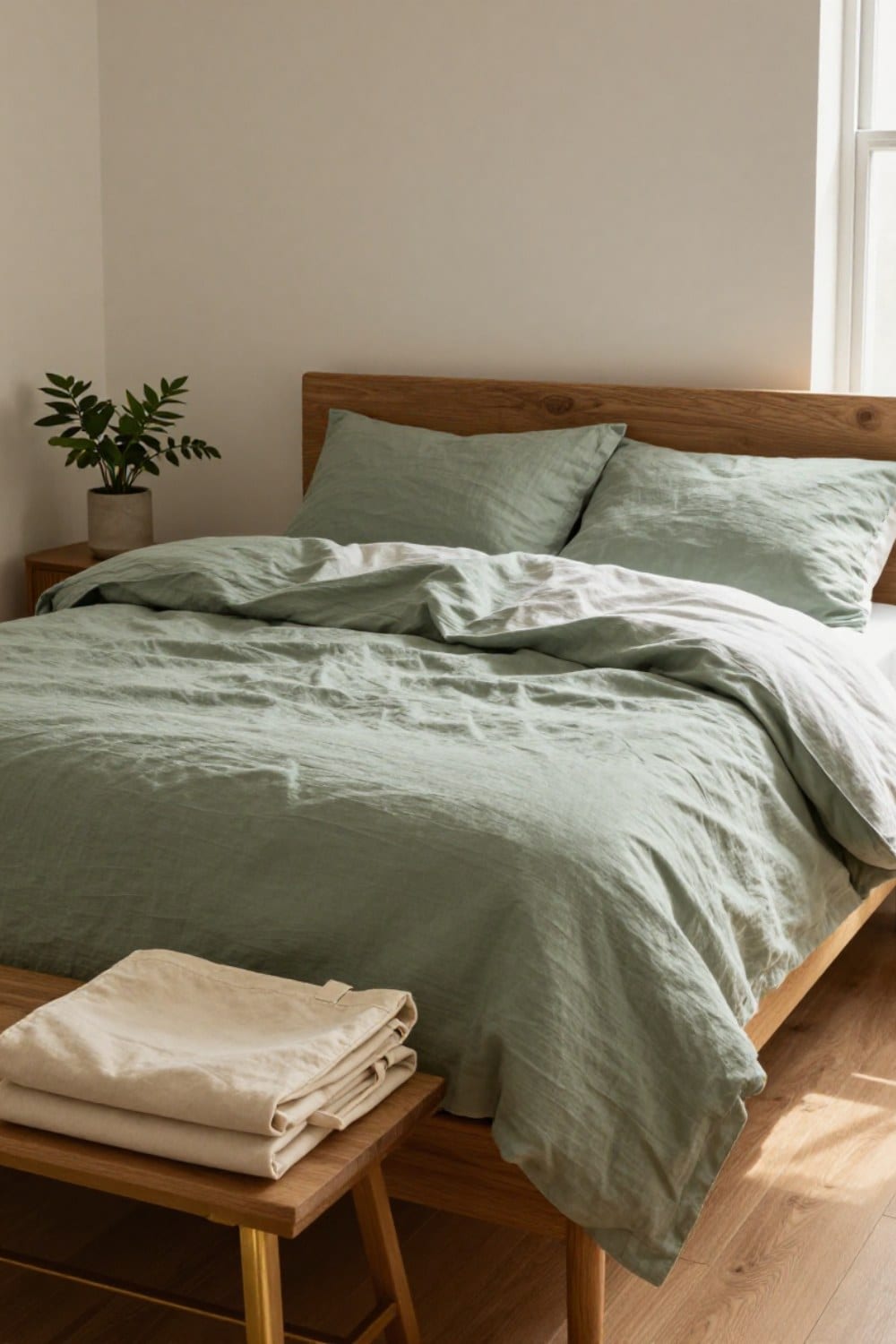
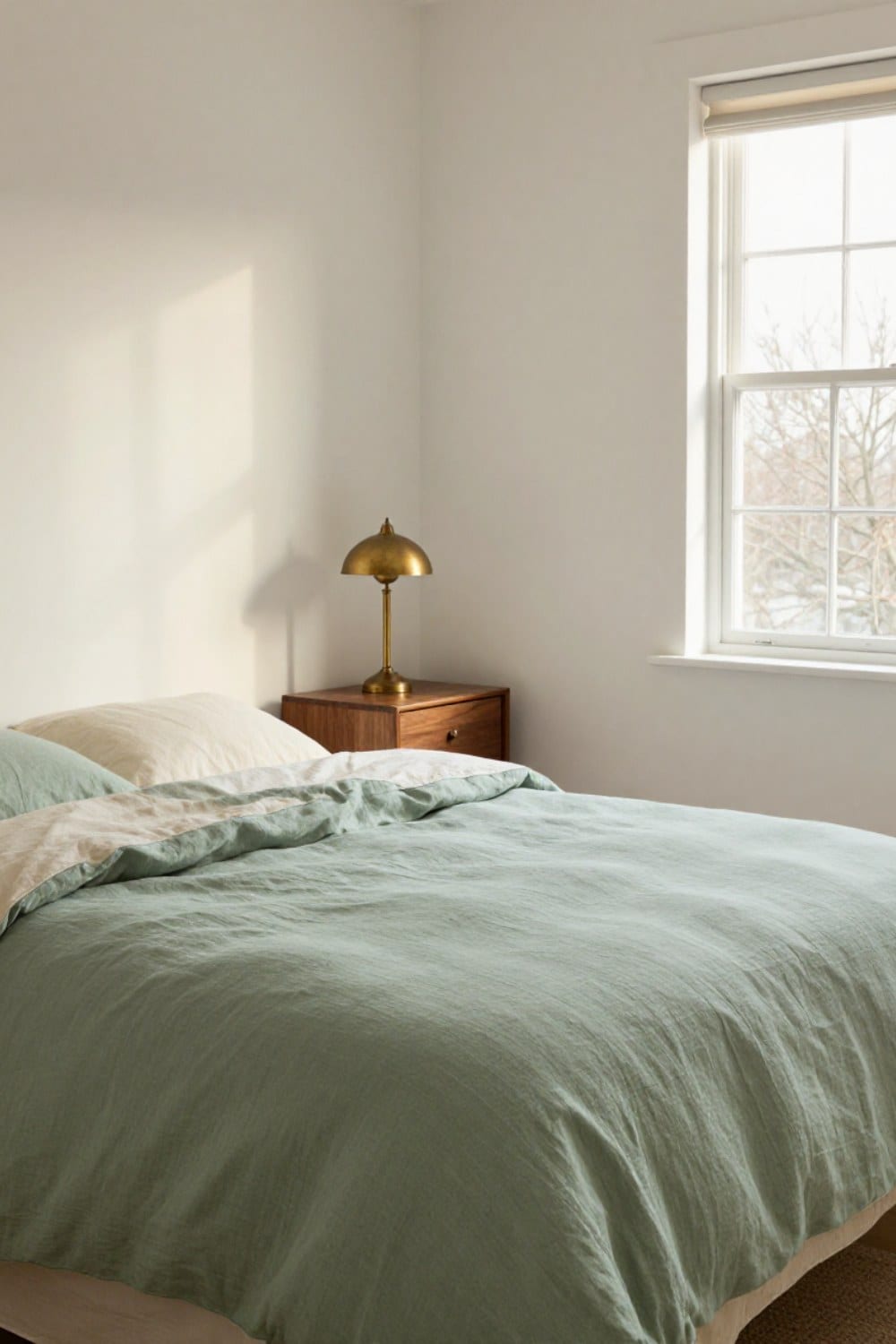
I've washed the same sage linen sheets for years now, and they're better than the week they arrived. They didn't get there by being babied. They got there by being washed gently, dried sensibly and left a bit rumpled, which is easier than most care labels make it sound.
Below are eight steps in the order a set actually lives, plus the part nobody mentions about green linen fading. If you're still deciding what to buy, linen versus cotton comes first. And if you want to see where all this fabric ends up once it's on the bed, the olive green bedding ideas are the place to start.
Why Linen Likes Being Washed
Linen is flax, a long, strong plant fiber, and flax is stiff until water gets to it. Each wash relaxes the fibers a little more. That's why a brand new linen sheet can feel almost papery, while a five-year-old one feels like a favorite shirt.
It wrinkles, too. Always, and that's part of the deal. Linen sheets are usually sold by weight, and most land somewhere around 160 to 190 GSM. Heavier ones feel plusher and take longer to dry. Lighter ones soften faster and crease more. Neither is better, they just behave differently on the line.
I'll be honest, the first linen set I bought felt scratchy enough that I nearly sent it back. Three washes later I'd have fought anyone who tried to take it. Give a new set a month before you decide how you feel about it.
How to Care for Linen Bedding, Step by Step
Eight steps, in the order they come up. None of them is hard. Most are a case of doing less than you'd do with cotton.
Wash it once before you sleep on it
New linen arrives with a stiffness and a bit of finishing residue you'll want gone. Wash it alone on a cool to warm cycle, roughly 86 to 104°F, with a mild detergent and no bleach.
Expect a little shrinkage. Don't panic if a fitted sheet feels snug the first time you tug it onto the mattress, because it relaxes back as you use it. The first wash is also where linen changes most. Mine came out looser, softer and covered in those small soft creases that make a bed look lived in, and the difference was obvious before it was even dry.

Wash on gentle with the drum half full
Linen is strong when wet, but it doesn't love being crushed. Fill the drum about halfway so the sheets can move, pick a gentle or delicate cycle and keep the water cool to warm. Turn green pieces inside out first (more on why below).
Leave out the fabric softener. It coats the fibers, makes linen slick and less absorbent, and undoes the very thing you're washing for. Sheets every one to two weeks is plenty. A duvet cover can go about once a month.
Dry it on a line, or tumble low and stop early
A line in the shade is the kindest option, and linen dries fast outdoors, often in an hour or two on a breezy day. In winter I use a wooden rack beside a radiator. If you reach for the dryer, choose low heat and pull everything out while it's still slightly damp. Bone-dry linen from a hot drum comes out stiff and creased hard, while damp linen finishes drying on its own and keeps its drape.
So yes, linen can go in the dryer. It just shouldn't live there.
Here's the trick I'd tell anyone: fold the sheets while they're still a little damp. Fold in thirds, then in half, press flat with your palms and stack them. Most of the creases never get the chance to set.

Let the wrinkles stay
Rumpled is the look. Linen smoothed completely flat starts to resemble polyester pretending to be something else, and the soft, slept-in folds are exactly why people choose it.
If you want it a little neater, iron it while it's still damp on the hottest linen setting, or run a steamer down the duvet cover once it's on the bed. I do that only when guests are coming. The rest of the year I shake it out, tug the corners and call it done.

Deal with stains early and gently
Blot, don't rub, and rinse the spot in cool water as soon as you can. Rubbing grinds a stain into the weave. A little mild detergent worked in with your fingertips lifts most marks, and a soak in cool water with a splash of detergent handles the rest.
Chlorine bleach is out. It weakens flax and takes the color out of green in patches. On white linen, an oxygen-based stain remover is fine. On green, test a hidden corner first and keep the treatment brief, because even gentle products can lighten dye.
Store it somewhere that breathes
Clean, fully dry linen goes in a cotton bag, an old pillowcase or straight onto an open shelf. Never plastic. Plastic holds on to moisture, and you'll get a musty smell and sometimes yellowing by the next season.
I keep spare sets folded inside a cotton pillowcase on the closet shelf, with a cedar block nearby but not touching the fabric. Each time you put a set away, fold along different lines so the same crease doesn't wear in for good.
Keep two sets and rotate them
One on the bed, one in the closet. It halves the wear on each set, gives the washed one time to air out and means you're never stuck waiting on a damp sheet.
It's also where buying fewer, better things pays off. Two good sets last far longer than one set washed to death, and they age at the same pace, so the bed always matches.
Know when to retire it
Good linen has a long life, often many years. You'll know it's time when you can see light through the weave, when seams pull open or when a thin patch tears at a touch.
Fading alone isn't a reason to stop. A washed-out sage can look better than the day it arrived. Thin spots, though, don't recover. Retired sheets make soft polishing cloths and good wrapping for gifts.
Why Green Linen Fades and How to Slow It
Every dyed fabric fades eventually. Green just shows it, because the shift is easy to spot against the original shade. Forest slides toward dusty moss, olive goes khaki gray, and sage softens toward a pale gray green. Sunlight, hot water and friction cause most of it.
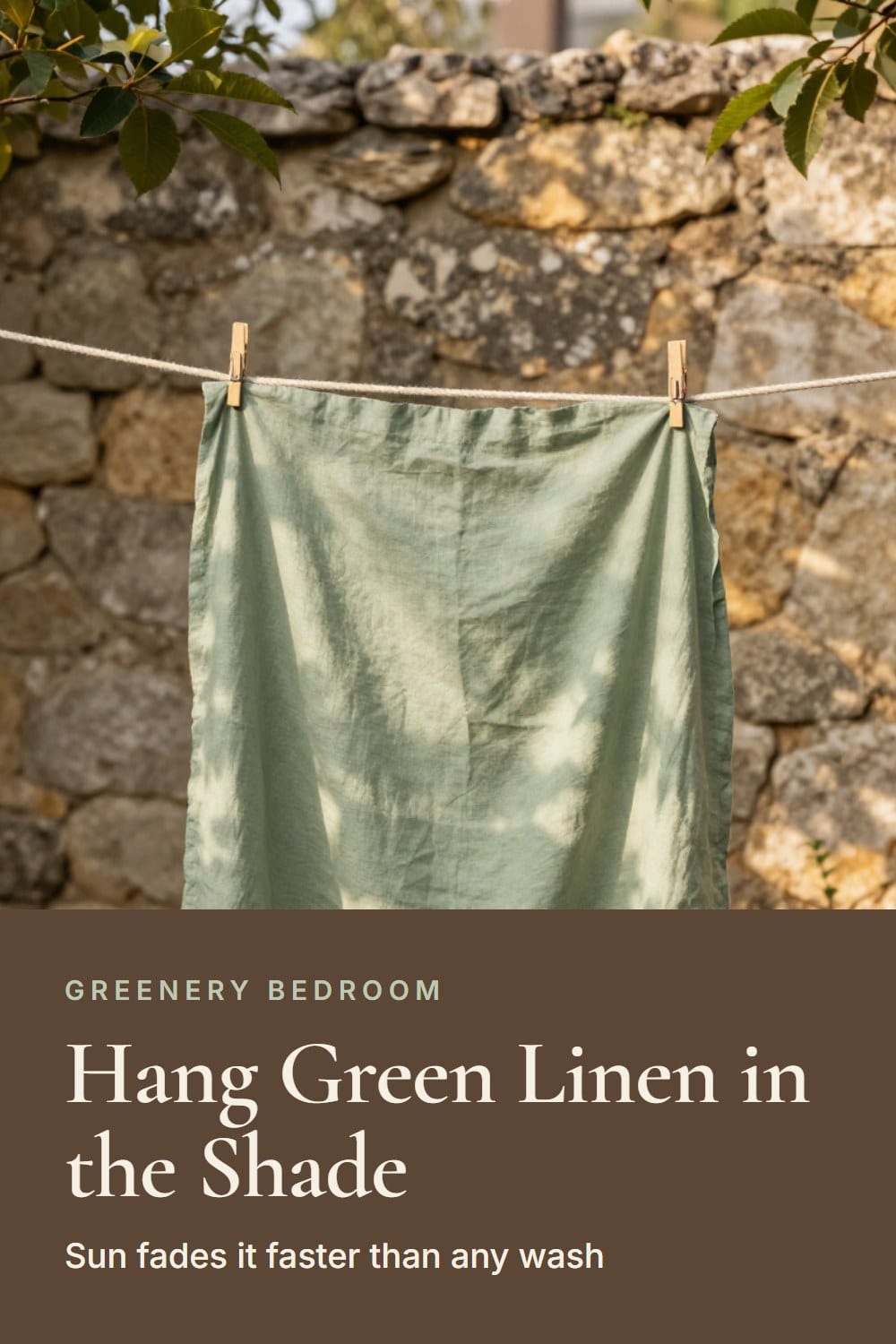
Washing inside out keeps the outer face from rubbing against the drum. Cool water holds the dye. Drying in the shade or indoors matters most of all, because direct sun is the strongest fader there is.
Some fading is simply the cost of linen, and plenty of people (me included) like the softened color. If you want to start with a shade that wears well, the best green linen duvet covers walks through sage, olive and forest side by side.
Linen Care Through the Seasons
The routine stays the same all year. The weather changes how you carry it out.
- Spring. Wash the winter layers, air the heavy pieces outdoors on a dry day and put the lighter linen back on the bed.
- Summer. Linen earns its keep in the heat. Wash weekly if the room runs warm, and dry on the line in shade, where it will be ready fast.
- Autumn. Check seams and thin spots before the cold arrives, and bring the second set into rotation so both age evenly.
- Winter. Dry on a rack indoors, or tumble low and finish on the rack. Linen takes longer in cold, damp air, so don't fold it away until it's completely dry.
When the cold-month velvet layer comes out, the linen underneath stays just as it was. Olive velvet bedding for winter covers that top layer, and layering bedding like a designer shows how it all sits over linen.
When Linen Gets Stiff, Fuzzy or Musty
Stiff first. Time and washing fix it. If a set still feels crisp after several washes, tumble it on low for ten minutes with two wool dryer balls, or add about half a cup of white vinegar to the rinse. Then hang it. Most of the softness comes from repeating the wash and dry cycle, not from any single trick.
Pilling is rarer than people think. Flax is a long fiber that doesn't bobble the way short cotton or a sateen weave can. What you usually see on linen is surface fuzz from an overstuffed drum or from washing against towels and zippers.
The pilling fix is to wash linen alone with the drum half full and to close duvet covers before they go in. Lift off any fuzz that's already there by hand, or go over it gently with a fabric shaver. Blends with short cotton fibers bobble more than pure linen does.
A musty smell almost always means linen was stored or left damp. Rewash it, dry it completely in a breeze, and give it room to breathe in the closet.
Six Linen Washing Mistakes
I've made most of these myself. Here's the short list.
- Washing hot. Heat shrinks linen and speeds up fading.
- Cramming the drum. Linen needs room to move, or it creases hard and rubs itself fuzzy.
- Using fabric softener. It leaves a film that makes the fabric slick and less absorbent.
- Reaching for chlorine bleach. It weakens flax and leaves pale blotches on green.
- Drying it bone-dry on high heat. Pull it out damp, as in step three.
- Wringing or twisting wet linen. It sets hard creases and strains the weave. Press the water out gently, or let the machine spin.
Three Linen Care Routines to Keep
None of this has to become a chore. These three routines are all I actually do.
- Every week or two. Strip the bed and wash the sheets and pillowcases on gentle, cool to warm, drum half full. Hang in the shade, or tumble low and pull them out damp.
- Once a month. Wash the duvet cover and any throw, check the seams, and give the bed a good shake-out by an open window.
- Twice a year. Swap your sets, air the stored one, refold along new lines, look for thin spots and retire anything you can see through.
The routines above need very little equipment. These three things cover the softening, the smoothing and the storing.
New Zealand Wool Dryer Balls, XL, 12 Pack
Softening a stiff new setWool dryer balls are what I reach for when a set still feels crisp after a few washes, tumbled on low.
CHI Handheld Garment Steamer
Smoothing a duvet cover on the bedA handheld steamer takes the sharpest creases out while leaving the rumpled look that linen is chosen for.
Cotton Canvas Zip Storage Bags for Bedding, 3 Pack
Storing the off-season setCotton canvas lets stored linen breathe, which is the reason I use it instead of plastic.
The Green Linen Care Card
The printable is being finished. It will live here, free, with no sign-up wall.
Linen That Gets Better Every Year
A set of good linen is one of the few things in a bedroom that improves with age instead of wearing out. Treat it plainly and it rewards you with a softer drape, deeper creases and a color that settles into something quieter.
My oldest set is going on nine years. It's thinner than it was and a gentler green than the one I bought, and I like it more than anything newer in the closet. If you're building a green bed from scratch, start with the olive green bedding ideas and let the routine above do the rest.
Frequently asked
Can you put linen sheets in the dryer?
Do linen sheets shrink?
How often should I wash linen bedding?
Should I iron linen bedding?
Sarah Whitmore
she keeps the teak, she oils it in spring
Sarah has furnished the same porch three times and finally stopped. She writes about what actually survives a decade outdoors — which wood silvers, which fabric fades, and which inexpensive piece quietly reads the same as the expensive one.
SarahTimeless Manor is a participant in the Amazon Services LLC Associates Program, an affiliate advertising program designed to provide a means for sites to earn advertising fees by advertising and linking to Amazon.com. As an Amazon Associate we earn from qualifying purchases. This means if you click a link and buy something, we may receive a small commission at no additional cost to you. We recommend pieces we believe will still be on your patio in a decade — never on commission.
More from this corner
 Bedroom Sanctuary
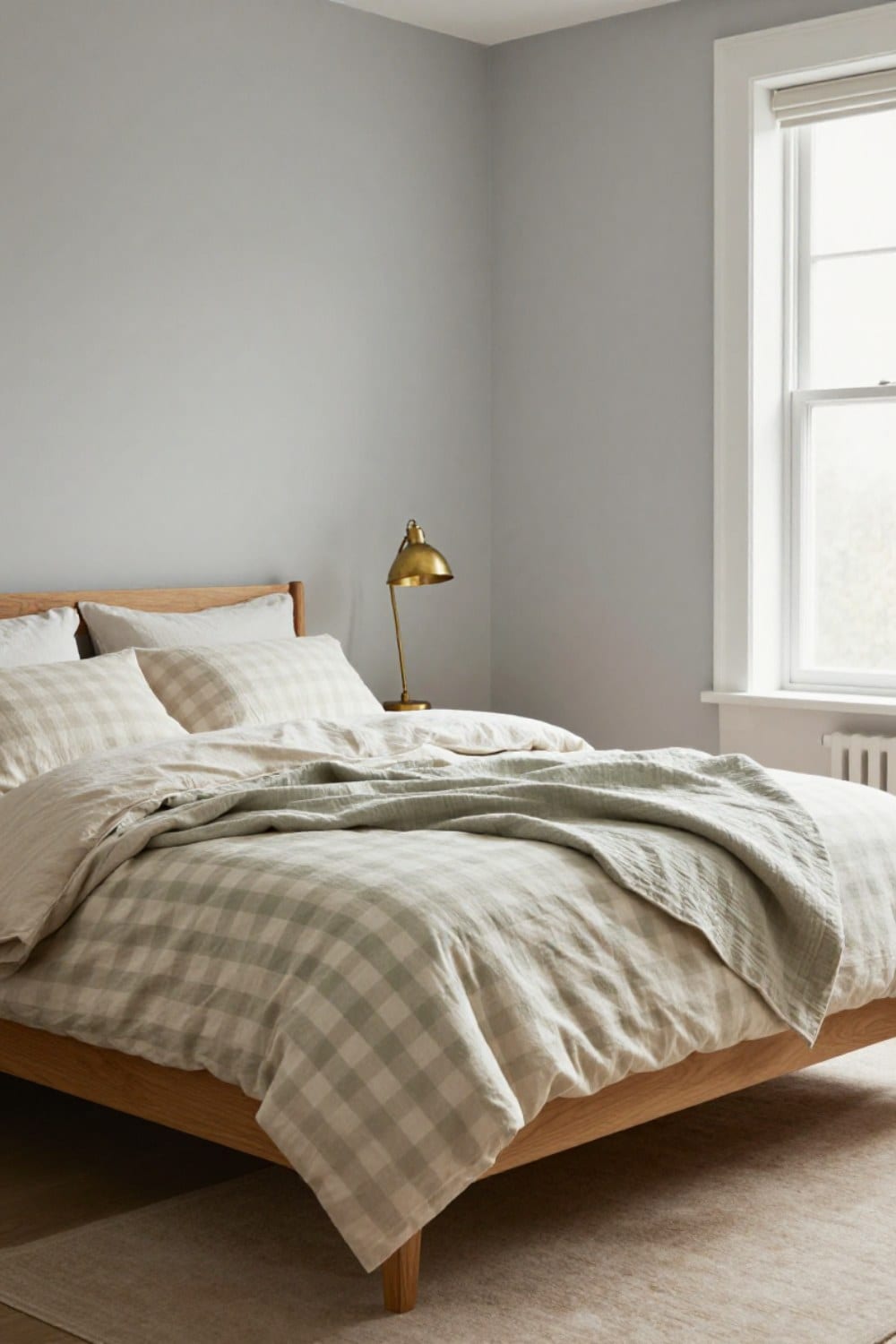
Green Gingham Bedding: How to Style It So It Looks Grown-Up
Green gingham bedding can look calm and collected instead of nursery. Here is how to choose the check size, keep it to one layer, mix it with other patterns and pair it with wood so the bed looks grown-up.
Oct 25, 2026 · 10 min read
 Bedroom Sanctuary
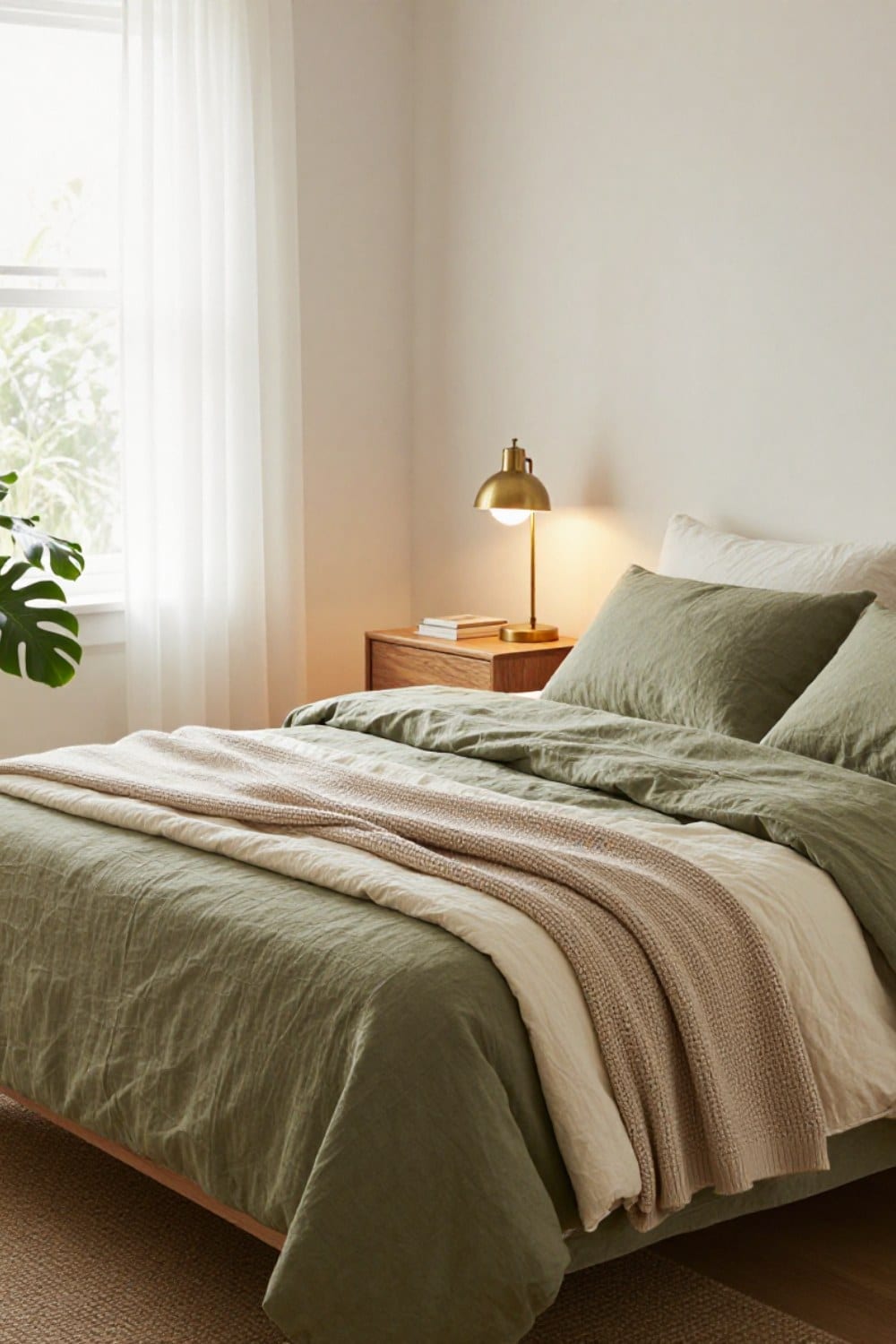
Olive Green Bedding Ideas: How to Make a Green Bed Look Collected
Olive green bedding ideas that make a bed look collected instead of matched: the three-tone rule, the fabrics that read expensive in green, what goes on top, and what belongs on the walls behind it.
Oct 22, 2026 · 11 min read
 Bedroom Sanctuary
What Color Walls Go With Green Bedding? Six Pairings That Work
Six wall colors that make green bedding look chosen on purpose: warm white, greige, soft plaster pink, taupe, pale sage and deep chocolate or charcoal. Each one comes with the green it suits, how your light changes it, and the wood that ties it together.
Oct 20, 2026 · 11 min read