Green Velvet Headboard Ideas for a Bedroom That Feels Finished
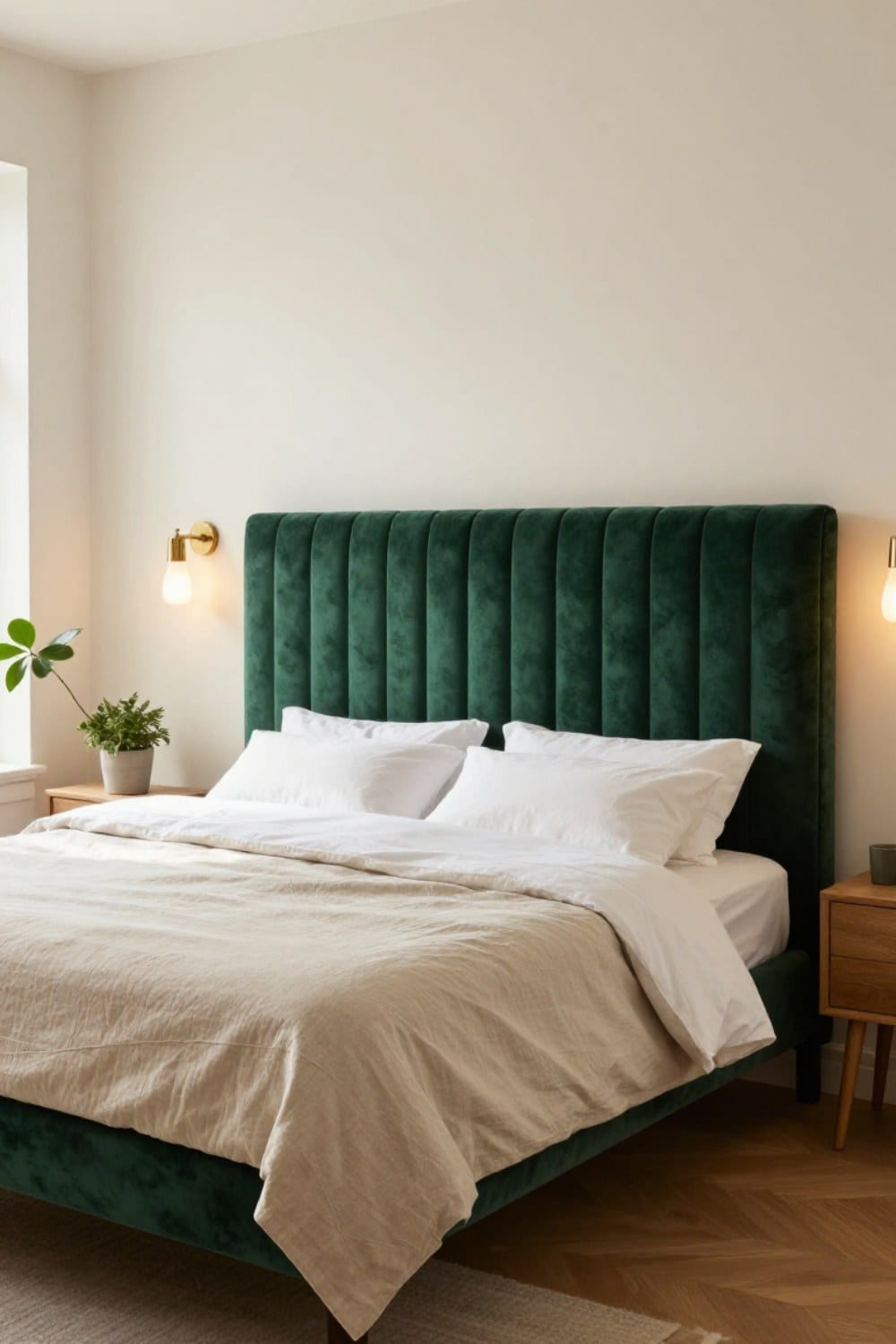
A green velvet headboard gives a bed a back, a color and a reason to be the center of the room. Shape, height, shade, fabric, mounting and the bedding in front of it, sorted out one decision at a time.

This post contains affiliate links. As an Amazon Associate we earn from qualifying purchases — at no extra cost to you.
A bed with nothing behind it is the quickest way to make a bedroom feel half done. The linen can be right, the lamps can be right, the rug can be right, and you still walk in and sense something missing. Nine times out of ten it's the wall behind the pillows. A green velvet headboard fixes that in one move, because it gives the bed a back, a color and a reason to be the center of the room.
I learned this slowly. Our guest room had a good mattress, a stack of white percale and a plain oatmeal wall. Everyone said it was nice. Nobody said it looked finished, and I could tell.
This guide is how I'd choose one now: the shape, the height, the shade of green, the fabric, how it mounts, what goes on the bed in front of it and what lights it. If you're still working out the bedding itself, start with the hub, Olive Green Bedding Ideas, and come back here for the piece that holds it all up.
Why a bare wall makes the whole room feel unfinished
The bed is the biggest object in the room, and it's low. Without a headboard, your eye slides right over it and up a flat wall with nothing to land on. Everything else, the art, the lamps, the curtains, ends up floating.
A headboard adds the one thing a bed can't give itself: height. It builds a back wall in fabric, so the nightstands have something to stand against and the lamps have something to frame.
Velvet earns its place because it changes with the light. In the morning it reads as a calm, flat green. By lamplight the pile catches and the same headboard turns deep and almost glossy. That shift is why a velvet headboard looks expensive in person and in photographs. It takes good decisions in the right order, not a large investment.
Pick the shape first
Four shapes cover nearly everything you'll see. The shape sets how formal the room feels, and unlike the color, you can't fix it with a throw pillow, so decide it before you fall for a swatch.

Channel-tufted
Vertical ribs, stitched in evenly spaced columns. This is the classic hotel shape and the most forgiving one. The ribs add structure and hide the small ripples velvet can show on a flat panel. In emerald it reads formal and a little theatrical. In olive it relaxes into something you'd find in a well-traveled friend's house.
Scalloped
Why are scalloped headboards everywhere right now? A few honest reasons. The curved top edge softens a rectangular bed. It photographs beautifully, because velvet catches light along every curve. And it signals a layered, collected look without requiring any other decor. I like them, with one caution: keep each scallop at least 8 inches wide. Tiny scallops on a velvet headboard start to look like a costume.
Arched
One tall curve rising in the center. It's the most architectural of the four and the best choice when the ceiling is high or the wall is wide. It echoes an arched mirror or a doorway, and it makes a smaller room feel taller. Pair it with a plain bed frame and keep the nightstands simple, because the headboard is already making the statement.
Simple panel
A clean rectangle, upholstered flat or with a thin piping edge. It's the quietest option and the one that ages best. If you change your mind about color in five years, a plain panel is the easiest to reupholster or live with. Go wide, a few inches past the mattress on each side, or it looks like a rug pad leaning against the wall.
How tall a headboard should be
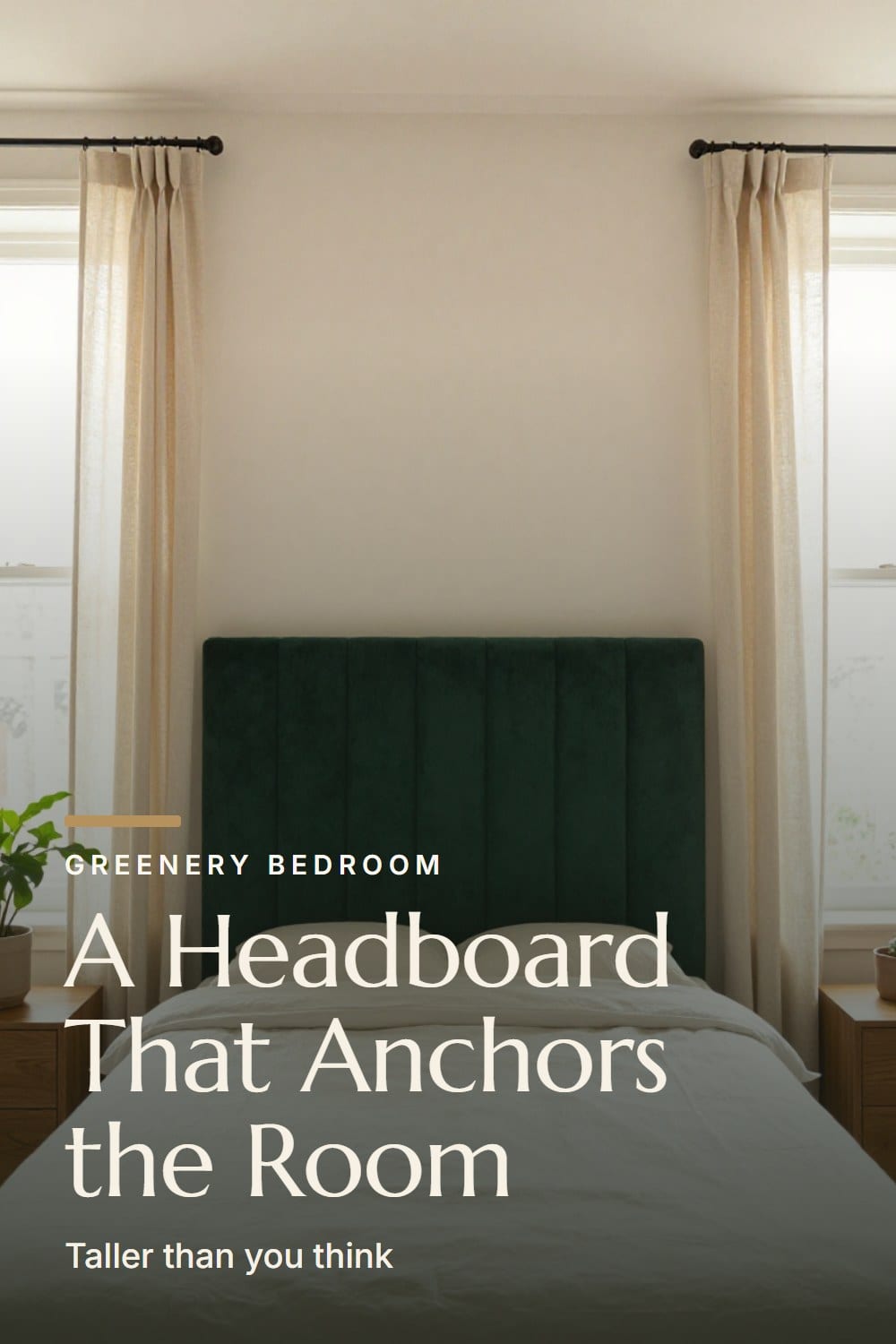
Taller than you think. The usual mistake is a headboard that stops just above the pillows, which makes the bed look as if it's apologizing for itself.
My rule of thumb: on an 8 foot ceiling, the top of the headboard sits around 55 to 60 inches off the floor. On a 9 foot ceiling, go 60 to 66 inches. A queen mattress is 60 inches wide and the top of a standard mattress sits about 24 inches up, so that range puts the headboard 30 to 40 inches above the mattress. Enough to lean against, enough to frame the lamps.
Windows complicate this. If a window sits behind the bed, either keep the headboard top an inch or two below the sill, or choose one wide enough that the window lands off to one side. A headboard top that slices across the glass is the one placement I'd steer around. It always looks like a measuring error.
Width matters as much as height. Match the mattress at minimum. For a queen, 64 to 68 inches wide looks planted. Any narrower and the bed overhangs it.
Emerald, olive or sage velvet
Green isn't one color, and the undertone is what you'll live with. Emerald has blue in it. It's jewel-like, formal and dramatic, and it looks best against warm white walls and brass. Olive has yellow in it. It's muted, a little earthy, and sits comfortably next to walnut, oak and linen. Sage has gray in it. It's the quietest of the three and the one that disappears into a room most easily.
Hold the swatch against your wood floor and your curtains in both morning light and lamplight before you decide. A green that looks rich in a showroom can turn muddy against a yellow-toned floor. If you're still choosing the wall behind it, six wall pairings that work with green bedding will save you a few swatch cards. For a room built entirely around the soft end of the range, see sage green bedroom ideas, and for the earthier end, olive green bedroom ideas.
Performance velvet or cotton velvet
Both are beautiful. They live differently.
Cotton velvet has the deepest, softest glow and a lovely dry hand. It also crushes where you lean, fades in direct sun, and can snag if a cat decides the headboard is a scratching post. Performance velvet is usually polyester or a polyester blend, woven tight with a stain-resistant finish. It shrugs off spills, hides the pressure marks and holds color in a bright room.
I bought a cotton velvet first, for a room that gets full afternoon sun. By the end of the summer there was a visibly paler stripe along the top edge. Lovely fabric, wrong room. The second headboard, in performance velvet, has been through a dog and two winters of morning coffee and looks exactly as it did.
If you have pets, children or a sunny wall, choose performance velvet. Ask for the abrasion rating, the Wyzenbeek double-rub count. Around 30,000 or more is commercial grade, and that's the number I'd want. And skip the very shiny, thin polyester velvets. They look flat and slick in lamplight, and they pill.
Wall-mounted or bed-mounted
A bed-mounted headboard bolts to the frame and travels with the bed. It's the simpler choice, and the right one if you move often or like to rearrange. The catch is the height: it's set by the frame, and you take whatever the manufacturer picked.
A wall-mounted headboard hangs from a rail or a cleat screwed into studs. You choose the exact height, you can hang it a half inch off the wall so there's no gap behind it, and the bed can slide in and out for cleaning without dragging a heavy upholstered panel along. It does mean holes in the wall, which is fine when you own the place, and it means you need to find studs, which is worth the twenty minutes.
Whichever you choose, mind the gap. A bed-mounted headboard that sits two inches off the wall will swallow your pillows every night. Push the bed flush, or add a thin wall-mounted panel behind to close the space.
What bedding goes with a green velvet headboard
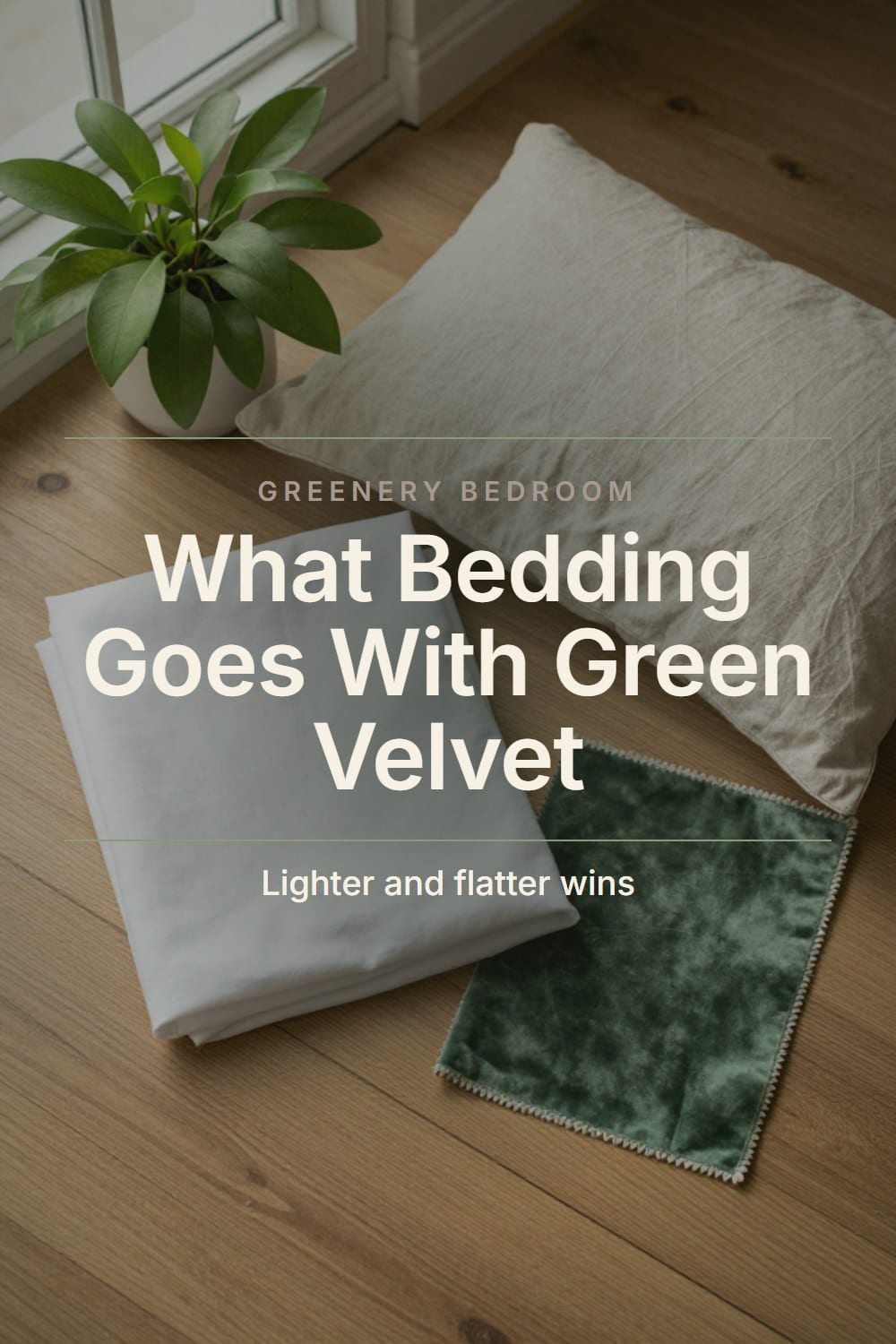
Keep the bed lighter and flatter than the headboard. The velvet is the one rich, saturated thing in the room, so everything in front of it should be matte and soft.
White percale is my first answer. It's crisp, matte and slightly cool, and it makes any green look fresher. Oatmeal linen is the second: the wrinkles and the flax texture give the headboard something to push against. Cream, ivory and a pale warm gray all work. Skip anything glossy next to velvet; two shiny surfaces compete.
Put two 26 x 26 inch Euro shams against the headboard, in oatmeal or white linen, then a pair of standard 20 x 26 shams in front, then your sleeping pillows. The Euros stand tall and echo the headboard's height, which is half the polish. For the full sequence, how to layer bedding like a designer takes you through it step by step.
If you want green on the bed too, keep it lighter than the headboard: a sage or olive linen duvet cover, or a single green throw. The best green linen duvet covers go through the sage, olive and forest options, and linen vs cotton sheets will help you choose what goes underneath. In the cold months, a velvet layer on the bed can echo the headboard, which is covered in olive velvet bedding for winter.
Lamps and sconces that frame it
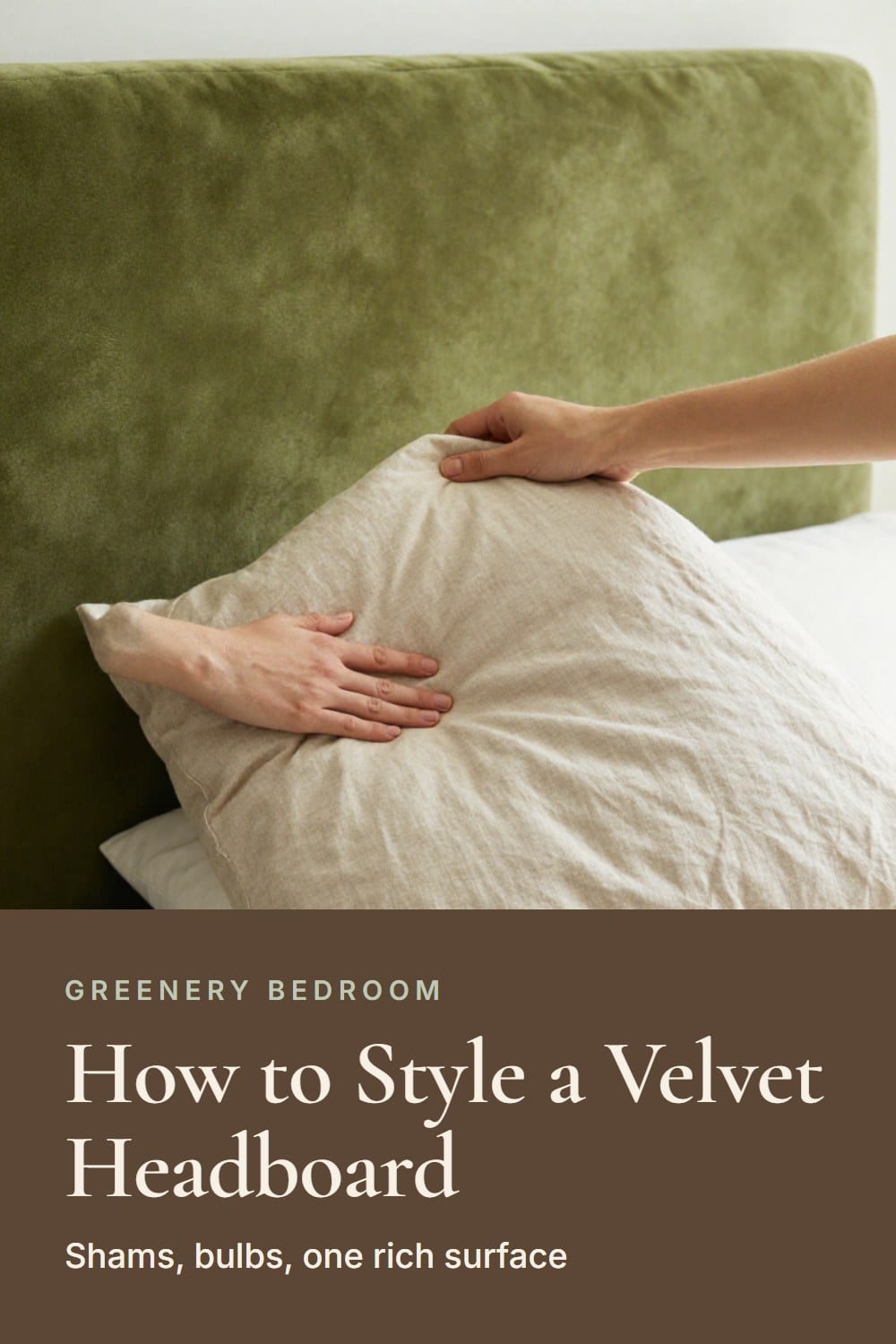
Velvet absorbs light, which is why it looks so deep. It also means a dim room makes the headboard read black. Use warm bulbs, 2700K, and give the room at least a few sources: a lamp on each nightstand, or a pair of sconces, plus whatever overhead light you have.
Plug-in sconces mounted on either side of the headboard are my favorite, because they free the nightstand tops and add a vertical line that echoes the headboard. Mount them so the center of each fixture sits around 60 to 66 inches off the floor, about a hand's width out from the edge of the headboard. If you'd rather use table lamps, the bottom of the shade should be near your shoulder when you're sitting up in bed, so the light falls on the page and not in your eyes.
Aim for about 450 lumens per bulb, the brightness of an old 40 watt bulb. Brass and aged bronze look right against green. Black iron works with olive. A glossy white lamp can read cold next to velvet, so go with something with a bit of warmth.
Seven green velvet headboard ideas to start from
Here are seven combinations I'd happily live with. Borrow one whole or steal a piece.
- Emerald channel-tufted, white percale, brass sconces. The classic. Warm white walls, a jute rug, and the headboard does all the talking.
- Olive scalloped, oatmeal linen, walnut nightstands. Collected and relaxed. A good fit for a guest room that has to feel welcoming without effort.
- Sage arched panel on a sage wall. Tone on tone, with cream bedding. A quiet, enclosed room for people who like the cocoon.
- Forest green plain panel, wall-to-wall in an alcove. When the bed fits snugly between two walls, a panel that spans the whole width looks built in.
- Tall emerald panel between two windows. Linen curtains on either side, and the headboard rises to just below the sills.
- Moss green low-profile with a gallery of framed prints above. For a lower ceiling, where the art does the vertical work.
- Olive channel-tufted for a winter room. Black iron lamps, a chunky oatmeal throw folded at the foot and a wool rug underneath.
Five velvet headboard mistakes to skip
- Too short. If the top is lower than the tops of the nightstand lamps, the headboard looks like an afterthought. Go taller.
- Green on green on green. Matching velvet quilt and pillows flatten the headboard. Make the bedding lighter and matte.
- Cotton velvet in a sunny room. It fades. Choose performance velvet for any wall that gets direct light.
- A gap behind the headboard. Pillows disappear and dust collects. Push the bed flush or wall-mount.
- Harsh overhead light only. Velvet needs layered, warm light. One cold ceiling bulb makes it read dull.
Six checks before you buy
I keep these on my phone for any upholstered piece, and they've talked me out of two mistakes.
- Measure the wall, the mattress width and the ceiling height, and write all three down.
- Order a swatch and look at it in morning light and lamplight, against your floor.
- Ask for the double-rub count. Around 30,000 or more is the number I look for.
- Read the cleaning code on the tag (W, S, W/S or X) and make sure you can live with it.
- Ask what's inside: a hardwood frame and dense foam, not thin plywood with staples.
- Check the mount: where the bolts or rail go, and whether the nightstands and outlets still clear.
Keeping a velvet headboard looking new
Vacuum it once a month with the soft brush attachment, working with the pile. If a spot looks crushed, brush it gently with a soft clothes brush, again along the pile, and the nap lifts. A linen Euro sham between your head and the top edge keeps hair product off the velvet, and since the bedding gets washed far more often, how to care for linen bedding is worth a read.
Velvet looks its best with warm light coming from the sides, and wall sconces free the nightstands for other things. Both of these plug in, so they work without opening a wall for new wiring.
Brass swing-arm plug-in wall sconces, pair
Reading light that swings outA pair of brass swing-arm sconces that plug into an outlet, with arms you can angle toward the page.
Brass plug-in wall sconces with linen shades, pair
Softer light beside velvetPlug-in brass sconces with linen shades, sold as a pair, which spread the light instead of aiming it.
The Green Bed Styling Card
The printable is being finished. It will live here, free, with no sign-up wall.
Questions about green velvet headboards
Frequently asked
How tall should a headboard be for a queen bed?
Is a velvet headboard a bad idea with pets?
Should I wall-mount or bed-mount a headboard?
What bedding goes with a green velvet headboard?
Sarah Whitmore
she keeps the teak, she oils it in spring
Sarah has furnished the same porch three times and finally stopped. She writes about what actually survives a decade outdoors — which wood silvers, which fabric fades, and which inexpensive piece quietly reads the same as the expensive one.
SarahTimeless Manor is a participant in the Amazon Services LLC Associates Program, an affiliate advertising program designed to provide a means for sites to earn advertising fees by advertising and linking to Amazon.com. As an Amazon Associate we earn from qualifying purchases. This means if you click a link and buy something, we may receive a small commission at no additional cost to you. We recommend pieces we believe will still be on your patio in a decade — never on commission.
More from this corner
 Bedroom Sanctuary
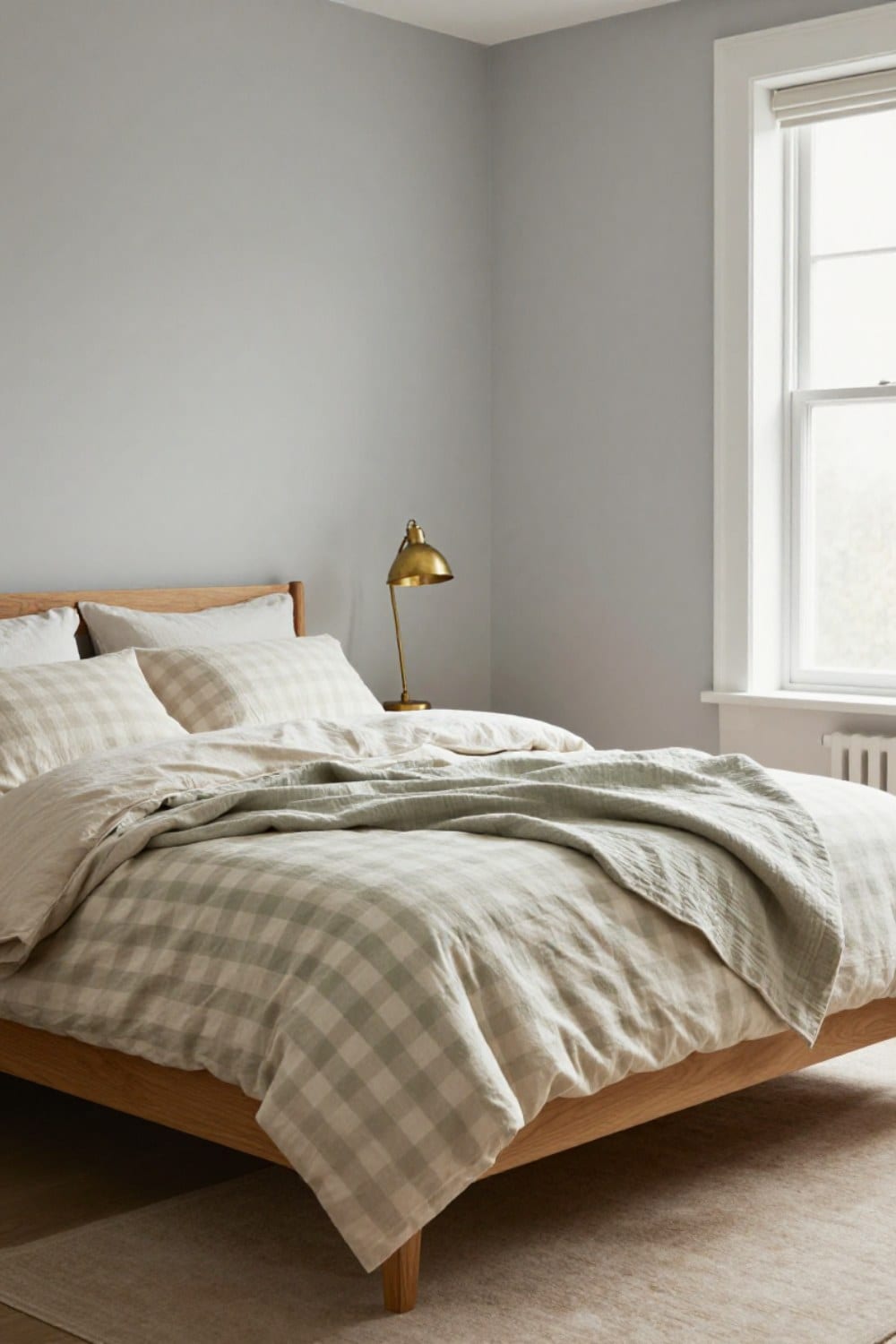
Green Gingham Bedding: How to Style It So It Looks Grown-Up
Green gingham bedding can look calm and collected instead of nursery. Here is how to choose the check size, keep it to one layer, mix it with other patterns and pair it with wood so the bed looks grown-up.
Oct 25, 2026 · 10 min read
 Bedroom Sanctuary
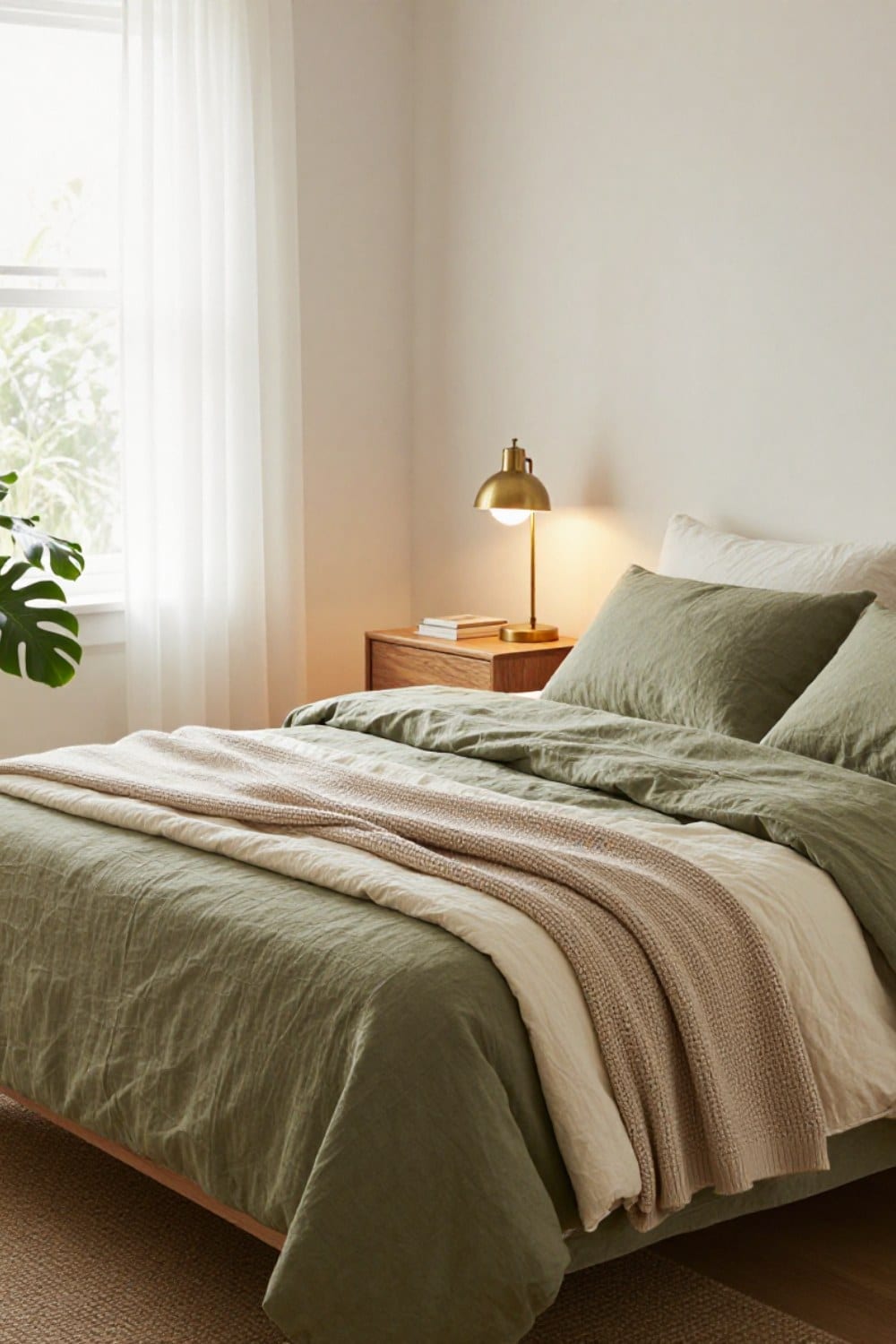
Olive Green Bedding Ideas: How to Make a Green Bed Look Collected
Olive green bedding ideas that make a bed look collected instead of matched: the three-tone rule, the fabrics that read expensive in green, what goes on top, and what belongs on the walls behind it.
Oct 22, 2026 · 11 min read
 Bedroom Sanctuary
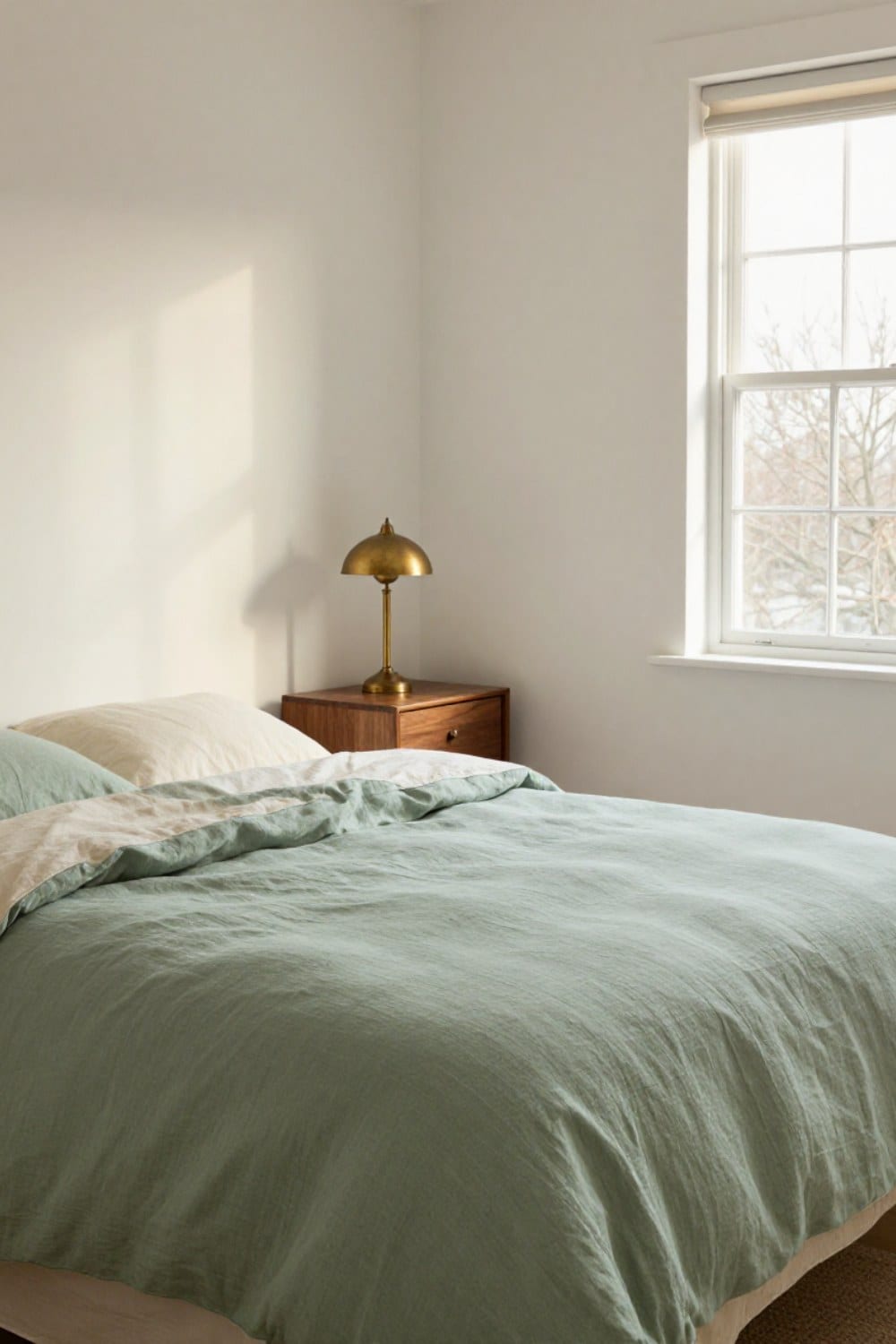
What Color Walls Go With Green Bedding? Six Pairings That Work
Six wall colors that make green bedding look chosen on purpose: warm white, greige, soft plaster pink, taupe, pale sage and deep chocolate or charcoal. Each one comes with the green it suits, how your light changes it, and the wood that ties it together.
Oct 20, 2026 · 11 min read