The Best Fluffy Pancakes recipe you will fall in love with. Full of tips and tricks to help you make the best pancakes.

12 Best Weather-Resistant Trays for Patio Coffee Tables
Stop warping your indoor trays outside. We break down the best weather-resistant trays for patio coffee tables — all-weather wicker, powder-coated steel, and UV-proof poly-resin — so your outdoor setup finally looks as good as it feels.

What the Community Is Saying (Reddit’s Honest Verdict on Outdoor Trays)
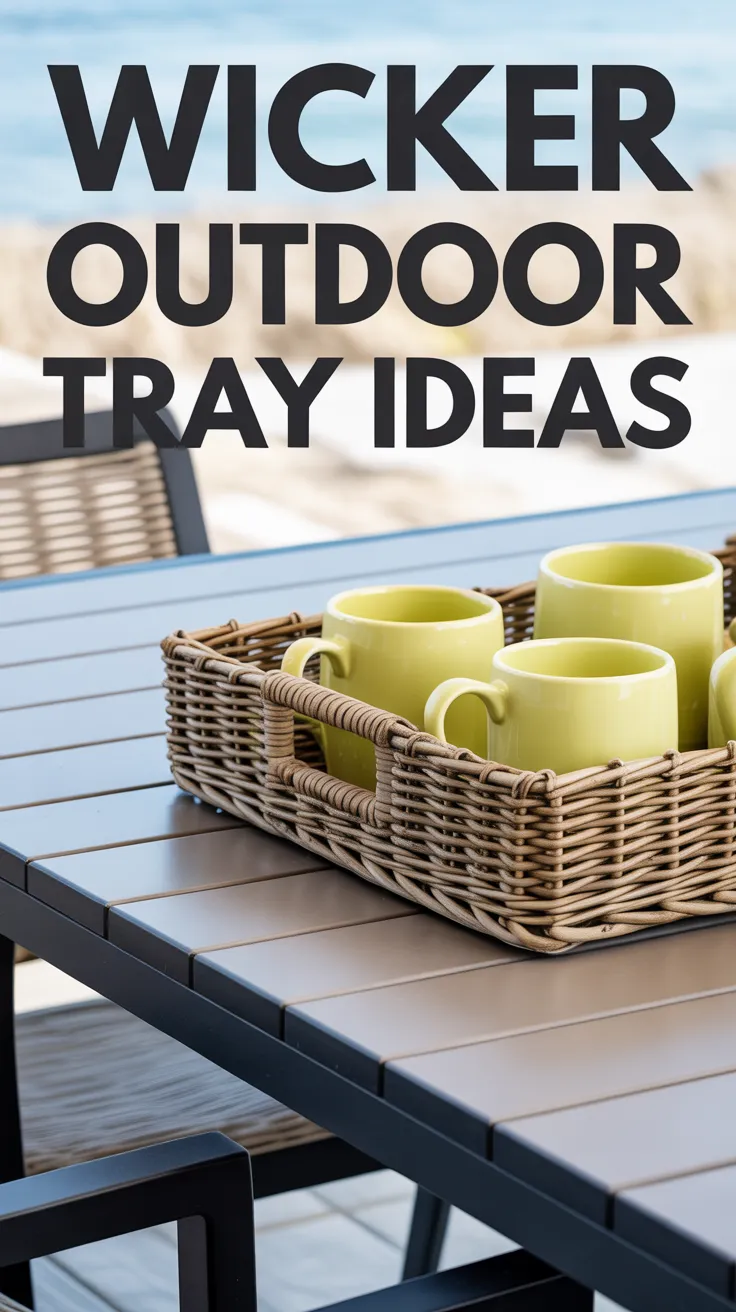
Before we get into materials and styling formulas, let’s be honest about what’s actually happening out there. Because if you’ve ever typed “outdoor tray decor” into a Reddit thread, you already know: the struggle is real, it’s universal, and nobody is talking about it loudly enough.
The complaints are almost always some version of the same three things:
“I put my beautiful rattan tray from HomeGoods on my patio in May. By August, it was unraveling at the corners and had green mold growing through the weave.”
“My ‘wicker’ tray turned out to be paper-wrapped wire. One rainstorm and it looked like papier-mâché.”
“I spent $60 on a decorative metal tray. It rusted in six weeks. Six weeks.”
Sound familiar? You’re not doing anything wrong. The problem is that “tray” as a product category was largely designed for indoor use, and manufacturers have been quietly labeling regular indoor trays as “patio-friendly” without any actual weatherproofing behind that claim. The result: you spend money, you style something beautiful, and then summer happens.
This guide exists to end that cycle. Every material recommendation here is selected specifically for outdoor survivability — not just aesthetics. Because the best-looking tray on your coffee table is the one still looking good in September.
Start here while you read. Search “thick clear acrylic spill proof outdoor tray” on Amazon — a clear acrylic base tray is the universal foundation that works under any styled arrangement and survives every season without question.
Why Every Styled Patio Table Starts With a Tray
There’s a reason interior designers — and the editors behind every “patio goals” image you’ve ever saved on Pinterest — always, always start with a tray. It’s not just aesthetics. It’s visual logic.
Place five individual objects directly on a coffee table surface and what you have is clutter with good taste. Place those same five objects inside a tray, and suddenly you have a moment. A composition. The tray draws an invisible boundary around the objects, telling your eye: this is intentional. This belongs together.
It’s the same principle that makes a well-set dining table look completely different from a table where everything’s just been placed down. Containment creates the perception of curation.
Outdoors, the tray does additional structural work. It manages the chaos of wind — keeping lightweight items corralled rather than scattered across the patio. It creates a wipeable surface that you can clean in one pass instead of moving twelve objects individually. And it provides a visual anchor that grounds your entire outdoor coffee table arrangement when everything around it is shifting — shadows moving, plants swaying, light changing hour by hour.
The problem: most people grab a tray they already own. An indoor rattan piece from a home goods haul. A decorative wooden slab they loved inside. A woven market basket turned on its side. And then the weather does what weather does.
What you actually need is a tray engineered for what it’s going to face. Sustained UV exposure. Moisture from rain, humidity, and condensation from cold glasses. Wind. Temperature swings between a 95°F afternoon and a 55°F morning the same week. The materials that can handle all of that without degrading are specific — and thankfully, they’re gorgeous.
Let’s break them down, one by one.
Treated Rattan & All-Weather Wicker: The Boho Dream That Actually Lasts
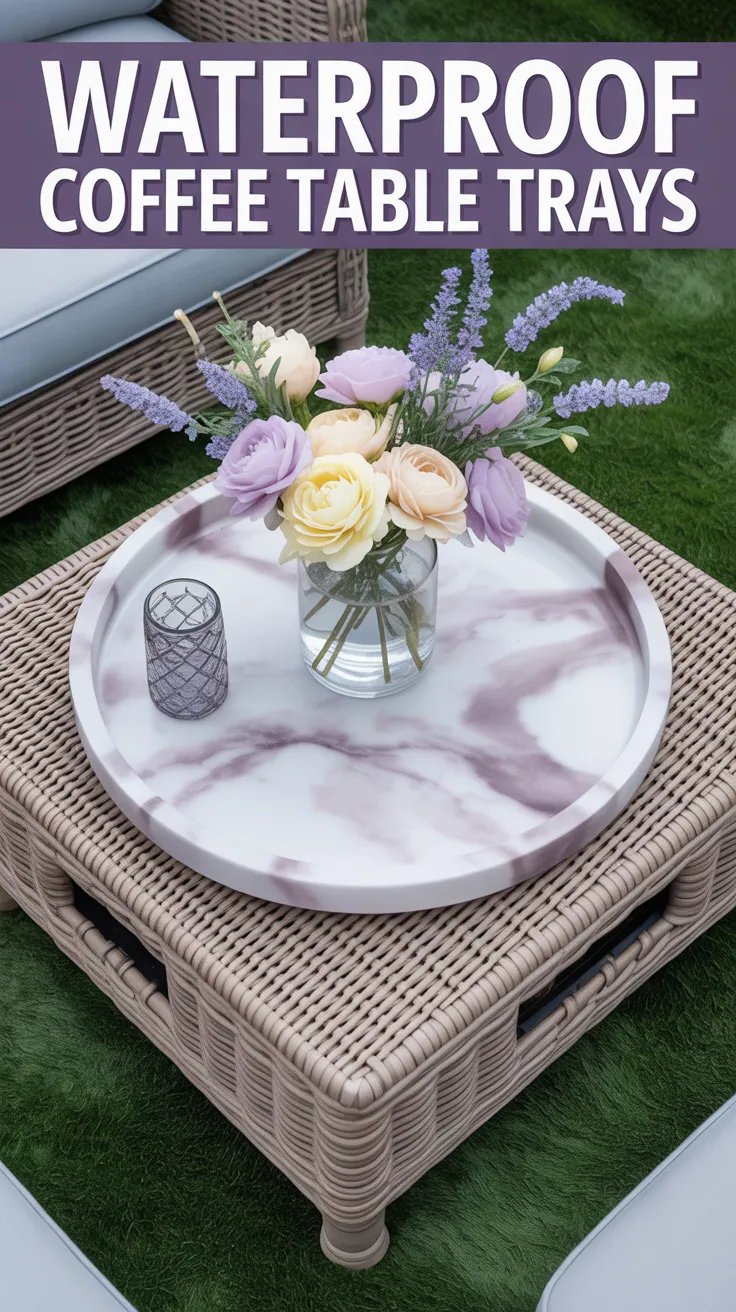
Nothing reads “relaxed, elevated outdoor living” quite like wicker and rattan. The woven texture, the warm natural tones, the organic irregularity of each piece — it’s the aesthetic that dominates high-end resort patios from Tulum to Santorini, and for good reason. It layers beautifully with almost every other outdoor material: linen cushions, terracotta pots, bleached wood, concrete, and marble all look better next to quality wicker.
The problem, as those Reddit commenters already know, is that true natural rattan is a tropical reed. Tropical reeds do not enjoy extended outdoor exposure in non-tropical climates. They dry out, crack, unravel, and absorb moisture in ways that lead directly to mold and structural failure. A natural rattan tray left outside through a Midwestern summer is going to look like an artifact by fall.
The Critical Difference: “All-Weather” vs. “Natural”

All-weather wicker — sometimes labeled as synthetic wicker, resin wicker, or PE rattan — is a completely different material that mimics the look of natural rattan with none of its structural vulnerabilities. It’s made from polyethylene fibers, usually woven over an aluminum or steel frame, and treated with UV inhibitors during manufacturing. The result:
- Won’t unravel (there’s no reed to split)
- Won’t absorb moisture (polyethylene is inherently hydrophobic)
- Won’t fade meaningfully for 3–5 years of full sun exposure
- Won’t develop the green mold bloom that kills natural wicker
- Won’t crack in cold-weather freeze-thaw cycles
The visual difference between quality all-weather wicker and natural rattan, when you’re sitting six feet away on a patio, is essentially zero. Up close, natural rattan has a slightly more irregular, handmade quality. All-weather wicker is slightly more uniform. Neither reads as inferior. Both look intentionally styled.
What to Look For on the Label
The terms “all-weather wicker,” “outdoor resin wicker,” and “PE rattan” are reliably good signs. The terms “wicker,” “rattan,” and “natural fiber” with no additional qualifier are red flags for outdoor use. Look specifically for language that includes UV protection, rust-resistant frame, and weatherproof finish.
Color matters too. The best all-weather wicker trays in neutral tones — natural, honey, dark walnut, or whitewash finishes — are the most versatile across different patio aesthetics. Avoid anything with a painted-over or lacquered finish, which will chip and peel in outdoor conditions faster than the weave itself deteriorates.
Get the boho look that lasts. Search “large all-weather wicker outdoor serving tray” on Amazon. Look for products that specify PE or resin wicker construction with a rust-resistant metal frame — that combination is your indicator of genuine outdoor durability.
Styling a Wicker Tray: The Rule That Makes It Look Expensive
The single biggest mistake people make with a wicker tray is overcrowding it. The warmth and texture of the weave needs visual breathing room to read properly. Use the 60/40 rule: 60% of the tray surface should be occupied, 40% should be visible tray. This negative space is what makes the arrangement look curated rather than stacked.
Powder-Coated Metal: The Windproof, Modern-Minimalist Solution
If your outdoor aesthetic skews modern, industrial, Scandinavian, or contemporary — or if your patio just experiences serious wind — powder-coated metal trays deserve serious consideration. They’re the heaviest option in this guide, and that weight is precisely the point.
A powder-coated steel or aluminum tray sitting on an outdoor coffee table isn’t going anywhere in a summer storm. Where lightweight wicker trays have to be weighted down by their contents, a quality metal tray provides its own ballast. This is particularly relevant for elevated patios, rooftop setups, or any outdoor space without perimeter wind protection.
The Science Behind “Powder-Coated” (And Why Regular Paint Fails Outdoors)
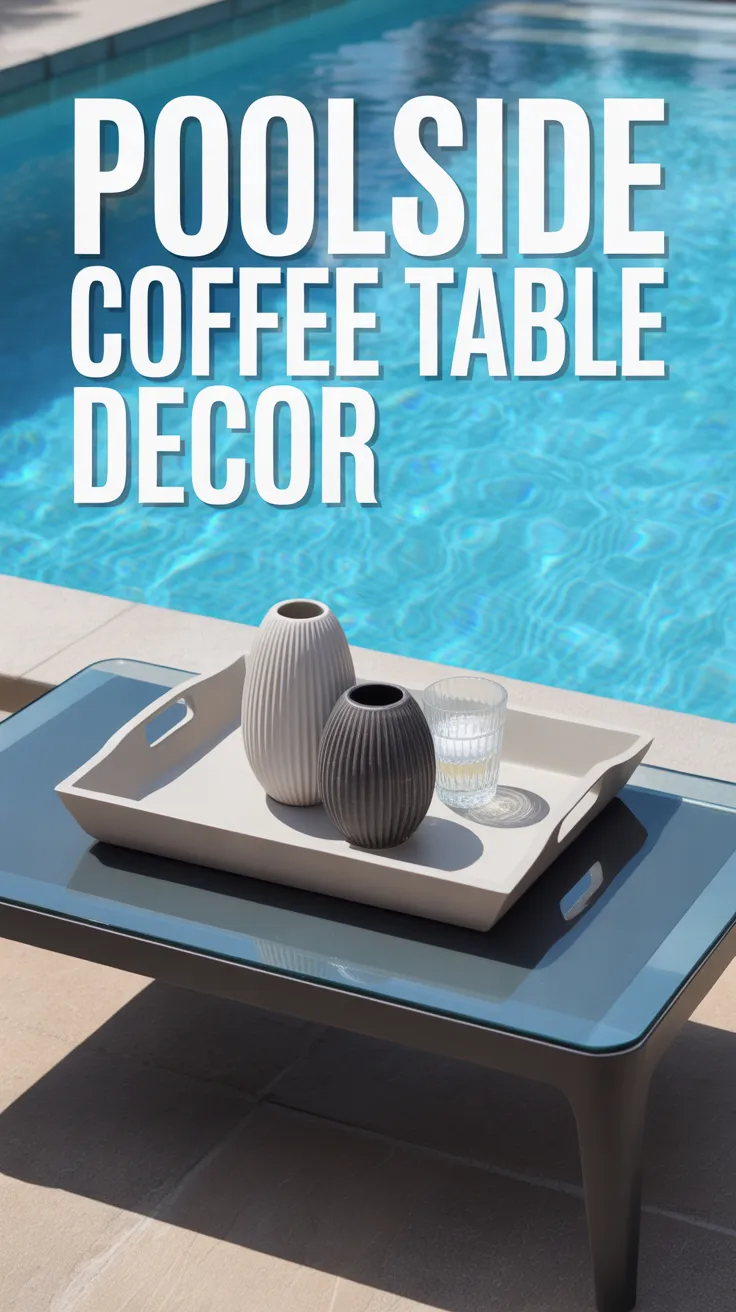
Standard paint, when applied to metal, creates a thin surface film that’s vulnerable to moisture penetration. Once water gets under the paint — which happens through chips, scratches, and microscopic pores — oxidation (rust) begins immediately and spreads rapidly. You’ve seen this on cheap metal outdoor furniture: the telltale rust bleeding through cracked paint at corners and edges.
Powder coating is a fundamentally different process. An electrostatically charged dry powder is applied to the metal, then cured in an oven at around 400°F. The heat chemically bonds the coating to the metal surface at a molecular level, creating a finish that is 3–4 times thicker than conventional paint, highly impact-resistant, and — critically — does not chip or peel in the same way. Moisture cannot penetrate it through normal use.
The result is a metal tray that can live outside year-round without rusting, a finish that maintains its color without fading for years, and a surface that’s completely wipeable with a damp cloth.
Matte Black, Sage Green, or Dusty Rose: Which Finish Works?
Matte black is the most versatile choice — it works in modern, industrial, bohemian, and even coastal settings, creates strong contrast against light-colored table surfaces, and hides minor smudges and fingerprints between cleanings.
Warm sage or olive green powder-coated trays have had a significant moment in the outdoor decor market and pair beautifully with natural materials, terracotta, and rattan accessories.
Dusty rose and blush tones are trending specifically in the target female homeowner demographic and work exceptionally well on white, cream, or light wood outdoor furniture.
Raw steel with clear coat — a matte, industrial look — is striking in the right context but shows water spots and requires more maintenance to keep looking clean outdoors.
Weight it down. Style it up. Search “matte powder coated metal outdoor coffee table tray” on Amazon. A handle-free, low-profile metal tray in matte black or a muted earth tone is the most functional and visually versatile option.
Poly-Resin & Acrylic: The Unbreakable, Poolside-Proof Choice
Here’s a scenario: you’re hosting a Sunday afternoon pool party. Drinks are being poured, kids are running, and the patio is busy in the way that makes beautiful things nervous. This is the specific use case that poly-resin and acrylic trays were built for.
These are the materials you choose when “it cannot break” is the primary requirement — without sacrificing the visual quality that makes your patio look styled rather than childproofed.
Poly-Resin: The Faux Wood That Fools Everyone
High-quality poly-resin (also called polyresin or resin stone) can be cast and painted to look convincingly like wood, stone, concrete, or ceramic. The texture and weight — poly-resin is denser than most plastics — contributes to the illusion. What you’re actually getting is a composite material that:
- Cannot shatter (it’s flexible, not brittle)
- Is completely waterproof at a material level (no sealing required)
- Is UV-stabilized to prevent color fading and surface degradation
- Is heavy enough to resist wind without additional weighting
- Tolerates the freeze-thaw cycles that crack natural stone
A poly-resin tray styled to look like weathered concrete or reclaimed wood will fool virtually every guest at your next outdoor gathering. It’s also about a third of the weight of actual concrete or stone, making it practical to move seasonally or rearrange when you’re refreshing the setup.
Acrylic: The See-Through Styling Hack

Thick acrylic (often marketed as “lucite” or “ghost” tray style) is a different aesthetic proposition entirely. Rather than mimicking another material, a clear acrylic tray is transparent — which means it visually disappears and lets the objects inside it take full visual focus.
This is the professional stylist’s secret weapon. A clear tray doesn’t compete with anything else on the table. It doesn’t add a color or texture that you have to coordinate. It’s the most versatile foundation possible because it literally works with everything.
It’s also the easiest to clean (warm water, done), impossible to rust or mold, and UV-treated versions won’t yellow in the sun the way cheap acrylic does.
The one practical note: choose a thick-walled option, at least 3–4mm acrylic. Thin acrylic bends in the heat and can crack at the corners when heavy objects are loaded onto it.
Shatter-proof and chic. Search “heavy duty poly resin outdoor decorative tray” on Amazon for the faux-concrete and faux-wood options that hold their finish in all weather — or search “thick clear acrylic spill proof outdoor tray” for the transparent styling foundation.
The Sizing Formula: Round vs. Rectangular (The Rule of Thirds for Trays)
This section is where most people quietly go wrong — and it’s the easiest fix in this entire guide. Tray sizing isn’t about personal preference or what was available. It’s geometry, and getting it right makes the difference between a coffee table that looks professionally styled and one that looks like it’s still in progress.
The Core Rule: Your Tray Should Cover the Middle Third of Your Table
Measure the length of your outdoor coffee table. Your tray should be approximately one-third of that length in its longest dimension. On a standard 48-inch rectangular patio table, that’s a tray in the 16–18 inch range. On a 60-inch table, you’re looking at 20–22 inches.
This proportion keeps the tray from looking undersized (which reads as afterthought) or oversized (which looks awkward and leaves no visual breathing room at the table edges).
Round Tables: Match the Shape, Scale to 50–60%
For round or oval outdoor coffee tables, use a round tray (or an oval one if you can find it). A rectangular tray on a round table creates visual tension — competing geometries that fight each other. A round tray should cover 50–60% of the table diameter. On a 30-inch round table, that’s approximately 15–18 inches.
Rectangular Tables: The Long-Axis Rule
On rectangular tables, your tray should run parallel to the long axis of the table — never perpendicular to it. A tray oriented across the width of a long table makes the table look like it’s been bisected. Oriented along the length, it anchors the center of the table properly.
Depth Matters More Than You Think
The depth (the shorter dimension) of your tray determines how much room you have to layer objects front-to-back, which is what creates that styled, three-dimensional look rather than a flat arrangement. Aim for a minimum 10-inch depth. Anything narrower and you’re essentially working with a decorative runner rather than a tray composition.
Get the proportions right. Search “oversized round waterproof patio coffee table tray” on Amazon if you’re working with a round or oval table. For rectangular setups, use your table measurements against the one-third formula and search “large outdoor serving tray” with your preferred material type.
Material Comparison: Which Tray Wins in Your Conditions?
| Condition | All-Weather Wicker | Powder-Coated Metal | Poly-Resin | Acrylic |
|---|---|---|---|---|
| Heavy rain | ✅ Drains easily | ✅ Fully waterproof | ✅ Fully waterproof | ✅ Fully waterproof |
| Full sun / UV | ✅ PE won’t fade | ✅ Won’t fade | ✅ UV-stabilized | ⚠️ Buy UV-rated only |
| High wind | ⚠️ Needs heavy contents | ✅ Self-anchoring | ✅ Heavy, stable | ⚠️ Needs weighted objects |
| Poolside / splash | ✅ Quick-dry weave | ✅ Rust-proof | ✅ Fully wipeable | ✅ Easiest to clean |
| Cold climates | ✅ Won’t crack | ✅ Stable | ✅ Flexible, won’t crack | ⚠️ Thick acrylic only |
| Boho / Natural aesthetic | ✅ Perfect | ❌ Conflicts | ⚠️ Stone look works | ❌ Too modern |
| Modern / Minimalist | ⚠️ Can work | ✅ Perfect | ✅ Concrete look works | ✅ Perfect |
| Budget-friendliness | 💲💲 Mid-range | 💲💲 Mid-range | 💲 Most affordable | 💲💲 Mid-range |
| Longevity (outdoor) | 3–5 years | 5+ years | 5+ years | 3–5 years (UV-rated) |
The Tray Styling System: A 3-Layer Formula
Knowing which tray to buy is half the equation. Knowing how to fill it is the other half. Here’s the exact layering system that turns a weather-resistant tray into a styled moment.
Layer 1 — The Anchor (Back Center): This is your tallest element. A lantern, a statement candle in a hurricane holder, or a potted plant. It creates the vertical axis that everything else orbits.
Layer 2 — The Body (Middle): Two to three medium-height objects. A small vase, a stack of outdoor-appropriate books or stone objects, a succulent or faux plant. These objects fill the horizontal plane and create visual density.
Layer 3 — The Finish (Front): Your flattest elements. Coasters fanned slightly. A small tray or plate. A decorative stone. These objects “ground” the composition and create the transition between the tray and the table surface beyond it.
The result is a front-to-back height gradient — shortest in front, tallest in back — that looks intentional from every angle, including the seated view from your outdoor chairs or sofa.
Conclusion: Build Your Base — Because Everything Else Depends on It
The tray is not a finishing touch. It’s the foundation. Every candle, plant, lantern, and coaster you add to your outdoor coffee table is going to perform better — look better, stay in place better, read as more intentional — when it’s anchored in a tray that’s built for the outdoors.
The materials that earn a place on an outdoor coffee table in 2024 are specific: PE resin wicker that won’t rot, powder-coated metal that won’t rust, poly-resin that won’t shatter, and UV-rated acrylic that won’t yellow. Everything else is an indoor tray waiting to fail.
Invest in the base once, correctly, and everything above it compounds. Your lanterns look more curated. Your plants look more intentional. Your coasters look placed rather than forgotten. The whole arrangement stops looking like “stuff on a table” and starts looking like a space you designed.
Shop our top-tested weather-resistant trays on Amazon to build your perfect patio centerpiece today:
- 🔍 “thick clear acrylic spill proof outdoor tray” — The universal foundation for any style
- 🔍 “large all-weather wicker outdoor serving tray” — The boho-luxe option that actually survives
- 🔍 “matte powder coated metal outdoor coffee table tray” — The windproof modern choice
- 🔍 “heavy duty poly resin outdoor decorative tray” — The unbreakable poolside essential
- 🔍 “oversized round waterproof patio coffee table tray” — For round tables, sized to the rule of thirds
Your patio has one season to be beautiful. Don’t let the wrong tray end it early.
Tags: weather resistant outdoor tray, best outdoor serving trays, patio coffee table tray, waterproof decorative tray, large outdoor tray, all weather wicker tray, outdoor table decor ideas