The Best Fluffy Pancakes recipe you will fall in love with. Full of tips and tricks to help you make the best pancakes.

How to Style a Modern Patio Coffee Table on a Budget (That Looks Genuinely Expensive)
You don't need a designer budget to get a Pinterest-worthy patio. Here's the exact high-low styling formula — faux-concrete trays, solar lanterns, UV-proof faux plants, and weighted coasters — that makes budget outdoor decor look like luxury.

What the Community Is Saying: The Budget Patio Problem Nobody Admits
Search “patio decor on a budget” in any Facebook homeowner group or r/HomeDecorating thread and you’ll find the same frustrated chorus playing on repeat:
“Everything I buy from discount stores looks cheap in photos and worse in person. I don’t know why I can’t make it look like the Pinterest images.”
“I spent $300 trying to make my patio look nice. It still looks like a clearance section.”
“How do people get that ‘expensive’ outdoor look without actually spending thousands? Is it just good lighting in the photos?”
Here’s the truth nobody in those threads is saying clearly enough: it’s not about how much you spend. It’s about where you spend it — and more importantly, how you arrange it. The patios that read as expensive on Pinterest are almost never decked out in luxury furniture. They’re small collections of the right objects, deliberately layered, in a cohesive material story. The “expensive” feeling is a visual trick. And once you understand the trick, you can pull it off for under $150.
This guide is that trick, broken down into five components you can source on Amazon and assemble in an afternoon.
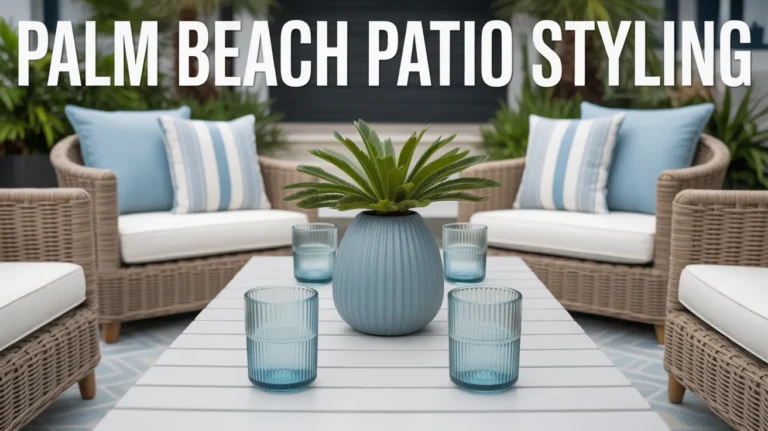
Start with the right table. Search “budget modern polywood outdoor coffee table” on Amazon. A clean-lined, weather-resistant polywood or composite table in a neutral tone is your canvas — and you don’t need to spend more than $80–$120 to get one that photographs beautifully.
The High-Low Mix That Changes Everything
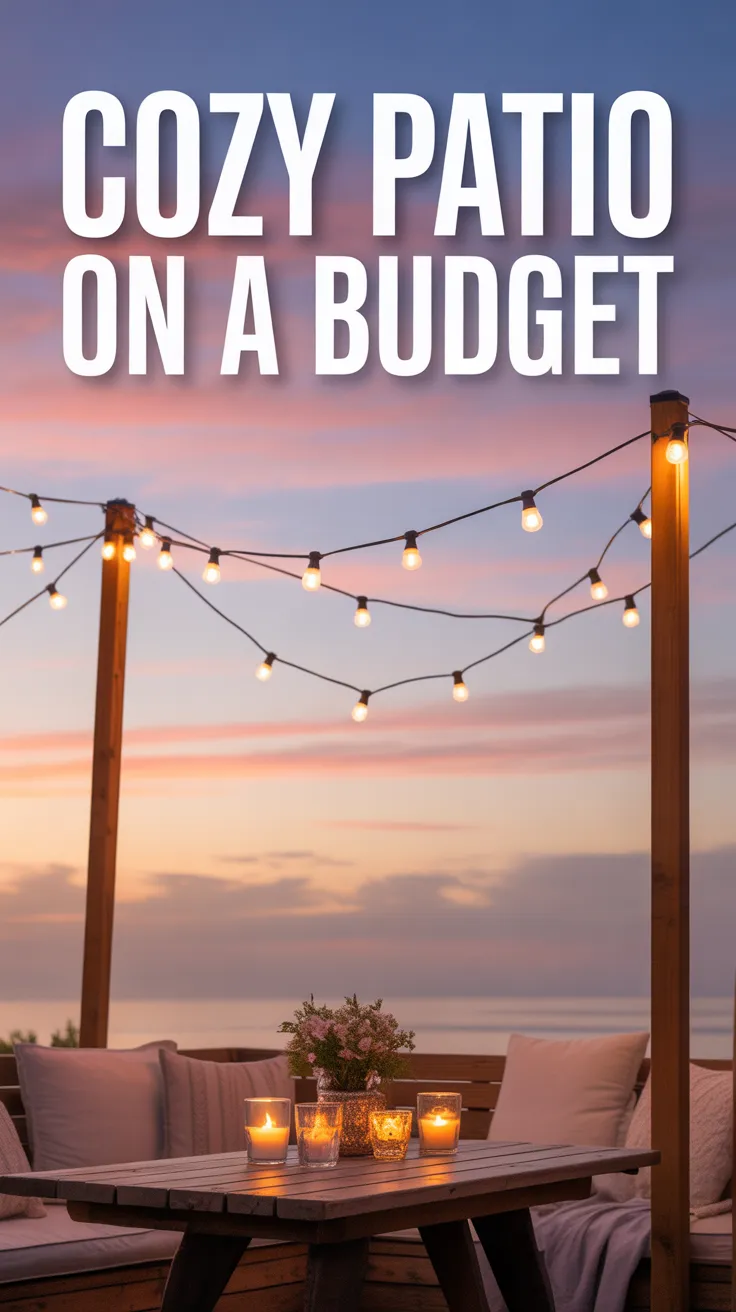
Let’s establish something upfront: expensive patios and expensive-looking patios are not the same thing.
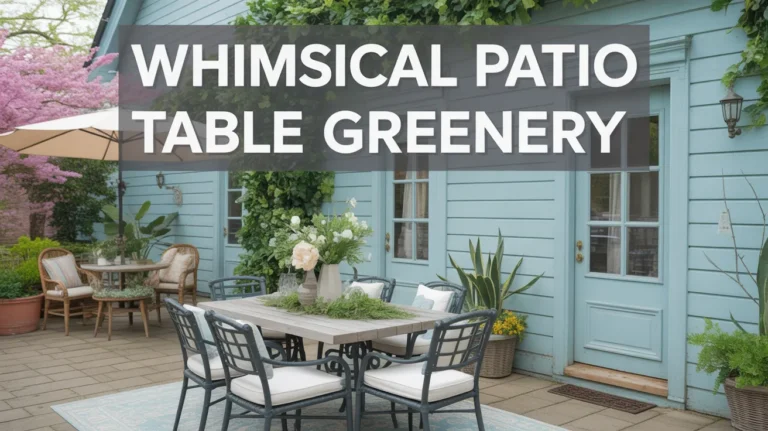
Walk through any high-end outdoor living showroom and you’ll notice that the $4,000 sectional doesn’t look $4,000 by itself. It looks $4,000 because of the coffee table in front of it — and more specifically, because of what’s on that coffee table. The layered tray. The sculptural lanterns. The small arrangement of greenery that adds organic warmth without visual clutter. Remove those five objects and put the same sectional in an empty backyard, and it looks like new patio furniture waiting to be styled, not a curated outdoor room.
This is the foundational insight behind high-low decorating: premium-feeling spaces are not defined by the price of each individual piece. They’re defined by the composition — how the pieces relate to each other, what materials are in conversation, and whether the overall arrangement reads as deliberate.
The coffee table is ground zero for this effect outdoors. It’s the visual center of any patio seating arrangement, the piece every eye returns to while people are sitting and talking. Get it right, and it pulls up the perceived value of everything around it — including that outdoor sofa you got on a flash sale and the string lights from a big-box store. Get it wrong, and even genuinely expensive furniture around it looks unstyled.
The method is straightforward: two grounding elements, one light source, one organic accent, and a base that ties them together. That’s five items. Each one is available for under $40. Together, they create a visual story that reads as sophisticated and cohesive — regardless of what your actual furniture budget was.
The Budget Base: How Faux-Concrete and Metal Trays Fake the Expensive Look
The tray is the single highest-leverage purchase in this entire guide. A good tray does more work per dollar than any other item on this list — which makes it the place to spend just a little more and get exactly right.
Here’s why the tray matters so disproportionately: it creates containment. Objects grouped inside a tray read as a single designed moment. Objects sitting directly on a table surface read as things that were placed down and haven’t been moved yet. The visual difference is dramatic, and it costs the price of a tray.
For a modern aesthetic on a budget, two material options stand above the rest.
Faux-Concrete Resin: The Designer Look at a Fraction of the Weight
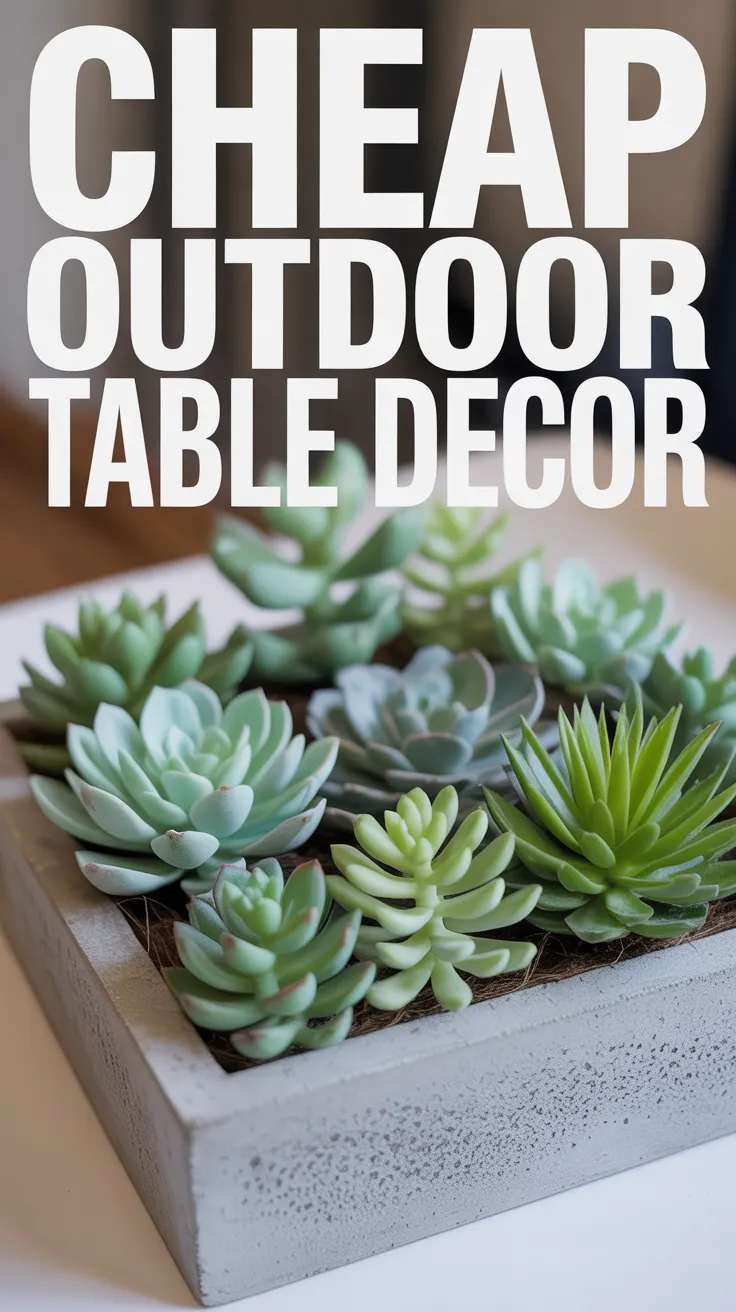
Real concrete trays exist. They’re beautiful, extremely heavy (we’re talking 8–15 pounds for a tray, before you put anything in it), expensive to manufacture, expensive to ship, and prone to cracking in freeze-thaw climates. They’re also genuinely not necessary.
High-quality poly-resin cast to mimic concrete texture is visually indistinguishable at any normal viewing distance. The surface texture — that slightly rough, slightly irregular quality of poured concrete — is accurately replicated in the molding process. The grey tones, from warm charcoal to cool slate, read as authentic. And the weight, while much lighter than real concrete, is still substantial enough to stay put in moderate wind.
What you’re actually getting with a faux-concrete resin tray is: fully waterproof material, no sealing required, UV-stabilized to prevent chalking or color shift, impact-resistant (it won’t shatter if a glass tips over onto it), and fully wipeable in one pass. It costs a fraction of a real concrete equivalent and ships in a standard cardboard box instead of a freight pallet.
For modern, minimalist, industrial, and Japandi-influenced patio aesthetics, a faux-concrete rectangular tray in a 16–20 inch length is the anchor piece that makes everything else make sense.
The Matte Metal Option: When You Want Edge, Not Softness
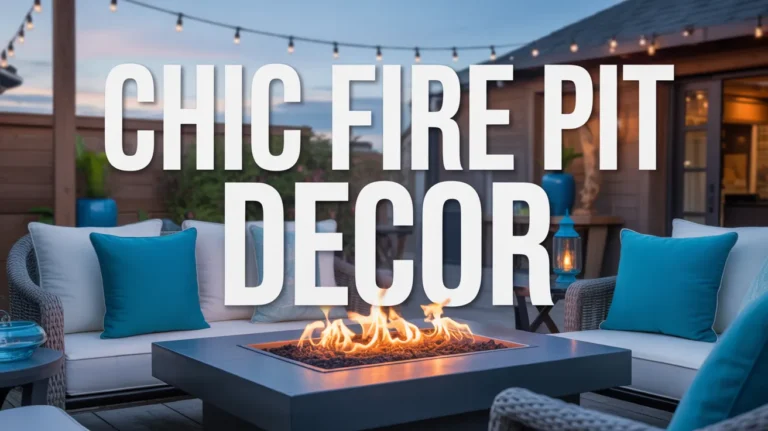
If your patio aesthetic is more contemporary or industrial — clean lines, darker tones, mixed metals — a flat matte metal tray in black, gunmetal, or brushed bronze does something that concrete can’t: it creates directional light play. The slightly reflective surface of a matte metal tray picks up ambient light from your solar lanterns in a way that makes the entire arrangement glow softly at dusk. It’s one of those details that’s hard to articulate but immediately visible in the space.
For budget metal trays that look expensive, the key specs are: powder-coated finish (not spray paint, which chips), flat or very low-profile rim, and handles that are integrated rather than bolted on. Bolted handles are the tell for inexpensive construction. Bent and welded handles are the standard on quality pieces.
Styling the Budget Tray: The One Rule That Changes Everything
Leave 40% of the tray surface empty. It sounds counterintuitive when you’re working with a small budget and only have a few objects. But negative space is what communicates luxury. Packed, cluttered trays read as maximalist-on-a-budget. Spare, breathing compositions read as curated-and-confident. Less, placed with intention, always looks more expensive than more, placed without it.
Get the foundation right. Search “faux concrete resin outdoor decorative tray” on Amazon. Look for products that specify UV-resistant finish and outdoor suitability — not just “decorative” without qualification.
Let There Be Light: Solar Elegance That Doesn’t Need an Electrician
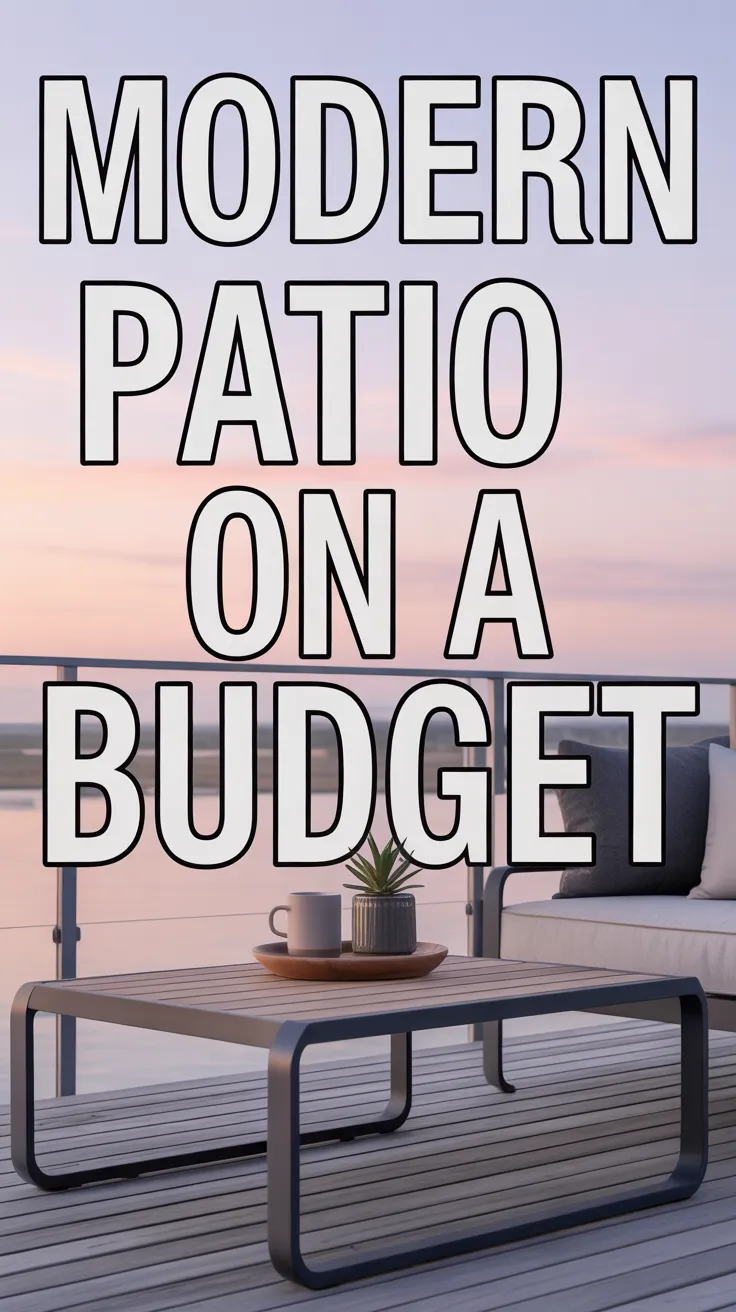
Lighting is the variable that transforms a styled patio table from “nice during the day” to “genuinely magical at night.” And it’s also the variable where most budget decorators either overspend (buying wired options that require professional installation) or underspend (buying the $8 plastic solar lights that look exactly like $8 plastic solar lights in every possible condition).
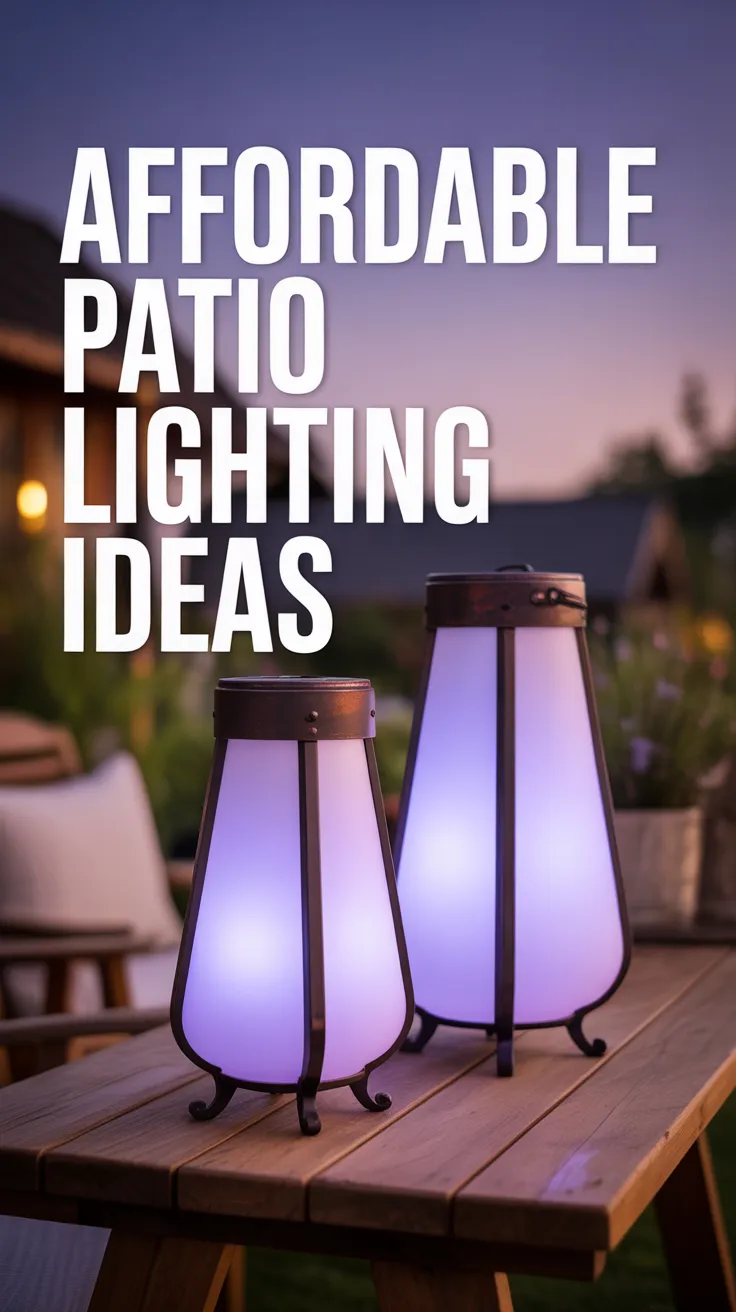
The sweet spot is specific: mid-range solar lanterns with a matte black or oil-rubbed bronze finish, genuine warm-white LED output (2700K or warmer), and an IP65 or higher waterproof rating.
Why Matte Black Solar Lanterns Punch Above Their Weight
The visual heaviness of a matte black lantern reads as expensive because black is a color that communicates both weight and sophistication in object design. A matte black lantern on a coffee table carries the same visual authority as matte black hardware in a kitchen renovation — it grounds the space, creates contrast, and anchors lighter-colored objects around it.
The specific advantage of solar over battery or wired options at the budget tier: a good solar lantern with a built-in dusk-to-dawn sensor creates effortless atmosphere with zero ongoing cost. You don’t replace batteries. You don’t run an extension cord. You don’t remember to turn it on. It simply starts glowing at dusk and turns off at dawn, every single night, for the cost of zero dollars in electricity.
What Separates a Good Solar Lantern From a Bad One
The difference between a $12 solar lantern and a $35 solar lantern is not primarily price — it’s light quality. The $12 version produces a cold, flat LED white (often 5000K+) that looks institutional and drains within two hours of darkness. The $35 version produces a warm amber-toned glow (2700–3000K) that mimics real candlelight, runs 6–8 hours per charge, and uses a high-capacity solar panel that charges meaningfully even in indirect sun.
The other variable: flame simulation. Modern LED flame-effect technology has advanced significantly. The better units use multi-LED clusters with random-phase flicker algorithms that genuinely read as organic flame movement from 3–4 feet away. From across a patio at night, the effect is nearly indistinguishable from a real candle.
For coffee table styling, buy in pairs. Two lanterns of identical style placed symmetrically within the tray arrangement creates visual balance that a single lantern cannot — and doubles the ambient light output of the arrangement.
Set the mood for free, every night. Search “2-pack matte black solar lanterns outdoor” on Amazon. Prioritize listings that specify warm white (2700K), IP65 waterproof rating, and auto dusk-to-dawn sensor. Those three specs separate genuine outdoor performers from visual decoys.
The LED Pillar Candle Alternative
If your patio aesthetic calls for something softer and more organic than a metal lantern, flickering LED pillar candles inside a glass hurricane holder are a compelling alternative. The glass amplifies and diffuses the flame effect, casting soft patterns on nearby surfaces that make the entire arrangement look like it belongs in a boutique hotel lobby. Look for rechargeable rather than battery-operated versions — the ongoing cost difference adds up quickly.
Zero-Maintenance Greenery: The $20–$30 Investment That Earns Its Place Every Season
There’s a specific calculation that budget-conscious outdoor decorators need to make about real versus faux plants — and it’s not as simple as “real is better, faux is cheap.”
Consider: a small real succulent costs $6–$12 from a garden center. Outdoors on a coffee table, it’s in one of the most hostile growing environments possible — full sun exposure, inconsistent watering, heat amplified by the table surface, wind desiccation. The average patio coffee table succulent lasts 4–8 weeks before it needs rescue, replacement, or moving to a less brutal location. That’s $6–$12 every 6 weeks through the outdoor season. Across a 20-week outdoor season, you’ve spent $20–$40 on plants and gained zero cumulative value — they’re gone.
A $25 UV-stabilized faux succulent set placed in a quality cachepot: $25, once, and it’s in the same condition in year three as it was on day one.
Why Quality Faux Plants Don’t Look Fake Anymore
The faux plant industry has undergone a genuine quality transformation in the last five years. The shift is material-based: the transition from PVC (the old plastic that looked obviously artificial) to PE (polyethylene), which has a translucent quality that allows light to pass through leaf edges in a way that mimics the behavior of actual plant tissue in sunlight.
The other factor is detail fidelity. High-quality faux succulents now include accurate surface texture — the slightly waxy, slightly irregular quality of real succulent leaves — and color variation within individual leaves (the reddish tipping at the edges of echeveria, the dusty blue-grey of sedum) that make casual observation genuinely ambiguous.
UV-Stabilized: The Spec You Cannot Skip
This is the make-or-break specification for any faux plant going outside. Non-stabilized plastics degrade in UV light through a process called photodegradation: the polymer chains break down, causing color fading (vivid greens turn yellowish-tan), surface brittleness, and that chalky, oxidized texture that screams “old plastic” from across the room. A UV-stabilized faux plant has additives in the material itself — not just a surface treatment — that absorb UV energy before it can damage the polymer. The practical result is a plant that maintains its color, texture, and structural integrity for 3–5 years of full outdoor exposure.
Do not buy faux plants for outdoor use unless the product listing specifically states “UV-resistant,” “UV-stabilized,” or “for outdoor use.” “Realistic” and “lifelike” say nothing about sun resistance and are meaningless for outdoor applications.
The Potting Trick That Elevates Cheap Faux Plants
The quickest way to make a budget faux succulent set look expensive is to repot it from whatever plastic nursery pot it ships in into a textured concrete planter, a matte white ceramic, or a small woven seagrass pot cover. The plant quality hasn’t changed, but the container quality completely reframes it. A $4 concrete planter from a dollar store plus a $20 faux succulent reads as a $40 styled piece. The container is doing the aesthetic heavy lifting.
Green that doesn’t quit. Search “small potted faux succulent set UV resistant outdoor” on Amazon. Look for sets of 2–3 small pots so you can cluster them or spread them across the tray arrangement without needing to buy additional pieces.
The Grounding Elements: Coasters, Books, and Visual Weight
This is the section most budget styling guides skip entirely — and it’s the reason their “Pinterest patio” results look unfinished even when every other element is right.
Visual weight is the concept in design that describes how heavy or substantial an object appears within a composition. Objects with high visual weight hold the eye longer, anchor the arrangement, and communicate permanence. Objects with low visual weight feel temporary, lightweight, easily moved — which subconsciously communicates low investment and low quality.
On a budget outdoor coffee table, you need at least one element with genuine visual weight. Something that looks like it belongs there rather than having been set down temporarily. This is the job of grounding elements — and the most practical grounding element at the budget tier is a quality coaster set.
Faux Marble Silicone Coasters: The Visual Authority of Stone Without the Price
Real marble coasters are beautiful. They’re also heavy to ship, cold to the touch, and require sealing to prevent moisture absorption and staining outdoors. They crack in freeze-thaw conditions. They’re genuinely impractical for most outdoor settings.
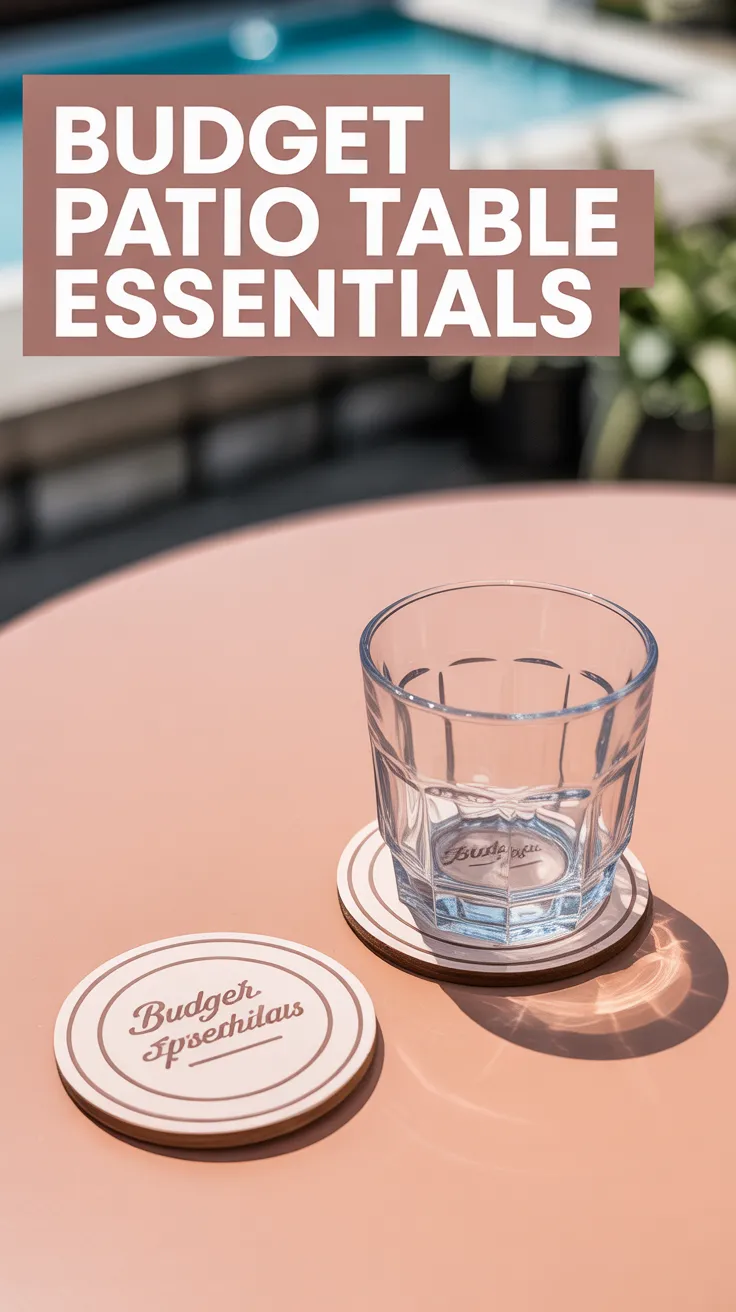
Silicone coasters cast and printed to mimic marble veining do three things simultaneously: they add visual weight (silicone is denser than it looks), they add texture contrast against the smooth surfaces of a faux-concrete tray, and they add the upscale material signal of “marble” without any of marble’s outdoor maintenance requirements.
The silicone material itself is the ideal outdoor coaster substrate: completely waterproof, mold-resistant, UV-stable, non-slip on both top and bottom surfaces, and rated for temperatures from -40°F to 450°F — meaning they handle both winter freeze and summer heat with zero degradation.
The Fan-Stack Method: Making Coasters Look Styled
A stack of four coasters placed flat in the corner of a tray looks like coasters. Four coasters fanned slightly — each one offset about 15 degrees from the next, like a hand of cards held loosely — looks like art direction. It’s the same four coasters. The arrangement is what creates the styling signal.
Outdoor Books: The $0 Grounding Element
Large-format books, coffee table books, or even stacked magazines placed under the tray composition add height variation and the intellectual/lifestyle signal of a cultivated person’s space. For outdoor use, wrap them in waterproof contact paper if they’re going to get wet, or use them purely for sunny-day styling and bring them in before rain. A $0 stack of books from your existing collection adds more visual weight to a budget patio table than most $15 decorative objects.
Lock it down visually. Search “faux marble silicone outdoor coasters set” on Amazon. A set of 4–6 in a marble or travertine print, in warm cream, grey, or black tones, gives you the visual weight and surface texture that makes the entire arrangement feel finished.
Budget vs. Splurge: Where Your Money Actually Makes a Difference
Not all patio styling purchases have equal visual return on investment. Here’s an honest breakdown of where budget choices look just as good as expensive ones — and where cutting corners actually shows.
| Element | Budget Option Works? | Why / Why Not |
|---|---|---|
| Coffee Table (Base) | ✅ Yes — with caveats | Clean lines matter more than brand. A $90 polywood table in a modern silhouette beats a $300 ornate table badly. Pick simple geometry. |
| Tray | ✅ Yes | Faux-concrete resin at $25–$40 is genuinely indistinguishable from expensive counterparts at normal viewing distance. This is the best budget win. |
| Solar Lanterns | ⚠️ Partly | Spend at least $30–$40 for a pair. The $10–$15 tier produces cold, flat light that immediately reads as cheap. Warm light is not negotiable. |
| Faux Plants | ✅ Yes | The PE vs. PVC quality difference is visible, but it’s a $20 vs. $45 difference — still firmly budget territory. UV rating is the spec, not the price. |
| Coasters | ✅ Yes | Silicone marble-look coasters at $15–$20 look more expensive than their actual cost more than almost any other item in this guide. |
| Candles / Accessories | ✅ Yes | No one can tell a $5 LED pillar candle from a $25 one at 4 feet away at night. The glow quality matters; the brand doesn’t. |
Putting It Together: The $120 Patio Coffee Table Setup That Looks Like $400
Here’s the full budget breakdown, priced honestly:
| Item | Search Term | Approximate Budget |
|---|---|---|
| Polywood/composite table | budget modern polywood outdoor coffee table | $80–$120 |
| Faux-concrete resin tray | faux concrete resin outdoor decorative tray | $25–$40 |
| 2-pack matte black solar lanterns | 2-pack matte black solar lanterns outdoor | $30–$45 |
| UV-resistant faux succulent set | small potted faux succulent set UV resistant outdoor | $20–$30 |
| Faux marble silicone coasters | faux marble silicone outdoor coasters set | $15–$22 |
| Total (decor only, excl. table) | $90–$137 |
Under $140 to completely transform your patio coffee table’s visual presence. That’s not a compromise. That’s knowing how design actually works — and using that knowledge to spend precisely where it counts.
Conclusion: Your Pinterest Patio Is Five Items Away
Here’s what the most-saved patio images on Pinterest have in common: they were styled by people who understood that perception is built from composition, not cost. A $4,000 table surrounded by nothing reads as furniture. A $90 table anchored by a concrete tray, two glowing lanterns, a cluster of succulents, and a weighted set of marble-look coasters reads as a space.
The difference between a forgettable patio and one that makes your guests silently wonder what you spent — that difference is the five items in this guide. And they’re all available with two-day shipping.
Shop the complete modern budget look below and transform your patio by this weekend:
- 🔍 “budget modern polywood outdoor coffee table” — Your weatherproof canvas
- 🔍 “faux concrete resin outdoor decorative tray” — Your high-design anchor
- 🔍 “2-pack matte black solar lanterns outdoor” — Your free nightly atmosphere
- 🔍 “small potted faux succulent set UV resistant outdoor” — Your zero-maintenance life
- 🔍 “faux marble silicone outdoor coasters set” — Your visual weight and finishing touch
This weekend. Under $150. Genuinely stunning.
Tags: modern patio coffee table, budget outdoor decor, cheap patio styling, affordable patio furniture accessories, outdoor coffee table ideas on a budget, faux outdoor plants, affordable outdoor lanterns