The Best Fluffy Pancakes recipe you will fall in love with. Full of tips and tricks to help you make the best pancakes.

20 Outdoor Coffee Table Decor Ideas for a Dreamy Retreat

Picture this. It’s a Thursday evening in late July. You’ve poured yourself something cold. The heat of the afternoon has finally softened into that golden-hour warmth that makes everything look a little more cinematic. You step outside — and you stop.
Not because you’re tired. Because your patio actually looks like somewhere you want to be.
That’s the thing nobody tells you when you first start decorating outdoors: the furniture isn’t the point. The sectional, the string lights overhead, the potted olive tree in the corner — none of that does the heavy lifting. What anchors the entire space, what makes it feel curated rather than assembled, is the coffee table and what’s sitting on top of it.
Interior designers have understood this for decades. The coffee table is the visual center of any living space, indoors or out. It’s where the eye lands first and returns to constantly. It sets the tone for everything around it. Get it right, and your patio reads like a boutique hotel terrace. Get it wrong — or worse, leave it bare — and even the most expensive outdoor furniture looks like it came from a clearance rack.
Here’s the good news: styling an outdoor coffee table isn’t complicated. It’s a system. A deliberate layering of five elements that, once you understand them, you can apply to any outdoor setup regardless of your budget, your climate, or how much time you have for maintenance. This guide walks you through every layer — from the base up — with specific product recommendations that hold up in real outdoor conditions.
Because beautiful is one thing. Weatherproof is another. The goal is both.
Start with the right foundation. Before you style anything, you need a table worth styling. Search “weather resistant polywood outdoor coffee table” on Amazon for solid all-weather options that won’t warp, crack, or splinter after a single winter.
The Psychology Behind “Patio Envy” — Why Some Outdoor Spaces Feel Like Destinations
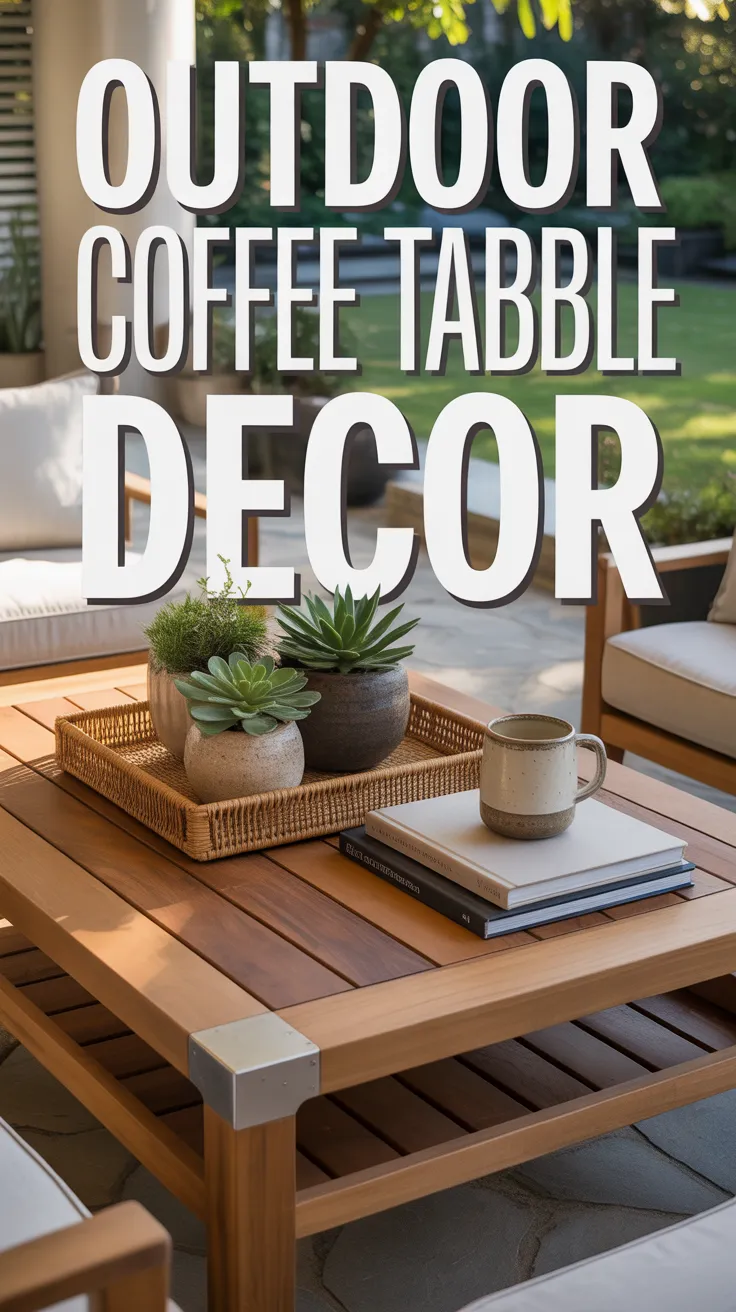
Before we get into the how, it’s worth understanding the why — because once you see the psychological principle at work, you’ll make better design decisions every single time.
There’s a concept in environmental psychology called restorative design: the idea that certain visual environments actively reduce cortisol levels and promote mental recovery. Researchers at the University of Michigan found that even brief exposure to natural, aesthetically layered environments — think textured surfaces, soft lighting, and organic shapes — measurably lowers stress markers. This is the science behind why you feel so calm at a well-designed resort, even before the vacation itself begins.
Your patio can do that. It doesn’t require a landscape architect or a $50,000 renovation budget.
What restorative outdoor spaces have in common is layering — specifically, the deliberate combination of:
- Texture contrast (rough stone next to smooth wood, woven natural fiber next to matte metal)
- Warm, ambient light that mimics the quality of late-afternoon sun
- Organic greenery that signals “living space” rather than “storage area”
- Objects with perceived weight and permanence — things that look like they belong, not things that look like they were left out by accident
That last point is quietly the most important. A patio that looks expensive almost always contains objects with visual mass. Heavy-looking candles. Substantial coasters. A tray that anchors everything else. The eye reads weight as value. Cheap outdoor decor fails not because it looks inexpensive, but because it looks weightless — easily moved, easily ignored.
This is also why bare outdoor coffee tables feel unfinished even when the surrounding furniture is beautiful. The table is a visual anchor that isn’t anchoring anything.
What Pinterest’s Top-Pinned Patios Actually Have in Common
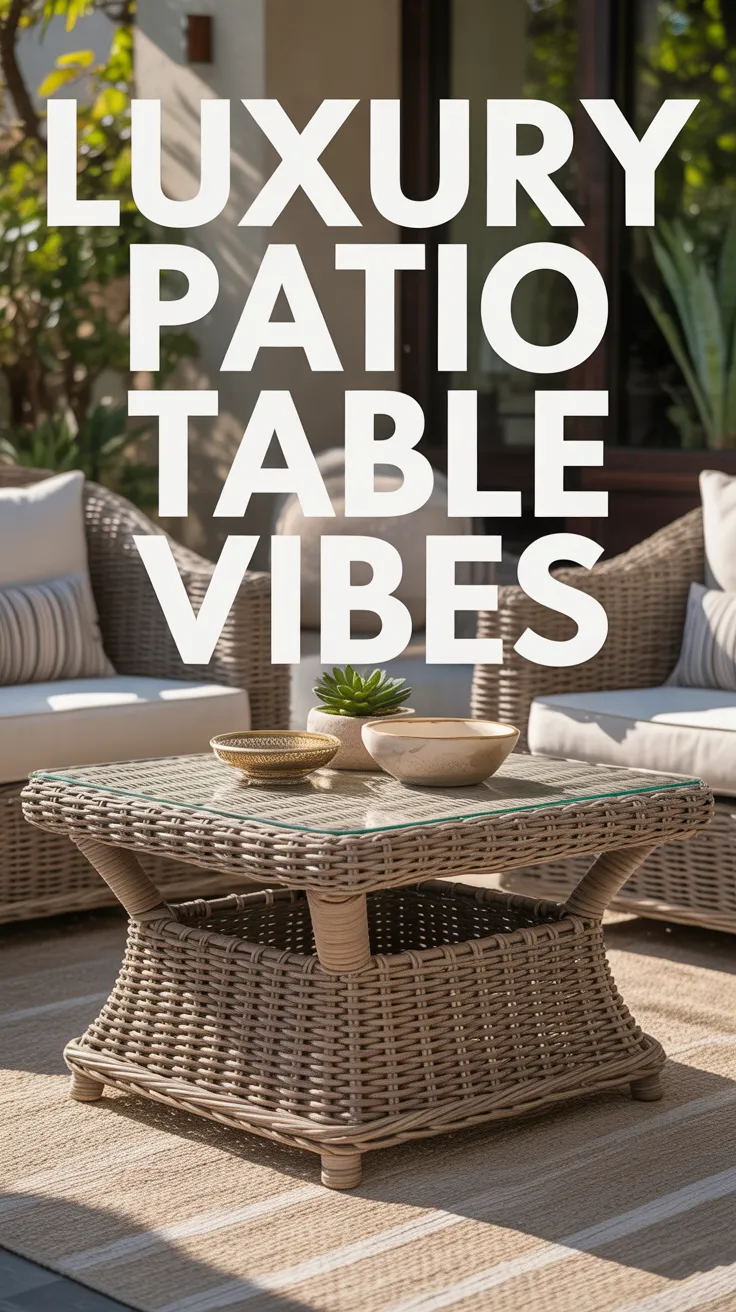
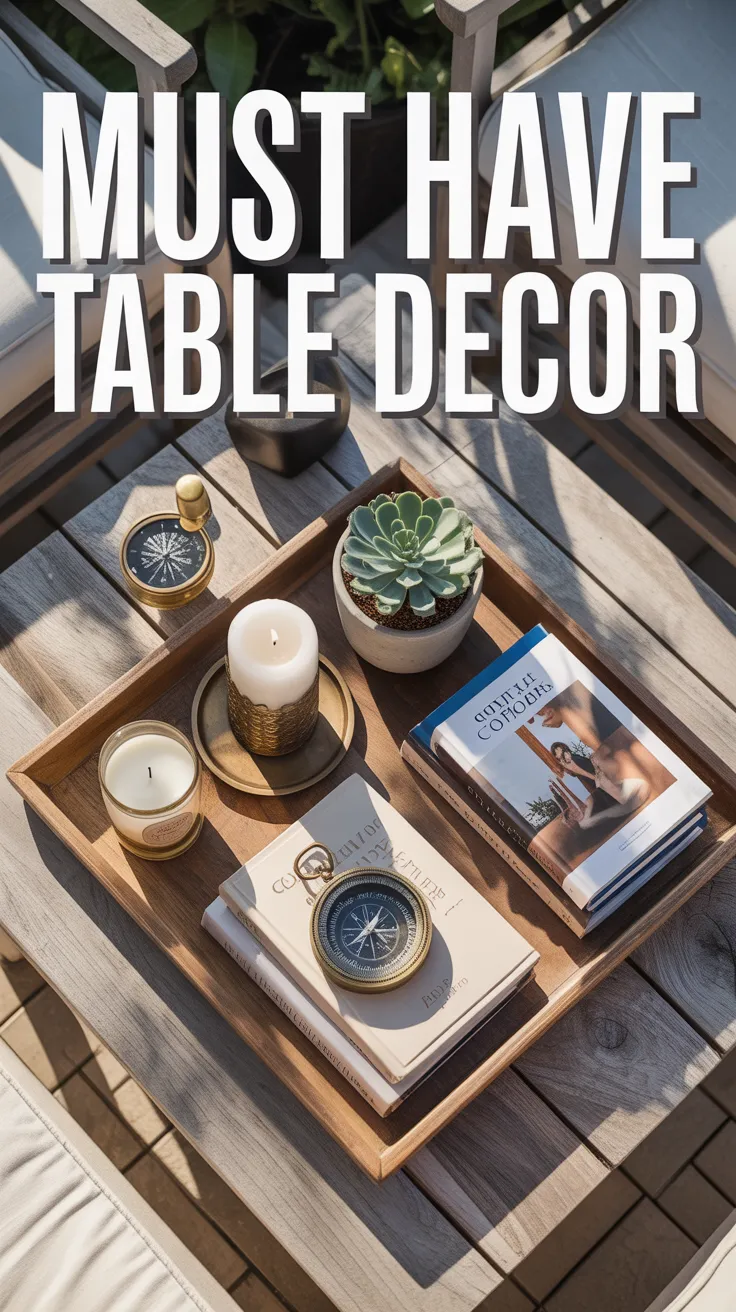
If you’ve spent any time on Pinterest searching “patio coffee table styling” or “outdoor living room decor,” you’ve probably noticed a pattern. The images that consistently get tens of thousands of saves share almost exactly the same composition: a tray or tray-like surface in the center, a light source (lantern or candle), one piece of greenery, and one grounding object — usually a stack of books or a set of coasters.
That’s it. Five elements, deliberately placed. No clutter, no randomness.
The brands that get it right — the ones whose patio images go viral on Pinterest boards — understand that outdoor styling is about editing, not accumulating. Every item earns its place.
The Foundation: Why a Weather-Resistant Tray Is Non-Negotiable
Here’s the mistake most people make when styling an outdoor coffee table: they treat it like a flat surface and place objects directly on top. The result looks scattered — five separate things competing for attention rather than one cohesive moment.
A tray solves this at a fundamental level. It creates a visual container, grouping objects into a single unified “moment” that reads as intentional. But outdoors, tray selection matters far more than it does inside.
What to Look For in an Outdoor Serving Tray
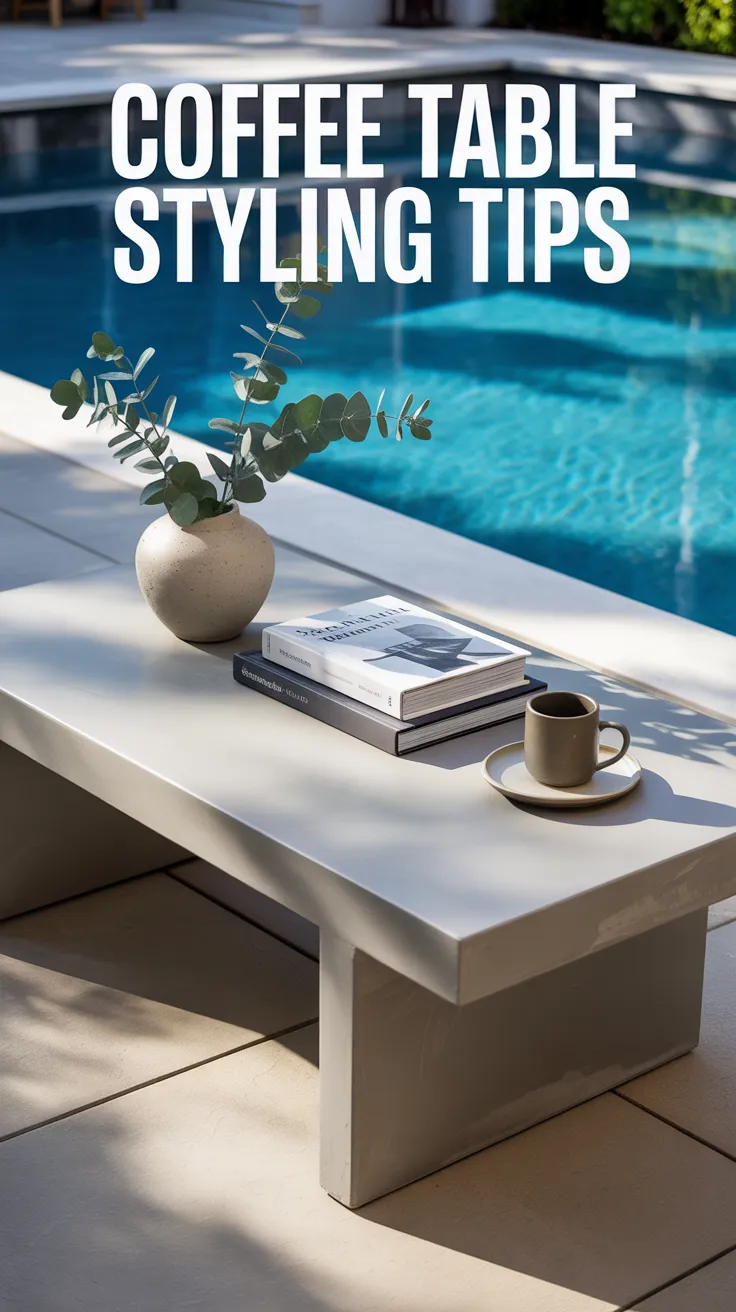
Standard indoor wicker trays will start breaking down within a season. The materials that actually hold up are:
Treated or resin-coated rattan — Natural-looking but sealed against moisture. Won’t absorb water or develop mold in humid climates. Look for a “water-resistant” or “weatherproof” designation specifically.
Powder-coated metal — Typically aluminum or iron. Incredibly durable, but style-specific. Works beautifully in modern or industrial-leaning patios. Less at home in bohemian or coastal aesthetics.
High-density polyethylene (HDPE) weave — This is what most high-end outdoor furniture is made from. When you see it in tray form, it’s virtually indestructible. Won’t crack in the cold, won’t fade in the sun, doesn’t care about rain.
Bamboo with sealant — Genuinely beautiful and structurally strong, but requires a proper UV and water sealant to last more than a year outdoors. Look for trays that specify outdoor or all-weather use.
Size matters more outdoors than indoors because you’re dealing with wind. A tray that’s too small becomes a projectile. Aim for at least 14–16 inches at the narrow side — wide enough to give your objects stability and enough visual weight to read from standing height.
Ready to anchor your setup? Search “large outdoor woven serving tray water resistant” on Amazon to find trays that are built for real outdoor conditions. A great tray is the single highest-ROI purchase you’ll make for your patio table.
The “Tray-In-a-Tray” Styling Method
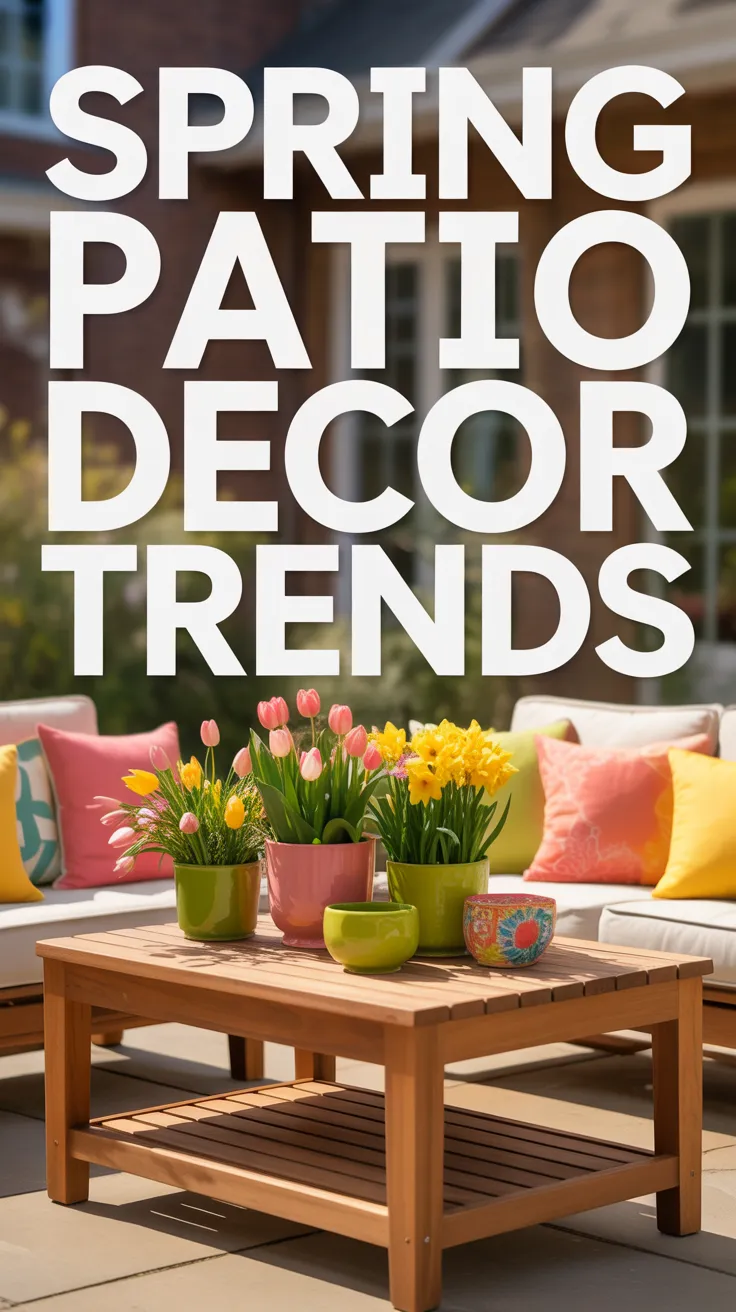
One technique that professional outdoor stylists use — and that almost nobody talks about — is the nested tray method. Place a larger flat tray as the base, then a smaller, raised tray or plate on top of it inside the arrangement. This creates visual height variation within the tray composition and adds a sense of depth that flat arrangements simply can’t achieve. It also makes the overall arrangement more wind-resistant, since objects are nested rather than simply sitting on a flat surface.
Ambient Lighting: How to Create the “Golden Hour Never Ends” Effect
Lighting transforms a space more than any other single variable. This is true indoors, and it’s especially true outdoors where you’re competing with the darkness of the surrounding environment and the visual chaos of trees, fences, and neighboring properties.
The magic of outdoor coffee table lighting isn’t in brightness — it’s in warmth and proximity. A light source placed at table height or slightly below the eyeline creates intimacy that overhead or standing lights simply can’t replicate. It draws people’s attention downward, creating a psychological sense of enclosure and safety — the same reason humans have gathered around campfires for approximately 400,000 years.
Solar vs. Battery vs. Wired: What Actually Works on a Patio Table
Wired lanterns or candles are gorgeous, but the logistics of running power to a coffee table make them impractical for most setups. Unless you have an outdoor outlet within arm’s reach and are committed to cord management, skip it.
Traditional candles work, but require constant vigilance — wind is a problem, wax is a mess, and leaving them unattended is a legitimate fire risk. They work for supervised dinner parties. Not for everyday ambiance.
Battery-operated LED lanterns are a solid middle-ground option. No wiring, no fire risk, and modern LED “flame” technology has gotten genuinely convincing. The downside: you’re constantly replacing batteries (or recharging them, depending on the model).
Solar lanterns are the sweet spot for outdoor coffee tables. The better-quality ones collect enough charge from indirect sunlight to run for 6–8 hours after dark, have built-in dusk-to-dawn sensors that turn them on automatically, and the newest generation uses warm (2700K–3000K) LED light that reads as candlelight, not hospital fluorescence.
The critical spec to check: IP rating. Look for IP65 or higher, which certifies protection against both dust and direct water jets. Many “waterproof” lanterns on Amazon have no IP certification at all — they’re splash-resistant at best, and they’ll fail in the first real rainstorm.
Sizing and Placement for Maximum Impact
One lantern is usually not enough. Two lanterns of the same style (or one lantern and one hurricane candle holder) create visual symmetry and double the light output without the setup looking crowded. Place them at the back of the tray composition with shorter objects in front — this naturally creates the layered, front-to-back depth that makes patio styling photographs so well.
Set the mood tonight. Search “outdoor solar lanterns waterproof decorative” on Amazon. Look for sets of two in warm bronze, black, or natural rattan finishes — they’re the most versatile across different patio aesthetics.
Greenery: The Living (or Brilliantly Faking-It) Layer
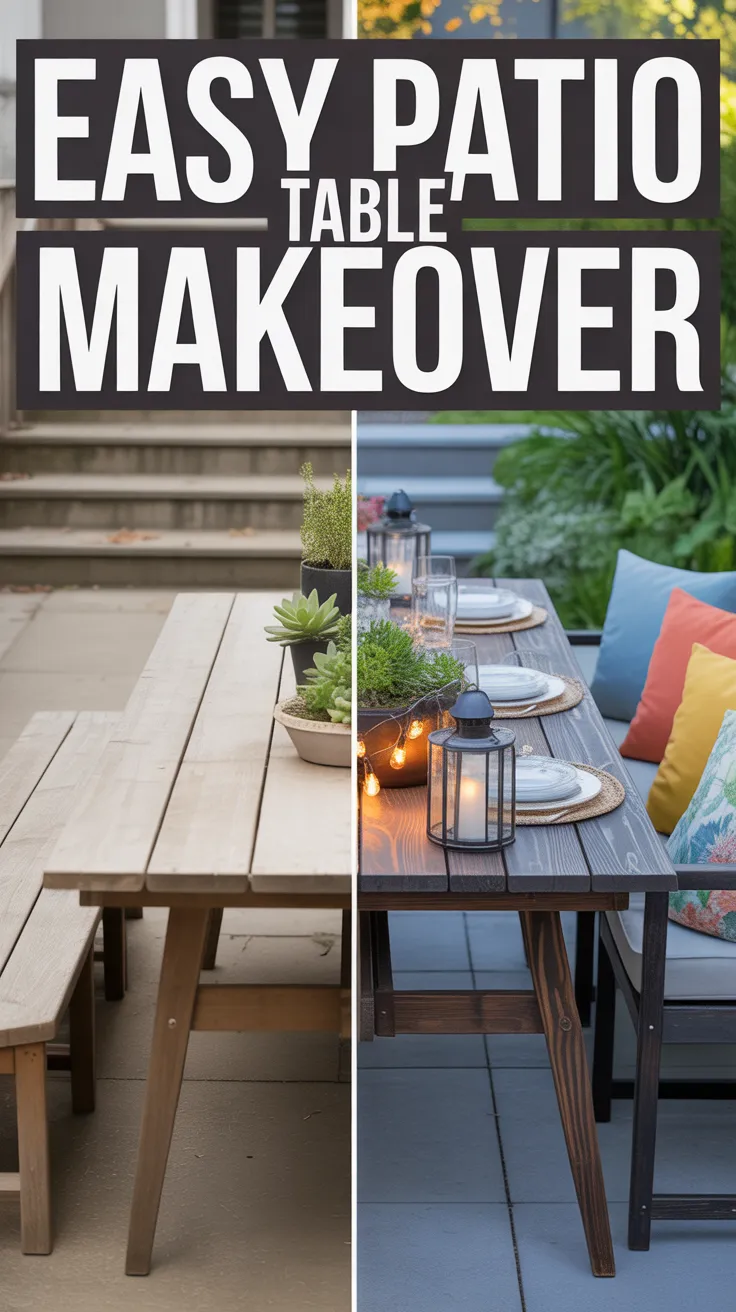
There’s an argument to be made for real outdoor plants on a coffee table. Dwarf succulents, small rosemary topiaries, trailing pothos in a cachepot — with the right care, they’re genuinely beautiful.
There’s a stronger argument for not doing that.
Here’s the honest calculus: outdoor coffee table plants are in one of the most hostile microclimates in your entire garden. Full sun exposure in summer, potential frost exposure in winter, low soil volume in small pots that dries out fast, and wind that accelerates moisture loss. The average person waters their patio table plant inconsistently, watches it wilt in August, and replaces it twice per season.
The UV-resistant faux plant industry has gotten remarkably good. The gap in visual quality between a $15 plastic plant from a dollar store and a $45–$65 UV-stabilized faux plant from a quality manufacturer is enormous. The latter uses PE (polyethylene) materials treated with UV inhibitors that prevent the yellowing and bleaching that make cheap faux plants look so obviously fake after one summer.
What “UV-Resistant” Actually Means (And Why It Matters)
Standard plastic degrades when exposed to ultraviolet radiation. The polymer chains break down, causing color fading, brittleness, and that chalky white oxidation you see on old plastic outdoor furniture. UV-stabilized plants have additives in the material itself — not just a coating — that absorb UV energy before it can damage the polymer chains. A quality UV-resistant faux plant can maintain its color and texture for 3–5 years of full outdoor exposure.
That’s 3–5 years of zero watering, zero wilting, zero replanting. The math on time and replacement costs is not subtle.
For an outdoor coffee table, the most versatile options are: compact boxwood spheres, trailing eucalyptus in small terracotta-style pots, and small lavender topiaries. All three work across multiple aesthetic directions — modern, coastal, Mediterranean, bohemian — and all three are well-represented in the UV-resistant faux category.
The Potting Matters As Much As the Plant
The container you put your faux plant in is actually doing more visual work than the plant itself. A UV-resistant faux boxwood ball in a plain plastic nursery pot looks cheap. The same plant in a textured concrete planter, a woven seagrass pot cover, or a matte terracotta-colored ceramic reads as entirely intentional. Elevate the container and the plant follows.
Skip the wilting. Keep the beauty. Search “UV resistant faux outdoor plants small” on Amazon. Look for products that specifically state “for outdoor use” or “UV stabilized” — not just “realistic” or “lifelike,” which say nothing about sun resistance.
Functional Decor: The Case for Taking Coasters Seriously
A coaster is an object most people think about as a practicality — you put it under a drink so the glass doesn’t leave a ring. Outdoors, it’s actually doing much more work than that.
On a patio coffee table, a quality coaster set is one of the few elements that signals hospitality. It tells guests that you thought about their comfort before they arrived. It communicates intentionality. And from a purely visual standpoint, a well-designed coaster set adds an additional layer of texture and material interest to the table surface that a blank expanse of wood or polywood simply can’t provide.
Why Outdoor Coasters Are Fundamentally Different From Indoor Ones
Standard cork or felt coasters disintegrate outdoors. Even wood coasters, without proper sealing, absorb moisture, swell, and eventually crack. Fabric-backed options grow mildew. The materials that actually thrive in outdoor conditions are:
Stone (slate, travertine, marble) — Naturally water-resistant, heavy enough to stay put in wind, and develops a beautiful weathered patina over time. The weight is the feature, not a bug — stone coasters don’t blow off tables.
Silicone — Weatherproof, non-slip, and available in designs that don’t read as utilitarian. Modern silicone coasters have moved well past the plain round disc — there are woven-look silicone options that visually mimic rattan, and geometric designs that work in contemporary outdoor settings.
Powder-coated metal with cork inserts — Extremely durable outer shell with a replaceable functional insert. Often the most visually sophisticated option, especially in matte black or antique brass finishes.
The one specification that matters above all others outdoors: non-slip base. A coaster that slides and stacks in even a light breeze is useless. Look for rubberized feet or bases, or in the case of stone coasters, natural grip texture on the underside.
Protect the surface. Elevate the look. Search “windproof outdoor coasters for patio table” on Amazon. Weighted stone or heavy silicone sets in natural tones — slate gray, sandstone, off-white — are the most versatile.
Comparison: Styling the Outdoor Coffee Table Right vs. Wrong
| Element | Common Mistake | The Right Approach |
|---|---|---|
| Tray | Using an indoor tray or skipping it entirely | Large, water-resistant outdoor tray (HDPE weave or sealed rattan) |
| Lighting | Relying on overhead string lights only | Solar lantern at table level, IP65+ rated, warm white (2700K) |
| Greenery | Real plants that wilt in summer heat | UV-stabilized faux plants rated for outdoor exposure |
| Coasters | Cork or felt coasters that mold or disintegrate | Stone, silicone, or powder-coated metal with non-slip bases |
| Composition | Objects scattered directly on the table | Layered arrangement: tray anchor → back-to-front height variation |
| Color palette | Matching everything too precisely | Two neutrals + one warm metal accent (brass, bronze, copper) |
| Maintenance plan | Bringing everything inside every season | Choosing genuinely weatherproof pieces that can stay out year-round |
Common Pitfalls & Fixes: What the Pinterest Photos Don’t Show You
The patio styling images that get saved thousands of times look effortless. They are not. Here are the problems most people run into — and how to sidestep them.
Pitfall #1: Buying Decor Designed for Covered Patios in a Fully Exposed Setting
“Water-resistant” and “weatherproof” are not the same thing. Water-resistant means it can handle light rain. Weatherproof means it can handle full outdoor exposure — direct sun, standing water, freezing temperatures. If your patio is uncovered, you need weatherproof, full stop.
Fix: Check for specific IP ratings on lighting. Verify that trays and planters are labeled “for outdoor use” rather than just “suitable for patios” (which often means covered only).
Pitfall #2: Ignoring Wind Load
Every object you put on an outdoor coffee table is a potential projectile. Lightweight lanterns, shallow plastic pots, and thin coasters will blow off the table in any meaningful wind event.
Fix: Choose objects with weight and low centers of gravity. Stone coasters, weighted lanterns, and full (soil-filled) planters have wind resistance built in. The tray itself should be heavy enough to resist tipping — look for solid wood, metal, or high-density woven options.
Pitfall #3: All Texture, No Contrast
A common beginner mistake: picking objects that are all the same material family because they “match.” All-rattan, all-wood, or all-wicker compositions look flat and one-dimensional.
Fix: Use the 2-1 rule. Two natural/organic textures (woven tray + faux greenery) against one hard/refined material (stone coasters or a metal lantern). This contrast is what creates visual interest.
Pitfall #4: Neglecting Vertical Variation
Everything sitting at the same height reads as clutter regardless of how beautiful the individual pieces are.
Fix: Intentionally vary heights within the tray composition. Tall lanterns at the back. Potted plant in the middle. Coasters flat in front. The eye should travel upward from the front of the tray to the back — that’s the directional flow that makes a composition look styled rather than assembled.
Pitfall #5: Forgetting the Season
A beautifully styled patio table in July can look neglected by October if you haven’t planned for seasonal shifts.
Fix: Swap out one element per season. Keep the tray, coasters, and faux plant year-round. Swap the lantern color or candle scent for autumn (warm amber tones) versus summer (cool white or natural rattan). This micro-refresh makes the space feel seasonal without requiring a full overhaul.
Final Verdict: The Patio You’ve Been Imagining Is Five Products Away
The outdoor coffee table decor system laid out in this guide isn’t complicated. It’s five elements, each with a specific job:
- A weatherproof outdoor coffee table — the canvas
- A water-resistant woven tray — the anchor
- A solar lantern, IP65+ — the atmosphere
- A UV-resistant faux plant — the life
- A weighted outdoor coaster set — the hospitality
None of these elements are expensive in isolation. But layered together, they produce the visual effect of a space that was designed — not just furnished. They make your patio feel like the place you want to be rather than just the place where the outdoor furniture lives.
The resort-terrace patio isn’t a fantasy reserved for people with landscapers and interior designers. It’s a composition problem, and now you know how to solve it.
Shop these outdoor essentials to build your perfect patio setup today:
- 🔍 Search “weather resistant polywood outdoor coffee table” — your foundation
- 🔍 Search “large outdoor woven serving tray water resistant” — your anchor
- 🔍 Search “outdoor solar lanterns waterproof decorative” — your atmosphere
- 🔍 Search “UV resistant faux outdoor plants small” — your greenery
- 🔍 Search “windproof outdoor coasters for patio table” — your finish
Every one of these is available on Amazon with Prime delivery. You could have a completely transformed patio setup by this weekend.
That cold drink isn’t going to enjoy itself.
Tags: outdoor coffee table decor, modern patio coffee table, outdoor decorating ideas, patio table styling tips, weather resistant outdoor decor, coffee table ideas, luxury outdoor furniture