The Best Fluffy Pancakes recipe you will fall in love with. Full of tips and tricks to help you make the best pancakes.

Teak vs. Metal: Choosing the Best Outdoor Coffee Table for a Lifetime of Style

The Decision That Defines Your Outdoor Space for the Next 30 Years
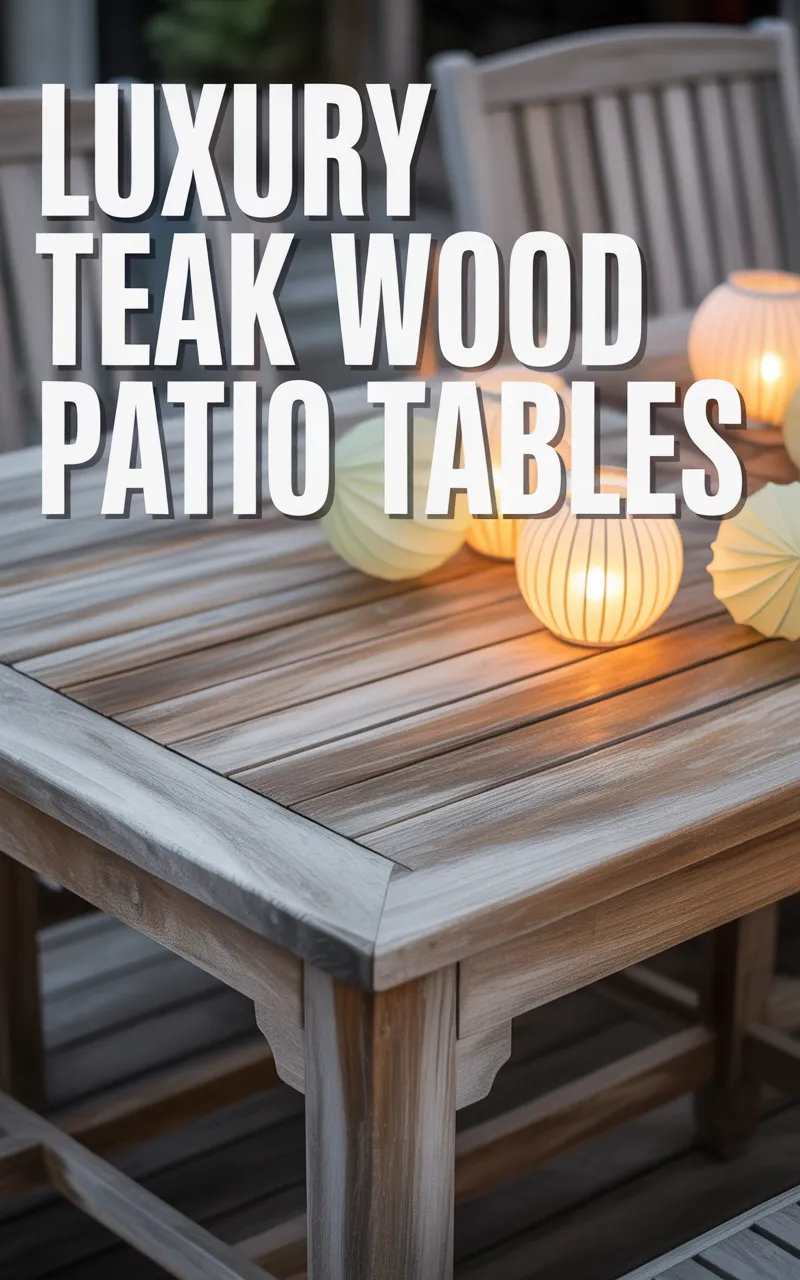
The furniture you place indoors is replaceable. Sofas are reupholstered, dining tables are swapped as aesthetics evolve, and bedroom sets are updated with each decade. Outdoor furniture — particularly the anchor piece at the center of your patio — operates on a different time horizon entirely.
A well-chosen outdoor coffee table is not a purchase you revisit in five years. It is a structural decision about your home’s exterior identity: the material, the silhouette, the way it ages and responds to the specific climate of where you live. Get it right, and it becomes the kind of piece that survives a full renovation of everything around it, that looks better at fifteen years than it did at fifteen months, and that your children will argue over inheriting.
Get it wrong, and it becomes the expensive lesson about outdoor material science that you mention when advising friends.
Two materials — and only two — rise to that standard of permanence in the outdoor coffee table category. Grade-A teak and powder-coated aluminum or galvanized steel. Every other material category — concrete, polywood, low-grade hardwood, painted pine, resin wicker — either requires substantive maintenance to survive a decade, is too fragile for true all-weather exposure, or simply doesn’t age gracefully enough to qualify as a long-term investment.
This guide treats the decision between teak and metal with the analytical seriousness it deserves. Because at the price points these materials command — and at the decades-long commitment they represent — choosing between them is not a matter of which looks nicer in the showroom. It is a matter of climate, lifestyle, aesthetic trajectory, and what kind of maintenance relationship you are willing to sustain over the life of the piece.
See the investment in person. Search “solid grade-A teak outdoor coffee table” on Amazon for the heritage option, and “heavy duty matte black aluminum outdoor coffee table” for the modern indestructible alternative. Both are represented in this guide’s analysis.
The Science of Teak: Why This Is Not Simply “Wood”

There is a tendency in outdoor furniture marketing to treat teak as an aesthetic choice — the warm, golden-toned hardwood with a satisfying heft and a visual warmth that no synthetic material has convincingly replicated. That framing undersells what teak actually is at a material science level.
Teak (Tectona grandis) is one of the few timber species in the world that has evolved a complete internal weatherproofing system. This is not a treatment applied during manufacturing. It is a biological property of the tree itself.
The Internal Chemistry: Silica, Natural Oil, and Rubber
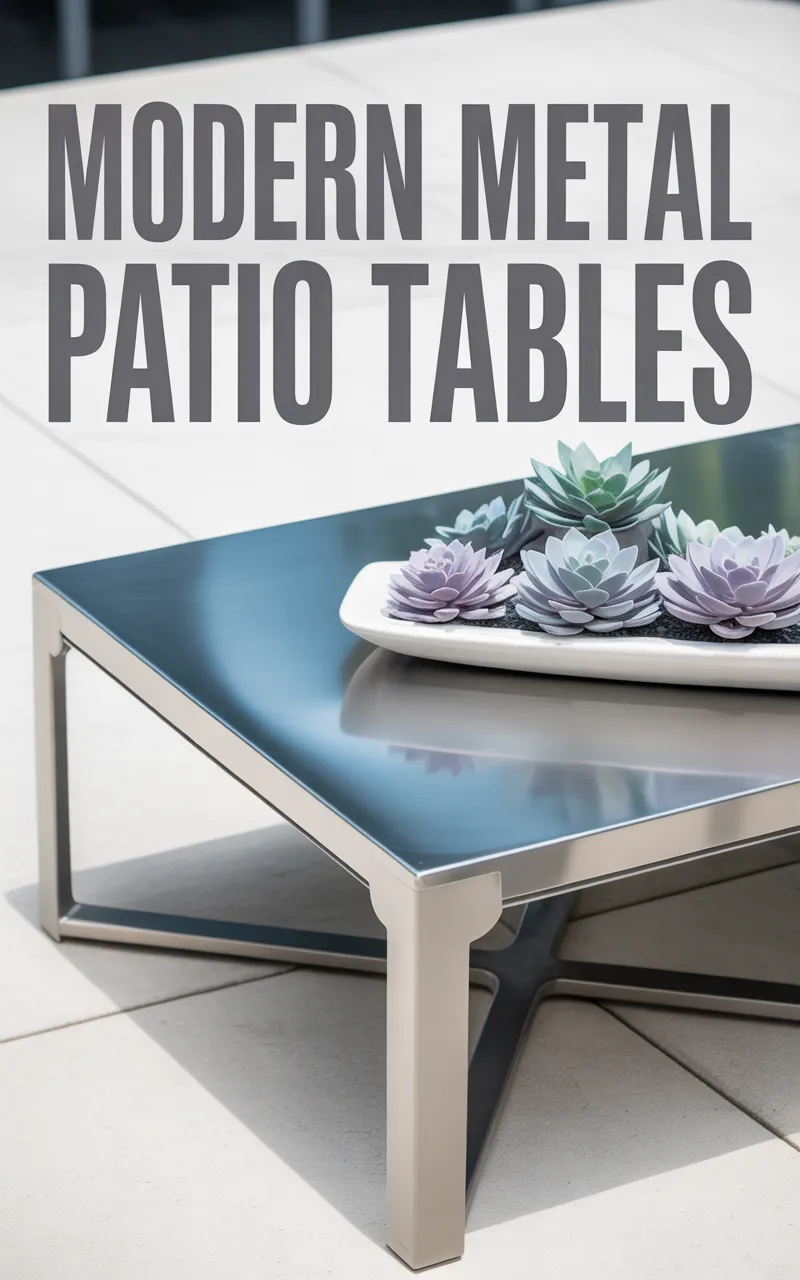
Teak wood contains three components that, in combination, make it functionally weatherproof without any human intervention.
Natural silica deposits form microscopic crystalline structures within the wood grain. These crystals repel water at the surface level — the same mechanism behind lotus leaves and high-grade synthetic waterproofing membranes — causing water to bead and roll rather than penetrate the surface fibers. This is why fresh teak feels almost waxy to the touch: the silica creates a natural hydrophobic surface.
High natural oil content (approximately 5–6% oil by volume in Grade-A teak) fills the cellular spaces within the wood, displacing the moisture that would otherwise cause swelling, cracking, and the rot cycle that destroys most exterior wood applications within a decade. The oil is produced by the living tree as protection against tropical rainfall conditions — teak’s native range in Myanmar, Thailand, and India includes monsoon climates with 80+ inch annual rainfall.
Natural rubber compounds give the wood a degree of dimensional flexibility that rigid hardwoods lack. Where a species like oak or mahogany will crack and check as it expands and contracts with temperature swings, teak’s rubber content allows it to flex microscopically without fracturing. This is the property that makes teak the material of choice for boat decking — it handles the constant expansion-contraction of marine environments without structural failure.
The practical result of this chemistry: a properly sourced Grade-A teak coffee table requires no waterproofing treatment to survive outdoor exposure. It arrives weatherproof. Whether you oil it, seal it, or do nothing to it, it will not rot, warp, crack, or structurally fail for decades.
Grade Classification: Why “A” Is Non-Negotiable
Teak quality is graded A, B, or C based on where the cut originates within the tree. Grade-A teak comes from the heartwood — the dense, oil-saturated center of a mature teak tree. Grade-B comes from the intermediate wood, where oil content varies. Grade-C is sapwood — the outer rings where oil concentration is lowest and weathering resistance is most compromised.
The price difference between Grade-A and Grade-C teak is significant. The performance difference outdoors over ten years is more significant. Grade-C teak in a wet climate will gray unevenly, develop surface cracking, and begin showing signs of degradation within three to five years. Grade-A teak in the same climate will gray uniformly, maintain structural integrity, and look architecturally distinguished rather than weathered.
When evaluating any teak outdoor furniture purchase, confirm Grade-A (sometimes labeled “FAS” — Firsts and Seconds, which is the North American lumber equivalent) in the product specification. If the grade is not specified, assume it is not Grade-A.
Protect and preserve the investment. Search “premium teak care kit cleaner and teak oil” on Amazon. A seasonal cleaning and oiling regimen (once per year, two hours of effort) is all that separates maintenance-free weathering from genuinely optimized longevity. The kit costs less than 2% of what the table is worth.
The Aesthetic Trajectory: Honey to Silver
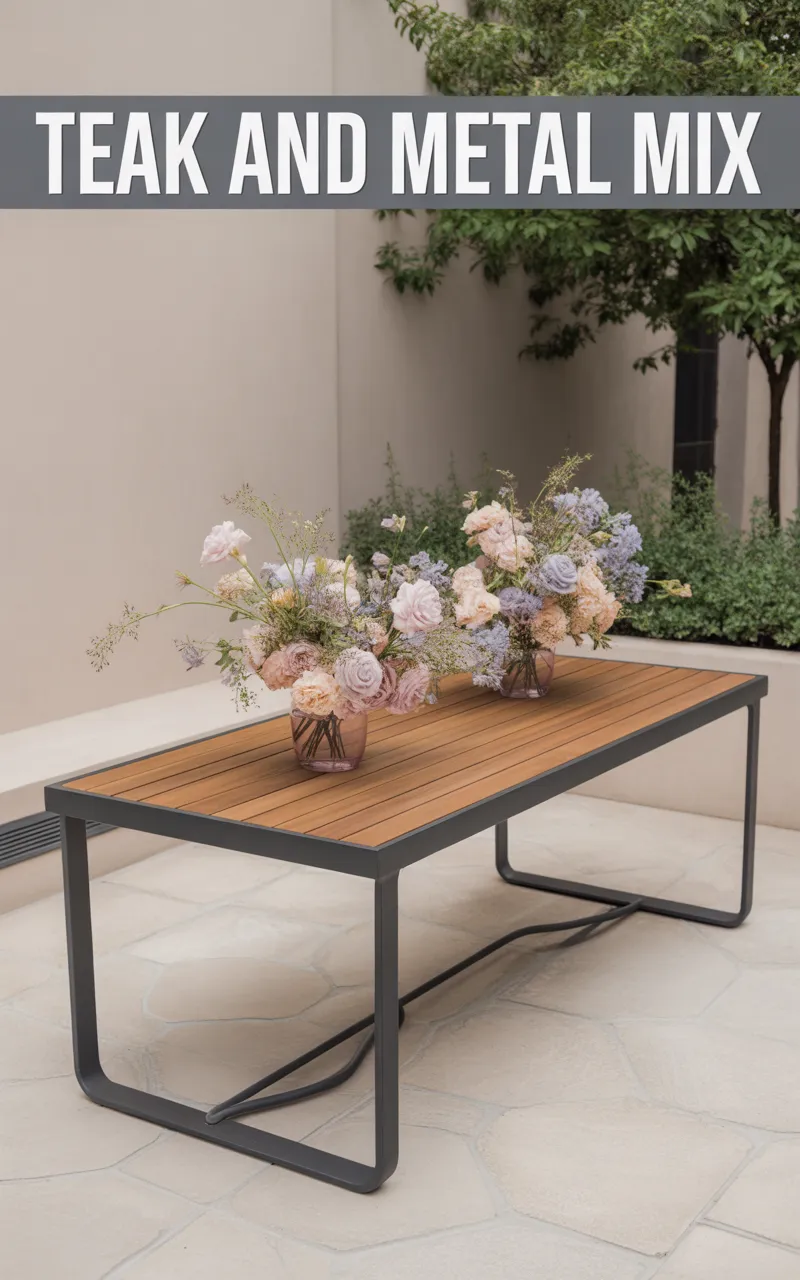
This is the aspect of teak ownership that most people underestimate until they experience it — and then consider the defining characteristic of the material.
New teak furniture presents in a warm honey-gold to medium brown tone, depending on specific cut and oil content. Over the course of approximately 12–18 months of unprotected outdoor exposure (faster in high-UV coastal climates, slower in Northern climates with limited direct sun), the surface undergoes a photochemical process called silvering. The UV radiation breaks down the outermost layer of tannins, gradually transitioning the surface color through amber, to taupe, to the characteristic warm silver-gray that defines aged teak.
This silver patina is not deterioration. It is a surface-level color change only — the structural wood beneath remains fully intact and fully oil-rich. Think of it as the teak equivalent of a cast-iron skillet’s seasoning: it looks different from new, it functions identically or better, and it communicates history rather than neglect.
The silver teak aesthetic has become a design signature in its own right — the material language of classic New England coastal homes, British garden architecture, and Scandinavian outdoor living. It ages into spaces rather than fighting them. After fifteen years, a well-maintained teak coffee table looks considered and architectural. Almost nothing else outdoor furniture is made of achieves that.
If you prefer to maintain the honey-gold tone: Annual application of teak oil, preceded by a teak cleaner to remove the gray surface layer, restores the warm color reliably. This is a personal aesthetic choice, not a structural maintenance requirement.
The Metal Advantage: The Case for Powder-Coated Aluminum
If teak is the choice made by those who value the relationship between a material and time, powder-coated aluminum is the choice made by those who value the complete absence of a maintenance relationship. These are not competing values in a hierarchy. They are genuinely different lifestyle orientations toward furniture ownership — and both are legitimate at the highest end of outdoor design.
The Material Science of Powder-Coated Aluminum
Aluminum as a base material for outdoor furniture brings three inherent advantages: it does not rust (aluminum oxidizes, but aluminum oxide is a stable, non-progressive surface layer — unlike iron’s rust, which penetrates and destroys), it is exceptionally lightweight relative to its structural strength, and it is dimensionally stable across extreme temperature ranges.
Powder coating transforms the aluminum surface from a structural material into a finished product. The electrostatic application and high-temperature curing process creates a finish that is, by any practical measure, permanent: it does not chip through normal use, it does not peel in UV exposure, it does not absorb moisture, and it does not require refinishing on any regular schedule.
The finish options available in quality powder-coated aluminum furniture span a design range wide enough to serve any aesthetic: matte black for contemporary and modern applications, warm sand or putty tones for transitional settings, hammered texture in graphite or bronze for industrial-luxe, and even baked enamel whites and creams for more delicate garden aesthetics.
Galvanized steel offers a higher raw weight (which translates to better wind resistance on exposed patios) but requires the same powder-coat protection to prevent rust. For purely functional comparison purposes, powder-coated aluminum is the superior outdoor choice: lighter to move, dimensionally more stable in temperature extremes, and natively corrosion-resistant without relying entirely on the coating.
The modern investment. Search “heavy duty matte black aluminum outdoor coffee table” on Amazon for the zero-maintenance, decade-proof alternative to wood. Clean lines, no warping, no silvering — exactly what it looked like on day one, indefinitely.
The Structural Argument: Wind Load and Permanence
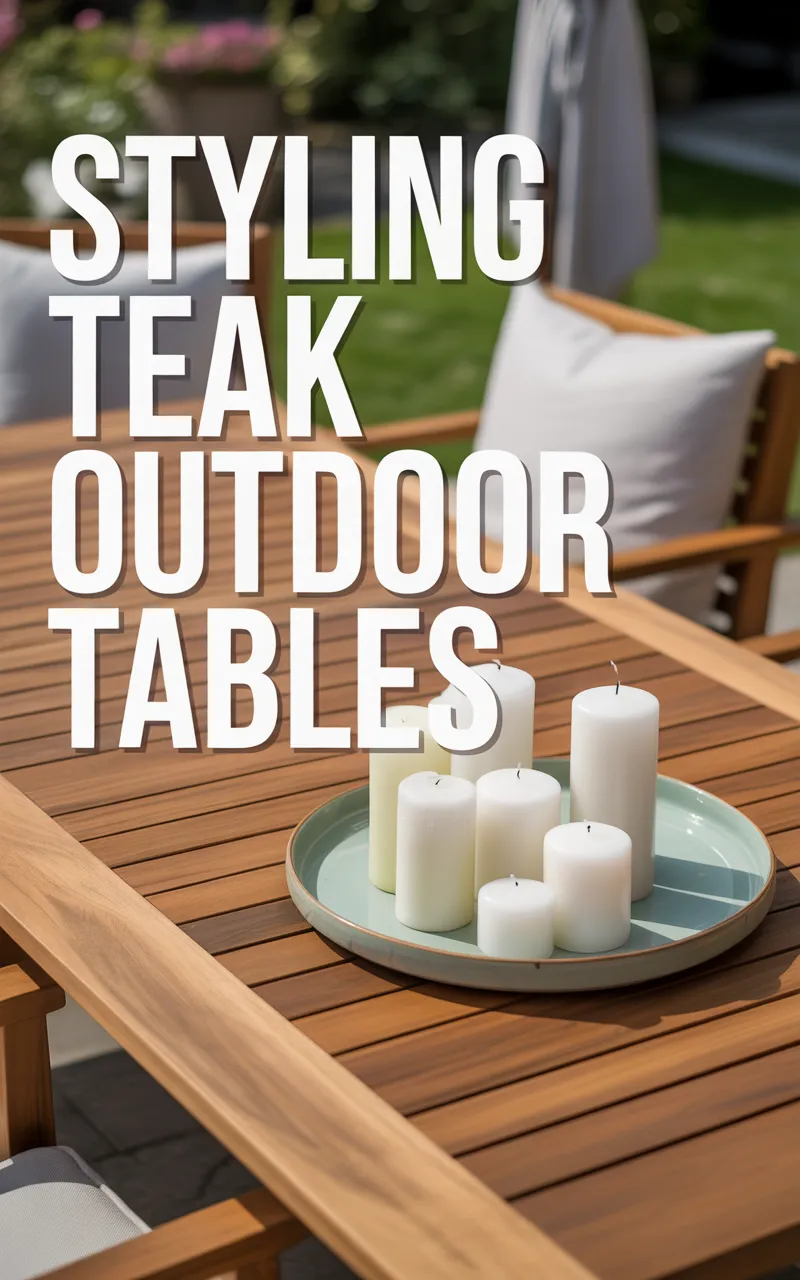
One of the underappreciated advantages of metal outdoor coffee tables over teak is wind load resistance. A solid aluminum table with a low center of gravity and appropriate mass simply does not blow over. In coastal climates, exposed rooftop patios, or any outdoor setup with meaningful wind exposure, this is a substantive safety and practicality consideration — not just an aesthetic one.
Quality aluminum outdoor tables should specify wall thickness in their manufacturing data (thicker is better — look for 1.5mm or greater in framing), welded construction rather than bolted (bolt joints loosen over repeated temperature expansion cycles), and non-marking, rubberized foot caps that protect both the table base and the flooring surface beneath it.
Climate Considerations: Matching Material to Where You Actually Live
This is the analytical section that most comparative guides skip — and it is frequently the variable that determines which material is objectively correct for a given homeowner, regardless of aesthetic preference.
Teak Performance by Climate Zone
Tropical and subtropical (Florida, Gulf Coast, Hawaii): Teak is the native material for these conditions. High humidity, high UV, warm temperatures year-round — teak’s natural oil content was evolved for exactly this climate. It performs without any modification to its natural weathering schedule. Silvering occurs faster in high-UV conditions; annual oiling can slow this if desired.
Mediterranean and coastal (California coast, Pacific Northwest, Southeast England): Excellent teak territory. Moderate temperatures, significant moisture, and meaningful UV exposure give teak the ideal weathering conditions for a beautiful, even silver patina. Minimal maintenance required.
Continental with hard winters (Midwest, Northeast US, Northern Europe): Teak is viable, but freeze-thaw cycles do work on even the most oil-rich wood over time. Best practice is to store teak furniture during extended hard freezes (multiple weeks below 20°F) or invest in a high-quality furniture cover. The teak itself won’t fail, but repeated hard freeze-thaw cycles will eventually surface-check the outer layer, requiring more frequent cleaning.
Desert and extreme heat (Arizona, Nevada, inland California): Teak can perform well but loses oil faster in extreme dry heat than it does in humid climates. Annual oiling is closer to mandatory than optional in these conditions, and should occur in both spring and fall.
Metal Performance by Climate Zone
Extreme heat climates: This is the primary functional limitation of metal outdoor furniture. A matte black aluminum coffee table in direct Arizona sun will reach surface temperatures that make casual contact uncomfortable. This is not a structural concern — powder-coated aluminum handles heat without degradation — but it is a user experience consideration. A light-colored powder coat (sand, cream, putty) reduces surface temperature significantly. A table cover during peak sun hours is the most practical management strategy.
Coastal salt-air climates: This is where premium powder coating earns its specification. Salt air is significantly more corrosive than standard atmospheric moisture. Quality marine-grade powder coating (look for this specification in coastal climate use cases) is formulated with higher coating thickness and additional corrosion inhibitors. Standard powder coating will perform adequately; marine-grade will perform definitively.
Cold climates: Metal is the superior cold-weather performer, full stop. Freeze-thaw cycles have no meaningful effect on aluminum’s structural integrity or surface finish. A powder-coated aluminum table can be left outside through a Minnesota winter without any protective measures and remain completely unchanged in spring.
Protect both investments. Search “custom fit waterproof outdoor furniture table cover” on Amazon. A quality fitted cover — not a generic tarp, a fitted canvas or polyester cover with ventilation grommets — extends the finish life of both materials by eliminating the UV and freeze-thaw cycles responsible for surface degradation. The cost is measured in tens of dollars; the benefit is measured in years.
The Styling Strategy: Playing Each Material to Its Strengths
A teak table and an aluminum table are not styled the same way. They want different companions, different textures, different color palettes — and understanding what each material responds to is what separates a styled patio from a furnished one.
Styling Teak: The Art of Texture Contrast
Teak’s visual strength is its warmth and organic character. The grain, the honey-to-silver color range, the material depth that no synthetic achieves — these qualities are most powerful when set against materials with contrasting characteristics.
Heavy metal trays in matte black or aged bronze are the natural counterpart to a teak surface. The industrial weight of matte metal against organic wood grain creates the tension that high-end design editors call “tension” — the juxtaposition of hard and soft, made and grown, permanent and changing. A large rectangular black metal tray on a teak coffee table is among the most sophisticated outdoor styling combinations available at any price point.
Stone elements — marble-look coasters, concrete candle holders, slate serving boards — continue the material contrast story and add the “collected over time” quality that distinguishes styled spaces from decorated ones.
Avoid matching wood tones. Rattan trays, bamboo accents, and wicker accessories placed on a teak table create material sameness — too much warmth, too little contrast, a composition that reads as monotone rather than layered.
Styling Metal: The Softening Strategy
A powder-coated metal coffee table’s aesthetic challenge is the inverse of teak’s. Where teak reads as warm and needs contrast to keep it from feeling heavy, metal reads as cool and precise — which, without intervention, can shade into clinical and unwelcoming.
The corrective is texture and warmth introduced through accessories.
Soft pastel outdoor table runners are the most efficient single intervention: they introduce textile warmth, break the visual reflectivity of the metal surface, and add a layered, lived-in quality that metal alone cannot produce. Look specifically for outdoor-rated fabric (solution-dyed acrylic or polyester) — standard cotton runners will mildew in outdoor conditions within a single season.
Warm-toned rattan or wicker trays placed on metal surfaces do what metal trays on teak do in reverse: they introduce the organic material story that softens the industrial aesthetic without undermining it. The contrast principle works in both directions.
Faux greenery in concrete or terracotta-style pots adds the organic, living element that metal can’t supply on its own. On a matte black aluminum table, a small potted faux succulent in a rough concrete cachepot reads as genuinely curated rather than decoratively added.
Soften the metal. Search “soft pastel outdoor table runner solution dyed acrylic” on Amazon. A runner in dusty rose, sage green, or warm ivory transforms a metal table’s visual character from austere to inviting — in one piece, under $30.
The 30-Year Ownership Comparison: An Honest Accounting
| Variable | Grade-A Teak | Powder-Coated Aluminum |
|---|---|---|
| Initial investment | Higher | Moderate to high |
| Structural lifespan | 50–75 years (with basic care) | 25–40 years |
| Annual maintenance | Optional oiling (1–2 hours, 1x year) | None |
| Weather resistance | Excellent (native) | Excellent (engineered) |
| Cold climate performance | Good with cover | Excellent without cover |
| Extreme heat performance | Excellent | Good (surface temperature concern) |
| Aesthetic evolution | Honey → architectural silver | Unchanged from day one |
| Resale / estate value | Significant (Grade-A teak appreciates) | Moderate |
| Wind resistance (exposed patios) | Good (heavy material) | Excellent (heavier gauge options) |
| Styling versatility | High (warm, natural anchor) | High (modern, precise anchor) |
| Sustainability profile | Excellent (FSC-certified sources) | Good (aluminum is highly recyclable) |
| Best aesthetic home | Traditional, coastal, garden, transitional | Contemporary, minimalist, industrial, Japandi |
Conclusion: The Discerning Choice Is a Personal One — Made With Complete Information
There is no objectively superior material between Grade-A teak and powder-coated aluminum. There is only the material that is correct for your climate, your aesthetic, your maintenance philosophy, and your timeline.
If you are drawn to the idea of a piece that changes with time — that develops a visual history, that reads differently at ten years than it did at one, and that carries the biological intelligence of a tree that evolved to survive monsoons — teak is your material. It is the choice of those who want their outdoor furniture to be a relationship, not an appliance.
If you are drawn to the idea of a piece that is identical in five years, ten years, and twenty — that requires nothing from you beyond occasional cleaning, that holds its line in a hurricane and its surface in a salt-air climate without asking for attention — powder-coated aluminum is your material. It is the choice of those who want their outdoor furniture to be definitively solved, not ongoing.
Both of these are entirely valid orientations. Both produce beautiful, permanent outdoor spaces that justify the investment they represent.
Make the choice that lasts a lifetime. Shop our top-rated teak and metal coffee tables to anchor your patio today:
- 🔍 “solid grade-A teak outdoor coffee table” — The living legacy material
- 🔍 “premium teak care kit cleaner and teak oil” — Protect the investment, annually
- 🔍 “heavy duty matte black aluminum outdoor coffee table” — The maintenance-free modern choice
- 🔍 “custom fit waterproof outdoor furniture table cover” — Essential protection for both materials
- 🔍 “soft pastel outdoor table runner solution dyed acrylic” — The styling corrective for metal’s austerity
One of these tables will outlast the furniture around it, the landscaping beside it, and quite possibly the house it decorates. The only question is which version of permanence suits you.
Tags: teak vs metal outdoor furniture, best outdoor coffee table material, luxury teak patio table, modern metal coffee table, durable patio furniture, weather resistant wood, grade a teak