The Best Fluffy Pancakes recipe you will fall in love with. Full of tips and tricks to help you make the best pancakes.

The 2026 Guide to Investing in High-Ticket Outdoor Furniture

By Timeless Manor | Luxury Outdoor Furniture · Terrace Design Ideas · High-End Patio Sets · Weather-Resistant Luxury · 2026 Outdoor Living Trends
There is a particular quality to a well-furnished terrace — one that has been considered, not assembled. This guide is for the woman who understands that distinction.
I. The New Architectural Frontier: Your Terrace as a Primary Living Suite
For decades, the terrace occupied an ambiguous position in American residential design — neither fully interior nor fully claimed as architecture. It was furnished, if at all, with pieces that seemed to acknowledge their own impermanence: sets purchased from garden centers in May, stacked and sheeted by October, replaced within three years when the frames rusted and the cushion foam compressed beyond recovery. Functional, but entirely without conviction.
That era is over.
In 2026, the manor terrace — whether it is a rear veranda attached to a Georgian colonial in Connecticut, a rooftop suite above a Chicago penthouse, or a landscaped patio extending from a California ranch house — is being treated with precisely the same architectural seriousness as a primary living room. The outdoor area has become a true extension of the home, now including outdoor seating as comfortable as indoor furniture, and decor with the same thoughtful coherence homeowners once reserved exclusively for interior rooms. Design houses are unveiling collections accordingly: today’s design houses are marrying elegance with innovation, combining refined aesthetics with advanced technologies that make outdoor furniture more durable and versatile than ever before.
The shift is being driven by two overlapping constituencies who approach it from different directions but arrive at the same conclusion.
The first is the woman who has spent three decades curating an interior that reflects her taste, her travels, and her sense of permanence. She has replaced nothing cheaply. She understands the provenance of a well-made object — how a Grade-A teak dining table develops a silver-grey patina of extraordinary beauty over twenty years of honest weathering, and how that patina is the material equivalent of a well-worn leather briefcase: evidence of quality, not deterioration. For her, the terrace is simply the next room to receive the same level of consideration it deserves. The language she speaks is heirloom, craftsmanship, legacy.
The second is the woman who manages her home with the same efficiency-minded intelligence she brings to every other significant investment. She is not uninterested in beauty — she insists on it — but she also understands lifecycle cost analysis. She knows that a $4,000 Grade-A teak sectional from a certified source, properly maintained, outlasts five $800 sets from a big-box retailer by decades. She calculates this. The language she speaks is performance, engineering, smart-investment.
This guide is written for both of them, because in the area of high-ticket outdoor furniture, their requirements converge completely.
The Investment Gap: What “Disposable” Actually Costs You
Before examining materials and design, it is worth establishing the economic case clearly, because it rarely gets made with the precision it deserves.
The average American household replaces its primary outdoor seating set approximately every 2.5 to 3 years. At a per-set expenditure of $600 to $1,200 — the market segment that represents the majority of big-box outdoor furniture sales — this translates to a ten-year spend of $2,400 to $4,800 on patio furniture that, at the end of that decade, leaves nothing behind. No accumulated character, no retained value, no furniture worth passing to a daughter outfitting her first home.
Compare that to a considered investment in heritage-grade materials — an FSC-certified Grade-A teak sectional paired with powder-coated aluminum dining chairs and Sunbrella-wrapped cushions in the $3,500 to $8,000 range. Premium materials, refined design, and timeless style add value; done right, outdoor upgrades don’t just hold value — they multiply it. Outdoor kitchens add 1.5 to 3.0 times their cost to resale value. The furniture itself, properly maintained, serves the household for fifteen to thirty years. High-quality teak can remain structurally sound for decades with minimal maintenance, making it a preferred material for sustainable garden furniture strategies among households focused on reducing waste and investing in timeless design.
The mathematics of quality outdoor furniture are, in the end, uncomplicated. The only question is whether you are buying furniture or investing in it.
II. The Material Hierarchy: Selecting for Longevity
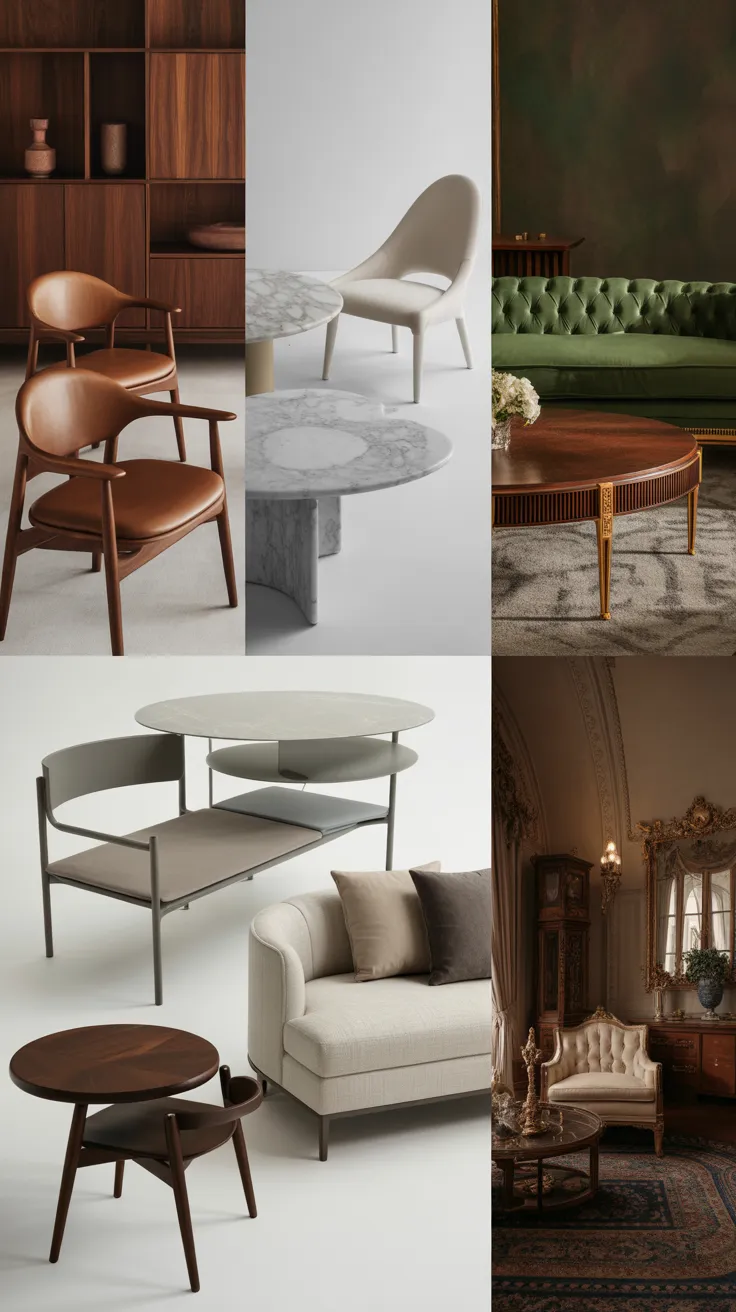
Not all outdoor materials age with the same grace. Some weather beautifully, developing depth and character with exposure. Others simply degrade — bleaching, rusting, warping, becoming eyesores that accelerate the replacement cycle. Understanding the hierarchy of outdoor materials is the foundational act of intelligent outdoor furniture investment.
Grade-A Teak: The Standard Against Which All Others Are Measured
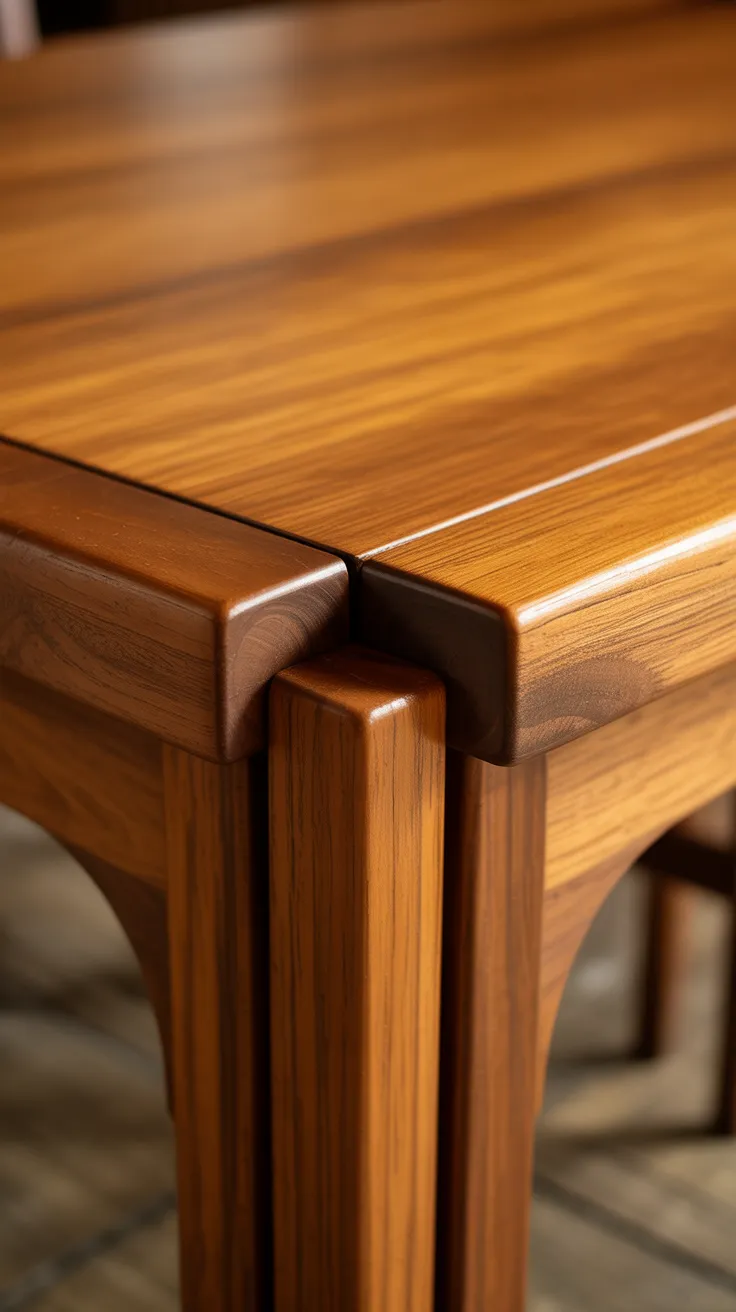
To speak of Grade-A teak in the context of luxury outdoor furniture is to speak of a material with a provenance that goes back centuries. Teak (Tectona grandis) was the preferred shipbuilding wood of colonial-era navies for the same reasons it dominates high-end outdoor furniture today: its extraordinary natural oil content, which repels water and resists insect damage without chemical treatment; its exceptional tensile strength; and its dimensionally stable cellular structure, which means it neither warps significantly in heat nor cracks in cold — the twin nemeses of lesser outdoor woods.
What separates Grade-A teak from the grades below it is specific: Grade-A teak must be cut from the center, or “heartwood,” of a fully mature teak tree — usually twenty years old or older. Unlike lesser teak grades, Grade-A is strong, long-lasting, and is the perfect hardwood for luxury outdoor furniture. Compared to lower grades, Grade-A teak has a beautiful grain and a consistent coloring that will patina to a silvery-grey over time — a worthy investment for furniture that could last over 100 years.
That final figure deserves emphasis: over 100 years of structural integrity, under normal outdoor conditions, with modest annual care. No other outdoor furniture material — not HDPE polymer, not powder-coated aluminum, not synthetic wicker — makes a credible claim to that lifespan. Teak is, in the most precise sense, heirloom-grade.
The 2026 teak moment is a notable one. Teak remains a cornerstone material in outdoor furniture for 2026, particularly in luxury residential projects. FSC-certified teak is valued not only for its visual warmth but for its natural resistance to moisture, insects, and deformation. Rather than treating teak as a premium upgrade, many design-forward homeowners now view it as a cost-stable material over a long lifecycle — its ability to maintain structural integrity while developing a natural patina aligns well with long-term asset planning.
The provenance of your teak matters beyond aesthetics. FSC (Forest Stewardship Council) and SVLK (Indonesian Timber Legality Verification) certification ensure that the wood was harvested from responsibly managed forests — a consideration that carries genuine weight for the environmentally conscious buyer who understands that sustainability and luxury are not in conflict.
The 2026 teak form: RH’s Outdoor 2026 collection explores the intersection of contemporary vision and archival revival, unveiling sculptural barrel-back forms anchored by tulip-shaped plinths, crafted from solid teak and detailed with handwoven all-weather rope — with an alternative blackened teak finish that further accentuates the natural grain. Drawing from classical Greek precedents and neoclassical English garden traditions, the silhouettes balance sweeping curves with architectural clarity. This is the direction the category is moving: teak not as rustic material but as architectural one.
Timeless Manor Standard: When sourcing Grade-A teak, verify FSC or SVLK certification before purchase. Uncertified teak of unknown origin is not only an ethical concern — it frequently fails to meet the grading standards it claims, and the structural difference becomes apparent within five years.
The Modern Alternative: Powder-Coated Aluminum and the “Modern Farmhouse” Terrace
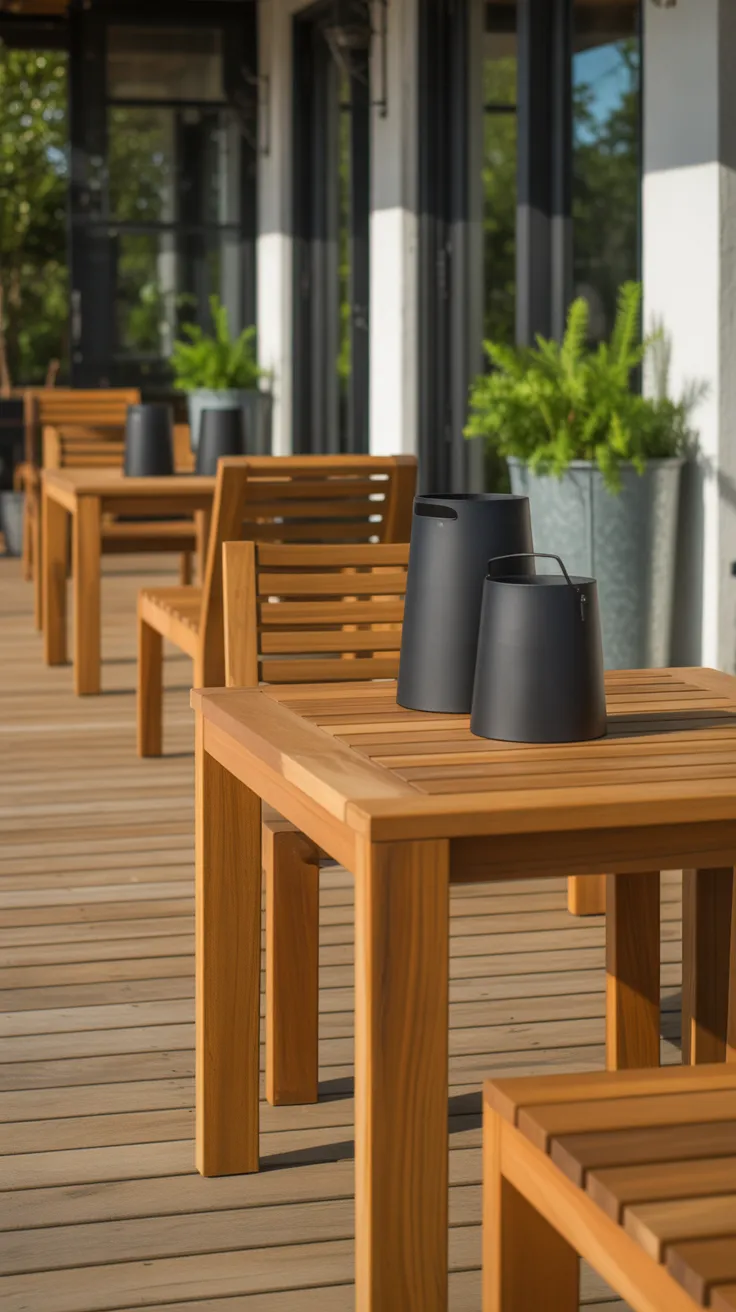
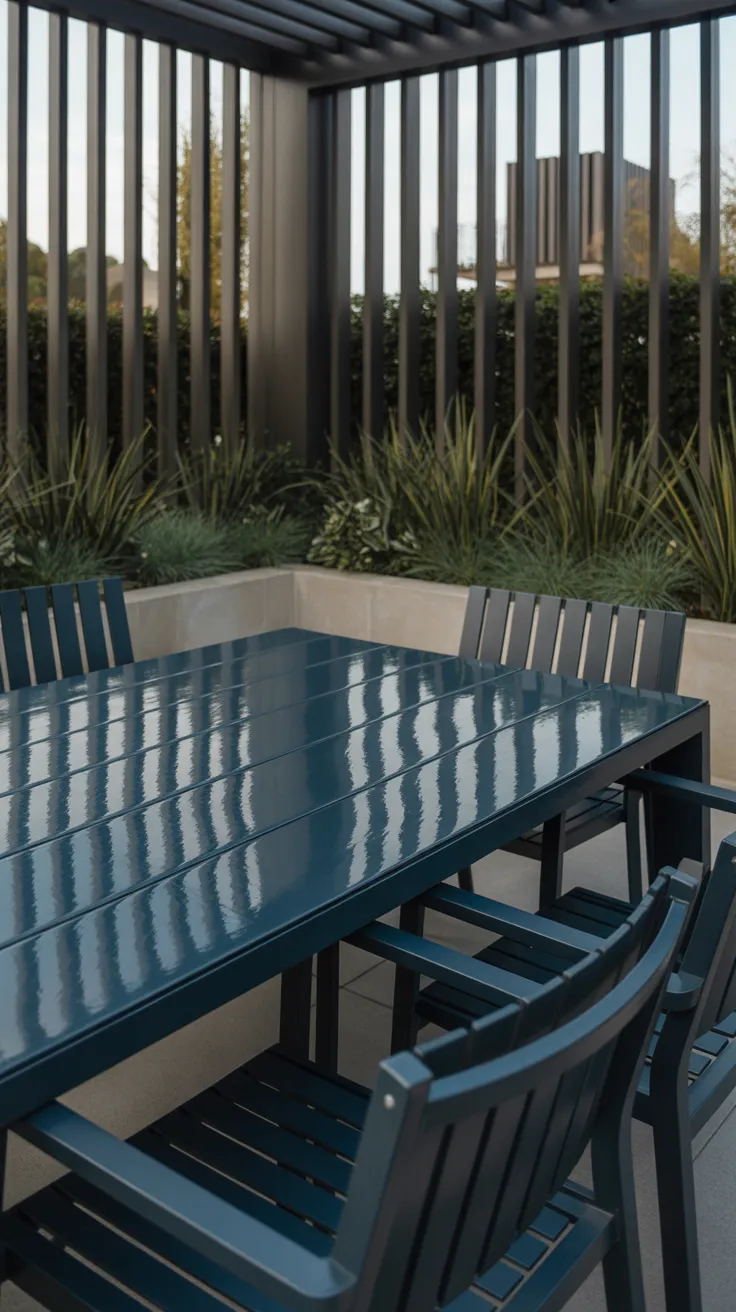
For the homeowner whose terrace aesthetic leans toward the crisp architectural vocabulary of modern farmhouse design — clean lines, matte black frames, the interplay of metal and natural texture — powder-coated aluminum represents the most intelligent investment in its category.
Aluminum continues to dominate modern high-end projects due to its lightweight structure and corrosion resistance. In 2026, aluminum frames are increasingly paired with soft materials such as rope, fabric, and cushions to balance visual comfort with structural efficiency. Powder-coated finishes further extend durability while allowing color consistency across the entire set. The powder-coating process — electrostatically applying a dry polymer coating that is then heat-cured — creates a surface finish that is not merely decorative but structurally protective: resistant to chipping, fading, and the electrochemical process of rust.
The material profile of quality powder-coated aluminum reads as follows: rust-proof, regardless of climate; UV-stable in its matte finish; dimensional stability across temperature extremes from Maine winters to Arizona summers; and a frame weight that permits year-round use without anchoring furniture in place permanently. For 2026, the top durable materials include marine-grade aluminum — known for its rust resistance — which ensures furniture can handle anything from a surprise rain shower to hot summer sun without structural compromise.
The design pairing that defines 2026’s modern farmhouse patio aesthetic is the teak-and-aluminum hybrid — the warmth and provenance of wood joinery at the seat and tabletop, the precision and permanence of powder-coated metal in the frame. Mixed-material furniture is becoming a standout trend, blending natural warmth with engineered performance to create striking, elegant pieces. Natural teak accents introduce warmth and texture to sleek aluminum frameworks, softening modern lines while adding depth and character. This is not a compromise between two aesthetics — it is a synthesis that achieves what neither material accomplishes alone.
Timeless Manor Standard: Always request powder-coating specifications before purchase. The standard for quality outdoor furniture is a minimum coating thickness of 60–80 microns. Anything below this threshold will show wear within three to five years of UV and moisture exposure.
The Quiet Third: Marine-Grade Hardware and the Details That Determine Longevity
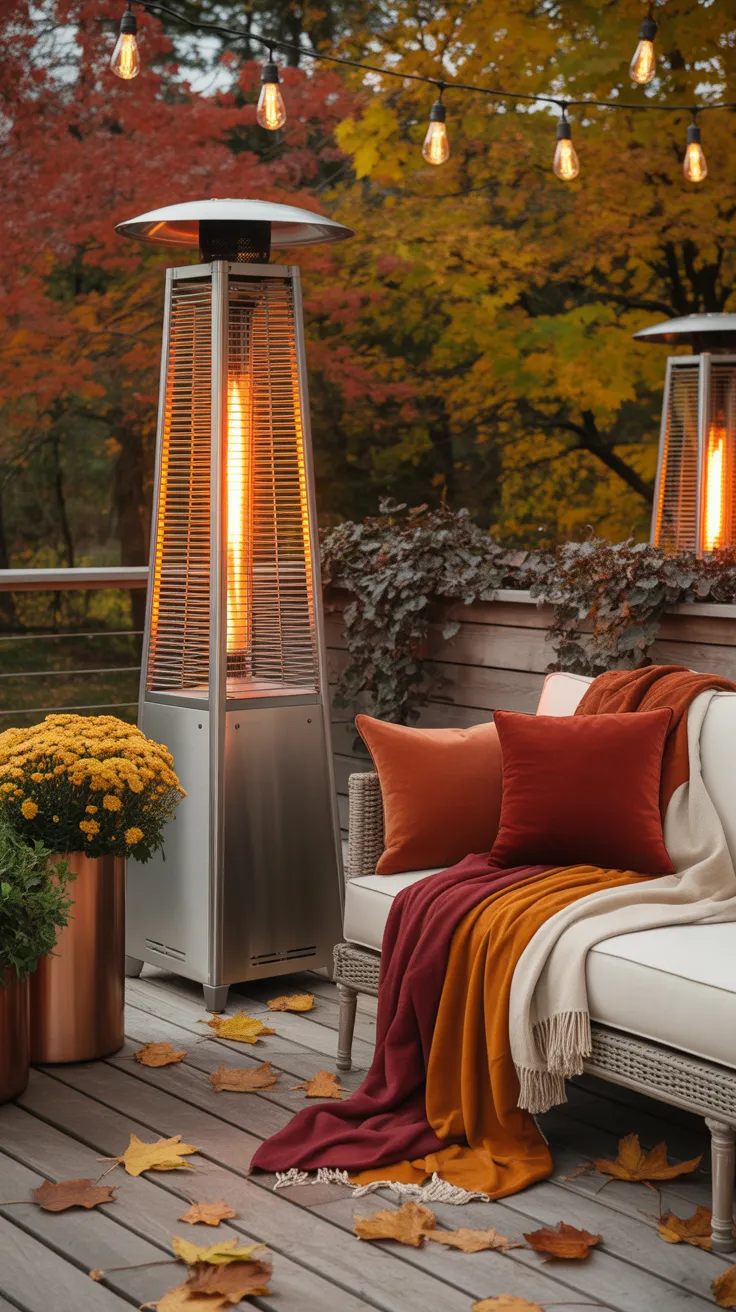
The weakest structural point of any outdoor furniture set is rarely the primary material — it is the hardware. The screws, bolts, and connection fittings that join frame sections, attach armrests, and secure tabletop surfaces are the components most vulnerable to accelerated corrosion, and they are the ones least frequently specified in product descriptions.
Marine-grade 316 stainless steel hardware — the standard used in genuine marine applications where saltwater immersion is routine — is the specification that separates heritage furniture from furniture that merely appears heritage-grade. Its chromium-nickel-molybdenum alloy composition resists chloride-induced corrosion at a fundamentally different level than the 304 stainless steel used in most interior applications.
If a furniture manufacturer cannot or will not specify its hardware grade, that silence is the answer.
III. The Comfort Engineering: Where Performance Meets Living
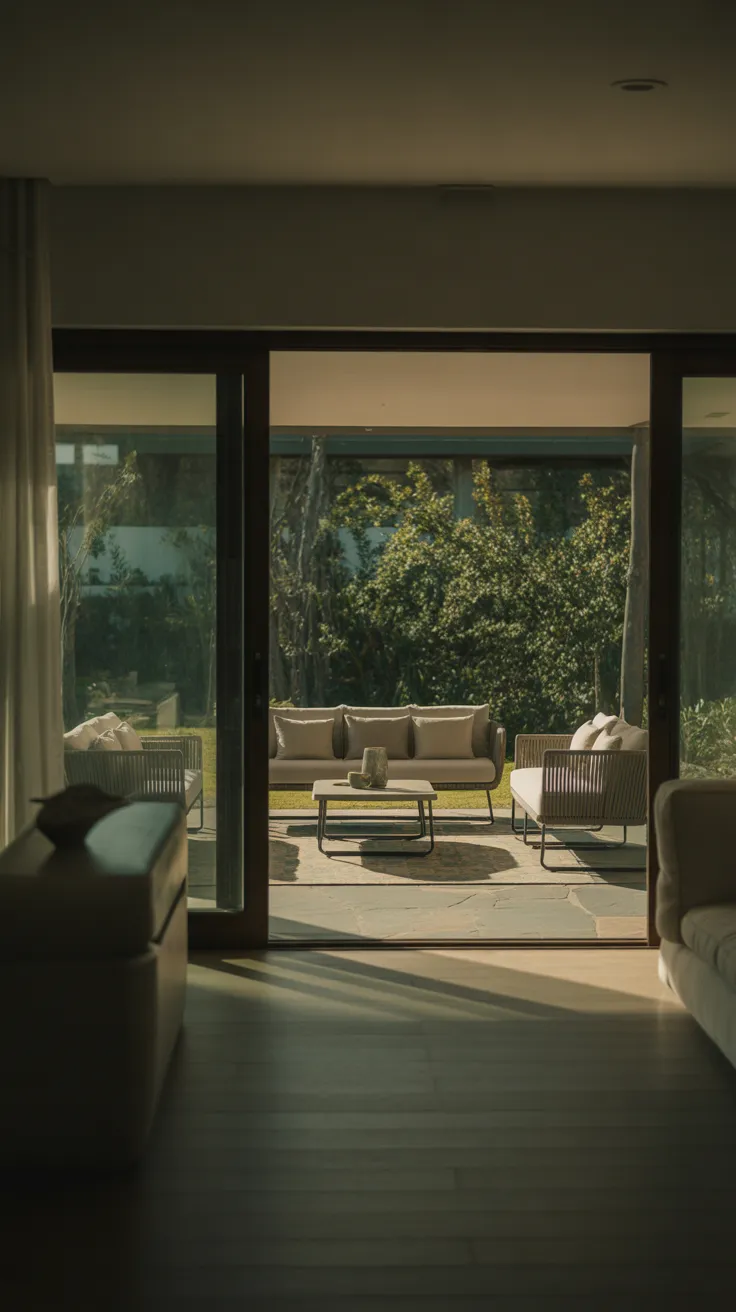
A terrace that is beautiful but uncomfortable is, ultimately, a terrace that goes unused. The most sophisticated outdoor furniture investments of 2026 recognize that comfort is not a secondary consideration to be addressed by cushion depth — it is an engineering specification as carefully considered as the frame material.
Fabric Evolution: The Solution-Dyed Acrylic Standard
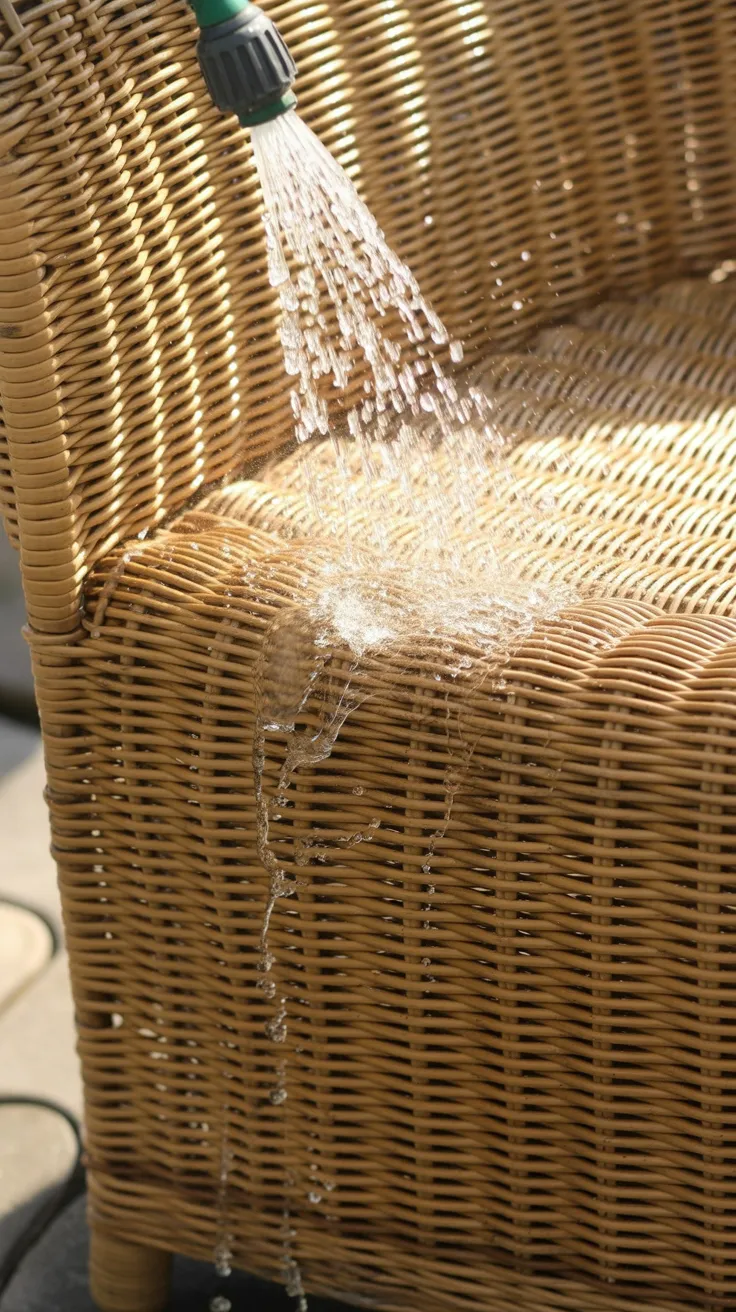
The category of outdoor performance fabrics has undergone a genuine technical revolution over the past decade, and understanding it separates the informed buyer from the one who replaces cushion sets every two years.
The distinction begins at the molecular level. Standard outdoor fabrics are piece-dyed: color is applied to the finished fabric after weaving, meaning it sits on the surface of the fiber. UV exposure, moisture, and abrasion remove that surface color over time, producing the characteristic ghost-fade of most patio cushions by their second summer. Solution-dyed acrylic — the process used by Sunbrella, the benchmark in performance outdoor textiles — works differently. The color is an integral part of the fiber, not just a surface treatment. This inherent colorfastness means cushions retain their look season after season, resisting the bleaching effects of the sun and the wear and tear of outdoor life.
Sunbrella outdoor fabrics are UV protective, resistant to fading, stains, mold, and mildew. The fabrics do the heavy lifting, so you can take pleasure in worry-free outdoor living. When a fabric carries a Sunbrella specification from a furniture manufacturer, it represents a ten-year warranty against color loss — a figure that speaks directly to the longevity calculus of a considered outdoor investment.
The newest evolution in this category is Sunbrella Rain — a 100% waterproof barrier-finish applied to the solution-dyed acrylic base. Paired with innovative cushion technology, outdoor seating wrapped in Sunbrella Rain fabric shrugs off rain, from mist to monsoon. The rain simply beads up and rolls right off, and the design not only resists fading, mold, and mildew — it eliminates the ritual of rushing cushions indoors before a storm. This is not a marginal comfort improvement. For a homeowner who entertains regularly and whose terrace operates as a true living suite rather than a seasonal amenity, Sunbrella Rain fabric changes the entire relationship with weather.
Timeless Manor Standard: When evaluating cushion fabric for a high-ticket set, request the Sunbrella® fabric grade specifically. “Outdoor fabric” is a category description, not a performance specification. The Sunbrella tag on the cushion is the performance specification.
The Quick-Dry Foam Standard: Open-Cell Engineering for 2026
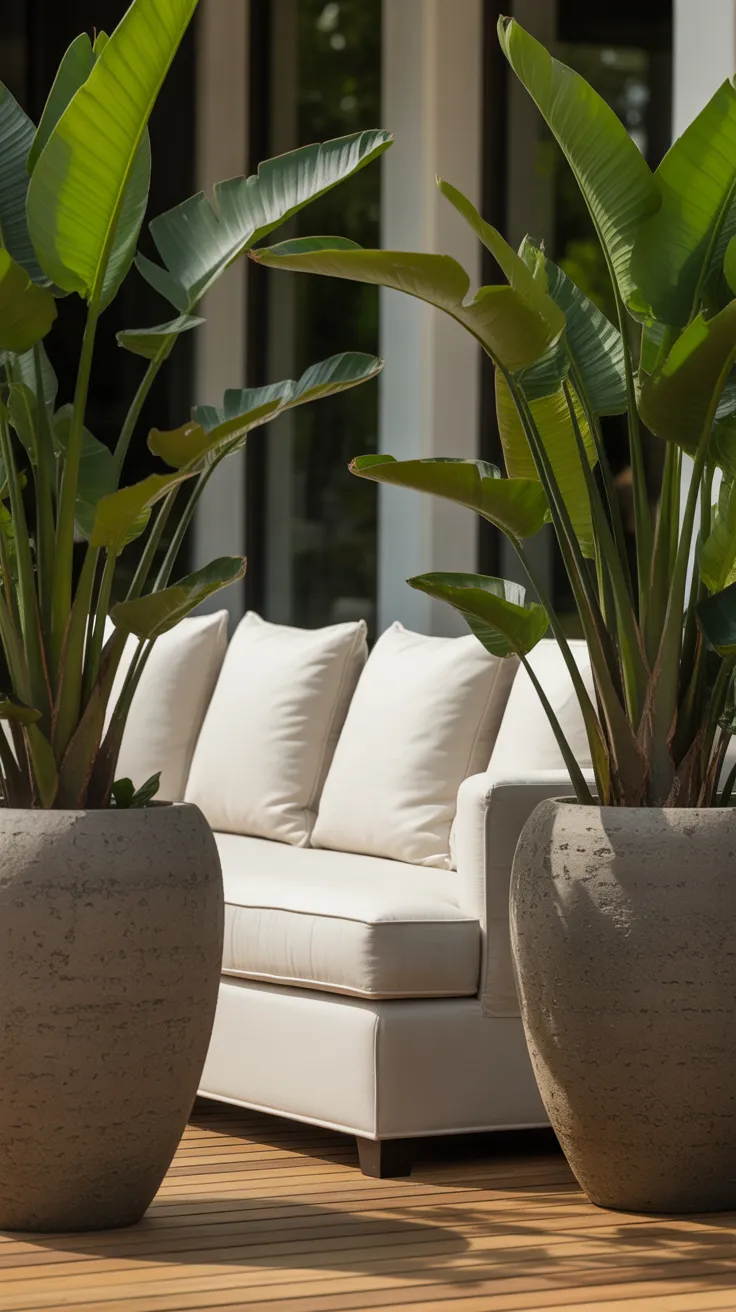
Beneath the fabric specification, the foam core is where most outdoor cushion investments fail, and where the most meaningful engineering improvements have been made.
Standard polyurethane foam — the fill used in the majority of mid-market outdoor cushions — has a closed-cell structure. When water penetrates the fabric (through seams, compression, or prolonged exposure), it is absorbed and retained by the foam, creating a reservoir that takes hours or days to dry fully. The consequence is familiar to anyone who has pressed a fingertip into a patio cushion after rain: that characteristic cold, damp resistance, the mildew odor that eventually follows, the foam that compresses and never fully recovers.
Open-cell foam, specifically engineered for outdoor applications, solves this at the structural level. Open-cell foam’s structure allows water to pass through easily, meaning no more soggy cushions after a rainstorm. By allowing water to flow freely through its porous structure, it eliminates the stagnant water pockets where mold and mildew typically begin to grow. This rapid drainage, combined with good air circulation, ensures that the cushion’s interior remains dry, healthy, and odor-free, even in humid environments.
With the right open-cell foam technology, if water does penetrate the cushion, the cushion will dry within 20 to 30 minutes versus hours or days depending upon the weather. This is the standard that Frontgate, Restoration Hardware, and Pottery Barn Outdoor specify in their top-tier collections, and it is the specification to require of any outdoor furniture investment above the $2,000 threshold. Sunbrella fabric itself is incredibly durable and can last for ten years or more under normal outdoor conditions. The limiting factor in the overall lifespan of an outdoor cushion is typically the foam insert, not the fabric — quick-dry foam lasts approximately five to eight years before showing signs of compression. Many quality outdoor furniture brands offer replacement cushion covers and foam inserts, allowing you to refresh a set without purchasing entirely new furniture.
The ability to replace cushion cores without replacing the frame is itself a mark of heritage-grade furniture: it separates sets designed to be maintained from sets designed to be replaced.
Timeless Manor Standard: Ask any furniture manufacturer the specific foam density and cell structure of their cushion fill. A reputable brand at the high-ticket level will answer this question without hesitation. If the answer is “outdoor foam,” that is insufficient specification for a serious purchase.
IV. Layout Mastery: The Architecture of the Outdoor Room
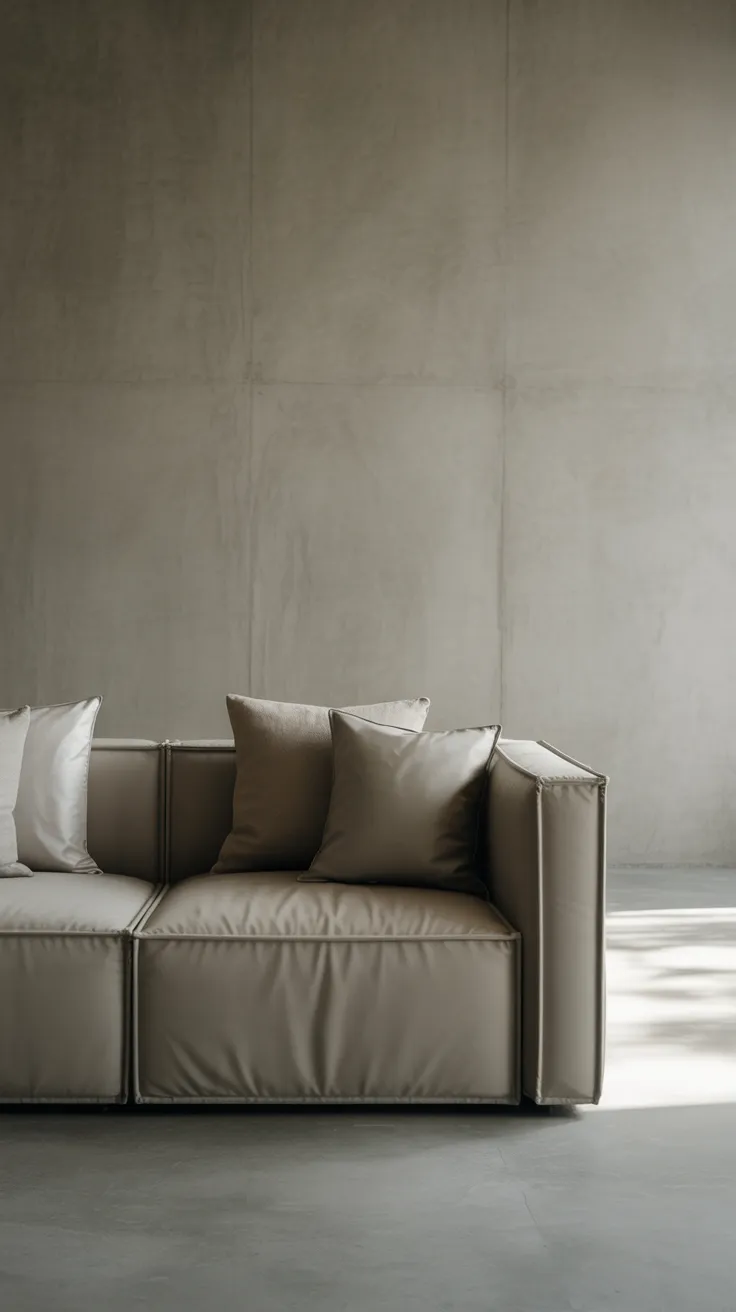
Once material and comfort specifications are established, the design question becomes architectural: how does a terrace of a given dimension become a room? Not a furnished space — a room, with the internal logic, zone definition, and visual authority that the word implies.
Symmetry, Scale, and the “Anchor” Principle
The single most common error in patio layout is under-scaling: choosing furniture that is appropriate for the square footage but too small for the visual weight of the space. A 12-by-16-foot covered terrace furnished with a standard four-piece bistro set in the center will feel like a large room with very small furniture at its middle — the opposite of the grounded, intimate quality that high-end outdoor furniture achieves when correctly sized.
Choose one great luxury patio set to anchor the space, and the patio will finally feel like the extra room you’ve been missing. Look for powder-coated aluminum or steel frames paired with teak, high-density polyethylene wicker, or stone-look tops — materials that resist rust, warping, and fading better than untreated wood or low-cost plastics.
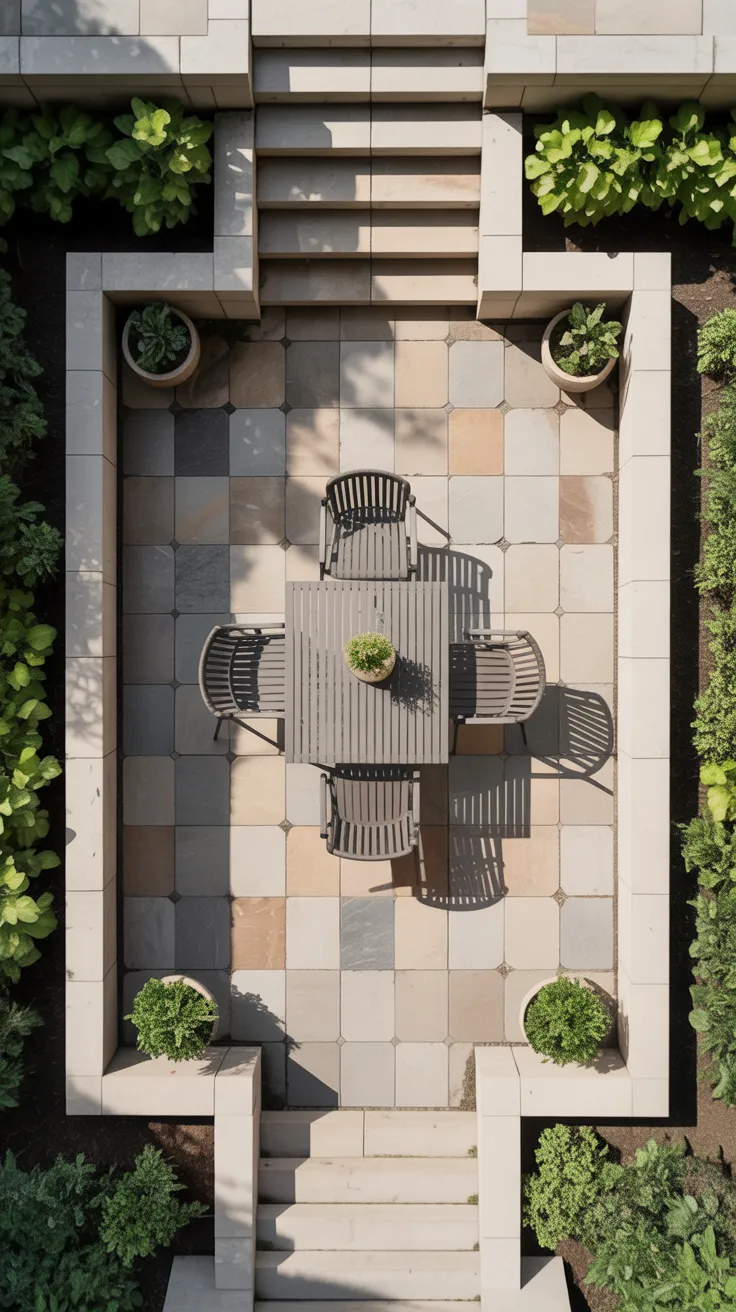
The anchor principle works as follows: select the largest seating configuration that the space can appropriately hold, leave a minimum of 30 inches of clear circulation on all sides, and build the remaining furnishings — side tables, ottomans, occasional chairs — around that central anchor piece. The anchor reads the room; everything else supports it. An oversized Grade-A teak sectional on a generous terrace will make the space feel complete at first glance. The same sectional in an undersized courtyard will feel crowded. Scale is not about room size — it is about proportion and the relationship between furniture mass and available volume.
For large verandas and formal terraces: symmetry is a powerful tool. A matched pair of deep-seat armchairs flanking a central conversation sofa creates a visual axis that communicates permanence and intention. This is, not coincidentally, the layout grammar of the English garden tradition — the same visual logic that has governed formal outdoor living spaces from Sissinghurst to the great colonial estates of Virginia — and it works because it borrows the authority of interior furniture arrangement and applies it outside.
Timeless Manor Standard: Before purchasing any high-ticket outdoor set, tape out the footprint on your actual terrace with painter’s tape. Include the cushion overhang (typically 2 to 3 inches beyond the frame) and the 30-inch circulation clearance on all sides. This takes fifteen minutes and prevents the most expensive mistake in outdoor furniture investment.
Zoning for Hosting: Conversation Circles and Dining Vistas
The terrace that functions as a genuine living suite is almost never a single-use space. The same environment that serves breakfast on a Wednesday morning — intimate, quiet, oriented toward the garden view — should transition with minimal adjustment to a dinner party for twelve on a Saturday evening. Achieving this requires deliberate zone design, not simply placing furniture where it fits.
The Conversation Circle is the primary social zone: a sectional or sofa grouping facing inward, anchored by a central coffee table at a height of 14 to 16 inches, with side tables within arm’s reach of every seat. This zone operates independently of any dining configuration — it is the terrace living room, and it should be positioned for the best view: toward the garden, the pool, the landscape, or the most interesting architectural feature of the property.
The Dining Vista is the secondary zone, designed specifically around the act of a seated meal. The orientation principle here reverses: dining chairs should face outward toward the view, not inward toward each other, because the experience of a formal outdoor dinner is as much about the setting as the conversation. A rectangular teak dining table on a large terrace should be positioned so that guests seated along both long sides have a meaningful view — not a fence, not a utility structure, but the most compelling aspect of the outdoor environment.
The ideal approach: measure the terrace, note all door swings, stairs, and no-go zones, then roughly block out “lounge” and “dining” zones before any furniture is purchased. Pick priority — decide if you’re lounge-first, dining-first, or balanced — then define the style and key materials before you shop.
The two zones should be separated by a minimum of six feet — enough space to create a genuine sense of transition between them, as one moves from the relaxed posture of the conversation circle to the formal posture of the dining table. An outdoor rug under each zone is the most effective way to define these boundaries without any physical barrier.
V. The Preservation Protocol: Protecting What You Have Invested In
Heritage-grade outdoor furniture does not maintain itself — but its maintenance requirements are considerably less onerous than the replacement cycle it eliminates. Understanding what each material requires, and applying that care consistently, is the final act of intelligent furniture investment.
Investment Protection: The Custom-Fit Cover System
Proper care and storage can prevent mold and mildew, fading, and rust longer than a “set it and forget it” mentality. Outdoor furniture should be covered when not in use to prevent mildew, rust, and fading. This is established principle. What is less frequently discussed is the difference between a generic cover and a custom-fit cover — and why that distinction matters at the high-ticket level.
A generic cover, fitted to the approximate dimensions of a seating category rather than the specific footprint of a named set, creates pockets of trapped moisture at every point where the cover does not conform to the furniture profile. These moisture pockets are precisely the conditions where mold and mildew establish themselves — not on exposed surfaces, where UV and air circulation inhibit organic growth, but in the dark, damp, enclosed spaces between an ill-fitting cover and the furniture beneath it.
Custom-fit, breathable covers — made from solution-dyed, UV-resistant polyester in a material that permits air circulation while repelling rain — address this directly. The cover breathes, allowing moisture vapor to escape while blocking liquid water entry. The fit conforms to the furniture’s actual footprint, eliminating trapped-air pockets. And the UV-resistance of the cover material ensures that the cover itself does not degrade before the furniture it protects.
Brands including Coverstore, Classic Accessories, and Duck Covers offer furniture-specific cover programs for named sets from RH, Pottery Barn Outdoor, and Frontgate — a detail worth investigating at the point of furniture purchase rather than after the fact.
Material-Specific Maintenance: The Minimal-Intervention Approach
Grade-A Teak: The most common misconception about teak maintenance is that it requires aggressive intervention — annual oiling, sealing, or refinishing. It does not. Teak’s natural oils are real — furniture sits outside for years and doesn’t fall apart. The minimal approach: leave it alone, or oil once yearly if you want to maintain the warm honey color rather than allowing the natural silver-grey patina to develop. For those who prefer to preserve the original warm honey tone, a single application of food-grade teak oil in spring — applied to clean, dry wood, allowed to penetrate for thirty minutes, then buffed — is the extent of the maintenance requirement. For those who prefer the patina, the maintenance requirement is periodic cleaning with mild soap and warm water. Nothing more.
Powder-Coated Aluminum: Quality powder coating protects itself. Clean it with mild soap and water seasonally. The only risk point is physical damage to the coating — chips or scratches from abrasive cleaning materials — which can be addressed with touch-up paint in the original color. Inspect hardware annually, particularly in coastal environments, and tighten any connections that have worked loose through seasonal thermal expansion and contraction.
Sunbrella and Performance Fabrics: The cleaning protocol for solution-dyed acrylic is refreshingly simple. For routine cleaning, brush off loose dirt, apply a solution of mild soap and lukewarm water, work in gently with a soft brush, then rinse thoroughly and allow to air-dry completely. For organic stains — mildew, red wine, sunscreen — a diluted bleach solution (¼ cup bleach per gallon of water) may be applied without damaging the solution-dyed fibers. This is a material specification, not a cleaning tip: the fact that Sunbrella fabric can be treated with bleach without color loss is the functional equivalent of a performance guarantee.
Cushion Storage: At the end of the outdoor season — or during extended periods of non-use — store cushions in a breathable fabric storage bag in a dry interior location. Do not store in sealed plastic containers: the moisture trapped during the season will create the mildew conditions that outdoor performance fabrics were designed to resist. A ventilated garage shelf or a cedar-lined storage bench on a covered porch are appropriate storage environments.
Timeless Manor Standard: Set a calendar reminder for the first weekend of April and the last weekend of October. April is for uncovering, inspecting hardware, and applying a single coat of teak oil if desired. October is for final cleaning, cushion storage, and custom cover deployment. Two weekends per year is the full maintenance requirement of properly specified outdoor furniture.
VI. Building Your Legacy: The Timeless Verdict
There is a particular satisfaction in a decision that does not need to be revisited. The replacement cycle of disposable outdoor furniture — the annual survey of fading cushions, corroding frames, and structural joints that have failed their third season of thermal stress — represents a form of low-grade, recurring dissatisfaction that accumulates quietly over years. Every replacement acknowledges that the previous purchase was inadequate. Every re-purchase reinvests in the same inadequacy at a slightly higher price point, producing the same result on a slightly longer timeline.
The alternative is the purchase that closes the decision. A Grade-A teak sectional from a certified source, properly specified with open-cell foam cushions in Sunbrella performance fabric, on a powder-coated aluminum or solid teak frame, secured by marine-grade hardware — this is furniture that will not need to be replaced. It will need to be maintained, which is a different relationship entirely. Maintenance acknowledges value. Replacement acknowledges failure.
Sustainability has emerged as the defining characteristic of luxury outdoor design in 2026, representing a fundamental shift toward responsible luxury that prioritizes environmental stewardship without compromising on sophistication or performance. The most sustainable outdoor furniture decision a homeowner can make is to purchase once, at the appropriate quality level, and maintain that purchase for decades. This is not a luxury rationalization. It is the logical conclusion of any honest lifecycle analysis.
Homeowners are now approaching outdoor design with the same permanence and sustainability mindset they apply to interior spaces, with demand moving strongly toward certified teak, long-term value, and iconic pieces that combine heritage design with exceptional durability.
The terrace you invest in this season should, if the investment is made correctly, be the terrace you are still hosting on in fifteen years. It should weather in the ways that beautiful, honest materials weather — developing character, not deteriorating. It should require less of your attention over time, not more. And it should, on a quiet evening with a glass of wine and the light dropping through the pergola, feel like it has always been there.
That quality — the feeling that a space has arrived at its proper self — is what distinguishes a furnished terrace from a designed one. It cannot be achieved by accumulation. It is achieved by one considered decision, made once, made well.
“Quality is not an act. It is a habit — built into the grain of the wood, the weave of the fabric, and the care with which both are maintained.” — Timeless Manor
The Curator’s Reference: Materials at a Glance
| Material | Lifespan | Key Specification | Maintenance | Best For |
|---|---|---|---|---|
| Grade-A Teak (FSC-Certified) | 50–100+ years | Heartwood cut, mature tree | Oil annually or let patina naturally | Primary seating, dining tables, heirloom investment |
| Powder-Coated Aluminum | 20–30 years | 60–80 micron coating thickness; marine-grade hardware | Annual hardware inspection; soap and water | Modern farmhouse, coastal, minimal aesthetic |
| Teak + Aluminum Hybrid | 30–50 years | FSC teak + powder-coated marine-grade frame | Combined protocol for each material | 2026 signature aesthetic; best of both materials |
| Sunbrella Performance Fabric | 10+ years (fabric) | Solution-dyed acrylic; Rain variant available | Mild soap; bleach-safe for stains | All cushion applications; poolside; high-humidity climates |
| Open-Cell Quick-Dry Foam | 5–8 years | Open-cell structure; replace cores independently | Store covered in dry location seasonally | All cushion fills; rain-prone climates |
The Investment Timeline: When to Buy, What to Buy First
For the homeowner approaching a significant outdoor furniture investment for the first time, sequence matters. The common mistake is purchasing everything simultaneously in a single season — an approach that produces a set that feels complete immediately but rarely reflects the accumulated editorial instinct of a curated space.
Year One — The Anchor: Commission or purchase the primary seating piece: the Grade-A teak sectional, or the equivalent investment in a deep-seat sofa grouping in the chosen material and fabric. This is the piece against which all future additions will be measured. Do not compromise here. Everything that follows will either reinforce or undermine this first decision.
Year One to Two — The Dining Zone: Add the dining table and chairs once the seating zone feels settled and understood. Allow one full season with the primary seating before committing to the dining configuration — you will know, by the end of that first season, precisely how the space is used and what the dining zone actually requires.
Year Two to Three — The Finishing Layer: Outdoor rugs, side tables, occasional lighting, planters. These are the pieces that complete the room and give it personality. They are also the most replaceable, and the most appropriate place for some design experimentation. The rugs and the lighting can evolve as your taste evolves; the teak sectional does not need to.
This is the Timeless Manor approach to outdoor furniture investment: not decoration, but architecture. Not a season’s purchase, but a decade’s commitment. Not furniture you tolerate until the next replacement — furniture that, with every passing year, becomes more precisely yours.
Further Reading from Timeless Manor
“How to Layer Outdoor Rugs Like a Pro: The 2026 Pairing Guide” — the definitive approach to anchoring your outdoor furniture investment with the right foundation underfoot.
“The Welcome Committee: Why Every Front Door Needs a Washable Plaid Runner” — extending the Timeless Manor aesthetic from terrace to threshold.
SEO Note: Keywords used in editorial context — luxury outdoor furniture, high-end patio sets, grade-a teak sectional, outdoor furniture investment, modern farmhouse patio, English garden furniture, 2026 outdoor living trends, weather-resistant luxury, high-ticket home decor, terrace design ideas.